Home > Money > Question
Need Expert Advice?Our Gurus Can Help
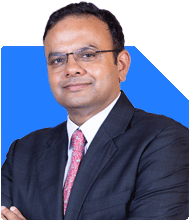
Abhishek

Abhishek Dev  | Answer  |Ask -

Financial Planner - Answered on Aug 04, 2023

Abhishek Dev is the co-founder and CEO of the financial planning company, Epsilon Money Mart.
A management graduate, he has over 21 years of experience in asset and wealth management.
He has been associated with reputed companies like HSBC GAM (India, south east Asia), PGIM, AMC, AMEX Bank, HDFC AMC and UTI in various roles, including leading business management, sales, marketing, product development and as a board member.... more

Neeraj Question by Neeraj on Jun 08, 2023Hindi

Listen
Money

Dear Sir, I am Neeraj gupta. I do request you to please guide about Samco Active Momentum Fund NFO ( comming from June 15 -29, 2023. Shall I invest Lumpsum 5 Lakh in this NFO ? I learnt that SAMCO is not allowing any investment or SIP after closing on June 29,2023.

Ans: We are in a structural bull market today with strong economic cues. At such times, price is the king, hence momentum investing is the talk of the town. What we would ask you to analyze before investing is whether this fund suits your risk profile and help you reach your goals. This is the first fund wherein momentum investing will be followed actively, therefore, the idea certainly is new. However, fresh investments are not allowed because the fund manager himself accepts that deploying a lot of money in few investible ideas can be a problem.
DISCLAIMER: The content of this post by the expert is the personal view of the rediffGURU. Users are advised to pursue the information provided by the rediffGURU only as a source of information to be as a point of reference and to rely on their own judgement when making a decision.
Money

You may like to see similar questions and answers below

Sanjeev

Sanjeev Govila  | Answer  |Ask -

Financial Planner - Answered on May 22, 2023

Ramalingam

Ramalingam Kalirajan  |11152 Answers  |Ask -

Mutual Funds, Financial Planning Expert - Answered on Jan 20, 2025

Listen
Money
Hi Gurus , Finally last month I have started my investment in MF thru sip in following funds *Hdfc mid cap direct 4k* *tata small direct 4k* *Sbi bluechip direct4k* *Paragh flexi direct 4k* I did all sip through grow app I will wait next 15- 20years is this good any suggestions
Ans: Investing in mutual funds is a step in the right direction. Your portfolio showcases diversity and long-term focus. A 15–20-year horizon is excellent for wealth creation. Let’s review and refine your strategy.

Portfolio Review
Mid-Cap Funds
Mid-cap funds offer a mix of growth and risk. They outperform large-caps over the long term.

Small-Cap Funds
Small-cap funds are ideal for aggressive growth. However, they are more volatile.

Large-Cap Funds
Large-cap funds provide stability in your portfolio. They act as a cushion during downturns.

Flexi-Cap Funds
Flexi-cap funds are versatile. They allocate dynamically across market capitalisations.

Disadvantages of Direct Funds
While direct funds save commission costs, they require constant monitoring.

Professional Expertise Lacking
A Certified Financial Planner (CFP) ensures a well-structured portfolio.

Market Timing Risk
Direct investors may make emotional decisions during volatility.

Portfolio Review
Regular funds offer continuous reviews by professionals.

Holistic Financial Guidance
An MFD with CFP certification provides personalised investment advice.

Suggestions for Improvement
Your portfolio is good but can be fine-tuned for better results.

Diversification Across Categories
Add a hybrid or balanced fund to reduce risk.

Sectoral Funds
If confident, allocate a small portion to sectoral funds.

Avoid Overlapping Funds
Check for duplication of holdings in existing funds.

Taxation Impact
New taxation rules make tax-efficient investing important.

Equity Funds
Long-term capital gains above Rs. 1.25 lakh are taxed at 12.5%.

Short-Term Capital Gains
Gains from investments held for less than one year are taxed at 20%.

Plan Tax-Efficient Withdrawals
Use these rules for optimal tax management at redemption.

Benefits of Staying Invested
Compounding Benefits
Long-term investing amplifies wealth through compounding.

Mitigates Volatility
Staying invested reduces the impact of market fluctuations.

Goal-Oriented Investing
A 15–20-year horizon aligns with long-term goals.

Actionable Steps
Consolidate Portfolio
Avoid too many funds. Stick to 4–5 well-performing ones.

Periodic Reviews
Review your portfolio every year with a CFP for alignment with goals.

Reinvest in Underperformers
Switch funds only if underperformance persists for 2–3 years.

Consider Professional Advice
Switch from direct to regular funds for expert guidance.

Final Insights
Your SIP strategy is on the right track. Small adjustments can optimise it further. Focus on professional advice and consistent reviews to maximise returns.

Best Regards,

K. Ramalingam, MBA, CFP,

Chief Financial Planner,

www.holisticinvestment.in
https://www.youtube.com/@HolisticInvestment

..Read more

Ramalingam

Ramalingam Kalirajan  |11152 Answers  |Ask -

Mutual Funds, Financial Planning Expert - Answered on Jun 16, 2025

Money
Hi sir I'm 30 years old and started my sip 10 months ago 1.5 lakhs invested till the date . Want to invest for 15 years Below are details Quant small cap 2.5 k per month Nippon India small cap 5k Motilal Oswal mid cap 5k Parag Parikh flexi cap 3k ICICI prudential nifty 50 index fund etf Rs 200/- 1. Currently investing Rs15700/- want to invest 20k suggest which Current MF to invest more amount or any changes need to be done. 2. Should I invest 5 lakhs in lump sum or in sip which is better
Ans: You have made a great start at the age of 30. Investing early builds strong financial foundation. You are investing Rs. 15,700 per month, which is a healthy amount. You are also planning to increase it to Rs. 20,000 monthly. That’s a smart move. You also have Rs. 5 lakhs for lump sum investing. Now let’s evaluate your mutual fund choices, portfolio structure, and ideal action plan.

Age, Time Horizon and Investment Profile
Age: 30 years

Investment horizon: 15 years

Monthly SIP: Rs. 15,700 currently

Planning to increase to: Rs. 20,000

Lump sum available: Rs. 5 lakhs

Your strengths:

Long time horizon gives high compounding benefit

SIP is already running in good amount

You are open to increasing your investment

You are thinking long term. That’s the right mindset

Let’s analyse your mutual funds in a structured way.

Analysing Your Existing SIP Portfolio
1. Small Cap Exposure
Two small cap funds: Rs. 7,500 per month

These are high-risk, high-return funds

You are investing 48% of SIP into small cap category

That is a high concentration for a young portfolio

Small caps can be very volatile

Better to reduce exposure a little

2. Mid Cap Exposure
One mid cap fund: Rs. 5,000 per month

Mid cap funds are ideal for long-term investors

They balance growth and stability

32% allocation to mid caps is fine

3. Flexi Cap Exposure
One flexi cap fund: Rs. 3,000 per month

Flexi cap funds give fund manager freedom to move between cap sizes

These are good for diversification and dynamic allocation

You can increase allocation here

4. Index Fund (ETF)
Monthly investment: Rs. 200 only

You mentioned it as Nifty 50 ETF

This is an index fund

Index funds have no flexibility

They can’t protect in falling markets

They follow the index blindly

Active funds have proven to beat index consistently over time

Avoid index funds in wealth creation journey

You may exit this and reallocate to active funds

Suggested Portfolio Changes
You aim to invest Rs. 20,000 per month going forward. Let’s realign your portfolio with a strong mix.

Suggested fund category allocation:

Small Cap Funds: 25% of SIP

Mid Cap Funds: 30% of SIP

Flexi Cap Funds: 25% of SIP

Large & Mid Cap Funds: 20% of SIP

New monthly SIP allocation suggestion (Rs. 20,000 total):

Small Cap: Rs. 5,000

Mid Cap: Rs. 6,000

Flexi Cap: Rs. 5,000

Large & Mid Cap: Rs. 4,000

Key actions to take:

Reduce SIP in one small cap fund by Rs. 2,500

Continue with one small cap only. Pick the more consistent one

Increase allocation in Flexi Cap fund

Introduce one Large & Mid Cap fund to diversify

Exit the index ETF fund completely

It adds little value and lacks protection in correction

Should You Invest Rs. 5 Lakhs as Lump Sum or SIP?
This is a very important question. Your decision must consider market timing risk.

Risks in lump sum investing:

If market falls just after lump sum, portfolio value drops

Emotionally it becomes hard to continue

Market may not recover quickly

You may exit at wrong time if not mentally prepared

SIP offers smoother entry:

Rupee cost averaging works well in SIP

Emotional comfort is higher

Volatility is absorbed better

You avoid regret of wrong timing

Best way to invest Rs. 5 lakhs:

Do not invest all in one go

Spread it over next 6 to 9 months

Do STP (Systematic Transfer Plan) from liquid fund to equity funds

This gives safety and gradual market exposure

Choose funds where you are continuing SIP for long term

Avoid lump sum in small cap or sector funds

Suggested STP action:

Put Rs. 5 lakhs in a low-risk liquid fund

Transfer Rs. 55,000 to Rs. 80,000 per month into chosen equity funds

Use the same four fund categories for STP

Asset Allocation View for 360-Degree Planning
You are young. You can afford high equity exposure. But that doesn't mean 100% small caps.

Suggested equity exposure:

Total equity exposure: 90%

Liquid/emergency: 10%

You can take this exposure for next 10 years

Ideal allocation among equity styles:

Large cap and large & mid cap: 30%

Mid cap: 30%

Small cap: 20–25%

Flexi cap and multi cap: 15–20%

This structure gives better balance. It protects from high volatility and improves long-term returns.

Regular Funds vs Direct Funds
You didn’t mention if you are using direct plans. If yes, then please note these:

Disadvantages of Direct Funds:

You get no guidance during market volatility

You may stop SIP at wrong time

No proper rebalancing or strategy check

Emotionally hard to manage alone

Many direct investors make mistakes in fund choice and exit timing

Benefits of Regular Funds through Certified Financial Planner:

Ongoing tracking and review of your portfolio

Behavioural coaching during market fall

Proper rebalancing and performance audit

Long-term handholding for goal-based planning

Worth more than the small trail cost involved

For long-term wealth creation, professional support is very useful.

Additional Suggestions for Long-Term Success
Emergency Fund Planning:

Keep 6 months expenses in a liquid fund

Never invest this portion in equity

Insurance:

Take pure term insurance if not yet done

Health insurance for self and family is also must

Periodic Review:

Review your SIP funds every 12 months

Do not change funds based on short-term return

Stick to the goal and asset allocation

Avoid These Mistakes:

Do not invest in traditional LIC plans, endowment or ULIP

Avoid high exposure to sector or thematic funds

Don’t go for trending new funds or NFOs

Avoid real estate for now. Liquidity is poor and returns are slow

Do not invest in index funds unless portfolio is very large

Taxation Point to Note:

Equity mutual funds: LTCG above Rs. 1.25 lakhs taxed at 12.5%

STCG taxed at 20%

Debt fund returns taxed as per your income slab

Plan redemptions carefully to reduce tax impact

Finally
You have a great start at 30.

Keep investing consistently for 15 years

Reduce small cap exposure a little

Remove index fund ETF from your SIP

Use STP for Rs. 5 lakhs investment

Add one large & mid cap fund to portfolio

Review regularly with a Certified Financial Planner

You are on the right path. With a few changes and disciplined investing, you will build long-term wealth.

Best Regards,
K. Ramalingam, MBA, CFP,
Chief Financial Planner,
www.holisticinvestment.in
https://www.youtube.com/@HolisticInvestment

..Read more

Latest Questions
Nayagam P

Nayagam P P  |11102 Answers  |Ask -

Career Counsellor - Answered on Apr 24, 2026

Asked by Anonymous - Apr 24, 2026Hindi
Career
My son ranked 4700 jee main 2026, home state west bengal. 99.71 percentile. Which nit , can he get cse ?
Ans: Based on your son's 99.71 percentile, he has a strong chance of becoming a good ranker in JEE Advanced as well. If he scores well there, IIT admission can be his first preference.

With a JEE Main All India Rank (AIR) around 4,700 and 99.71 percentile, your son can realistically target CSE in several NITs, especially under the West Bengal home-state quota. Typically, top NIT CSE closing ranks range between 1,500 and 5,000—for example, recent CSE closing ranks include NIT Trichy at 1,449, Surathkal at 1,827, Warangal at 2,409, Rourkela at 3,431, Calicut at 5,222, and MNNIT Allahabad at 4,594.

For West Bengal home-state candidates, NIT Durgapur CSE is a strong and realistic target, and your son may also secure ECE, EEE, or IT branches at other NITs depending on the round and seat availability.

Backup options to consider include newer IIIT campuses offering CSE/ECE, lower-demand branches at NITs, and IIEST Shibpur. While CSE in top NITs is achievable, the choice of branch and timing of counseling rounds will play a significant role. Once the JEE Advanced exam is over, your son can check the answer key on the same day or the next to estimate his expected score and AIR. He should then promptly review the JoSAA opening and closing ranks from the past 2-3 years to gain deeper insights and better understand admission trends, focusing first on reputed IITs and then on NITs. ALL the BEST for Your Son's Prosperous Future!

Follow RediffGURUS to Know More on 'Careers | Money | Health | Relationships'.

...Read more

Nayagam P

Nayagam P P  |11102 Answers  |Ask -

Career Counsellor - Answered on Apr 24, 2026

Career
As an outstate Maharashtra resident can my son get admission in any top Maharashtra Government / Private Colleges, if my son score 140+ marks in MHT CET and having 93.60 percentile in JEE mains. Please name the top Maharashtra government / private colleges in which my son can get admission via MHT CET and JEE main score being an outstate Maharashtra resident.
Ans: Govind Sir, As an outside-Maharashtra candidate, your son can still pursue admission to Maharashtra colleges, but government seats through MHT CET are limited and highly competitive. The more practical route to top institutes is securing All India quota seats via JEE Main. Based on recent cutoff trends and Maharashtra counselling rules, key colleges to consider include VJTI Mumbai, COEP Pune, SPCE Mumbai, Walchand Sangli, PICT Pune, DJ Sanghvi Mumbai, MIT-WPU Pune, and VIT Pune. With a 140+ score in MHT CET and a 93.60 percentile in JEE Main, securing CSE in top government colleges will be challenging, but admission to ECE, IT, ENTC, or Mechanical branches in newer or mid-tier colleges is more realistic. For non-domicile students, focusing on OMS/All India seats through JEE Main and exploring private colleges with strong placement records is advisable. Additionally, please review the JoSAA opening and closing ranks from the last 2-3 years to gain further insights and better understand admission trends. ALL the BEST for Your Son's Prosperous Future!

Follow RediffGURUS to Know More on 'Careers | Money | Health | Relationships'.

...Read more

Nayagam P

Nayagam P P  |11102 Answers  |Ask -

Career Counsellor - Answered on Apr 24, 2026

Career
My son is currently in Xth std ICSE MUMBAI. What are our options for getting into ENGINEERING? We are interested in enrolling them in a junior college rather than integrated learning. Which junior colleges can you recommend in Mumbai that has pathway to engineering ?
Ans: Neeraj Sir, For a junior college route in Mumbai, your son should enroll in Science (PCM) in FYJC (First Year Junior College), as this is the standard pathway to engineering through MHT-CET and JEE Main, leading to admission opportunities in colleges like IIT Bombay, VJTI, SPIT, DJSCE, KJ Somaiya, and ICT Mumbai.

Good junior college options in Mumbai with strong engineering pathways include St. Xavier’s, Jai Hind, Ruia, Mithibai, KJ Somaiya College of Science, and other reputable Science junior colleges known for strong PCM results and competitive admissions. For the best long-term engineering prospects, select a college that offers excellent teaching in Maths, Physics, and Chemistry, along with regular testing and a proven track record of students progressing to top engineering colleges. A value-added suggestion: If your son is specifically targeting the JEE, he should first thoroughly master the NCERT textbooks for all three subjects (Physics, Chemistry, and Mathematics) and then focus on the materials provided by his integrated coaching institute. ALL the BEST for Your Son's Prosperous Future!

Follow RediffGURUS to Know More on 'Careers | Money | Health | Relationships'.

For your son, the safest plan is to pursue FYJC Science with focused coaching for JEE and MHT-CET, followed by admission through these engineering entrance exams, rather than opting for integrated schooling if you prefer to maintain flexibility.

...Read more

DISCLAIMER: The content of this post by the expert is the personal view of the rediffGURU. Investment in securities market are subject to market risks. Read all the related document carefully before investing. The securities quoted are for illustration only and are not recommendatory. Users are advised to pursue the information provided by the rediffGURU only as a source of information and as a point of reference and to rely on their own judgement when making a decision. RediffGURUS is an intermediary as per India's Information Technology Act.

Close  

You haven't logged in yet. To ask a question, Please Log in below
Login

A verification OTP will be sent to this
Mobile Number / Email

Enter OTP
A 6 digit code has been sent to

Resend OTP in120seconds

Dear User, You have not registered yet. Please register by filling the fields below to get expert answers from our Gurus
Sign up

By signing up, you agree to our
Terms & Conditions and Privacy Policy

Already have an account?

Enter OTP
A 6 digit code has been sent to Mobile

Resend OTP in120seconds

x