Need Expert Advice?Our Gurus Can Help

Ramalingam Kalirajan |10881 Answers |Ask -Follow
Mutual Funds, Financial Planning Expert - Answered on Sep 27, 2024
Ramalingam Kalirajan has over 23 years of experience in mutual funds and financial planning.
He has an MBA in finance from the University of Madras and is a certified financial planner.
He is the director and chief financial planner at Holistic Investment, a Chennai-based firm that offers financial planning and wealth management advice.... more
He has an MBA in finance from the University of Madras and is a certified financial planner.
He is the director and chief financial planner at Holistic Investment, a Chennai-based firm that offers financial planning and wealth management advice.... more
Asked by Anonymous - Jul 10, 2024
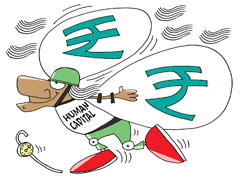
I live in a joint family in mumbai, we are 8 members, one son is working in the US, with a ctc of $90000, the other son is pursuing his studies at a college in mumbai, and the other 6 members are either retired or housewives, collectively we have 2 crores in fixed deposit, 3 crores in equity, 1.5 crores in jewelry and 2 self owned flats in mumbai, of which 1 is rented out and the other is occupied by us. My question is, that is this amount good enough for a family of my size in mumbai?
Ans: Your financial standing is impressive, but assessing whether it's sufficient for a family of 8 in a city like Mumbai requires a closer look at each asset and its potential growth or liquidity.
Fixed Deposits: Rs. 2 Crores
Fixed deposits provide a stable but relatively low return on investment. At around 6%-7% interest, this generates approximately Rs. 12 to 14 lakhs annually. However, given the inflation rate, the real value of this investment may not grow significantly over time. Therefore, while it’s secure, you might want to explore options that yield higher returns without compromising liquidity, especially for long-term needs.
Equity Investments: Rs. 3 Crores
With Rs. 3 crores in equity, you have a high potential for growth. Equities generally outperform inflation and fixed deposits over time, especially in a long-term horizon. Assuming an average return of 10%-12% per annum, your equity portfolio can generate substantial wealth over time. However, the volatility of equity markets means that you should have a clear risk strategy in place. Given your family’s age mix, maintaining a balanced portfolio with some exposure to debt might be worth considering to protect against market fluctuations.
Jewelry: Rs. 1.5 Crores
While gold and jewelry are valuable assets, they do not generate regular income and may not provide liquidity unless sold. However, they act as a good hedge against inflation and economic uncertainty. You could consider them as a fallback or emergency asset rather than part of the regular financial strategy.
Real Estate: Two Flats in Mumbai
Real estate is a significant asset, particularly in Mumbai, where property values tend to appreciate well over time. You already have one flat generating rental income, which is great. It’s important to assess whether the rental yield is competitive with other investment opportunities, as real estate can sometimes have low rental returns compared to its value. Also, you should periodically review the property market for opportunities to optimize this asset.
Living Expenses for a Joint Family
Mumbai is an expensive city, and for a family of 8, your living costs could be significant. Healthcare, daily expenses, lifestyle costs, and emergencies all need to be considered. Given that several family members are either retired or dependent, you’ll need to ensure that your investments generate enough cash flow to cover ongoing expenses.
Income from Abroad: Son in the US
Your son earning $90,000 annually is a major financial support, assuming he contributes to the household. His income can help meet any shortfalls in day-to-day expenses or cover larger family needs like healthcare or property maintenance. However, depending too heavily on external income may create financial vulnerability, particularly if circumstances change.
Future Financial Planning: Key Considerations
Retirement Needs: Since 6 out of 8 family members are either retired or housewives, ensure your current financial assets cover healthcare costs, emergencies, and inflation-adjusted living costs.
Liquidity: Ensure you maintain sufficient liquidity. Fixed deposits and equity portfolios are good, but always keep a cash buffer for emergencies, especially for medical expenses.
Wealth Preservation: You may want to rebalance your equity portfolio periodically to reduce risk as family members age. A Certified Financial Planner can help you manage this transition smoothly.
Diversification: While you have a well-diversified asset base, ensure that your investments match your family’s risk tolerance and future needs.
Final Insights
Your financial situation is strong, but it needs to be managed wisely for long-term security. Periodic rebalancing, ensuring liquidity, and maintaining a stable cash flow from assets like real estate and fixed deposits will be crucial.
Best Regards,
K. Ramalingam, MBA, CFP,
Chief Financial Planner,
www.holisticinvestment.in
https://www.youtube.com/@HolisticInvestment
Fixed Deposits: Rs. 2 Crores
Fixed deposits provide a stable but relatively low return on investment. At around 6%-7% interest, this generates approximately Rs. 12 to 14 lakhs annually. However, given the inflation rate, the real value of this investment may not grow significantly over time. Therefore, while it’s secure, you might want to explore options that yield higher returns without compromising liquidity, especially for long-term needs.
Equity Investments: Rs. 3 Crores
With Rs. 3 crores in equity, you have a high potential for growth. Equities generally outperform inflation and fixed deposits over time, especially in a long-term horizon. Assuming an average return of 10%-12% per annum, your equity portfolio can generate substantial wealth over time. However, the volatility of equity markets means that you should have a clear risk strategy in place. Given your family’s age mix, maintaining a balanced portfolio with some exposure to debt might be worth considering to protect against market fluctuations.
Jewelry: Rs. 1.5 Crores
While gold and jewelry are valuable assets, they do not generate regular income and may not provide liquidity unless sold. However, they act as a good hedge against inflation and economic uncertainty. You could consider them as a fallback or emergency asset rather than part of the regular financial strategy.
Real Estate: Two Flats in Mumbai
Real estate is a significant asset, particularly in Mumbai, where property values tend to appreciate well over time. You already have one flat generating rental income, which is great. It’s important to assess whether the rental yield is competitive with other investment opportunities, as real estate can sometimes have low rental returns compared to its value. Also, you should periodically review the property market for opportunities to optimize this asset.
Living Expenses for a Joint Family
Mumbai is an expensive city, and for a family of 8, your living costs could be significant. Healthcare, daily expenses, lifestyle costs, and emergencies all need to be considered. Given that several family members are either retired or dependent, you’ll need to ensure that your investments generate enough cash flow to cover ongoing expenses.
Income from Abroad: Son in the US
Your son earning $90,000 annually is a major financial support, assuming he contributes to the household. His income can help meet any shortfalls in day-to-day expenses or cover larger family needs like healthcare or property maintenance. However, depending too heavily on external income may create financial vulnerability, particularly if circumstances change.
Future Financial Planning: Key Considerations
Retirement Needs: Since 6 out of 8 family members are either retired or housewives, ensure your current financial assets cover healthcare costs, emergencies, and inflation-adjusted living costs.
Liquidity: Ensure you maintain sufficient liquidity. Fixed deposits and equity portfolios are good, but always keep a cash buffer for emergencies, especially for medical expenses.
Wealth Preservation: You may want to rebalance your equity portfolio periodically to reduce risk as family members age. A Certified Financial Planner can help you manage this transition smoothly.
Diversification: While you have a well-diversified asset base, ensure that your investments match your family’s risk tolerance and future needs.
Final Insights
Your financial situation is strong, but it needs to be managed wisely for long-term security. Periodic rebalancing, ensuring liquidity, and maintaining a stable cash flow from assets like real estate and fixed deposits will be crucial.
Best Regards,
K. Ramalingam, MBA, CFP,
Chief Financial Planner,
www.holisticinvestment.in
https://www.youtube.com/@HolisticInvestment
DISCLAIMER: The content of this post by the expert is the personal view of the rediffGURU. Users are advised to pursue the information provided by the rediffGURU only as a source of information to be as a point of reference and to rely on their own judgement when making a decision.
MoneyReply


You may like to see similar questions and answers below

Career Coach | Answer |Ask -Follow
Workplace Expert - Answered on Mar 19, 2024

Ramalingam Kalirajan |10881 Answers |Ask -Follow
Mutual Funds, Financial Planning Expert - Answered on Jan 27, 2025

Ramalingam Kalirajan |10881 Answers |Ask -Follow
Mutual Funds, Financial Planning Expert - Answered on Jan 28, 2025

Ramalingam Kalirajan |10881 Answers |Ask -Follow
Mutual Funds, Financial Planning Expert - Answered on Jun 02, 2025


Latest Questions

Nayagam P P |10854 Answers |Ask -Follow
Career Counsellor - Answered on Dec 14, 2025


Radheshyam Zanwar |6744 Answers |Ask -Follow
MHT-CET, IIT-JEE, NEET-UG Expert - Answered on Dec 14, 2025


Radheshyam Zanwar |6744 Answers |Ask -Follow
MHT-CET, IIT-JEE, NEET-UG Expert - Answered on Dec 14, 2025

Dr Dipankar Dutta |1840 Answers |Ask -Follow
Tech Careers and Skill Development Expert - Answered on Dec 14, 2025


Dr Dipankar Dutta |1840 Answers |Ask -Follow
Tech Careers and Skill Development Expert - Answered on Dec 13, 2025

Dr Dipankar Dutta |1840 Answers |Ask -Follow
Tech Careers and Skill Development Expert - Answered on Dec 13, 2025


Mayank Chandel |2575 Answers |Ask -Follow
IIT-JEE, NEET-UG, SAT, CLAT, CA, CS Exam Expert - Answered on Dec 13, 2025

Radheshyam Zanwar |6744 Answers |Ask -Follow
MHT-CET, IIT-JEE, NEET-UG Expert - Answered on Dec 13, 2025
Mayank Chandel |2575 Answers |Ask -Follow
IIT-JEE, NEET-UG, SAT, CLAT, CA, CS Exam Expert - Answered on Dec 13, 2025


Mayank Chandel |2575 Answers |Ask -Follow
IIT-JEE, NEET-UG, SAT, CLAT, CA, CS Exam Expert - Answered on Dec 13, 2025
Asked by Anonymous - Oct 04, 2025Hindi