Home > Money > Question
Need Expert Advice?Our Gurus Can Help
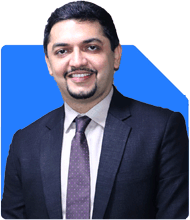
Mihir

Mihir Tanna  |1095 Answers  |Ask -

Tax Expert - Answered on Feb 03, 2024

Mihir Ashok Tanna, who works with a well-known chartered accountancy firm in Mumbai, has more than 15 years of experience in direct taxation.
He handles various kinds of matters related to direct tax such as PAN/ TAN application; compliance including ITR, TDS return filing; issuance/ filing of statutory forms like Form 15CB, Form 61A, etc; application u/s 10(46); application for condonation of delay; application for lower/ nil TDS certificate; transfer pricing and study report; advisory/ opinion on direct tax matters; handling various income-tax notices; compounding application on show cause for TDS default; verification of books for TDS/ TCS/ equalisation levy compliance; application for pending income-tax demand and refund; charitable trust taxation and compliance; income-tax scrutiny and CIT(A) for all types of taxpayers including individuals, firms, LLPs, corporates, trusts, non-resident individuals and companies.
He regularly represents clients before the income tax authorities including the commissioner of income tax (appeal).... more
Asked by Anonymous - Feb 01, 2024Hindi

Listen
Money

After Interim Budget 2024, how will income be taxed? Any changes?

Ans: No change made in Budget 2024 for personal income tax.
DISCLAIMER: The content of this post by the expert is the personal view of the rediffGURU. Users are advised to pursue the information provided by the rediffGURU only as a source of information to be as a point of reference and to rely on their own judgement when making a decision.
Money

You may like to see similar questions and answers below

Ramalingam

Ramalingam Kalirajan  |11028 Answers  |Ask -

Mutual Funds, Financial Planning Expert - Answered on Feb 06, 2025

Listen
Money
As per Budget 2025, for income upto ₹12 Laks has zero Income Tax liability. But the Tax slabs start from ₹0 to ₹4 Laks, which should have started from ₹12 Laks to ₹16 Laks, as income up to ₹12 Laks has zero Tax applicable. Also under Budget 2025, who is required to file Return compulsorily?
Ans: In the Union Budget 2025, the Indian government introduced changes to the income tax structure. The new tax regime now offers a basic exemption limit of Rs. 4,00,000. Individuals earning up to Rs. 12,00,000 annually are eligible for a rebate under Section 87A, which effectively brings their tax liability to zero.

Addressing Your Concern

You mentioned that the tax slabs should begin from Rs. 12,00,000, given the exemption up to Rs. 12,00,000.However, the tax slabs are designed to follow a progressive system. The initial slab of Rs. 0 to Rs. 4,00,000 ensures tax relief for lower-income groups.

Additionally, the Rs. 12,00,000 limit is specifically available as a rebate for income from salary and business/professional sources only. For individuals earning other income (such as rental income, capital gains, etc.), the tax will apply starting from Rs. 4,00,000. This is why the slab starts from Rs. 0 to Rs. 4,00,000.

Thus, the tax liability structure is based on the source of income, with the rebate applicable only for salary and business/professional income. The objective is to provide targeted relief to salaried individuals and small businesses while still taxing other types of income starting from Rs. 4,00,000.

Mandatory Income Tax Return Filing

As per Budget 2025, the requirement to file an Income Tax Return (ITR) remains unchanged. Individuals whose total income exceeds the basic exemption limit (Rs. 4,00,000) are required to file an ITR. Even if your income is below the taxable limit, filing an ITR can be advantageous for reasons like claiming refunds, applying for loans, or proving your income for future financial planning.

Final Insights

The revised tax slabs aim to provide relief to those with lower incomes while ensuring a fair contribution from all income groups. The structure encourages compliance and simplifies the tax process for salaried and small-business earners, while still ensuring taxes on other sources of income.

Best Regards,

K. Ramalingam, MBA, CFP,
Chief Financial Planner,
www.holisticinvestment.in
https://www.youtube.com/@HolisticInvestment

..Read more

Latest Questions
Reetika

Reetika Sharma  |541 Answers  |Ask -

Financial Planner, MF and Insurance Expert - Answered on Feb 12, 2026

Money
Sir, How can we reduce the Commision on Regular MF ?What is Steps to avoid the Tax if wants to Switch from Regular to Direct?.
Ans: Hi Amit,

Your concern regarding commision in regular funds is quite genuine and common these days due to the misleading content shared by some people.
You should understand that a whilst regular funds have comparatively lower expense ratio than direct funds, and this has risen to the direct fund popularity. But in actual a direct fund portfolio is only good if you know all ins and out of the market, have proper knowledge and knows the correct way to invest perse your individual profile.

There are few benefits of regular fund portfolio which is highly overlooked:
- a professional builds your portfolio keeping in mind your detailed profile, funds selction are done based on your risk profile
- a professional knows the best time to invrease your investments, to hold and to shift. They constantly monitor the same and periodically review them

And a regular fund portfolio definitely beats the direct fund portfolio made with random tips and zero or less knowledge.
Hence I would not suggest you to switch from regular to direct funds if you are working with a professional.

Also switching from regular funds to direct will attract tax, there is no way to avoid the taxation.

However, you can get your portfolio reviewed from another advisor and ask them to guide you to make necessary changes.

If you do not have an advisor, connect with a professional Certified Financial Planner - a CFP who can guide you with exact funds to invest in keeping in mind your age, requirements, financial goals and risk profile. A CFP periodically reviews your portfolio and suggest any amendments to be made, if required.

Let me know if you need more help.

Best Regards,
Reetika Sharma, Certified Financial Planner
https://www.instagram.com/cfpreetika/

...Read more

Naveenn

Naveenn Kummar  |249 Answers  |Ask -

Financial Planner, MF, Insurance Expert - Answered on Feb 11, 2026

Asked by Anonymous - Dec 11, 2025Hindi
Money
Hi there, I am 53 years and retiring on 31/12/2025. I hvae a daughter and son, both studing and un-married. I am curently holding mutual fund (investment only) of around 15lacs. I am doing a SIP of 12000/- PM. Beside this, i have an equity investment of 15.50 lacs. I do have 65lacs in FD and the same amunt is expected upon retirement. I have a own house and there is no loan obligations currently. i have another 50lacs given to relatives and there is no timeline when I will be receiving this amount. I have around 100000 monthly expense and ofcourse the marriage expenses of my daughter and son in next 3-4 years. Kindly advise the best strategy and utilization of funds. Thank you.
Ans: Hi sir ,
You are entering a very sensitive financial phase where protection of capital becomes more important than aggressive growth. At the same time, you still have 30 plus years of life expectancy to fund, along with two large near-term goals children’s marriages and ongoing household expenses. So the strategy has to balance income, liquidity, and moderate growth.

Let me break this down in a practical way.

1. Where you stand today

Assets available / expected

Mutual Funds approx 15 lakh

Direct Equity approx 15.5 lakh

FD 65 lakh

Retirement proceeds expected approx 65 lakh

Money given to relatives 50 lakh uncertain timeline

Own house no loan

Total financial assets (excluding relatives money)
~160 lakh

If relatives repay, corpus rises to ~210 lakh but we should not depend on it for planning.

2. Monthly expense reality check

You mentioned ?1,00,000 per month = ?12 lakh per year.

Assuming 6 percent inflation, this expense will double in ~12 years.

So retirement planning must create income + growth, not just fixed income.

3. Immediate financial buckets to create

Think in 4 separate buckets instead of one pool.

A. Emergency + Liquidity bucket

Keep 18–24 months expenses.

?20–25 lakh
Park in:

Savings + sweep FD

Liquid / money market funds

Purpose: medical, family, urgent needs without breaking investments.

B. Marriage funding bucket (3–4 years)

Do not keep this in equity markets due to time risk.

Estimate requirement realistically. Suppose:

Daughter marriage 25–30 lakh

Son marriage 20–25 lakh

Total say 50 lakh

Park in:

Short duration debt funds

Bank FD ladder

RBI bonds

Capital safety is priority here.

C. Income generation bucket

This is the most critical post-retirement engine.

From your corpus, allocate ~70–80 lakh.

Options mix:

Senior Citizen Saving Scheme (SCSS)

Post Office MIS

RBI Floating Rate Bonds

High quality Corporate FD

Debt mutual funds with SWP

Target blended return: 7–8 percent.

This can generate ?45k–?55k monthly income.

D. Growth bucket (Long term)

You still need equity to beat inflation.

Allocate 25–30 lakh minimum.

Continue SIP (even post retirement if possible).

Suitable allocation:

Large Cap funds

Balanced Advantage / Dynamic Asset Allocation

Multi Asset funds

Time horizon: 10–20 years.

This bucket funds late retirement and healthcare inflation.

4. What to do with existing investments
Mutual Funds (15 lakh)

Keep invested. Review fund quality. Shift to:

Balanced Advantage

Large Cap / Flexi Cap

Avoid small cap concentration now.

Direct Equity (15.5 lakh)

Gradually reduce risk.

Move profits into hybrid funds or debt over 12–18 months. Do not exit in one shot to avoid tax and timing risk.

5. Retirement corpus deployment illustration

Here is a simple structure using your ~160 lakh corpus:

Bucket Amount Purpose
Emergency 25 L Liquidity
Marriage 50 L 3–4 yr goals
Income 60 L Monthly cashflow
Growth 25 L Inflation hedge

If relatives repay 50 lakh later:

Add 20 lakh to growth

Add 15 lakh to medical reserve

Add 15 lakh to income bucket

6. Monthly income gap

Expense: ?1,00,000

Income possible:

SCSS + MIS + Bonds: ~?50,000

SWP from debt / hybrid: ~?20,000

Equity dividends / growth withdrawal later: ~?10,000–?15,000

Gap may still exist initially.

So you may need:

Part time income / consulting (even ?25k helps)

Delay large withdrawals till age 60 when senior schemes expand

7. Important risks to manage
Healthcare

Take a family floater + super top up if not already.

Longevity risk

Plan till age 90, not 75.

Relatives money

Treat as “bonus”, not retirement funding.

Document repayment if possible.

Inflation

Do not over-allocate to FD.

That is the biggest mistake retirees make.

8. Action checklist

Finalize marriage budget realistically

Create 2-year emergency fund

Invest in SCSS immediately after retirement

Restructure equity to hybrid orientation

Continue SIP from surplus if feasible

Arrange health insurance buffer

Write a will and nominations

...Read more

DISCLAIMER: The content of this post by the expert is the personal view of the rediffGURU. Investment in securities market are subject to market risks. Read all the related document carefully before investing. The securities quoted are for illustration only and are not recommendatory. Users are advised to pursue the information provided by the rediffGURU only as a source of information and as a point of reference and to rely on their own judgement when making a decision. RediffGURUS is an intermediary as per India's Information Technology Act.

Close  

You haven't logged in yet. To ask a question, Please Log in below
Login

A verification OTP will be sent to this
Mobile Number / Email

Enter OTP
A 6 digit code has been sent to

Resend OTP in120seconds

Dear User, You have not registered yet. Please register by filling the fields below to get expert answers from our Gurus
Sign up

By signing up, you agree to our
Terms & Conditions and Privacy Policy

Already have an account?

Enter OTP
A 6 digit code has been sent to Mobile

Resend OTP in120seconds

x