Home > Money > Question
Need Expert Advice?Our Gurus Can Help
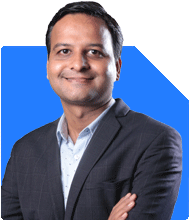
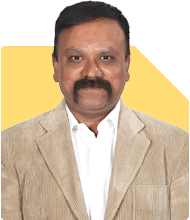
Ulhas

Ulhas Joshi  |284 Answers  |Ask -

Mutual Fund Expert - Answered on Jun 02, 2023

With over 16 years of experience in the mutual fund industry, Ulhas Joshi has helped numerous clients choose the right funds and create wealth.
Prior to joining RankMF as CEO, he was vice president (sales) at IDBI Asset Management Ltd.
Joshi holds an MBA in marketing from Barkatullah University, Bhopal.... more

Mirza Question by Mirza on Jun 02, 2023Hindi
Listen
Money

How is my portfolio do you recommend any changes. 1.parag parikh flexi cap 2.nippon small cap 3.sbi blue chip direct pkan 4.kotak small cap. 5.dsp nifty 50

Ans: Hello Mirza and thanks for writing to me. You have 2 Small Cap oriented funds and 1 Index Fund.

You can consider continuing to invest in Kotal Small Cap, pause investments in DSP Nifty 50 and begin investing in Edelweiss NIFTY 100 Quality 30 Index Fund, pause investments in Nippon Small Cap Fund and begin investing in SBI Focused Equity Fund.
DISCLAIMER: The content of this post by the expert is the personal view of the rediffGURU. Users are advised to pursue the information provided by the rediffGURU only as a source of information to be as a point of reference and to rely on their own judgement when making a decision.
Money

You may like to see similar questions and answers below

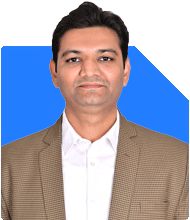
Ramalingam

Ramalingam Kalirajan  |11151 Answers  |Ask -

Mutual Funds, Financial Planning Expert - Answered on Aug 04, 2025

Asked by Anonymous - Jul 09, 2025Hindi
Money
Sir please review my portfolio.time horizon long term 15 to 20 yr Monthly: 1: Nippon india large cap fund direct 1500 2: Hdfc midcap opportunity direct 1000 3: Motilal Oswal midcap direct 1000 4: Parag parikh flexi cap direct 1000 5: Bandhan small cap direct 1000 6: Nippon india small cap 1000
Ans: Your SIP plan shows thoughtful diversification. You’ve selected a variety of fund categories. That’s a very good starting point. You have made the effort to start early with long-term goals. And you’re consistent across market segments. Let’s now assess your mutual fund portfolio thoroughly.

» Portfolio Composition and Allocation

– You are investing Rs. 6,500 per month across six funds.
– You have included large cap, mid cap, small cap, and flexi cap funds.
– Allocation is well spread but can be more focused.
– Monthly SIP amounts are relatively small but consistent.
– As your income grows, step up SIPs regularly by 10-15% annually.
– You have 2 small cap funds and 2 mid cap funds. That is too much overlap.

» Assessment of Large Cap Exposure

– One fund is in the large cap space.
– Large caps offer stability in the portfolio.
– Allocation of Rs. 1,500 is around 23% of your SIP.
– This is decent for now, but can be increased slowly.
– Large caps are less volatile and can act as a cushion in down markets.

» Evaluation of Mid Cap Exposure

– You have chosen two mid cap funds.
– Rs. 2,000 goes to mid cap category every month.
– Mid caps offer growth but are more volatile than large caps.
– Duplication in mid cap funds may cause redundancy.
– One well-managed mid cap fund is enough.
– Having two mid cap funds with similar strategy is unnecessary.

» Review of Small Cap Allocation

– Two small cap funds make up Rs. 2,000 SIP.
– This is a high-risk-high-reward segment.
– Too much small cap exposure increases volatility.
– For a conservative long-term approach, one small cap is enough.
– Small caps fall more in bear markets.
– Consider gradually reducing exposure to one fund only.

» Flexi Cap Fund Role in Your Plan

– You’ve added one flexi cap fund with Rs. 1,000 SIP.
– These funds allow fund managers to invest across categories.
– This adds balance and flexibility to the portfolio.
– Continue this allocation and consider increasing over time.
– Flexi caps can adjust based on market conditions.
– They support both stability and growth.

» Overlap and Redundancy Concerns

– Having six funds with Rs. 1,000 to Rs. 1,500 each creates unnecessary spread.
– This causes duplication in underlying stocks.
– Multiple mid cap and small cap funds will have same holdings.
– Excess diversification reduces overall impact.
– Fewer but stronger funds perform better in long run.
– 3 to 4 carefully chosen funds are enough at this stage.

» Suggestion on Streamlining Portfolio

– Keep one each from large, mid, small, and flexi cap.
– Exit one mid cap and one small cap fund after checking 3-year performance.
– Stick to consistent performing funds, not recent winners.
– Avoid theme-based or momentum-style funds.

» Long-Term Suitability and Growth Potential

– Your 15 to 20-year horizon allows compounding to work.
– Equity funds are suitable for such a timeframe.
– You may see market ups and downs, stay invested.
– Long-term SIPs in good funds beat most fixed-income returns.
– Patience is the key in equity investing.

» Step-Up SIP and Top-Up Advice

– Your current SIP total is Rs. 6,500.
– If possible, increase it by Rs. 500 to Rs. 1,000 each year.
– Use bonuses or increments to top-up.
– Regular step-up builds a larger corpus with minimal pain.

» On Choosing Between Direct and Regular Plans

– All your funds are direct plans.
– Direct plans seem cheaper due to lower expense ratio.
– But you miss personalised advice and periodic rebalancing.
– Monitoring fund performance needs skill and time.
– Mistakes in fund choice or timing can erode gains.
– A regular plan through a qualified CFP and MFD adds guidance.
– CFPs bring deep analysis, strategy, and handholding in downturns.
– They also suggest fund switches and portfolio consolidation when required.
– With MFD, you can track everything in one place.
– You’ll save more by avoiding wrong decisions than the 1% fee.

» Taxation Understanding for Long-Term Equity SIPs

– As per new rule, LTCG above Rs. 1.25 lakh taxed at 12.5%.
– STCG taxed at 20%.
– Equity SIPs become long term after 1 year holding.
– Plan redemptions strategically to reduce tax.
– Do not withdraw all at once. Use staggered exit.
– Tax planning should be part of long-term SIP journey.

» Additional Suggestions to Make Portfolio Stronger

– Have 1 emergency fund worth 6 months’ expenses in liquid or overnight fund.
– Ensure adequate term insurance based on income.
– Take separate health cover apart from employer’s policy.
– Avoid investing in traditional insurance or ULIP plans.
– Review your funds once a year, not more.
– Don’t stop SIPs during market crash; continue or increase if possible.
– Set clear goals like retirement, house, or child education.
– Link SIPs to those goals and track progress every year.

» Behavioral Discipline and Emotional Control

– Stay calm during market falls.
– Don’t switch funds based on short-term returns.
– Don’t compare funds monthly.
– Don’t try to time the market.
– SIP works because it removes emotion.
– Stay focused on long-term growth, not monthly NAV.

» Final Insights

– You have done a great job starting early.
– You’ve picked decent funds from all major categories.
– Too many similar funds will not give extra return.
– Simplify your plan with 3 or 4 funds max.
– Consider regular plans with CFP guidance for better strategy.
– Stay invested, review yearly, and keep increasing SIP.
– Over 15 to 20 years, this approach can build significant wealth.

Best Regards,
K. Ramalingam, MBA, CFP,
Chief Financial Planner,
www.holisticinvestment.in
https://www.youtube.com/@HolisticInvestment

..Read more

Ramalingam

Ramalingam Kalirajan  |11151 Answers  |Ask -

Mutual Funds, Financial Planning Expert - Answered on Apr 01, 2026

Money
Sir, kindly review my portfolio and suggest. I have HDFC Flexi cap dir-6000, ICICI large cap dir-5000, HDFC Mid cap dir-4500, Bandhan small cap dir-4000, Kotak multi asset omni FOF-2000, ICICI pharma fund-2000. Total: 23500/month
Ans: Your portfolio shows very good intent and discipline. You are investing across large, mid, small, flexi-cap, sector and multi-asset categories. This is a strong step towards long-term wealth creation. Many investors do not reach this level of diversification early. Your monthly SIP of Rs 23,500 is meaningful and powerful if continued with patience.

Still, some refinements can improve stability, balance and long-term comfort.

» Overall Portfolio Structure Assessment

Your allocation currently includes:

– One flexi-cap fund
– One large-cap fund
– One mid-cap fund
– One small-cap fund
– One pharma sector fund
– One multi-asset fund of funds

This structure shows:

– Good exposure to growth segments
– Some diversification across market capitalisation
– Exposure to one defensive sector
– Exposure to asset allocation through multi-asset route

However:

– Mid-cap + small-cap exposure together is slightly on the higher side
– Sector fund exposure adds concentration risk
– Multi-asset fund of funds gives indirect diversification but may reduce efficiency

Portfolio is growth-oriented. That is good if your time horizon is long.

» Allocation Strengths

Your portfolio has several positives:

– Flexi-cap fund provides dynamic allocation across market segments
– Large-cap fund adds stability during market corrections
– Mid-cap fund supports long-term growth
– Small-cap fund supports wealth creation over long horizon
– Pharma fund provides defensive support during economic slowdowns
– Multi-asset fund adds some diversification across asset classes

This shows thoughtful selection.

» Areas Where Improvement Is Possible

There are three improvement opportunities:

Sector exposure risk

Sector funds move in cycles. Pharma sector may underperform for long periods.

Suggestion:

– Limit sector exposure to a smaller portion of total SIP
– Avoid increasing allocation further

Mid + small cap combined exposure

Mid-cap and small-cap together form a large portion of portfolio risk.

These categories:

– perform strongly in bull markets
– fall faster during corrections

Balancing them improves comfort.

Fund-of-funds structure limitation

Multi-asset fund of funds invests through other funds.

This creates:

– extra layer of cost
– slower response to market opportunities
– lower flexibility compared to direct multi-asset strategy funds

» Important Observation About Direct Plan Investing

You are investing through direct plans. Many investors think direct plans always give better outcomes because expenses are lower. But there are practical challenges:

– No structured review support
– No allocation correction guidance during market cycles
– No behaviour management during corrections
– No tax planning integration with investments
– No retirement income strategy alignment
– No risk rebalancing support

Over long periods, many investors make switching mistakes without professional monitoring.

Regular plans through an MFD working along with a Certified Financial Planner help investors:

– stay disciplined
– rebalance properly
– avoid emotional decisions
– align investments with goals
– adjust allocation when life situations change

Expense difference often becomes less important than correct strategy.

» Suggested Allocation Refinement Strategy

Instead of changing everything, gradual adjustment is better.

Possible improvements:

– Keep flexi-cap as core holding
– Keep large-cap as stability anchor
– Maintain mid-cap exposure but control size
– Reduce small-cap slightly if risk tolerance is moderate
– Limit sector allocation exposure
– Review whether multi-asset exposure is required or can be simplified

Goal is balance between:

– growth
– stability
– flexibility
– risk control

» Role of Time Horizon in Your Portfolio

If your investment horizon is:

Less than 5 years:

– reduce mid-cap
– reduce small-cap
– reduce sector exposure

More than 7–10 years:

– current structure can work with minor tuning

Time horizon decides allocation quality.

» Importance of Goal Linking

Portfolio becomes stronger when linked with goals such as:

– retirement planning
– children education
– wealth creation
– emergency corpus
– healthcare reserve

Without goal mapping:

portfolio may look diversified but may not be efficient.

A Certified Financial Planner helps align SIP structure with life goals.

» Risk Control Through Periodic Rebalancing

Every 12 months portfolio should be reviewed for:

– market movement impact
– sector overweight positions
– mid/small-cap valuation levels
– asset allocation drift

This keeps risk under control without stopping SIP.

» Finally

You already built a strong SIP structure. That itself is a major strength. With small allocation correction and professional monitoring support, your portfolio can become more stable and more goal-oriented over time.

Best Regards,

K. Ramalingam, MBA, CFP,

Chief Financial Planner,

www.holisticinvestment.in

https://www.linkedin.com/in/ramalingamcfp/

..Read more

Latest Questions
Ramalingam

Ramalingam Kalirajan  |11151 Answers  |Ask -

Mutual Funds, Financial Planning Expert - Answered on Apr 22, 2026

Money
If I want to withdraw 1.5 lac per month, which SWP is better and how much should I invest in it?
Ans: It is very good that you are planning SWP (Systematic Withdrawal Plan) in advance. Planning monthly income properly helps protect your capital and gives stable cash flow.

To withdraw Rs 1.5 lakh per month, the correct SWP structure depends mainly on:

– your age
– investment horizon
– whether income is required lifelong or for limited years
– existing retirement corpus
– risk tolerance

Still, I will guide you with a practical structure that suits most long-term SWP income needs.

» How much investment is required to withdraw Rs 1.5 lakh per month

Normally, safe SWP withdrawal rate should be around:

– 6% yearly for very safe structure
– 7% yearly for balanced structure
– 8% yearly for growth-oriented structure

Based on this:

Approximate investment required:

– Conservative structure: around Rs 3 crore
– Balanced structure: around Rs 2.5 crore
– Growth-oriented structure: around Rs 2.25 crore

This allows income sustainability without early capital depletion.

If withdrawal period is limited (example 15 years), required corpus may be lower.

If income required lifelong, higher corpus is safer.

» Which mutual fund categories are best for SWP income

Best SWP income normally comes from a combination approach.

Ideal structure:

– 40% Multi asset allocation category fund
– 30% Balanced advantage category fund
– 20% Flexi cap category fund
– 10% Short duration debt category fund

This structure provides:

– income stability
– inflation protection
– market downside control
– long-term capital sustainability

Avoid using only pure equity category funds for SWP.

Avoid using only debt category funds also because inflation reduces value.

Combination approach works best.

» Why multi asset allocation category fund works well for SWP

This category invests across:

– equity
– debt
– gold

It adjusts allocation automatically and supports stable withdrawal planning.

Very suitable for retirement-style monthly income planning.

» Tax efficiency advantage of SWP

SWP is more tax-efficient compared to interest income.

Because:

– only capital gain portion is taxed
– equity mutual fund LTCG above Rs 1.25 lakh taxed at 12.5%
– debt fund gains taxed as per income slab

So proper category selection improves post-tax income.

» How to structure SWP correctly

Better approach:

– keep 2 years withdrawal amount in short duration debt category fund
– keep remaining corpus in multi asset + balanced advantage category funds
– review once per year
– increase withdrawal gradually based on inflation

This protects income continuity during market corrections.

» Important preparation before starting SWP

Before starting SWP ensure:

– emergency fund available separately
– health insurance active
– no high-interest loans pending
– nominee details updated

These steps protect retirement income stability.

» Finally

To withdraw Rs 1.5 lakh monthly comfortably, target corpus should ideally be between Rs 2.25 crore and Rs 3 crore depending on risk level.

Use combination of multi asset, balanced advantage, flexi cap and short duration debt category funds instead of relying on a single category. This improves income stability and protects capital for long-term sustainability.

Best Regards,

K. Ramalingam, MBA, CFP,

Chief Financial Planner,

www.holisticinvestment.in

https://www.linkedin.com/in/ramalingamcfp/

...Read more

Nayagam P

Nayagam P P  |11050 Answers  |Ask -

Career Counsellor - Answered on Apr 22, 2026

Career
Namaskar, My son has got 93.60 percentile in JEE mains 2026 with General rank 100144 and OBC NCL rank 32618. I request you to kindly guide me can he get admission in SGSITS, Indore in CSE / IT / ETC branch having MP domicile or any other better option as per your recommendation.
Ans: Govind Sir, With 93.60 percentile, CRL 1,00,144 and OBC-NCL rank 32,618 (MP domicile), your son should try both MP BE counselling and JoSAA. For SGSITS Indore, recent MP-counselling data show General home-state closing ranks around CSE 18,410, IT 37,589, ETC 48,484 in 2025, so CSE looks difficult, IT is borderline, and ETC appears the most realistic; OBC-MP quota may improve chances somewhat. For JoSAA, at OBC 32,618, expect mainly lower-demand branches in mid/lower NITs, IIITs and GFTIs, not CSE/IT in top institutes. My recommendation: SGSITS ETC/IT first, then good MP colleges like IET-DAVV/JEC, while keeping JoSAA + CSAB as backup. (I suggest you also cross-check the JoSAA opening and closing ranks data from the last 2–3 years before filling in the maximum number of your son’s preferred institutions and branches during counselling). ALL the BEST for Your Son's Prosperous Future!

Follow RediffGURUS to Know More on 'Careers | Money | Health | Relationships'.

...Read more

DISCLAIMER: The content of this post by the expert is the personal view of the rediffGURU. Investment in securities market are subject to market risks. Read all the related document carefully before investing. The securities quoted are for illustration only and are not recommendatory. Users are advised to pursue the information provided by the rediffGURU only as a source of information and as a point of reference and to rely on their own judgement when making a decision. RediffGURUS is an intermediary as per India's Information Technology Act.

Close  

You haven't logged in yet. To ask a question, Please Log in below
Login

A verification OTP will be sent to this
Mobile Number / Email

Enter OTP
A 6 digit code has been sent to

Resend OTP in120seconds

Dear User, You have not registered yet. Please register by filling the fields below to get expert answers from our Gurus
Sign up

By signing up, you agree to our
Terms & Conditions and Privacy Policy

Already have an account?

Enter OTP
A 6 digit code has been sent to Mobile

Resend OTP in120seconds

x