Home > Money > Question
Need Expert Advice?Our Gurus Can Help

Samraat

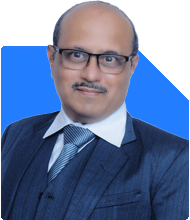
Samraat Jadhav  |2507 Answers  |Ask -

Stock Market Expert - Answered on Jun 04, 2025

Samraat Jadhav is the founder of Prosperity Wealth Adviser.
He is a SEBI-registered investment and research analyst and has over 18 years of experience in managing high-end portfolios.
A management graduate from XLRI-Jamshedpur, Jadhav specialises in portfolio management, investment banking, financial planning, derivatives, equities and capital markets.... more
Asked by Anonymous - Jun 04, 2025

Money

Hello Sir, I m currently 39 years old with close to 80 L debt in loans which comprises of OD Loan, Personal Loan and Home Loan. With other card outstanding of 20 L. I have occured losses in Options Trading in past 16 months. I am working in a private organization earning around 2L/ month. How can i come out of this. Please suggest !

Ans: Managing debt can feel overwhelming, but with a structured approach, you can work towards financial stability. Here are some steps to consider:

1. Assess Your Financial Situation
- List all your debts, including interest rates and repayment terms.
- Identify essential expenses and areas where you can cut costs.

2. Prioritize Debt Repayment
- Focus on high-interest debts first (like credit cards and personal loans).
- Consider the snowball method (paying off smaller debts first) or the avalanche method (paying off high-interest debts first).

3. Negotiate with Lenders
- Contact banks and financial institutions to discuss restructuring options.
- Request lower interest rates or extended repayment periods.

4. Debt Consolidation
- Explore options to consolidate multiple loans into a single lower-interest loan.
- This can simplify payments and reduce overall interest costs.

5. Increase Income Streams
- Consider freelancing, consulting, or passive income sources.
- Upskill to improve job prospects and salary growth.

6. Avoid Further Debt
- Pause options trading until financial stability is achieved.
- Limit unnecessary expenses and avoid new loans.
7. Seek Professional Help
- Financial advisors or debt management firms can provide tailored strategies.
- Organizations like SingleDebt offer expert debt management services in India
DISCLAIMER: The content of this post by the expert is the personal view of the rediffGURU. Users are advised to pursue the information provided by the rediffGURU only as a source of information to be as a point of reference and to rely on their own judgement when making a decision.
Money

You may like to see similar questions and answers below

Ramalingam

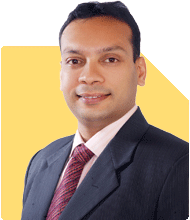
Ramalingam Kalirajan  |10881 Answers  |Ask -

Mutual Funds, Financial Planning Expert - Answered on Jun 02, 2025

Asked by Anonymous - May 14, 2025Hindi
Money
I made very huge mistake, first I started trading in share market without knowledge and lost 1.5Cr last yr all on loan and now again 70L gone in Forex and crypto this year. I hv a salary of 2.27 monthly all goes in EMI and intrest. I am trapped in the loans and finding it very stressful. I should hv taken calculated risk instead of risking everything including my family future. Total 2.25Cr outstanding loan with average intrest of 13% Please suggest how to get out of this trap.
Ans: You have total outstanding loans of Rs. 2.25 crore.

The average interest rate is high at 13%.

Your monthly salary of Rs. 2.27 lakh is going towards EMIs and interest.

Losses from trading in share market, forex, and crypto are significant.

It’s natural to feel stressed and regretful.

Appreciate your honesty and willingness to correct this.

Let’s plan a path to reduce stress and regain financial stability.

Immediate Steps for Debt Management
First, list down all loans with outstanding amounts and EMIs.

Include interest rates and remaining tenure for each loan.

Focus on paying off high-interest loans first.

Avoid further loans or borrowing for investments.

Do not enter forex, crypto, or high-risk trading again.

A Certified Financial Planner can help restructure your debt.

Explore Loan Restructuring Options
Speak to lenders to restructure your loans.

Request for extended tenures to reduce EMI burden.

Try to negotiate lower interest rates if possible.

Banks may allow temporary moratoriums in genuine hardship cases.

Always explain your situation honestly to lenders.

Create a Practical Monthly Budget
List all essential monthly expenses: rent, food, utilities, children’s needs.

Allocate minimum for discretionary expenses like entertainment.

Whatever is left should go towards loan EMIs and savings.

Track expenses closely to avoid leaks.

Increase Income Wherever Possible
Explore part-time work or freelance projects for extra income.

Any additional money should go to paying down high-interest loans.

Avoid using extra income for new risky investments.

Avoid High-Risk Trading and Speculative Investments
You lost large amounts due to unplanned trades and speculation.

Trading without knowledge is dangerous and not reliable for wealth building.

Stop forex and crypto trading entirely.

Stocks can be risky if not managed well.

Prefer regulated instruments like mutual funds managed by professionals.

Certified Financial Planners recommend actively managed mutual funds for steady growth.

Systematic Investment in Mutual Funds
Avoid direct equity investments without proper knowledge.

Mutual funds managed by professionals can help build wealth steadily.

Regular mutual fund investments through a CFP ensure a disciplined approach.

Actively managed funds try to beat the market, unlike index funds.

Index funds only copy the market; they don’t adapt to changes.

Regular mutual fund investments via CFP are better than direct funds.

Direct funds lack ongoing guidance and emotional support during volatility.

Protecting Your Family’s Financial Future
Ensure your family’s basic needs and future goals are safeguarded.

Health insurance for your family is a must to avoid medical shocks.

If you have dependents, get term insurance for life protection.

Avoid mixing insurance and investment in one policy.

Work with a Certified Financial Planner
A CFP can create a detailed debt repayment plan.

They will help with loan restructuring and prioritising payments.

They can plan your investments for safety and long-term growth.

They give unbiased advice and guide you through financial decisions.

Psychological and Emotional Support
Financial stress can be heavy on your mind.

Speak to family or trusted friends to ease the emotional burden.

Seek professional help if stress feels unmanageable.

Remember, mistakes happen but taking corrective steps is key.

Steps to Control Spending and Improve Cash Flow
Limit lifestyle expenses to bare essentials.

Cut out luxury or non-essential spending completely.

Use budgeting tools to monitor every rupee spent.

Keep a record of income and outflows for better visibility.

Loan Consolidation as an Option
Consider consolidating high-interest loans into one lower-interest loan.

This may help reduce EMI burden and simplify repayments.

Discuss with a CFP or bank for consolidation feasibility.

Always read terms carefully before consolidating.

Long-Term Approach to Rebuild Wealth
Wealth rebuilding will take time, but discipline and patience are vital.

Set realistic long-term goals for retirement, children’s education, and other needs.

Use disciplined, systematic investments to meet these goals.

Avoid short-term get-rich schemes.

Avoid Future Pitfalls
Do not chase risky investments or get-rich-quick schemes again.

Avoid unsolicited tips or social media financial influencers.

Stick to safe, professionally managed investments.

Don’t invest borrowed money in stock markets or crypto.

Building a Financial Safety Net
Slowly build an emergency fund in savings or liquid mutual funds.

Emergency fund should cover 6-12 months of expenses.

This buffer helps avoid future debt traps.

Final Insights
You have faced tough financial setbacks.

Appreciate your courage in seeking solutions now.

Work with a Certified Financial Planner to prioritise loan repayment.

Avoid risky trades and focus on building a secure, steady future.

Discipline, realistic goals, and professional advice are your tools to recover.

Financial stability will take time but it is possible with these steps.

Best Regards,

K. Ramalingam, MBA, CFP,

Chief Financial Planner,

www.holisticinvestment.in

https://www.youtube.com/@HolisticInvestment

..Read more

Latest Questions
Nayagam P

Nayagam P P  |10854 Answers  |Ask -

Career Counsellor - Answered on Dec 14, 2025

Asked by Anonymous - Dec 12, 2025Hindi
Career
Hello, I am currently in Class 12 and preparing for JEE. I have not yet completed even 50% of the syllabus properly, but I aim to score around '110' marks. Could you suggest an effective strategy to achieve this? I know the target is relatively low, but I have category reservation, so it should be sufficient.
Ans: With category reservation (SC/ST/OBC), a score of 110 marks is absolutely achievable and realistic. Based on 2025 data, SC candidates qualified with approximately 60-65 percentile, and ST candidates with 45-55 percentile. Your target requires scoring just 37-40% marks, which is significantly lower than general category standards. This gives you a genuine advantage. Immediate Action Plan (December 2025 - January 2026): 4-5 Weeks. Week 1-2: High-Weightage Chapter Focus. Stop trying to complete the entire syllabus. Instead, focus exclusively on high-scoring chapters that carry maximum weightage: Physics (Modern Physics, Current Electricity, Work-Power-Energy, Rotation, Magnetism), Chemistry (Chemical Bonding, Thermodynamics, Coordination Compounds, Electrochemistry), and Maths (Integration, Differentiation, Vectors, 3D Geometry, Probability). These chapters alone can yield 80-100+ marks if practiced properly. Ignore topics you haven't studied yet. Week 2-3: Previous Year Questions (PYQs). Solve JEE Main PYQs from the last 10 years (2015-2025) for chapters you're studying. PYQs reveal question patterns and difficulty levels. Focus on understanding why answers are correct, not memorizing solutions. Week 3-4: Mock Tests & Error Analysis. Take 2-3 full-length mock tests weekly under timed conditions. This is crucial because mock tests build exam confidence, reveal time management weaknesses, and error analysis prevents repeated mistakes. Maintain an error notebook documenting every mistake—this becomes your revision guide. Week 4-5: Revision & Formula Consolidation. Create concise formula sheets for each subject. Spend 30 minutes daily reviewing formulas and key concepts. Avoid learning new topics entirely at this stage. Study Schedule (Daily): 7-8 Hours. Morning (5:00-7:30 AM): Physics concepts + 30 PYQs. Break (7:30-8:30 AM): Breakfast & rest. Mid-morning (8:30-11:00): Chemistry concepts + 20 PYQs. Lunch (11:00-1:00 PM): Full break. Afternoon (1:00-3:30 PM): Maths concepts + 30 PYQs. Evening (3:30-5:00 PM): Mock test or error review. Night (7:00-9:00 PM): Formula revision & weak area focus. Strategic Approach for 110 Marks: Attempt only confident questions and avoid negative marking by skipping difficult questions. Do easy questions first—in the exam, attempt all basic-level questions before attempting medium or hard ones. Focus on quality over quantity as 30 well-practiced questions beat 100 random questions. Master NCERT concepts as most JEE questions test NCERT concepts applied smartly. April 2026 Session Advantage. If January doesn't deliver desired results, April gives you a second chance with 3+ months to prepare. Use January as a practice attempt to identify weak areas, then focus intensively on those in February-March. Realistic Timeline: January 2026 target is 95-110 marks (achievable with focused 50% syllabus), while April 2026 target is 120-130 marks (with complete syllabus + experience). Your reservation benefit means you need only approximately 90-105 marks to qualify and secure admission to quality engineering colleges. Stop comparing yourself to general category cutoffs. Most Importantly: Consistency beats perfection. Study 6 focused hours daily rather than 12 distracted hours. Your 110-mark target is realistic—execute this plan with discipline. All the BEST for Your JEE 2026!

Follow RediffGURUS to Know More on 'Careers | Money | Health | Relationships'.

...Read more

Dr Dipankar

Dr Dipankar Dutta  |1840 Answers  |Ask -

Tech Careers and Skill Development Expert - Answered on Dec 13, 2025

Asked by Anonymous - Dec 12, 2025
Career
Dear Sir/Madam, I am currently a 1st year UG student studying engineering in Sairam Engineering College, But there the lack of exposure and strict academics feels so rigid and I don't like it that. It's like they don't gaf about skills but just wants us to memorize things and score a good CGPA, the only skill they want is you to memorize things and pass, there's even special class for students who don't perform well in academics and it is compulsory for them to attend or else the student and his/her parents needs to face authorities who lashes out. My question is when did engineering became something that requires good academics instead of actual learning and skill set. In sairam they provides us a coding platform in which we need to gain the required points for each semester which is ridiculous cuz most of the students here just look at the solution to code instead of actual debugging. I am passionate about engineering so I want to learn and experiment things instead of just memorizing, so I actually consider dropping out and I want to give jee a try and maybe viteee , srmjeee But i heard some people say SRM may provide exposure but not that good in placements. I may not be excellent at studies but my marks are decent. So gimme some insights about SRM and recommend me other colleges/universities which are good at exposure
Ans: First — your frustration is valid

What you are experiencing at Sairam is not engineering, it is rote-based credential production.

“When did engineering become memorizing instead of learning?”

Sadly, this shift happened decades ago in most Tier-3 private colleges in India.

About “coding platforms & points” – your observation is sharp

You are absolutely right:

Mandatory coding points → students copy solutions

Copying ≠ learning

Debugging & thinking are missing

This is pseudo-skill education — it looks modern but produces shallow engineers.

The fact that you noticed this in 1st year already puts you ahead of 80% students.

Should you DROP OUT and prepare for JEE / VITEEE / SRMJEEE?

Although VIT/SRM is better than Sairam Engineering College, but you may face the same problem. You will not face this type of problem only in some top IITs, but getting seat in those IITs will be difficult.
Instead of dropping immediately, consider:

???? Strategy:

Stay enrolled (degree security)

Reduce emotional investment in college rules

Use:

GitHub

Open-source projects

Hackathons

Internships (remote)

Hardware / software self-projects

This way:

College = formality

Learning = self-driven

Risk = minimal

...Read more

DISCLAIMER: The content of this post by the expert is the personal view of the rediffGURU. Investment in securities market are subject to market risks. Read all the related document carefully before investing. The securities quoted are for illustration only and are not recommendatory. Users are advised to pursue the information provided by the rediffGURU only as a source of information and as a point of reference and to rely on their own judgement when making a decision. RediffGURUS is an intermediary as per India's Information Technology Act.

Close  

You haven't logged in yet. To ask a question, Please Log in below
Login

A verification OTP will be sent to this
Mobile Number / Email

Enter OTP
A 6 digit code has been sent to

Resend OTP in120seconds

Dear User, You have not registered yet. Please register by filling the fields below to get expert answers from our Gurus
Sign up

By signing up, you agree to our
Terms & Conditions and Privacy Policy

Already have an account?

Enter OTP
A 6 digit code has been sent to Mobile

Resend OTP in120seconds

x