Home > Money > Question
Need Expert Advice?Our Gurus Can Help

Should I Increase My SIP Amount or Start New SIPs?

Ramalingam

Ramalingam Kalirajan  |11056 Answers  |Ask -

Mutual Funds, Financial Planning Expert - Answered on Jul 19, 2024

Ramalingam Kalirajan has over 23 years of experience in mutual funds and financial planning.
He has an MBA in finance from the University of Madras and is a certified financial planner.
He is the director and chief financial planner at Holistic Investment, a Chennai-based firm that offers financial planning and wealth management advice.... more
Asked by Anonymous - Jul 14, 2024Hindi

Listen
Money

Hello there. I am 27 years as on date and in a profession. I have started investing since the age of 25 with an SIP of Rs 5k and now I am investing 12.5k in 3 different mutual funds- SBI Hybrid Equity, SBI Large and Mid Cap and lastly SBI Bluechip funds. I am thinking of investing for another 20 years.

Ans: Current Financial Overview
You are 27 years old and have been investing since 25.

You are currently investing Rs 12.5k per month in three mutual funds.

These funds are SBI Hybrid Equity, SBI Large and Mid Cap, and SBI Bluechip funds.

You plan to invest for the next 20 years.

Assessing Your Current Investments
Mutual Fund Allocation
SBI Hybrid Equity Fund: Balances equity and debt, offering growth with reduced risk.

SBI Large and Mid Cap Fund: Invests in large and mid-cap stocks, providing a mix of stability and growth potential.

SBI Bluechip Fund: Focuses on large-cap companies, offering stability and steady returns.

Investment Strategy
Diversification
Equity Diversification: Your current funds offer a good mix of large, mid-cap, and hybrid investments.

Adding Sectoral and Thematic Funds: Consider allocating a small portion to sectoral or thematic funds. This adds diversity and growth potential.

SIPs (Systematic Investment Plans)
Increase SIP Amounts: Gradually increase your SIP amounts as your income grows. This boosts your investment corpus over time.

Consistency: Continue investing consistently. SIPs benefit from rupee cost averaging and compounding.

Additional Investment Options
Debt Mutual Funds
Stability and Safety: Consider investing in debt mutual funds. They provide stability and act as a cushion during market volatility.

Allocation: Allocate a portion, say Rs 2.5k monthly, to debt funds for a balanced portfolio.

Index Funds
Active Funds Over Index Funds: Index funds passively track market indices. Actively managed funds often outperform them due to expert management.

Advantages of Active Funds: Actively managed funds can adapt to market changes and provide higher returns over time.

Regular Funds vs Direct Funds
Direct Funds Disadvantages: Direct funds require more active management and market knowledge. They may not be suitable for all investors.

Benefits of Regular Funds: Regular funds offer professional advice and management through MFDs and CFPs. This can help optimize returns and manage risks.

Tax Planning
ELSS Funds
Tax Benefits: Consider investing in ELSS funds. They offer tax deductions under Section 80C and provide equity exposure.
Building an Emergency Fund
Liquidity: Maintain an emergency fund equal to 6-12 months of expenses. This ensures liquidity during unforeseen events.
Insurance Coverage
Health Insurance
Adequate Cover: Ensure you have adequate health insurance coverage for yourself and dependents. This protects against high medical expenses.
Term Insurance
Life Cover: Consider a term insurance plan. It offers financial security to your dependents in case of unforeseen events.
Regular Review
Annual Financial Review
Portfolio Assessment: Review your portfolio annually. Adjust your investments based on performance and changing financial goals.

Rebalancing: Rebalance your portfolio periodically to maintain the desired asset allocation.

Final Insights
Your current investment strategy is on the right track. Continue investing in diversified equity and hybrid funds. Consider adding debt mutual funds for stability. Increase SIP amounts gradually and maintain an emergency fund. Ensure adequate insurance coverage and review your portfolio regularly.

Best Regards,

K. Ramalingam, MBA, CFP,

Chief Financial Planner,

www.holisticinvestment.in
DISCLAIMER: The content of this post by the expert is the personal view of the rediffGURU. Users are advised to pursue the information provided by the rediffGURU only as a source of information to be as a point of reference and to rely on their own judgement when making a decision.
Money

You may like to see similar questions and answers below
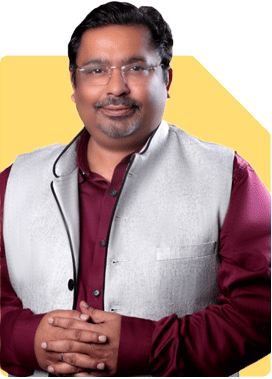
Ramalingam

Ramalingam Kalirajan  |11056 Answers  |Ask -

Mutual Funds, Financial Planning Expert - Answered on May 20, 2024

Asked by Anonymous - May 13, 2024Hindi
Listen
Money
Hi. I'm 30years old with monthly salary of 60k. Having said, I have savings of 5L in hand and not had any investment so far in mutual fund. Having 2 child to take care with their education after 20 years. Need of advice on where to start in mutual fund. My risk appetite is moderate to high but don't know which fund to choose for long term investment. As well as I need of assured corpus of Rs.1 crore after 12 years to support my investment horizon along with my salary for rest of 8 years as I don't think my salary alone will be suffice to meet the investment journey. Also after 12 years need of an advice on how to get monthly income out of some portion of 1crore to manage family with it and save all my salary to mutual fund. I also want to know what will be the average return I will be getting based on your suggestion with all plannings as I said above after 20years
Ans: Your commitment to securing your family's future and achieving financial stability is commendable. Let's outline a strategic mutual fund investment plan tailored to your goals, risk appetite, and investment horizon.

Assessing Your Financial Goals and Risk Profile
At 30, with a moderate to high risk appetite, you're well-positioned to embark on a long-term investment journey. Your primary objectives include building a substantial corpus for your children's education in 20 years and securing a corpus of ?1 crore in 12 years for additional financial support.

Structuring Your Mutual Fund Portfolio
Given your investment horizon and risk tolerance, a diversified portfolio of equity and debt mutual funds is recommended. Equity funds offer growth potential, while debt funds provide stability and income generation. Here's a suggested allocation:

Equity Funds: Allocate a significant portion of your investment, considering your moderate to high-risk appetite. Choose a mix of large-cap, mid-cap, and small-cap funds for diversification and potential returns.

Debt Funds: Allocate a portion of your portfolio to debt funds to mitigate risk and generate stable returns. Opt for a combination of short-term, medium-term, and long-term debt funds based on your risk preference.

Planning for Future Income Streams
After 12 years, when you aim to secure a corpus of ?1 crore, consider investing a portion of this amount in a combination of dividend-paying mutual funds and systematic withdrawal plans (SWPs). This strategy will provide you with a regular monthly income stream while preserving the principal amount for long-term growth.

Estimating Average Returns
While it's challenging to predict exact returns, a well-diversified mutual fund portfolio targeting a moderate to high-risk profile can potentially generate average returns ranging from 10% to 12% annually over the long term. However, returns may vary depending on market conditions and fund performance.

Emphasizing Discipline and Review
Consistency and discipline are key to achieving your financial goals. Review your portfolio regularly, monitor fund performance, and make adjustments as needed to stay aligned with your objectives. Consider consulting with a Certified Financial Planner to fine-tune your strategy and navigate market fluctuations effectively.

Conclusion
In conclusion, a strategic mutual fund investment plan tailored to your financial goals, risk profile, and investment horizon can pave the way for long-term wealth creation and financial security. By diversifying your portfolio, planning for future income streams, and maintaining discipline, you can work towards achieving your objectives and securing your family's future.

Best Regards,

K. Ramalingam, MBA, CFP,

Chief Financial Planner,

www.holisticinvestment.in

..Read more

Latest Questions
Ramalingam

Ramalingam Kalirajan  |11056 Answers  |Ask -

Mutual Funds, Financial Planning Expert - Answered on Mar 07, 2026

Asked by Anonymous - Mar 07, 2026Hindi
Money
Hi Sir, Im from Bangalore, I work in IT My monthly in hand salary post deductions 1.09L, Ive a kid who is 3 years old and my wife is home maker. I would like to known if my apporach of savings/investements to be changed little bit to maximize savings and accumulate amount for my kid higher education and house purchasing. My monthly expenses and savings as below Rent: 12k House hold exp:15k My savings: SIP Mutual funds: im doing it both on my name as well as my wife name, On My name: monthly 14k( accumulated so far 3.18L) On My wife name: Monthly 6k( Accumualated sonfar 68k) Ive stocks investments of about 2.30lakhs I do RD of 20k Ive cheeti every month 20k( will be completed in 2 months and i get 4 lakhs) Sukanya samridhi yogana: 3.5k( so far accumulated 75k) Ive emergency fund of 3lakhs And everymonth I save 8k in liquid fund for my child school fees i use this accumulated amount for every next year school fees 4k every month savings for LIC Jeevan labh 936 And 6k in gold and 2k in silver I know gold and silver are voltalie considering recent returns im doing SIP of 8k both gold and silver. Ive term insurance for 1cr Health insurance company sponsored 10lakhs. My goal is to buy a house in 2 years atleast to make down payment of 15l and rest to go for loan And my child higher education after 12th to save how do i plan my investements and I wanted to make sure to continue the SIP which im doing now.
Ans: Your financial discipline is very impressive. With a monthly income of Rs 1.09 lakh, you have already built a strong system of savings. Supporting a family with a young child while still investing regularly shows very good financial maturity.

Let us review and fine tune your structure so your goals become easier to achieve.

» Understanding Your Current Financial Structure

Your current monthly pattern roughly shows:

– Household expenses around Rs 27k
– Mutual fund SIP around Rs 20k
– Recurring deposit Rs 20k
– Chit fund Rs 20k (ending soon)
– Gold and silver SIP Rs 8k
– LIC premium Rs 4k
– Sukanya Samriddhi Rs 3.5k
– School fee saving Rs 8k

You are saving a very healthy portion of your income. This is a very strong foundation.

But your money is spread across too many instruments.

Simplifying your structure will improve growth.

» Emergency Fund Review

You already have Rs 3 lakhs emergency fund.

This is a good cushion.

– Maintain this in safe liquid instruments
– Do not use it for investments or house purchase
– This protects your family during job or health uncertainty

This part is already well managed.

» House Down Payment Goal (Next 2 Years)

You want to arrange Rs 15 lakhs in 2 years.

Equity mutual funds are not suitable for such a short goal because market volatility can disturb the amount.

So the correct approach is:

– Use the Rs 4 lakh chit amount when received
– Continue the recurring deposit
– Add part of monthly savings into safe short-term instruments

This will help you accumulate the down payment safely.

Avoid depending on stock market returns for a 2-year goal.

» Child Higher Education Planning

Your child is 3 years old. You still have 14 to 15 years.

This is a very good long-term horizon.

Your mutual fund SIP strategy is correct.

Continue investing in actively managed diversified equity funds.

Benefits of actively managed funds:

– Professional fund managers select strong companies
– Portfolio can adjust during market changes
– Aim to generate higher return than the market

For long goals like education, equity funds are powerful due to compounding.

Continue SIPs in both your name and your wife's name.

Gradually increase SIP whenever your salary increases.

» Review of Gold and Silver Investments

You are currently investing Rs 8k monthly in gold and silver.

Precious metals are useful for diversification but they should not dominate the portfolio.

– Keep allocation around 5% to 10% of total investments
– Do not increase beyond this level

Too much allocation in metals can reduce long-term wealth creation.

Gradually redirect part of this amount to equity funds.

» LIC Policy Review

You mentioned a policy with premium around Rs 4k per month.

Many investment-cum-insurance policies give limited return compared to mutual funds.

If this policy is mainly for investment purpose and not protection:

– Review surrender value
– Consider stopping and redirecting future money to mutual funds

Pure term insurance already protects your family.

Your Rs 1 crore term cover is a good decision.

» Health Insurance Planning

Currently you have company health cover of Rs 10 lakhs.

This is good but it is linked to your job.

So consider an additional personal family health insurance.

This ensures protection even if you change jobs.

Medical inflation in India is rising quickly.

» Managing Too Many Investment Buckets

Right now you have:

– Mutual funds
– Stocks
– RD
– Chit fund
– Gold and silver
– LIC
– Sukanya Samriddhi

Too many small buckets reduce clarity.

A simpler structure is better:

– Equity mutual funds for long-term goals
– Debt instruments for short-term goals
– Small allocation to gold

Simplicity improves tracking and discipline.

» Tax Awareness

When you redeem equity mutual funds for long-term goals:

– Long term capital gains above Rs 1.25 lakh taxed at 12.5%
– Short term gains taxed at 20%

Planning withdrawals properly helps reduce tax burden.

» Finally

You are already doing many things right.

Small improvements can make your financial life even stronger.

Focus on these actions:

– Continue mutual fund SIPs for long-term goals
– Use RD and chit amount for house down payment
– Reduce excess allocation to gold and silver
– Review LIC policy usefulness
– Add personal health insurance cover
– Increase SIP every year with salary growth

With this disciplined structure, you can comfortably achieve your child's education goal and build financial stability for your family.

Best Regards,

K. Ramalingam, MBA, CFP,

Chief Financial Planner,

www.holisticinvestment.in

https://www.youtube.com/@HolisticInvestment

...Read more

Radheshyam

Radheshyam Zanwar  |6832 Answers  |Ask -

MHT-CET, IIT-JEE, NEET-UG Expert - Answered on Mar 06, 2026

Asked by Anonymous - Mar 06, 2026Hindi
Career
The NEET is 2 months away. I have completed my syllabus but was sick for 1.5 months now. I am getting 348 marks. I feel like I have forgotten everything. How can I score 650+?
Ans: You still have about 8 weeks, which is enough time to make a big jump if you focus on revision + question practice. First, don’t panic about “forgetting everything”; after illness, it’s normal for recall to feel weak, but concepts usually come back quickly with practice. Start by revising Biology daily (2–3 chapters/day) because it gives the fastest score increase. For Physics and Chemistry, revise formulas, key reactions, and then solve topic-wise MCQs the same day to rebuild recall. Take a Full Mock Test every 3–4 days, analyze mistakes carefully, and make a small “error notebook” so you don’t repeat them. Try to solve 120–150 questions daily and spend more time on Biology accuracy, since it’s the easiest way to push your score up quickly. Also, maintain sleep, light exercise, and proper meals so your energy fully returns after being sick. If you stay consistent with revision, mocks, and error analysis for the next two months, jumping from 350 to 600+ is realistic, and 650+ becomes possible with high accuracy.

Practical Advice: You can improve your score from 350 to 650 with thorough study and practice. Saying recall is very easy, but it will only be effective if it was well understood in the past. It is better to choose chapters from PCB where you feel more confident and focus on questions from these chapters in the NEET Exam.
For 650+: You Score like- BIO > 300, PHY > 150, CHE > 200.


Good luck.
Follow me if you receive this reply.
Radheshyam

...Read more

Ramalingam

Ramalingam Kalirajan  |11056 Answers  |Ask -

Mutual Funds, Financial Planning Expert - Answered on Mar 06, 2026

Money
How and where to check the change in benchmark index of a mutual fund from the date of investment.
Ans: It is good that you want to track the benchmark change of your mutual fund. Monitoring this helps you understand whether the fund performance comparison is fair and transparent.

» Why Benchmark Change Matters

– Every mutual fund is compared with a benchmark index
– The benchmark helps you judge if the fund manager is doing better than the market
– If the benchmark changes, past performance comparison may look different

So it is important to know when the benchmark was changed.

» Where to Check Benchmark Changes

You can verify benchmark changes through the following places:

– Mutual fund scheme factsheet

Fund houses publish monthly factsheets

It mentions the current benchmark and sometimes the previous benchmark

– Scheme Information Document (SID)

The SID explains the benchmark used by the fund

When the benchmark changes, the document gets updated

– Addendum or notice issued by the fund house

When a benchmark is changed, the fund house releases an official notice

This is usually available on the AMC website under “Notices” or “Updates”

– Your account statement or email communication

Fund houses normally inform investors through email when such changes happen

» Platforms That Show Benchmark History

You may also check on investment tracking platforms such as:

– Mutual fund research portals
– Registrar websites where your folio is maintained
– Portfolio tracking platforms

These sometimes mention historical benchmark details.

» Practical Tip for Investors

While tracking benchmark change, also observe:

– Whether the new benchmark is more appropriate for the fund category
– Whether the fund is consistently beating the benchmark
– Whether the fund strategy has changed along with the benchmark

If benchmark keeps changing frequently, it deserves closer review.

» Finally

The best place to confirm benchmark change from the exact date is the official communication from the fund house such as SID updates, addendum notices, and monthly factsheets. Keeping these records helps you track whether your fund is truly creating value over time.

Best Regards,

K. Ramalingam, MBA, CFP,

Chief Financial Planner,

www.holisticinvestment.in

https://www.youtube.com/@HolisticInvestment

...Read more

Samraat

Samraat Jadhav  |2555 Answers  |Ask -

Stock Market Expert - Answered on Mar 06, 2026

Reetika

Reetika Sharma  |593 Answers  |Ask -

Financial Planner, MF and Insurance Expert - Answered on Mar 06, 2026

Money
I am doing SIP for following mutual funds, should I adjust my SIP amount between these funds or start investing into new funds also (Small cap or Metal ETFs or others) to get better future returns with some stability. SIP % amount mentioned with each fund, total SIP amount is Rs. 29000 per month. I wish to increase it to Rs. 40000 per month. I have take little risk and looking for 7-10 year horizon. started investing since last 1 year. I am into late 40s. I efficiently use PPF/NPS/SSY for family members. Is it worth to start Vatsalya NPS as well? SBI Equity Hybrid Fund (14%), ICICI Prudential Equity & Debt Fund (14%), Parag Parikh Flexi Cap Fund (17%), HDFC Mid Cap Fund (28%), ICICI Prudential Large Cap Fund (28%)
Ans: Hi SP,

Let us go through the details one at a time.

- You are investing in PPF, NPS n SSY for family. This is good with risk free returns. Continue doing the same.
- No requirement for NPS Vatsalaya for long term.
- You are doing good and your portfolio looks quite balanced considering the amount and % mentioned. You have a good blend of equity and hybrid funds for stability.
- However can consider adding small cap as well for the long term horizon of 10 years. Start a new SIP of 4000 in Axis Small Cap.
- Increase contribution to flexicap fund and SBI Equity Hybrid fund.
- Avoid investing in sectoral funds like metal sectors as these are cyclic performers and not required for your time period.

Overall it looks good but yet you may consider consulting a professional for long term goals and aligning your investments with your goals.
Hence can consult a professional Certified Financial Planner - a CFP who can guide you with exact funds to invest in keeping in mind your age, requirements, financial goals and risk profile. A CFP periodically reviews your portfolio and suggest any amendments to be made, if required.

Let me know if you need more help.

Best Regards,
Reetika Sharma, Certified Financial Planner
https://www.instagram.com/cfpreetika/

...Read more

DISCLAIMER: The content of this post by the expert is the personal view of the rediffGURU. Investment in securities market are subject to market risks. Read all the related document carefully before investing. The securities quoted are for illustration only and are not recommendatory. Users are advised to pursue the information provided by the rediffGURU only as a source of information and as a point of reference and to rely on their own judgement when making a decision. RediffGURUS is an intermediary as per India's Information Technology Act.

Close  

You haven't logged in yet. To ask a question, Please Log in below
Login

A verification OTP will be sent to this
Mobile Number / Email

Enter OTP
A 6 digit code has been sent to

Resend OTP in120seconds

Dear User, You have not registered yet. Please register by filling the fields below to get expert answers from our Gurus
Sign up

By signing up, you agree to our
Terms & Conditions and Privacy Policy

Already have an account?

Enter OTP
A 6 digit code has been sent to Mobile

Resend OTP in120seconds

x