Home > Money > Question
Need Expert Advice?Our Gurus Can Help

How can a 20-year-old earning 20k/month make 50k by 26 without investing?
Jinal

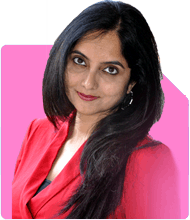
Jinal Mehta  | Answer  |Ask -

Financial Planner - Answered on Nov 10, 2024

Jinal Mehta is a qualified certified financial professional certified by FPSB India. She has 10 years of experience in the field of personal finance.
She is the founder of Beyond Learning Finance, an authorised education provider for the CFP certification programme in India.
In addition, she manages a family office organisation, where she handles investment planning, tax planning, insurance planning and estate planning.
Jinal has a bachelor's degree in management studies. She also has a diploma in in financial management from NMIMS, Mumbai.
... more

Draco Question by Draco on Nov 08, 2024Hindi
Listen
Money

I earn 20k per month at the age of 20 now How can i make upto 50k at the age of 26 from now I have not invested in any MF or other investing ideologies

Ans: I think if you look for good opportunities in work..you should be able to do it. Also investing a part of your income is a good start in creating your future portfolio
DISCLAIMER: The content of this post by the expert is the personal view of the rediffGURU. Users are advised to pursue the information provided by the rediffGURU only as a source of information to be as a point of reference and to rely on their own judgement when making a decision.
Money

You may like to see similar questions and answers below

Ramalingam

Ramalingam Kalirajan  |10870 Answers  |Ask -

Mutual Funds, Financial Planning Expert - Answered on Apr 23, 2024

Listen
Money
HOW CAN GET 50 K PER MONTH WITH INVESTMENT KINDLY SUGGEST
Ans: To achieve a monthly income of 50,000 from investments without going into detailed calculations:

Investment Horizon:
A longer investment horizon provides more time for your investments to grow and recover from market downturns. With a horizon of 15-20 years, you can consider a mix of equity and debt investments.
Asset Allocation:
Diversify your investments across different asset classes like equities, debt, and possibly real estate or gold. This diversification helps in balancing the risk and potential returns.
Equity Mutual Funds:
For wealth creation over the long term, equity mutual funds have historically offered higher returns. However, they come with higher volatility.
Debt Mutual Funds:
These funds provide stability and regular income with lower volatility compared to equities. They are suitable for investors with a medium risk appetite.
Systematic Investment Plan (SIP):
Investing through SIPs allows you to invest a fixed amount regularly. This disciplined approach to investing can help in achieving your financial goals over time.
Review and Rebalance:
Regularly review your investment portfolio to ensure it aligns with your financial goals and risk tolerance. Rebalance your portfolio if necessary, based on market conditions and your financial situation.
Inflation:
Consider the impact of inflation on your future income needs. Ensure that your investments aim to provide returns that beat inflation to maintain your purchasing power.
Consult a Financial Advisor:
For personalized advice tailored to your financial situation and goals, consult with a financial advisor. They can help you create a customized investment plan and guide you on how to achieve your target income of 50,000 per month.
Remember, investing is a journey, and it's essential to stay committed to your financial goals while being flexible to adapt to changing market conditions.

..Read more

Ramalingam

Ramalingam Kalirajan  |10870 Answers  |Ask -

Mutual Funds, Financial Planning Expert - Answered on May 22, 2024

Money
Sir. I am 33 I can make an SIP 50k for at least 5years I don't even have any saving right now how can I proceed further...thank you ????
Ans: Investing Rs. 50,000 per month in a Systematic Investment Plan (SIP) for five years is a commendable step. At 33 years old, you have the advantage of time on your side. Let's explore a strategic approach to achieving your financial goals through mutual funds.

Understanding Your Financial Position
Starting Point

You currently have no savings, but you can invest Rs. 50,000 monthly. This consistent investment will be a strong foundation for building your wealth.

Importance of Emergency Fund

Before starting your SIPs, it's crucial to have an emergency fund. This should cover 6-12 months of your living expenses. It ensures financial security during unforeseen circumstances.

Health and Life Insurance

Adequate insurance is necessary to protect your investments. Ensure you have sufficient health and life insurance coverage.

Benefits of SIPs
Rupee Cost Averaging

SIPs help in averaging the purchase cost over time, reducing the impact of market volatility. It allows you to buy more units when prices are low and fewer when prices are high.

Discipline and Consistency

Regular investments instill financial discipline. It encourages saving and investing before spending, ensuring consistent wealth accumulation.

Power of Compounding

Starting early and investing regularly allows your investments to grow exponentially over time. Compounding can significantly increase your wealth.

Selecting the Right Mutual Funds
Actively Managed Equity Funds
High Growth Potential

Actively managed equity funds are managed by professional fund managers who select stocks aiming to outperform the market. They can provide substantial returns over the long term.

Market Expertise

These funds benefit from the expertise of fund managers who analyze and pick stocks based on market trends and company performance.

Disadvantages of Index Funds

Index funds passively track market indices. They may not outperform during volatile markets. Active funds aim for better returns through strategic stock selection.

Diversified Equity Funds
Risk Mitigation

Diversified equity funds spread investments across various sectors. This reduces the impact of poor performance in any single sector, providing a balanced growth opportunity.

Consistent Performance

These funds aim to provide consistent returns by diversifying across sectors and companies. They balance risk and return effectively.

Hybrid Funds
Balanced Approach

Hybrid funds invest in both equity and debt instruments. They provide the growth potential of equities and the stability of debt.

Moderate Risk

These funds are suitable for investors with moderate risk tolerance. They offer balanced returns with lower volatility compared to pure equity funds.

Building Your SIP Portfolio
High Growth Equity Funds

Allocate a significant portion of your SIP to high growth equity funds. They have the potential to provide substantial returns over time.

Diversified Equity Funds

Include diversified equity funds in your portfolio to spread risk. They provide balanced growth by investing across various sectors.

Hybrid Funds

Add hybrid funds to your portfolio for stability. They balance growth and risk, making them suitable for conservative investors.

Avoiding Index Funds

While index funds have low fees, they may not provide the desired growth. Actively managed funds aim to outperform the market, offering better returns.

Regular Funds vs. Direct Funds

Advantages of Regular Funds

Investing through a Mutual Fund Distributor (MFD) with a Certified Financial Planner (CFP) provides professional guidance. They help in selecting the right funds and managing your portfolio effectively.

Disadvantages of Direct Funds

Direct funds have lower expense ratios but lack professional guidance. Investors must have the expertise to select and manage funds independently.

Monitoring and Adjusting Your Portfolio
Regular Reviews

Regularly review your portfolio to ensure it aligns with your financial goals. Adjust the allocation based on market conditions and personal circumstances.

Rebalancing

Periodically rebalance your portfolio to maintain the desired asset allocation. This involves buying and selling funds to keep the portfolio balanced.

Staying Informed

Stay updated with market trends and fund performance. Knowledgeable investors make informed decisions, ensuring better returns.

Professional Guidance
Certified Financial Planner (CFP)

A CFP provides personalized advice based on your financial situation and goals. They help in constructing a diversified portfolio that balances risk and return effectively.

Regular Consultation

Regular consultations with a CFP ensure your investments remain aligned with your goals. They provide insights and adjustments to optimize your investment strategy.

Setting Realistic Financial Goals
Achievable Targets

Set realistic financial goals based on your income and investment capacity. Unrealistic targets can lead to disappointment and poor investment decisions.

Long-Term Perspective

Focus on long-term wealth creation rather than short-term gains. Long-term investments benefit from compounding and provide substantial returns.

Conclusion
Starting a SIP of Rs. 50,000 per month is a significant step towards financial growth. Focus on building a diversified portfolio with a mix of actively managed equity funds, diversified equity funds, and hybrid funds. Regularly review and adjust your portfolio, and seek professional guidance from a CFP to achieve your financial goals.

Best Regards,

K. Ramalingam, MBA, CFP,

Chief Financial Planner,

www.holisticinvestment.in

..Read more

Ramalingam

Ramalingam Kalirajan  |10870 Answers  |Ask -

Mutual Funds, Financial Planning Expert - Answered on Jul 10, 2024

Asked by Anonymous - Jun 23, 2024Hindi
Listen
Money
I am 27 years old working in a Logistics company... Current salary is 60k and I started investing in mutual fund since my college and currently investing 20k per month in mutual funds...and I also have 16k loan to pay per month...I want to make 40Lac-50Lac in next 5-6 years... Please suggest
Ans: First off, great job on starting early with your investments in mutual funds. Starting early is one of the best decisions you can make for your financial future.

Let's dive into your situation and see how you can achieve your goal of making Rs. 40-50 lakhs in the next 5-6 years.

Assessing Your Current Financial Situation
You are 27 years old and working in a logistics company with a monthly salary of Rs. 60,000. You have an investment of Rs. 20,000 per month in mutual funds and a loan repayment of Rs. 16,000 per month. Your net disposable income after loan repayment and mutual fund investment is Rs. 24,000.

Setting Realistic Financial Goals
Achieving Rs. 40-50 lakhs in 5-6 years is ambitious but doable with a disciplined approach. The goal is to maximize your returns while managing risks effectively. You need to focus on the power of compounding and diversification in your mutual fund investments.

Investment Strategy: Mutual Funds
Mutual funds are a great tool for wealth creation. They offer diversification, professional management, and the potential for high returns. Since you are already investing in mutual funds, let's break down how you can optimize your portfolio.

Categories of Mutual Funds
Equity Mutual Funds: These are the best for long-term wealth creation. They invest primarily in stocks and have the potential to provide high returns. However, they also come with higher risks.

Debt Mutual Funds: These are lower-risk investments that provide steady returns. They invest in bonds and other fixed-income securities.

Hybrid Mutual Funds: These funds invest in both equities and debts, providing a balance of risk and return.

Power of Compounding
Compounding is when your investment earnings start generating their own earnings. The longer you stay invested, the more your money grows. Since you have a 5-6 year horizon, this is crucial. By consistently investing Rs. 20,000 per month, you allow your investments to grow and compound over time.

Optimizing Your Mutual Fund Portfolio
Given your goal and investment horizon, here’s a strategy you could consider:

Increase Equity Exposure: Since you have a higher risk appetite and a 5-6 year horizon, focus on equity mutual funds. They have the potential to generate higher returns.

Diversify: Don’t put all your money into one type of equity fund. Diversify across large-cap, mid-cap, and small-cap funds to balance risk and return.

Systematic Investment Plan (SIP): Continue with your SIP of Rs. 20,000 per month. This helps in rupee cost averaging and reduces the impact of market volatility.

Review and Rebalance: Periodically review your portfolio and rebalance if needed. Ensure that your investments align with your goals and risk profile.

Managing Your Loan
You have a loan repayment of Rs. 16,000 per month. While it’s important to invest, ensure you’re also managing your debt efficiently. High-interest debts should be paid off as soon as possible. If your loan is at a high-interest rate, consider repaying it faster or refinancing it for a lower interest rate.

Additional Investment Opportunities
If you can manage to save more, consider increasing your SIP amount. Even an additional Rs. 5,000 per month can significantly impact your overall returns over the next 5-6 years. Also, if you receive any bonuses or windfalls, consider investing a portion of that amount into your mutual funds.

Risk Management
Investing in equity mutual funds involves risks. To manage these risks:

Stay Invested for the Long Term: Don’t panic during market downturns. The market tends to recover over time.

Diversify: As mentioned, diversify your portfolio across different types of equity funds and sectors.

Emergency Fund: Maintain an emergency fund equivalent to 6-12 months of your expenses. This ensures you don’t have to dip into your investments during emergencies.

Final Insights
You are on the right track by starting early and investing consistently. With disciplined investing and proper portfolio management, you can achieve your goal of Rs. 40-50 lakhs in the next 5-6 years. Focus on equity mutual funds, diversify your investments, and leverage the power of compounding. Manage your loan efficiently and consider increasing your SIP amount if possible. Regularly review and rebalance your portfolio to stay aligned with your financial goals.

Remember, investing is a journey. Stay patient, stay disciplined, and you will reach your financial goals.

Best Regards,

K. Ramalingam, MBA, CFP

Chief Financial Planner

www.holisticinvestment.in

..Read more

Ramalingam

Ramalingam Kalirajan  |10870 Answers  |Ask -

Mutual Funds, Financial Planning Expert - Answered on Sep 27, 2025

Asked by Anonymous - Sep 27, 2025Hindi
Money
Hello sir, i m 56 years old. I have invested 20lacs in mutual fund: large cap, SBI gold G, Aditya birla flexi cap . And i have saving of another 30lacs in fixed deposits. I need a monthly income of 20/25k permonth for next 20-25years. I dont know how to go about it. Kindly advice..
Ans: You have done well by investing Rs 20 lakh in mutual funds and Rs 30 lakh in fixed deposits. Your goal of Rs 20-25k monthly income for the next 20-25 years is achievable with proper planning. Let’s break it down carefully.

»Understanding Your Current Investments

Your mutual fund investments are diversified across large-cap, flexi-cap, and gold.

Large-cap funds offer stability and steady growth over time.

Flexi-cap funds provide flexibility to capture growth in various sectors.

Gold funds act as a hedge against inflation and market volatility.

Fixed deposits give safety and predictable interest but offer low growth.

Together, your portfolio balances risk and stability. This mix is positive for income planning.

»Monthly Income Requirement

You need Rs 20-25k per month, which is Rs 2.4-3 lakh per year.

Your goal spans 20-25 years, so capital preservation and moderate growth are essential.

Simply relying on fixed deposits will not meet inflation-adjusted income over 25 years.

Mutual funds are essential to generate growth and support sustainable withdrawals.

»Portfolio Assessment

Your current MF allocation is good but needs income focus.

Large-cap and flexi-cap funds can generate capital appreciation.

Gold funds protect against market uncertainty but do not give regular income.

Fixed deposits provide guaranteed interest but may lag behind inflation.

Combining these, a structured withdrawal plan can give steady monthly income.

»Recommended Withdrawal Approach

Use a systematic withdrawal plan (SWP) from mutual funds.

SWP allows you to receive fixed monthly amounts from your funds.

This reduces market timing risk and provides discipline in withdrawals.

You can adjust SWP amount annually to match inflation.

Keep part of your portfolio in fixed deposits to cover emergencies and stability.

»Mutual Fund Type Consideration

Actively managed funds are better than index funds in your case.

Index funds track the market and may not provide consistent income.

Active funds allow fund managers to manage risks and capture opportunities.

Your chosen flexi-cap and large-cap funds are suitable for SWP.

Avoid direct funds; regular mutual funds through MFDs provide guidance and tax efficiency.

»Tax Planning for Withdrawals

For equity funds, LTCG above Rs 1.25 lakh is taxed at 12.5%.

Short-term capital gains are taxed at 20%.

Debt fund gains are taxed as per income slab.

Planning SWP smartly minimizes taxes and maximizes income.

Structuring withdrawals from multiple funds avoids high taxation in a single year.

»Fixed Deposit Strategy

Keep fixed deposits as a safety buffer for emergencies.

Interest earned from FDs is taxable as per your slab.

Laddering FDs across different maturities ensures liquidity.

Avoid keeping all FD in one term; this helps in flexibility.

»Income Allocation Strategy

Withdraw a part from mutual funds via SWP for monthly income.

Use FD interest to supplement SWP when markets are down.

Rebalance annually to maintain risk-to-income balance.

This combination ensures monthly cash flow and capital preservation.

»Inflation Management

Inflation reduces purchasing power over 20+ years.

Equity mutual funds help grow corpus to counter inflation.

Fixed deposits alone will erode real income.

Adjust SWP annually for inflation to maintain lifestyle.

»Risk Assessment

At 56, your risk appetite is moderate.

Equity exposure should not exceed 50-60% of total corpus.

Fixed deposits provide safety but low returns.

Diversifying among equity, gold, and FDs balances growth and risk.

Regular monitoring ensures timely adjustments.

»Emergency Fund

Maintain at least 1-2 years of expenses in liquid instruments.

FDs and liquid funds are ideal for emergencies.

This avoids selling equity in downturns.

»Healthcare and Insurance

Ensure adequate health insurance coverage for you and family.

Include critical illness coverage if not already present.

Insurance protects corpus and monthly income plans from unforeseen events.

»Portfolio Review and Rebalancing

Review MF performance at least annually.

Rebalance to maintain target equity-debt ratio.

Redeem underperforming funds and increase allocation in stable funds.

Regular review helps sustain long-term income plan.

»Avoiding Common Mistakes

Avoid over-reliance on FDs; they cannot beat inflation.

Avoid index funds for income-focused long-term withdrawals.

Avoid sudden large redemptions in mutual funds; use SWP instead.

Avoid keeping insurance-cum-investment policies with low returns; consider liquidation if any exist.

»Long-Term Growth Consideration

Equity mutual funds provide growth for 20-25 years horizon.

Small growth annually compounds over decades for your corpus.

SWP ensures systematic withdrawal without eroding principal quickly.

»Gold Fund Perspective

Gold funds protect during volatility but don’t provide regular income.

Limit gold to 5-10% of corpus for safety.

Do not rely on gold alone for withdrawals.

»Liquidity Management

Keep FD ladder and some liquid funds to meet short-term needs.

This prevents forced sale of equity in adverse markets.

»Holistic Income Plan

Use 50-60% in mutual funds, 40-50% in fixed deposits for balance.

SWP for monthly cash flow from mutual funds.

FD interest supplements cash flow.

Emergency funds in liquid instruments.

Annual review and rebalancing ensures sustainability.

»Inflation-Proof Strategy

Increase SWP withdrawal gradually to match inflation.

Equity mutual funds will grow over time to offset inflation impact.

Regular review keeps income plan realistic.

»Psychological Comfort

Maintaining FD ensures peace of mind.

SWP from equity funds gives flexibility and growth.

Balanced portfolio reduces stress during market volatility.

»Professional Management Advantage

Using a Certified Financial Planner ensures discipline and guidance.

CFP helps in selecting funds, tax planning, and SWP setup.

Expert advice reduces mistakes and maximizes long-term returns.

»Action Steps You Can Take

Start systematic withdrawal plan from mutual funds immediately.

Ladder fixed deposits for liquidity and interest flow.

Monitor portfolio annually with CFP guidance.

Adjust SWP for inflation and market performance.

Maintain emergency funds and adequate health insurance.

»Monitoring and Adjustment

Keep track of monthly income needs and corpus health.

Adjust withdrawals if market falls significantly.

Rebalance portfolio to maintain equity-debt ratio.

Avoid panic withdrawals; stay disciplined for 20-25 years.

»Final Insights

Your current investments provide a strong base for income.

SWP in mutual funds with FD support ensures sustainable cash flow.

Actively managed funds provide growth and stability.

Regular review and professional guidance maximize safety and returns.

Diversified, disciplined, and monitored approach secures your long-term income.

Best Regards,

K. Ramalingam, MBA, CFP,

Chief Financial Planner,

www.holisticinvestment.in

https://www.youtube.com/@HolisticInvestment

..Read more

Latest Questions
Dr Dipankar

Dr Dipankar Dutta  |1837 Answers  |Ask -

Tech Careers and Skill Development Expert - Answered on Dec 05, 2025

Career
Dear Sir, I did my BTech from a normal engineering college not very famous. The teaching was not great and hence i did not study well. I tried my best to learn coding including all the technologies like html,css,javascript,react js,dba,php because i wanted to be a web developer But nothing seem to enter my head except html and css. I don't understand a language which has more complexities. Is it because of my lack of experience or not devoting enough time. I am not sure. I did many courses online and tried to do diplomas also abroad which i passed somehow. I recently joined android development course because i like apps but the teaching was so fast that i could not memorize anything. There was no time to even take notes down. During the course i did assignments and understood the code because i have to pass but after the course is over i tend to forget everything. I attempted a lot of interviews. Some of them i even got but could not perform well so they let me go. Now due to the AI booming and job markets in a bad shape i am re-thinking whether to keep studying or whether its just time waste. Since 3 years i am doing labour type of jobs which does not yield anything to me for survival and to pay my expenses. I have the quest to learn everything but as soon as i sit in front of the computer i listen to music or read something else. What should i do to stay more focused? What should i do to make myself believe confident. Is there still scope of IT in todays world? Kindly advise.
Ans: Your story does not show failure.
It shows persistence, effort, and desire to improve.

Most people give up.
You didn’t.
That means you will succeed — but with the right method, not the old one.

...Read more

Ravi

Ravi Mittal  |676 Answers  |Ask -

Dating, Relationships Expert - Answered on Dec 04, 2025

Asked by Anonymous - Dec 02, 2025Hindi
Relationship
My married ex still texts me for comfort. Because of him, I am unable to move on. He makes me feel guilty by saying he got married out of family pressure. His dad is a cardiac patient and mom is being treated for cancer. He comforts me by saying he will get separated soon and we will get married because he only loves me. We have been in a relationship for 14 years and despite everything we tried, his parents refused to accept me, so he chose to get married to someone who understands our situation. I don't know when he will separate from his wife. She knows about us too but she comes from a traditional family. She also confirmed there is no physical intimacy between them. I trust him, but is it worth losing my youth for him? Honestly, I am worried and very confused.
Ans: Dear Anonymous,
I understand how difficult it is to let go of a relationship you have built from scratch, but is it really how you want to continue? It really seems to be going nowhere. His parents are already in bad health and he married someone else for their happiness. Does it seem like he will be able to leave her? So many people’s happiness and lives depend on this one decision. I think it’s about time you and your BF have a clear conversation about the same. If he can’t give a proper timeline, please try to understand his situation. But also make sure he understands yours and maybe rethink this equation. It really isn’t healthy. You deserve a love you can have wholly, and not just in pieces, and in the shadows.

Hope this helps

...Read more

DISCLAIMER: The content of this post by the expert is the personal view of the rediffGURU. Investment in securities market are subject to market risks. Read all the related document carefully before investing. The securities quoted are for illustration only and are not recommendatory. Users are advised to pursue the information provided by the rediffGURU only as a source of information and as a point of reference and to rely on their own judgement when making a decision. RediffGURUS is an intermediary as per India's Information Technology Act.

Close  

You haven't logged in yet. To ask a question, Please Log in below
Login

A verification OTP will be sent to this
Mobile Number / Email

Enter OTP
A 6 digit code has been sent to

Resend OTP in120seconds

Dear User, You have not registered yet. Please register by filling the fields below to get expert answers from our Gurus
Sign up

By signing up, you agree to our
Terms & Conditions and Privacy Policy

Already have an account?

Enter OTP
A 6 digit code has been sent to Mobile

Resend OTP in120seconds

x