Need Expert Advice?Our Gurus Can Help
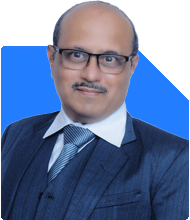
Nitin Narkhede | Answer |Ask -Follow
MF, PF Expert - Answered on Jul 02, 2025
Nitin Narkhede, founder of the Prosperity Lifestyle Hub, is a certified financial advisor with eight years of experience in helping clients design and implement comprehensive financial life plans.
As a mentor, Nitin has trained over 1,000 individuals, many of whom have seen remarkable financial transformations.
Nitin holds various certifications including the Association Of Mutual Funds in India (AMFI), the Insurance Regulatory and Development Authority and accreditations from several insurance and mutual fund aggregators.
He is a mechanical engineer from the J T Mahajan College, Jalgaon, with 34 years of experience of working with MNCs like Skoda Auto India, Volkswagen India and ThyssenKrupp Electrical Steel India.... more
As a mentor, Nitin has trained over 1,000 individuals, many of whom have seen remarkable financial transformations.
Nitin holds various certifications including the Association Of Mutual Funds in India (AMFI), the Insurance Regulatory and Development Authority and accreditations from several insurance and mutual fund aggregators.
He is a mechanical engineer from the J T Mahajan College, Jalgaon, with 34 years of experience of working with MNCs like Skoda Auto India, Volkswagen India and ThyssenKrupp Electrical Steel India.... more
Asked by Anonymous - Jun 30, 2025Hindi

Age 53 Bought a house at 1.7cr Term plan 1cr Health insurance for family of 3 Expected income in next 6 months sure 2cr after tax Plan a retirement plan at 65 Swp lumsum Market linked midcap And large cap Also some sip
Ans: Dear Friend,
At 53, you have a strong financial base with a ?1.7 crore house, ?1 crore term plan, family health insurance, and a confirmed ?2 crore post-tax income expected soon. To retire comfortably at 65, begin by setting aside ?10–15 lakhs as an emergency fund and maintain adequate health cover. Invest ?1.5–1.6 crore in a diversified mix: 30% in midcap funds, 30% in large-cap funds, 20% in flexi-cap or dynamic funds, and 20% in high-quality debt funds. Continue monthly SIPs of ?30,000–?50,000 to build long-term wealth. By retirement, aim for a corpus of ?4–5 crore. You can then initiate a Systematic Withdrawal Plan (SWP) of ?1–1.25 lakh per month to meet living expenses, while the remaining corpus continues to grow. Regularly review and rebalance your portfolio and increase SIPs over time. This disciplined approach can help ensure a stress-free and financially independent retirement.
Regards, Nitin Narkhede -Founder, Prosperity Lifestyle Hub,
Free webinar https://bit.ly/PLH-Webinar
At 53, you have a strong financial base with a ?1.7 crore house, ?1 crore term plan, family health insurance, and a confirmed ?2 crore post-tax income expected soon. To retire comfortably at 65, begin by setting aside ?10–15 lakhs as an emergency fund and maintain adequate health cover. Invest ?1.5–1.6 crore in a diversified mix: 30% in midcap funds, 30% in large-cap funds, 20% in flexi-cap or dynamic funds, and 20% in high-quality debt funds. Continue monthly SIPs of ?30,000–?50,000 to build long-term wealth. By retirement, aim for a corpus of ?4–5 crore. You can then initiate a Systematic Withdrawal Plan (SWP) of ?1–1.25 lakh per month to meet living expenses, while the remaining corpus continues to grow. Regularly review and rebalance your portfolio and increase SIPs over time. This disciplined approach can help ensure a stress-free and financially independent retirement.
Regards, Nitin Narkhede -Founder, Prosperity Lifestyle Hub,
Free webinar https://bit.ly/PLH-Webinar
DISCLAIMER: The content of this post by the expert is the personal view of the rediffGURU. Users are advised to pursue the information provided by the rediffGURU only as a source of information to be as a point of reference and to rely on their own judgement when making a decision.
MoneyReply


You may like to see similar questions and answers below
Jinal Mehta | Answer |Ask -Follow
Financial Planner - Answered on Mar 18, 2024



Ramalingam Kalirajan |10893 Answers |Ask -Follow
Mutual Funds, Financial Planning Expert - Answered on Aug 12, 2025
Ramalingam Kalirajan |10893 Answers |Ask -Follow
Mutual Funds, Financial Planning Expert - Answered on Aug 26, 2025


Latest Questions
Ramalingam Kalirajan |10893 Answers |Ask -Follow
Mutual Funds, Financial Planning Expert - Answered on Dec 15, 2025

Ramalingam Kalirajan |10893 Answers |Ask -Follow
Mutual Funds, Financial Planning Expert - Answered on Dec 15, 2025


Radheshyam Zanwar |6746 Answers |Ask -Follow
MHT-CET, IIT-JEE, NEET-UG Expert - Answered on Dec 15, 2025


Ramalingam Kalirajan |10893 Answers |Ask -Follow
Mutual Funds, Financial Planning Expert - Answered on Dec 15, 2025


Ramalingam Kalirajan |10893 Answers |Ask -Follow
Mutual Funds, Financial Planning Expert - Answered on Dec 15, 2025


Ramalingam Kalirajan |10893 Answers |Ask -Follow
Mutual Funds, Financial Planning Expert - Answered on Dec 15, 2025



Samraat Jadhav |2508 Answers |Ask -Follow
Stock Market Expert - Answered on Dec 15, 2025


Ramalingam Kalirajan |10893 Answers |Ask -Follow
Mutual Funds, Financial Planning Expert - Answered on Dec 15, 2025


Reetika Sharma |425 Answers |Ask -Follow
Financial Planner, MF and Insurance Expert - Answered on Dec 15, 2025


Radheshyam Zanwar |6746 Answers |Ask -Follow
MHT-CET, IIT-JEE, NEET-UG Expert - Answered on Dec 15, 2025