Need Expert Advice?Our Gurus Can Help
50 and Free: What's a Future-Proof Investment for a Skilled Craftsman?
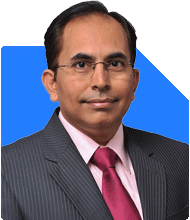
Janak Patel |71 Answers |Ask -Follow
MF, PF Expert - Answered on Apr 09, 2025
Janak Patel is a certified financial planner accredited by the Financial Planning Standards Board, India.
He is the CEO and founder of InfiniumWealth, a firm that specialises in designing goal-specific financial plans tailored to help clients achieve their life goals.
Janak holds an MBA degree in finance from the Welingkar Institute of Management Development and Research, Mumbai, and has over 15 years of experience in the field of personal finance. ... more
He is the CEO and founder of InfiniumWealth, a firm that specialises in designing goal-specific financial plans tailored to help clients achieve their life goals.
Janak holds an MBA degree in finance from the Welingkar Institute of Management Development and Research, Mumbai, and has over 15 years of experience in the field of personal finance. ... more
Asked by Anonymous - Mar 15, 2025Hindi

I am 50 yrs free hand worker which kind of One time Investment good for my future life
Ans: Hi,
As you are free hand worker and also at age 50, it is important to consider safety, liquidity along with growth of your investment.
I would recommend you evaluate your requirements and proceed to invest as mentioned
1. Requirements up to 3 years - Money required for this duration should be completed protected and kept available as and when required. I would suggest you consider keeping such amount in a fixed income source e.g. Fixed Deposits. Even when you setup the FDs, setup FDs for 6 months, 1 year, 2 year etc. so that you can access the matured amounts of the FD and don't need to break them. Of course if required you can access when needed. But optimize the returns by not breaking the FDs but by letting them mature at the time of your requirement. Risk - Low. Expected Returns - just about equal to or below inflation.
2. Requirements beyond 3 years and up to 7 years - Such money can be kept in funds that can give you a little better returns than the FDs, as you have some more time for it. I suggest you can consider Conservative Hybrid/Balanced Advantage Mutual Fund Schemes for this as they can provide better returns over the period of time. These schemes will invest in Debt (fixed income) and Equity (Market linked) opportunities and have the potential to generate better returns than FDs. So pick Conservative Hybrid schemes if you require it under 5 years and Balanced Advantage schemes for over 5 years requirements. Risk - Moderate. Expected Returns - equal to or above inflation.
3. Requirement beyond 7 years - With time on your side you can look for a slightly higher returns and consider Equity Mutual Fund schemes for such money. A diversified portfolio of schemes (3-6 schemes) depending on the amount can be considered for achieving slightly higher returns to beat inflation and growing the corpus amount. Risk - High. Expected Returns - can provide double digit growth.
Please note , you have to decide your own risk taking ability along with the prospects of income in the future as you decide on any approach/option. The lesser the risk, the safer options you should consider.
Considering your age and income you will need to prepare an approach. Soon your retirement requirement may come into consideration.
I recommend you approach a certified adviser who can guide you through these aspects over time.
Thanks & Regards
Janak Patel
Certified Financial Planner.
As you are free hand worker and also at age 50, it is important to consider safety, liquidity along with growth of your investment.
I would recommend you evaluate your requirements and proceed to invest as mentioned
1. Requirements up to 3 years - Money required for this duration should be completed protected and kept available as and when required. I would suggest you consider keeping such amount in a fixed income source e.g. Fixed Deposits. Even when you setup the FDs, setup FDs for 6 months, 1 year, 2 year etc. so that you can access the matured amounts of the FD and don't need to break them. Of course if required you can access when needed. But optimize the returns by not breaking the FDs but by letting them mature at the time of your requirement. Risk - Low. Expected Returns - just about equal to or below inflation.
2. Requirements beyond 3 years and up to 7 years - Such money can be kept in funds that can give you a little better returns than the FDs, as you have some more time for it. I suggest you can consider Conservative Hybrid/Balanced Advantage Mutual Fund Schemes for this as they can provide better returns over the period of time. These schemes will invest in Debt (fixed income) and Equity (Market linked) opportunities and have the potential to generate better returns than FDs. So pick Conservative Hybrid schemes if you require it under 5 years and Balanced Advantage schemes for over 5 years requirements. Risk - Moderate. Expected Returns - equal to or above inflation.
3. Requirement beyond 7 years - With time on your side you can look for a slightly higher returns and consider Equity Mutual Fund schemes for such money. A diversified portfolio of schemes (3-6 schemes) depending on the amount can be considered for achieving slightly higher returns to beat inflation and growing the corpus amount. Risk - High. Expected Returns - can provide double digit growth.
Please note , you have to decide your own risk taking ability along with the prospects of income in the future as you decide on any approach/option. The lesser the risk, the safer options you should consider.
Considering your age and income you will need to prepare an approach. Soon your retirement requirement may come into consideration.
I recommend you approach a certified adviser who can guide you through these aspects over time.
Thanks & Regards
Janak Patel
Certified Financial Planner.
DISCLAIMER: The content of this post by the expert is the personal view of the rediffGURU. Users are advised to pursue the information provided by the rediffGURU only as a source of information to be as a point of reference and to rely on their own judgement when making a decision.
MoneyReply


You may like to see similar questions and answers below

Ramalingam Kalirajan |10893 Answers |Ask -Follow
Mutual Funds, Financial Planning Expert - Answered on Apr 12, 2024

Ramalingam Kalirajan |10893 Answers |Ask -Follow
Mutual Funds, Financial Planning Expert - Answered on Nov 01, 2024

Latest Questions
Nitin Narkhede |113 Answers |Ask -Follow
MF, PF Expert - Answered on Dec 15, 2025


Nitin Narkhede |113 Answers |Ask -Follow
MF, PF Expert - Answered on Dec 15, 2025

Ramalingam Kalirajan |10893 Answers |Ask -Follow
Mutual Funds, Financial Planning Expert - Answered on Dec 15, 2025
Ramalingam Kalirajan |10893 Answers |Ask -Follow
Mutual Funds, Financial Planning Expert - Answered on Dec 15, 2025


Radheshyam Zanwar |6746 Answers |Ask -Follow
MHT-CET, IIT-JEE, NEET-UG Expert - Answered on Dec 15, 2025


Ramalingam Kalirajan |10893 Answers |Ask -Follow
Mutual Funds, Financial Planning Expert - Answered on Dec 15, 2025


Ramalingam Kalirajan |10893 Answers |Ask -Follow
Mutual Funds, Financial Planning Expert - Answered on Dec 15, 2025


Ramalingam Kalirajan |10893 Answers |Ask -Follow
Mutual Funds, Financial Planning Expert - Answered on Dec 15, 2025



Samraat Jadhav |2508 Answers |Ask -Follow
Stock Market Expert - Answered on Dec 15, 2025


Ramalingam Kalirajan |10893 Answers |Ask -Follow
Mutual Funds, Financial Planning Expert - Answered on Dec 15, 2025