Home > Money > Question
Need Expert Advice?Our Gurus Can Help
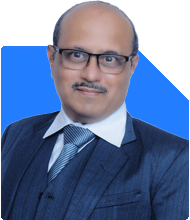
Nitin

Nitin Narkhede  | Answer  |Ask -

MF, PF Expert - Answered on May 25, 2025

Nitin Narkhede, founder of the Prosperity Lifestyle Hub, is a certified financial advisor with eight years of experience in helping clients design and implement comprehensive financial life plans.
As a mentor, Nitin has trained over 1,000 individuals, many of whom have seen remarkable financial transformations.
Nitin holds various certifications including the Association Of Mutual Funds in India (AMFI), the Insurance Regulatory and Development Authority and accreditations from several insurance and mutual fund aggregators.
He is a mechanical engineer from the J T Mahajan College, Jalgaon, with 34 years of experience of working with MNCs like Skoda Auto India, Volkswagen India and ThyssenKrupp Electrical Steel India.... more
Asked by Anonymous - May 23, 2025
Money

I am 42 years and My husband is 45, We both are running a Sofa manufacturing factory.We have 2 kids 1 is in grade 6 and another is 3.5 years old. We don't have any EMI,I have saved money to both of my children 6 lakhs each in FD. Myself and my husband have saved around 30 lakhs which we have kept in FD, we have health insurance and 5 lakhs I have invested in ICICI mutual funds. We have our own house, car which are EMI free. Since too much competition in Sofa industry gradually business has gone down . If we decide to close our factory how much money should I have in my account to lead happy and tension free retirement life or what should we do know to have a good life.

Ans: Dear Friend,
You're in a strong financial position—no EMIs, own home, and decent savings. At 42 and 45, with two young children, you still have 10–15 years to earn and build wealth for a peaceful retirement actively.
You're financially stable with ?30L in FDs, ?12L saved for kids, and ?5L in mutual funds. But if you plan to close your factory, assess alternate income sources or part-time work. To retire comfortably, aim to build a corpus of ?3–4 crore over the next 15 years through a mix of equity mutual funds (SIP ?50–70k/month), PPF, and targeted investments for your kids' higher education. Keep 1–2 years of expenses in liquid funds. Since you’re debt-free, focus on maximising savings and generating passive income to ensure a tension-free retired life.
Regards, Nitin Narkhede -Founder, Prosperity Lifestyle Hub,
Free webinar https://bit.ly/PLH-Webinar
DISCLAIMER: The content of this post by the expert is the personal view of the rediffGURU. Users are advised to pursue the information provided by the rediffGURU only as a source of information to be as a point of reference and to rely on their own judgement when making a decision.
Money

You may like to see similar questions and answers below

Ramalingam

Ramalingam Kalirajan  |10870 Answers  |Ask -

Mutual Funds, Financial Planning Expert - Answered on Sep 02, 2024

Asked by Anonymous - Aug 21, 2024Hindi
Money
Hi Anil, I am 45, married. Located at Bangalore. My daughter is in 8th Standard. Me and my wife together have savings of Rs.3 Cr. and no debt or EMI to pay. Saving amount is roughly 1 Cr each divided into stocks, MF and FD's. We stay in our own apartment, i.e. no rental expense. Our apartment is at good location, and worth 1 Cr. minimum. We both work, and together earn 4L per month. At a high level, monthly expense comes out to 1L. Which includes Daughter's education. We have monthly SIP's running, that total to 2L. I am stressed at current job, and considering retirement. I need to know, if with current savings and monthly expense of 1L, is retirement something realistic or I have more ground to run. Please advise considering that we both decide to retire, and might look forward sending our Daughter abroad for higher education. We do have a plot at hometown that is worth 32-37 lakh, but not considering it, as we have not tried to sell.
Ans: First, let's appreciate your financial discipline. You and your wife have savings of Rs. 3 crore and no debt or EMI. This is a strong foundation. You also own a Rs. 1 crore apartment in Bangalore. Additionally, you have a plot worth Rs. 32-37 lakh. Your monthly household income is Rs. 4 lakh, and you manage expenses within Rs. 1 lakh, which includes your daughter’s education. You both contribute Rs. 2 lakh per month into SIPs. With these figures, you're on solid ground.

Retirement Feasibility
1. Current Lifestyle and Retirement Plans

You are considering early retirement due to job stress. This is a common scenario, especially when you have already achieved financial stability. With your current monthly expense of Rs. 1 lakh, let's analyze if your savings can sustain your lifestyle if you both retire now.

2. Retirement Corpus Analysis

You have Rs. 3 crore in savings. This is divided equally into stocks, mutual funds (MFs), and fixed deposits (FDs). Typically, a balanced retirement corpus should include a mix of growth (stocks and MFs) and stability (FDs). Since your current monthly expenses are Rs. 1 lakh, this would amount to Rs. 12 lakh annually. Factoring in inflation, this expense will increase over time. You need a well-structured investment strategy to ensure your corpus lasts throughout your retirement.

3. Impact of Inflation

Inflation is a critical factor. Your expenses will rise over the years, reducing the purchasing power of your money. Suppose inflation averages 6% annually. The Rs. 1 lakh you spend today will increase in the future. Therefore, your retirement corpus must not only cover current expenses but also account for inflation. A certified financial planner (CFP) would suggest a strategy to hedge against inflation, usually through a combination of equity and debt investments.

Daughter’s Education
1. Higher Education Costs

You mentioned the possibility of sending your daughter abroad for higher education. This is a significant financial commitment. Depending on the country and course, the cost could range from Rs. 50 lakh to Rs. 1.5 crore or more. It’s essential to start planning now. You might need to allocate a portion of your current savings or future income specifically for this purpose.

2. Education Fund Strategy

Consider creating a separate education fund. This fund should be invested in a mix of equity and debt, balancing growth and security. Equity investments could help grow this fund, while debt investments offer stability. You could also consider education-specific mutual funds or ULIPs that offer flexibility and growth potential. However, it’s crucial to avoid products that are too complex or have high charges.

Investment Strategy Post-Retirement
1. Rebalancing Your Portfolio

Once retired, you need to revisit your investment strategy. The goal should be to generate a steady income while preserving your capital. Given your current portfolio, here’s a suggested approach:

Equity Exposure: Since you have Rs. 1 crore in stocks, you could maintain around 30-40% in equity. This helps combat inflation and offers growth potential.

Debt Instruments: Keep a significant portion in FDs or other debt instruments. These provide stability and regular income. Consider diversifying into bonds, especially those with tax-free interest, for better post-tax returns.

Mutual Funds: Your SIPs should continue, but you might want to shift towards more conservative or hybrid funds. These funds offer a balance between equity and debt, reducing risk while still providing some growth.

Systematic Withdrawal Plan (SWP): You could set up an SWP from your mutual funds to generate regular income. This allows you to withdraw a fixed amount periodically, ensuring liquidity while keeping the rest of your corpus invested.

2. Emergency Fund

An emergency fund is essential, especially after retirement. You already have Rs. 3 crore in savings, but it’s wise to set aside at least 6-12 months' worth of expenses in a highly liquid form. This could be in a savings account or a liquid mutual fund. This fund will help cover unexpected expenses without affecting your long-term investments.

Health and Insurance
1. Health Insurance

Healthcare costs are rising. Ensure you have adequate health insurance coverage for yourself, your wife, and your daughter. This is critical in retirement when medical expenses might increase. Review your current health insurance policies to ensure they provide sufficient cover. Consider top-up or super top-up plans for additional protection. This is especially important if you plan to retire early, as your employer-provided health insurance may cease.

2. Life Insurance

If you have life insurance policies, review them to ensure they align with your current needs. Since you have no debt and significant savings, your need for life insurance might be reduced. However, it’s essential to have some coverage until your daughter is financially independent. You could consider term insurance, which offers high coverage at a low cost.

Estate Planning
1. Will and Nomination

Estate planning is crucial to ensure your assets are distributed according to your wishes. Make sure you have a will in place, clearly outlining the distribution of your assets. This will prevent legal complications and ensure your family is taken care of. Also, review the nominations on all your financial accounts and insurance policies to ensure they are up to date.

2. Trusts and Other Tools

Consider setting up a trust if you want to ensure long-term management of your assets, especially for your daughter’s education or other future needs. A trust can offer control over how and when your assets are distributed, providing additional security for your loved ones.

Income Sources in Retirement
1. Generating Passive Income

With Rs. 3 crore in savings, you could generate passive income to supplement your retirement needs. Here are some options:

Dividends: If your stock portfolio includes dividend-paying stocks, this could provide a regular income stream. Ensure these stocks are from stable companies with a history of consistent dividend payments.

Rental Income: If you have the option, consider renting out a portion of your apartment or another property. This could provide additional income, although it comes with its own set of responsibilities.

Fixed Deposits and Bonds: Interest from FDs and bonds can provide a steady income. Consider laddering your FDs, where you invest in multiple FDs with different maturities. This ensures liquidity while taking advantage of varying interest rates.

2. Avoiding High-Risk Investments

At this stage, it’s crucial to avoid high-risk investments. While it might be tempting to chase high returns, the focus should be on preserving your capital and generating steady income. Stick to investments you understand and that align with your risk tolerance.

Final Insights
1. Retirement Readiness

Given your current financial situation, early retirement is feasible. However, it requires careful planning. You need to ensure that your savings can sustain your lifestyle, especially with the potential education costs for your daughter. Continue working with a certified financial planner (CFP) to regularly review your plan and make adjustments as needed.

2. Education Planning

Start a separate fund for your daughter’s higher education. This will allow you to plan and invest appropriately, ensuring that her education is not compromised if you decide to retire early.

3. Health and Insurance

Ensure you have adequate health and life insurance coverage. This is crucial to protect your family’s financial well-being in case of any unforeseen events.

4. Estate Planning

Finally, don’t overlook estate planning. Having a will in place and considering trusts or other tools will ensure your assets are managed according to your wishes.

With careful planning and regular review, you can achieve a comfortable retirement while also providing for your daughter’s future.

Best Regards,

K. Ramalingam, MBA, CFP,

Chief Financial Planner,

www.holisticinvestment.in

..Read more

Ramalingam

Ramalingam Kalirajan  |10870 Answers  |Ask -

Mutual Funds, Financial Planning Expert - Answered on Nov 26, 2024

Money
Hi my name is Somani, I have completed 39 years and planning to retire in my career, below are my current financial situation. Saving account: 5 Lac FD: 15 Lac, all maturing in 2026 Mutual fund: 28 Lac (current value: 36 Lac, Large cap: 50%, Mid cap: 26%, Small cap: 22%, Other: 2%) Gold Bonds: 3.5 Lac (current value: 6.85 Lac) Equity share: 26 Lac (current value: 47 Lac) NPS: current value: 6 Lac EPFO: 12.25 Lac PPF: 7.67 Lac Term Plan: 1 Cr Pension Plan after 60: 30k approx monthly Health insurance: 13 Lac whole family My wife is working and gets around 70k in hand Having one daughter, age is 8 year and studying in 2nd class My father is retired and below are his financial situation Pension: 45k approx per month FD: 1 cr Equity Share/Mutual fund/ Gold bonds: 1 cr approx Property: 80 Lac approx current valuation Own House: 1.75 cr - 2 cr current valuation Rental income: 18k approx per month Please guide me on above data, how much corpus I should have to have a peaceful retirement considering my current monthly expense around 1.25 Lac per month.
Ans: You have a strong and diverse financial foundation. Let us analyse it comprehensively.

Liquid Assets
Savings account balance of Rs 5 lakh offers immediate liquidity.

Fixed deposits worth Rs 15 lakh maturing in 2026 ensure mid-term stability.

Investments
Mutual fund portfolio of Rs 36 lakh is well-diversified across large, mid, and small caps.

Gold bonds with a current value of Rs 6.85 lakh add stability and hedge against inflation.

Equity shares valued at Rs 47 lakh showcase significant growth.

National Pension System (NPS) holding of Rs 6 lakh offers retirement-oriented savings.

Retirement Savings
EPFO corpus of Rs 12.25 lakh and PPF balance of Rs 7.67 lakh ensure steady long-term growth.

Term plan coverage of Rs 1 crore secures your family's future.

Family Support
Your wife’s monthly income of Rs 70,000 provides stability.

Your father’s solid financial base and Rs 45,000 pension ensure reduced dependency.

Estimating Retirement Corpus
Retirement planning requires addressing future expenses, inflation, and longevity.

Monthly Expense Analysis
Your current expenses of Rs 1.25 lakh per month are significant.

Adjust for post-retirement expenses like reduced work-related costs but increased healthcare spending.

Corpus Needed
For a peaceful retirement, aim for a corpus that generates Rs 1.25 lakh monthly for at least 30 years.

Factor in inflation at 6-7% annually to maintain purchasing power.

A corpus of Rs 12-15 crore is recommended for financial independence.

Strategic Recommendations
Step 1: Optimising Current Assets
Avoid excessive reliance on savings accounts and fixed deposits due to lower returns.

Reinvest FD maturity proceeds into higher-yielding instruments like mutual funds.

Step 2: Enhancing Mutual Fund Investments
Increase mutual fund allocation to Rs 50 lakh in a staggered manner.

Focus on actively managed funds for better performance over passive options like index funds.

Diversify further across asset classes and maintain a balance between equity and debt.

Step 3: Consolidating Gold and Equity
Gold bonds and equity shares have grown well.

Retain gold bonds for stability but monitor equity shares for market risks.

Systematically transfer gains from volatile equity to stable debt funds or hybrid funds.

Step 4: Strengthening Retirement-Specific Savings
Increase contributions to NPS for additional tax benefits and retirement growth.

Continue regular contributions to PPF, which is risk-free and tax-efficient.

Maintain EPFO balance, and avoid withdrawing unless necessary.

Step 5: Creating a Balanced Corpus for Child’s Education
Your daughter is 8 years old, and higher education expenses will occur in 10-12 years.

Allocate Rs 25 lakh into child education-focused mutual funds or debt-oriented funds.

Start an SIP to build this fund systematically.

Step 6: Managing Health and Insurance
Your health insurance coverage of Rs 13 lakh is good. Ensure it includes critical illness coverage.

Consider top-up plans to cover any significant medical expenses in the future.

Review your term plan periodically to ensure adequate coverage.

Optimising Your Father’s Financial Portfolio
Active and Passive Income
Your father’s Rs 45,000 monthly pension is stable.

Rental income of Rs 18,000 adds a small but regular inflow.

Investment Portfolio Management
Consolidate his Rs 1 crore equity/mutual fund portfolio to reduce risks post-retirement.

Diversify between equity, debt, and fixed-income instruments for balance.

Monitor FD renewals to ensure competitive interest rates.

Property Considerations
His property portfolio offers a mix of rental and non-income-generating assets.

Avoid liquidating assets unless it becomes necessary to meet financial needs.

Tax-Efficient Strategies
Use ELSS mutual funds to save taxes under Section 80C while building wealth.

NPS contributions provide tax benefits under Section 80CCD(1B).

Plan mutual fund redemptions carefully to minimise long-term and short-term capital gains taxes.

Finally
A peaceful retirement requires balancing current and future needs.

Build a robust corpus through diversified investments.

Review your portfolio annually and make adjustments with the guidance of a certified financial planner.

Stay disciplined and prioritise long-term financial security over short-term gains.

Best Regards,

K. Ramalingam, MBA, CFP,

Chief Financial Planner,
www.holisticinvestment.in
https://www.youtube.com/@HolisticInvestment

..Read more

Ramalingam

Ramalingam Kalirajan  |10870 Answers  |Ask -

Mutual Funds, Financial Planning Expert - Answered on Jun 02, 2025

Money
Dear Sir, I am 43 years old with two kids aged 13 and 9( both daughters) and wife homemaker. I have a home loan of 80 lakhs and pay 65,000 EMI monthly. My NTH is 2.5 lakhs per month. Following are my savings 1)MF- 85 Lacs 2) FD-25 lacs 3) SGB- 15 lacs 4) Gold 100 sovereigns belong to my wife 5) Immovable asset- 1 apartment on 20k rent and an individual villa worth 1.5 crs(On loan) 6) PF -30 lacs 7) NPS- 20 lacs. Kindly advice on the financial planning with daughters education and marriage and our retirement corpus. What will be the right age for retirement ? ( I am not greedy in moneymaking and wanted to settle a peaceful life)
Ans: You are living a disciplined life. You are not greedy. You want peace and security for your family. That is the best approach.

Let us now see your position and what you can do to secure your daughters’ education, marriage, and your peaceful retirement. We will explore all angles. The solution will be 360 degree. Very simple words used below.

Your Current Profile
Age: 43 years

Two daughters: Age 13 and 9

Wife: Homemaker

Net monthly income: Rs. 2.5 lakhs

Home loan EMI: Rs. 65,000

Your Existing Assets
Mutual Funds: Rs. 85 lakhs

Fixed Deposits: Rs. 25 lakhs

Sovereign Gold Bonds (SGBs): Rs. 15 lakhs

Gold (physical): 100 sovereigns (around 800 grams)

Apartment: Gives rent of Rs. 20,000/month

Villa worth Rs. 1.5 crore (on loan)

PF: Rs. 30 lakhs

NPS: Rs. 20 lakhs

Your Financial Goals
Daughters' Higher Education

Daughters' Marriage

Peaceful Retirement

Daughters’ Education Planning
Your elder daughter will go for higher studies in 4 to 5 years.

Younger daughter in 8 to 9 years.

Assume Rs. 25 lakhs each is needed.

That means Rs. 50 lakhs total in 10 years.

You already have strong base in mutual funds.

Keep investing regularly in diversified equity funds.

Prefer actively managed funds. Avoid index funds. Index funds don’t beat inflation always.

Actively managed funds adapt better to market. They use fund manager experience.

Avoid direct plans. Use regular plans through Certified Financial Planner.

Regular plans give guidance and service.

For short-term education expenses, use fixed deposits or short-term debt funds.

Do not touch PF or NPS for education.

Daughters’ Marriage Planning
Plan for both marriages in 12–15 years.

Assume Rs. 30 lakhs each. So Rs. 60 lakhs in total.

Keep physical gold for this. Do not sell it.

SGBs also can be used if needed.

But you must build this corpus with mutual funds too.

Use balanced advantage funds and hybrid funds.

Review your fund performance every year.

Avoid speculative stocks or unregulated instruments.

Retirement Planning
You are 43 now. Target retirement age can be 58.

That gives 15 years to build the corpus.

You don’t want too much money. You want peace.

That is the right mindset.

You need around Rs. 3–4 crores to retire peacefully.

PF will become Rs. 70–80 lakhs in 15 years.

NPS will grow to Rs. 50–60 lakhs.

Mutual funds can grow to Rs. 2 crores easily.

Apartment rent will also rise. Can give steady retirement cash.

You must not touch PF or NPS now.

Keep them for retirement only.

Real Estate Position
One house gives Rs. 20,000 rent.

That is good. Keep the rent for EMIs or education fund.

The villa worth Rs. 1.5 crore is on loan.

If EMI is high, use your bonus or excess funds to prepay.

Do not buy more property.

Real estate gives poor liquidity and poor returns.

Focus on financial assets more.

Monthly Surplus Planning
Your EMI is Rs. 65,000.

Assume family expenses are Rs. 75,000.

You still save Rs. 1.1 lakh per month.

Out of this, Rs. 60,000 can go to mutual fund SIPs.

Rs. 20,000 to emergency fund or short-term goals.

Rs. 30,000 for prepayment of loans once in 6 months.

Insurance Check
Ensure term insurance of Rs. 1–1.5 crore is there.

No investment-linked insurance like ULIPs or money back.

Take family floater health insurance of minimum Rs. 10 lakhs.

Ensure daughters are also covered.

Emergency Fund
Maintain Rs. 5–6 lakhs in liquid fund or sweep-in FD.

Use only in real emergency like job loss or health issue.

Tax Planning
Use full limit of Section 80C through PF, school fees, and ELSS.

Use Section 24(b) for home loan interest deduction.

Use Section 80D for health insurance premium.

Use NPS for extra deduction under 80CCD(1B).

Review and Rebalance
Every year in April, review all assets.

Rebalance equity and debt based on age and goals.

At 50, shift some equity gains to safer debt funds.

Avoid taking financial decisions emotionally.

What Not To Do
Don’t invest in more properties.

Don’t run behind high-return schemes.

Don’t take new loans unless compulsory.

Don’t use index funds. They follow market blindly.

Actively managed funds perform better over time.

Don’t invest in direct funds if you don’t track market daily.

Regular funds through Certified Financial Planner give better handholding.

Finally
You are on a strong base.

With right planning, all goals will be achieved.

You can retire at 58 without tension.

Children’s education and marriage needs can be met with proper allocation.

Peace comes not from big money, but from right planning.

You are already moving in that direction.

Stay focused, stay disciplined, stay peaceful.

Best Regards,
K. Ramalingam, MBA, CFP,
Chief Financial Planner,
www.holisticinvestment.in
https://www.youtube.com/@HolisticInvestment

..Read more

Ramalingam

Ramalingam Kalirajan  |10870 Answers  |Ask -

Mutual Funds, Financial Planning Expert - Answered on Jun 04, 2025

Money
Dear Sir, I am from Chennai and aged 43 years with two kids aged 13 and 9( both daughters) and wife homemaker. I have a home loan of 80 lakhs and pay 65,000 EMI monthly. My NTH is 2.5 lakhs per month. Following are my savings 1)MF- 85 Lacs 2) FD-25 lacs 3) SGB- 15 lacs 4) Gold 100 sovereigns belong to my wife 5) Immovable asset- 1 apartment on 20k rent and an individual villa worth 1.5 crs(On loan) 6) PF -30 lacs 7) NPS- 20 lacs. I have a Life cover of 1.5 crs and a standalone Health insurance of 10 lacs for family. My monthly household expenses is approximately 25k. Kindly advice on the financial planning with daughters education and marriage and our retirement corpus. What will be right corpus and the right age for retirement ? ( I am not greedy in money making and wanted to settle a peaceful life). Need your kind advice
Ans: You are 43, earning Rs 2.5 lakhs monthly, with clear goals and values.
You want peace, not greed — a wonderful attitude that deserves appreciation.

Let us now assess your full picture and guide you step by step.

Family and Lifestyle Overview

You are 43 years old and based in Chennai.

Your wife is a homemaker. Two daughters are 13 and 9 years old.

Household monthly spending is Rs 25,000 — simple and efficient.

You pay Rs 65,000 EMI for an Rs 80 lakh home loan.

Balance income goes into strong savings and investments.

You are structured, mindful, and financially aware. Very few maintain this balance.

Assets and Investments Snapshot

Let us first evaluate your current holdings.

Mutual Funds: Rs 85 lakhs — main growth engine.

Fixed Deposits: Rs 25 lakhs — good liquidity buffer.

Sovereign Gold Bonds: Rs 15 lakhs — safe but slow growth.

Physical Gold: 100 sovereigns — belongs to wife. Not easily liquid.

Apartment: Rental income Rs 20K.

Villa (worth Rs 1.5 crore): Under loan. May be self-occupied.

Provident Fund: Rs 30 lakhs — stable retirement base.

NPS Tier I: Rs 20 lakhs — long-term disciplined savings.

Life Insurance: Rs 1.5 crore — basic cover.

Family Health Cover: Rs 10 lakhs — necessary protection.

Your diversification is balanced across growth, security, and stability.

Monthly Cash Flow Overview

Income: Rs 2.5 lakhs (net take-home)

EMI: Rs 65,000

Household expenses: Rs 25,000

Rental income: Rs 20,000

Your surplus is approximately Rs 1.8 lakhs monthly. That is your wealth builder.

Children’s Education Planning

Your elder daughter is 13. You have 5 years for college.

Your younger daughter is 9. You have 9 years for her UG course.

Let us estimate needs simply:

Higher education in India may cost Rs 20–30 lakhs per child.

If abroad, the cost may touch Rs 80 lakhs–1 crore.

To be safe, plan for Rs 60 lakhs total for both education goals.

Use mutual funds to create this goal corpus.

Keep SIPs running and link them to these time frames.

Do not use FDs or SGBs for this. They cannot beat education inflation.

Daughters’ Marriage Planning

Marriage is emotional and cultural. Corpus depends on expectations.

If you plan to spend moderately, Rs 25–30 lakhs per child is sufficient.

Together, Rs 50–60 lakhs should be planned.

Use a combination of gold, SGBs, and some mutual fund investments.

Avoid locking funds in real estate or ULIPs.

Gold already owned by your wife can be reserved for this.

SGBs are fine, but match maturity to your need year.

Retirement Planning – Timing and Corpus

You have strong resources already. You don’t need to work till 65.

Let us evaluate ideal retirement age and required corpus.

You may aim to retire by 55 or 58. That is peaceful and realistic.

For this, plan to cover:

30 years of post-retirement life.

Monthly needs of Rs 60,000 (inflated from current Rs 25K).

Emergency medical costs beyond insurance.

Lifestyle and travel desires.

Your target corpus should be around Rs 5–6 crores minimum.

This assumes you live modestly but comfortably.

How Far Are You From Your Retirement Target?

You are already well-positioned.

Let’s review your retirement-aligned assets:

MF: Rs 85 lakhs

NPS: Rs 20 lakhs

PF: Rs 30 lakhs

Rental Income: Rs 20K monthly

SGB: Rs 15 lakhs

FD: Rs 25 lakhs

These alone total over Rs 1.75 crores.

You still have 12–15 years to grow them.

If you invest Rs 1 lakh monthly from your surplus, you can reach Rs 6 crore.

Equity vs Debt – The Right Mix for You

At your age, the following mix is ideal:

65% in equity (mutual funds, NPS equity portion)

35% in debt (FD, debt funds, PF, SGB)

Review and rebalance yearly. Do not let equity cross 75%.

As you near 55, reduce equity slowly to 40%.

At 60, move to 30–35% equity and rest in safe debt funds.

Do not depend only on SGB, PF, or NPS. They lack flexibility.

Important Adjustments and Suggestions

Avoid real estate for further investment. Focus on financial assets.

Increase life insurance cover to Rs 2–2.5 crore. Use only term plan.

Increase health cover to Rs 25 lakhs with super top-up.

If you hold any ULIPs, endowment plans, or LIC-type savings policies — surrender them.

Reinvest surrendered amount into mutual funds via Certified Financial Planner.

Avoid annuities for retirement. They give poor returns and lock funds.

Do not shift to index funds. They lack flexibility and underperform in sideways markets.

Stay in actively managed mutual funds. They handle volatility better.

Emergency Fund and Loan Strategy

Keep Rs 8–10 lakhs in liquid fund for emergencies.

FDs are fine but don’t park everything there.

Try to prepay 25–30% of your home loan in the next 5 years.

Don’t rush to close it fully now. Interest savings vs growth trade-off must be reviewed.

Children’s Future – Financial Teaching Opportunity

Involve them in small saving decisions.

Teach them value of SIPs and long-term goals.

Open child folios and assign part of education SIPs in their names.

This creates financial discipline in the next generation.

Asset Use Strategy After Retirement

Use rental income + mutual fund SWP to cover expenses.

Use PF maturity to create debt mutual fund corpus.

NPS partial withdrawal can support health or vacation spending.

Do not buy annuity with full NPS maturity. Use only minimum required.

Keep part of FD for annual medical and big ticket needs.

SGBs can be encashed post maturity in staggered way.

What To Do Every Year

Review your goal progress with a Certified Financial Planner.

Track each child’s education fund growth.

Shift money from FD to equity when markets correct.

Top-up SIPs yearly as income grows.

Avoid emotional buying of gold or property.

Don’t stop SIPs during market fall. That is the best time to invest.

Finally

You are calm, structured, and values-driven.

Your focus is not greed, but peace. That is rare.

You already built a solid base. You only need direction from here.

Build education and retirement plans with clear targets.

Use SIPs in regular plans with Certified Financial Planner for advice.

Avoid index funds, direct funds, and annuities.

Surrender any insurance-linked savings. Reinvest wisely.

Shift to safer funds as you near 55.

Maintain health and term insurance at strong levels.

Involve family in financial habits and decisions.

You can aim to retire peacefully by 55–58 with a Rs 6 crore corpus.

A 360-degree plan with reviews every year will ensure success.

Best Regards,
K. Ramalingam, MBA, CFP,
Chief Financial Planner,
www.holisticinvestment.in
https://www.youtube.com/@HolisticInvestment

..Read more

Latest Questions
Ravi

Ravi Mittal  |676 Answers  |Ask -

Dating, Relationships Expert - Answered on Dec 04, 2025

Asked by Anonymous - Dec 02, 2025Hindi
Relationship
My married ex still texts me for comfort. Because of him, I am unable to move on. He makes me feel guilty by saying he got married out of family pressure. His dad is a cardiac patient and mom is being treated for cancer. He comforts me by saying he will get separated soon and we will get married because he only loves me. We have been in a relationship for 14 years and despite everything we tried, his parents refused to accept me, so he chose to get married to someone who understands our situation. I don't know when he will separate from his wife. She knows about us too but she comes from a traditional family. She also confirmed there is no physical intimacy between them. I trust him, but is it worth losing my youth for him? Honestly, I am worried and very confused.
Ans: Dear Anonymous,
I understand how difficult it is to let go of a relationship you have built from scratch, but is it really how you want to continue? It really seems to be going nowhere. His parents are already in bad health and he married someone else for their happiness. Does it seem like he will be able to leave her? So many people’s happiness and lives depend on this one decision. I think it’s about time you and your BF have a clear conversation about the same. If he can’t give a proper timeline, please try to understand his situation. But also make sure he understands yours and maybe rethink this equation. It really isn’t healthy. You deserve a love you can have wholly, and not just in pieces, and in the shadows.

Hope this helps

...Read more

Mayank

Mayank Chandel  |2562 Answers  |Ask -

IIT-JEE, NEET-UG, SAT, CLAT, CA, CS Exam Expert - Answered on Dec 04, 2025

Career
My son will be appearing for JEE Main & JEE Advanced 2026 and will participate in JoSAA Counselling 2026. I request clarification regarding the GEN-EWS certificate date requirement for next year. I have already applied for an EWS certificate for current year 2025, and the application is under process. However, I am unsure whether this certificate will be accepted during JoSAA 2026, or whether candidates will be required to submit a fresh certificate for FY 2026–27 (issued on or after 1 April 2026). My concern is that if JoSAA requires a certificate issued after 1 April 2026, students will have only 1–1.5 months to complete the entire procedure, which is difficult considering normal government processing timelines. Also, during current JEE form filling, students are asked to upload a GEN-EWS certificate issued on or after 1 April 2025, or an application acknowledgement. This has created confusion among parents regarding which year’s certificate will finally be valid at the time of counselling. I request your kind guidance on: Which GEN-EWS certificate will be accepted for JoSAA Counselling 2026 — a certificate for FY 2025–26 (issued after 1 April 2025), or a new certificate for FY 2026–27 (issued after 1 April 2026)?
Ans: Hi
You need not worry about the EWS certificate. Even if you apply for the next year's certificate on 1 Apr 2026, the second session of JEE MAINS will still be held, followed by JEE ADVANCED, which will be held in May. JOSAA starts in June. so you will have 2 months in hand for fresh EWS certificate.

...Read more

DISCLAIMER: The content of this post by the expert is the personal view of the rediffGURU. Investment in securities market are subject to market risks. Read all the related document carefully before investing. The securities quoted are for illustration only and are not recommendatory. Users are advised to pursue the information provided by the rediffGURU only as a source of information and as a point of reference and to rely on their own judgement when making a decision. RediffGURUS is an intermediary as per India's Information Technology Act.

Close  

You haven't logged in yet. To ask a question, Please Log in below
Login

A verification OTP will be sent to this
Mobile Number / Email

Enter OTP
A 6 digit code has been sent to

Resend OTP in120seconds

Dear User, You have not registered yet. Please register by filling the fields below to get expert answers from our Gurus
Sign up

By signing up, you agree to our
Terms & Conditions and Privacy Policy

Already have an account?

Enter OTP
A 6 digit code has been sent to Mobile

Resend OTP in120seconds

x