Home > Career > Question
Need Expert Advice?Our Gurus Can Help

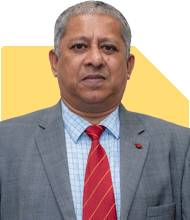
Nayagam P

Nayagam P P  |10886 Answers  |Ask -

Career Counsellor - Answered on Jul 22, 2025

Nayagam is a certified career counsellor and the founder of EduJob360.
He started his career as an HR professional and has over 10 years of experience in tutoring and mentoring students from Classes 8 to 12, helping them choose the right stream, course and college/university.
He also counsels students on how to prepare for entrance exams for getting admission into reputed universities /colleges for their graduate/postgraduate courses.
He has guided both fresh graduates and experienced professionals on how to write a resume, how to prepare for job interviews and how to negotiate their salary when joining a new job.
Nayagam has published an eBook, Professional Resume Writing Without Googling.
He has a postgraduate degree in human resources from Bhartiya Vidya Bhavan, Delhi, a postgraduate diploma in labour law from Madras University, a postgraduate diploma in school counselling from Symbiosis, Pune, and a certification in child psychology from Counsel India.
He has also completed his master’s degree in career counselling from ICCC-Mindler and Counsel, India.
... more
Asked by Anonymous - Jul 22, 2025Hindi

Career

Nie ece vs sit ece vs bmsit ece

Ans: The Electronics & Communication Engineering programmes at National Institute of Engineering (NIE) Mysore, Siddaganga Institute of Technology (SIT) Tumkur, and BMS Institute of Technology and Management (BMSIT) Bangalore each uphold strong accreditation, seasoned faculty, modern labs, robust student support, and varying placement outcomes. NIE Mysore (NAAC B++, established 1946) combines a legacy campus with specialized RF, VLSI, and communications laboratories, achieving a 78% ECE placement rate over the past three years. SIT Tumkur (NAAC A+, VTU affiliated) offers advanced signal-processing and embedded-systems facilities alongside soft-skill training, with ECE placements around 65% and a median package of ?8.75 LPA for all branches. BMSIT Bangalore (NAAC A+, VTU affiliated) leverages strong industry linkages and AI-driven labs yet records a lower 56% ECE placement rate despite an overall 73% campus placement, with median CSE/ECE packages of ?6 LPA. Geographic location also influences internship access and corporate partnerships, with Mysore offering proximity to Bengaluru’s tech corridor and SIT Bangalore-Tumkur facilitating regional IT recruitments.

Recommendation: Considering balanced accreditation, experienced faculty, cutting-edge ECE infrastructure, and consistently higher ECE placement rates, opting for NIE Mysore’s ECE program best aligns with strong employability and research exposure, while SIT Tumkur ECE suits those seeking VTU-backed training with solid median packages, and BMSIT Bangalore ECE serves as a credible alternative for broad industry-oriented learning. All the BEST for a Prosperous Future!

Follow RediffGURUS to Know More on 'Careers | Money | Health | Relationships'.
Career

You may like to see similar questions and answers below
Nayagam P

Nayagam P P  |10886 Answers  |Ask -

Career Counsellor - Answered on Aug 07, 2025

Asked by Anonymous - Aug 05, 2025Hindi
Career
Which should I choose bpit IT , BVCOE ECE or MSIT ECE
Ans: BPIT’s IT program is recognized for its rigorous curriculum, experienced faculty, and modern labs, maintaining solid industry connections and a strategic North Delhi location. Placement rates for IT hover around 58–60% with strong recruiter engagement from tech companies like Amazon, Accenture, and Infosys, and notable alumni success stories, though the median package in recent years is approximately 4.5 LPA. BVCOE ECE features competent faculty, regular industry-academia interactions, all essential facilities, and a placement rate that varies by branch, with ECE typically lagging behind core branches but reporting average packages of 3–5 LPA and a range of recruiters like L&T, Accenture, and Godrej. MSIT ECE is highly regarded for its research-active faculty, robust student bodies like IEEE chapters, comprehensive infrastructure, and a vibrant peer network in West Delhi. Over the past three years, MSIT ECE has achieved a reported 80–90% placement rate, with leading global recruiters (Amazon, Microsoft, Adobe, Accenture) and a steadily increasing recruiter base. The department emphasizes technical skill-building, innovation, and industry exposure, while the college’s brand value and placement support exceed most peer institutions.

Recommendation: Prioritize MSIT ECE for its superior placement outcomes, research activity, and industry interface, followed by BPIT IT for better opportunities in the IT/software domain. BVCOE ECE is a solid option but offers comparatively modest placement results and should be considered if location or special preference applies. All the BEST for a Prosperous Future!

Follow RediffGURUS to Know More on 'Careers | Money | Health | Relationships'.

..Read more

Latest Questions
Nayagam P

Nayagam P P  |10886 Answers  |Ask -

Career Counsellor - Answered on Jan 22, 2026

Asked by Anonymous - Jan 20, 2026Hindi
Career
I'm B.Sc final student. I want to do M.Sc & Phd in physics . Which is best route for me? Please advise. Opting for iiser intg phd program or doing standalone msc? I plan to take NET first and get placed into a job first. Then do phd. But also iiser research facilities are so good. Should I enroll for intg phd? I want to do phd but right after msc is uncertain. Please guide me.
Ans: You face a genuine but resolvable tension between research excellence, geographic accessibility, PhD timing flexibility, and family economic stability. The good news: multiple legitimate pathways exist that address all four constraints simultaneously. Each option offers research-calibre education, institutional credential recognition, and support for your deferred PhD model—where you complete MSc, stabilize family through 2-3 years academic employment, then pursue PhD from a strengthened position. Let's explore your three best options. Option 1: IISER Integrated PhD (Nearest Accessible Campus with Legitimate MSc Exit) - IISER Integrated PhD programs at Pune, Mohali, or Tirupati offer research-intensive physics education where institutional policy explicitly permits voluntary MSc exit after completing 2-year coursework and 5th-6th semester research projects. Your fear about professor judgment regarding early exit is unfounded because thousands of IISER students exit annually with MSc degrees—it's normalized institutional practice, not stigmatized failure. The IISER MSc credential, even with a documented PhD-exit trajectory, remains nationally recognized and highly competitive for academic job market entry. By combining IISER's prestigious brand credibility with your preferred sequencing (MSc → two to three years academic employment → PhD), you address all constraints: geographic flexibility through campus selection, legitimate PhD deferral through institutional exit policy, credential strength through IISER reputation, and family stabilization through employment phase before doctoral commitment. Pursuing this pathway requires: first, identifying which IISER campus (Pune, Mohali, or Tirupati) is geographically accessible from your home; second, preparing strongly for the IISER Aptitude Test; third, explicitly stating in your admission interview that you intend strategic career sequencing (MSc exit after research phase, employment period, then later PhD)—which demonstrates mature planning, not weak commitment; fourth, performing excellently in coursework and research projects to secure strong faculty recommendations; fifth, leveraging your MSc credential to apply for academic positions at colleges, universities, or research institutions like ISRO, DRDO, TIFR; and sixth, after three years professional stability and family consolidation, pursuing PhD from significantly strengthened research background. The unique advantage is that IISER provides a fellowship (Rs.35,000–60,000 monthly) covering relocation costs, allowing gradual family adjustment while building your independent research profile. Option 2: Harish-Chandra Research Institute (HRI) Standalone MSc Physics - Harish-Chandra Research Institute in Prayagraj, Uttar Pradesh, recently launched a standalone MSc Physics program taught directly by faculty members who are Padma Bhushan, Dirac Medal, and Bhatnagar Award recipients—ensuring internationally recognized research mentorship without integrated PhD pressure. The profound advantage here is that MSc is the terminal degree by design, eliminating any concern about "incompleteness" or exit stigma entirely; you're pursuing exactly what you intend from day one. The Prayagraj location in central North India is likely far more geographically accessible than distant southern IISER campuses, addressing your family's relocation constraints meaningfully. HRI's standalone structure naturally accommodates your preferred timeline: complete two-year MSc, pursue two to three years academic employment (leveraging HRI's faculty network connections with universities and research institutions), then undertake PhD from a professionally stabilized position. The research-calibre faculty mentorship ensures that HRI MSc graduates are positioned competitively for both immediate academic positions and future doctoral admissions at premier institutions globally. During your two-year MSc, you'll engage in directed research projects with world-class theoretical physicists in string theory, particle physics, quantum information, and astrophysics—building both technical competence and publication records. Your faculty advisors will provide recommendations unambiguously endorsing your research capabilities and employment readiness without any concern about "only pursuing MSc." Post-MSc, the HRI alumni network facilitates transitions to positions at IISc Bangalore, TIFR Mumbai, IISER campuses, central universities, or research agencies like BARC, DRDO, and ISRO. The financial structure offers affordable living costs compared to metro IISERs, reducing family economic burden. After securing teaching or research positions, typically within 2–3 years you'll have sufficient stability, savings, and professional experience to pursue PhD at premier institutions—with your HRI MSc credential and employment background making you exceptionally competitive for scholarships and selective admissions. Option 3: IIT Madras MSc Physics with Research-Track Employment Pathway - IIT Madras MSc Physics offers a two-year research-calibre program with fifty-four seats and ninety-five percent placement rate specifically in research institutions—directly supporting your academic employment objective without any integrated PhD pressure or ambiguity. Admission occurs through CUET-PG (Common University Entrance Test), which is widely accessible and geographically neutral. The program's unique strength is its direct recruitment ecosystem: ISRO, DRDO, BARC, TIFR, and CSIR-affiliated research institutes conduct campus interviews seeking MSc graduates for research officer and senior research fellow positions, with starting salaries of Rs.35,000–50,000 monthly and clear pathways to scientific positions. While this represents lower initial compensation than industry placement, it's directly aligned with your research-academic career objective and provides government job security, pension benefits, and sabbatical possibilities for later doctoral study. During your two-year MSc, you'll complete rigorous coursework in quantum mechanics, statistical mechanics, and electromagnetic theory alongside advanced electives in particle physics, condensed matter, or astrophysics—your choice depending on research interests. The research project component (thirty credits) is structured with faculty mentors who maintain active research grants and publications, ensuring recommendations carry weight for future opportunities. Critically, IIT Madras faculty networks include connections with academic institutions across India, facilitating pathways to assistant professor positions if research institution employment leads you in that direction. The Chennai location provides a major metropolitan ecosystem: proximity to ICTS (International Center for Theoretical Studies), ISRO Satish Dhawan Space Centre (fifty kilometers away), and diverse professional networking opportunities. After two years MSc completion, you'll transition into documented research institution employment (ISRO or DRDO roles offering clear progression), allowing three years of family economic consolidation, household stabilization, and professional credibility building. Your government position during this phase provides income certainty your family requires while you accumulate research credentials and professional maturity. The post-employment PhD application, supported by both IIT Madras MSc credentials and three years institutional research experience, positions you exceptionally strongly for doctoral admission at IITs, IISERs, IISc, or international universities—with research background making you far more competitive than MSc-direct applicants. Your core anxieties—about professor judgment, credential legitimacy, and PhD deferral competitiveness—are psychologically understandable but empirically unfounded. All three pathways are institutionally legitimate, research-credible, and professionally respected. Your MSc-to-employment-to-PhD sequencing is increasingly normative and enhances, not diminishes, doctoral applications. Choose the pathway nearest your home and execute with excellence; credential recognition and career progression will follow naturally. All the BEST for Your Prosperous Future!

Follow RediffGURUS to Know More on 'Careers | Money | Health | Relationships'.

...Read more

Nayagam P

Nayagam P P  |10886 Answers  |Ask -

Career Counsellor - Answered on Jan 22, 2026

Asked by Anonymous - Jan 20, 2026Hindi
Career
I want to study in iiser. But thing is they don't have standalone msc physics program. Iiser Tvm does have but it is very very far from my home. My parents won't let me go that far. And if i opt for iiser intg phd in physics, i am uncertain i really want to switch to phd just right after msc. I mean would like to think and give time before starting phd. If I chose msc exit option, i'm afraid I won't get recommendations letters from professors or everyone will think me I chose this program just to get stipend. I have plan to do phd but not right after msc. I want to take up a academic job first to stabilize myself and family. But if msc is done from a good college that will give me credibility. Please guide me.
Ans: You face a genuine but resolvable tension between research excellence, geographic accessibility, PhD timing flexibility, and family economic stability. The good news: multiple legitimate pathways exist that address all four constraints simultaneously. Each option offers research-calibre education, institutional credential recognition, and support for your deferred PhD model—where you complete MSc, stabilize family through 2-3 years academic employment, then pursue PhD from a strengthened position. Let's explore your three best options. Option 1: IISER Integrated PhD (Nearest Accessible Campus with Legitimate MSc Exit) - IISER Integrated PhD programs at Pune, Mohali, or Tirupati offer research-intensive physics education where institutional policy explicitly permits voluntary MSc exit after completing 2-year coursework and 5th-6th semester research projects. Your fear about professor judgment regarding early exit is unfounded because thousands of IISER students exit annually with MSc degrees—it's normalized institutional practice, not stigmatized failure. The IISER MSc credential, even with a documented PhD-exit trajectory, remains nationally recognized and highly competitive for academic job market entry. By combining IISER's prestigious brand credibility with your preferred sequencing (MSc → two to three years academic employment → PhD), you address all constraints: geographic flexibility through campus selection, legitimate PhD deferral through institutional exit policy, credential strength through IISER reputation, and family stabilization through employment phase before doctoral commitment. Pursuing this pathway requires: first, identifying which IISER campus (Pune, Mohali, or Tirupati) is geographically accessible from your home; second, preparing strongly for the IISER Aptitude Test; third, explicitly stating in your admission interview that you intend strategic career sequencing (MSc exit after research phase, employment period, then later PhD)—which demonstrates mature planning, not weak commitment; fourth, performing excellently in coursework and research projects to secure strong faculty recommendations; fifth, leveraging your MSc credential to apply for academic positions at colleges, universities, or research institutions like ISRO, DRDO, TIFR; and sixth, after three years professional stability and family consolidation, pursuing PhD from significantly strengthened research background. The unique advantage is that IISER provides a fellowship (Rs.35,000–60,000 monthly) covering relocation costs, allowing gradual family adjustment while building your independent research profile. Option 2: Harish-Chandra Research Institute (HRI) Standalone MSc Physics - Harish-Chandra Research Institute in Prayagraj, Uttar Pradesh, recently launched a standalone MSc Physics program taught directly by faculty members who are Padma Bhushan, Dirac Medal, and Bhatnagar Award recipients—ensuring internationally recognized research mentorship without integrated PhD pressure. The profound advantage here is that MSc is the terminal degree by design, eliminating any concern about "incompleteness" or exit stigma entirely; you're pursuing exactly what you intend from day one. The Prayagraj location in central North India is likely far more geographically accessible than distant southern IISER campuses, addressing your family's relocation constraints meaningfully. HRI's standalone structure naturally accommodates your preferred timeline: complete two-year MSc, pursue two to three years academic employment (leveraging HRI's faculty network connections with universities and research institutions), then undertake PhD from a professionally stabilized position. The research-calibre faculty mentorship ensures that HRI MSc graduates are positioned competitively for both immediate academic positions and future doctoral admissions at premier institutions globally. During your two-year MSc, you'll engage in directed research projects with world-class theoretical physicists in string theory, particle physics, quantum information, and astrophysics—building both technical competence and publication records. Your faculty advisors will provide recommendations unambiguously endorsing your research capabilities and employment readiness without any concern about "only pursuing MSc." Post-MSc, the HRI alumni network facilitates transitions to positions at IISc Bangalore, TIFR Mumbai, IISER campuses, central universities, or research agencies like BARC, DRDO, and ISRO. The financial structure offers affordable living costs compared to metro IISERs, reducing family economic burden. After securing teaching or research positions, typically within 2–3 years you'll have sufficient stability, savings, and professional experience to pursue PhD at premier institutions—with your HRI MSc credential and employment background making you exceptionally competitive for scholarships and selective admissions. Option 3: IIT Madras MSc Physics with Research-Track Employment Pathway - IIT Madras MSc Physics offers a two-year research-calibre program with fifty-four seats and ninety-five percent placement rate specifically in research institutions—directly supporting your academic employment objective without any integrated PhD pressure or ambiguity. Admission occurs through CUET-PG (Common University Entrance Test), which is widely accessible and geographically neutral. The program's unique strength is its direct recruitment ecosystem: ISRO, DRDO, BARC, TIFR, and CSIR-affiliated research institutes conduct campus interviews seeking MSc graduates for research officer and senior research fellow positions, with starting salaries of Rs.35,000–50,000 monthly and clear pathways to scientific positions. While this represents lower initial compensation than industry placement, it's directly aligned with your research-academic career objective and provides government job security, pension benefits, and sabbatical possibilities for later doctoral study. During your two-year MSc, you'll complete rigorous coursework in quantum mechanics, statistical mechanics, and electromagnetic theory alongside advanced electives in particle physics, condensed matter, or astrophysics—your choice depending on research interests. The research project component (thirty credits) is structured with faculty mentors who maintain active research grants and publications, ensuring recommendations carry weight for future opportunities. Critically, IIT Madras faculty networks include connections with academic institutions across India, facilitating pathways to assistant professor positions if research institution employment leads you in that direction. The Chennai location provides a major metropolitan ecosystem: proximity to ICTS (International Center for Theoretical Studies), ISRO Satish Dhawan Space Centre (fifty kilometers away), and diverse professional networking opportunities. After two years MSc completion, you'll transition into documented research institution employment (ISRO or DRDO roles offering clear progression), allowing three years of family economic consolidation, household stabilization, and professional credibility building. Your government position during this phase provides income certainty your family requires while you accumulate research credentials and professional maturity. The post-employment PhD application, supported by both IIT Madras MSc credentials and three years institutional research experience, positions you exceptionally strongly for doctoral admission at IITs, IISERs, IISc, or international universities—with research background making you far more competitive than MSc-direct applicants. Your core anxieties—about professor judgment, credential legitimacy, and PhD deferral competitiveness—are psychologically understandable but empirically unfounded. All three pathways are institutionally legitimate, research-credible, and professionally respected. Your MSc-to-employment-to-PhD sequencing is increasingly normative and enhances, not diminishes, doctoral applications. Choose the pathway nearest your home and execute with excellence; credential recognition and career progression will follow naturally. All the BEST for Your Prosperous Future!

Follow RediffGURUS to Know More on 'Careers | Money | Health | Relationships'.

...Read more

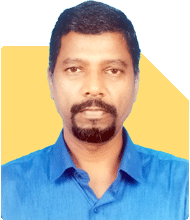
Ramalingam

Ramalingam Kalirajan  |10978 Answers  |Ask -

Mutual Funds, Financial Planning Expert - Answered on Jan 22, 2026

Asked by Anonymous - Jan 21, 2026Hindi
Money
Hi sir, i have around 10 lakhs loan which i initially bought for investing in bitcoin and lost 10 lakhs in the bitcoin scam. To repay my online loan EMI i took new loans which were short term ones which have high interest. 30k loan approved I used to get 26k credited and the repayment amount was 51k. My monthly salary is 50 and my emi payment was more than 1.5 lakhs, I'm trapped in debt and enrolled with lawyer anel for assistance. I missed 3 repayments and had to take expert help but now I thought to check if lawyer panel can really help me with this or not. To recover and get relief from debts i checked for loan consolidation and top loan but no banks are ready to help me with this. Hence I thought to go for loan settlement with the help of lawyer panel. Please suggest whether this is the right step. I have monthly family expenses for around 25k
Ans: I truly appreciate your honesty and courage in sharing this situation. Accepting the mistake, stopping further damage, and asking for help are the most important steps. Many people fall into such debt traps silently. You are choosing to face it, and that itself gives hope.

» Understanding your current financial reality
– Your monthly income is around Rs 50,000
– Family expenses are about Rs 25,000, which are essential and cannot be cut deeply
– EMI burden crossing Rs 1.5 lakh was never sustainable and was bound to collapse
– High-interest short-term online loans are designed in a way that keeps borrowers trapped
– What happened was not poor planning alone, but a structure meant to exploit urgency

» About the bitcoin loss and debt spiral
– The loss is painful, but it is already done and cannot be reversed
– Chasing recovery through fresh loans made the problem bigger
– Taking new loans to pay old EMIs is a classic debt spiral sign
– The most important thing now is to stop taking any new loan, fully and permanently

» Is loan settlement the right step in your case
– When income is not sufficient even for basic expenses plus EMIs, settlement becomes a practical option
– Banks rejecting consolidation clearly shows repayment capacity is broken for now
– Loan settlement is usually the last option, but sometimes it is the right option
– It gives breathing space when repayment has already failed
– It is not a moral failure; it is a financial reset tool

» Role of lawyer panel or debt assistance firms
– Such panels can help in negotiation, documentation, and dealing with recovery pressure
– They can slow down harassment and bring structure to communication
– However, they cannot erase loans magically or protect credit score fully
– You must clearly understand their fees, timeline, and written scope of work
– Never sign blank papers or give full control without transparency

» Important risks you must be aware of before settlement
– Credit score will be damaged for some years
– Future loans will be difficult or costly in the short to medium term
– Settlement requires discipline to save lump sums as agreed
– Any missed commitment during settlement can restart pressure

» What you must immediately stop doing
– Stop all new loans, apps, or borrowing from friends
– Stop believing any promise of “easy recovery” or “quick repair”
– Do not invest or trade with borrowed money again
– Do not hide calls or messages; route everything through one channel

» Cash flow survival plan for the next 12–24 months
– Protect your Rs 25,000 family expense without guilt
– Keep basic living stable; stress-free mind helps recovery
– Whatever remains from salary should go only toward settlement savings
– No investments, no trading, no shortcuts during this phase

» Emotional side and mindset reset
– Guilt and fear are natural but should not control decisions
– This phase is about damage control, not wealth creation
– Once debts are settled and income stabilises, rebuilding is possible
– Many financially strong people today have gone through such low points

» What comes after debt relief
– First priority will be emergency savings
– Then gradual rebuilding of credit discipline
– Only later, slow and controlled investing through proper guidance
– For now, survival and stability are success

» Finally
– Given your income, expenses, and failed repayment structure, loan settlement is a reasonable step
– Lawyer panel can help, but only with full clarity and strict self-control
– Accept temporary credit score damage to protect long-term life stability
– This phase will pass if you stay disciplined and patient
– Financial recovery is slow, but it is absolutely possible

Best Regards,

K. Ramalingam, MBA, CFP,

Chief Financial Planner,

www.holisticinvestment.in

https://www.youtube.com/@HolisticInvestment

...Read more

Ramalingam

Ramalingam Kalirajan  |10978 Answers  |Ask -

Mutual Funds, Financial Planning Expert - Answered on Jan 22, 2026

Asked by Anonymous - Jan 22, 2026Hindi
Money
The gold price today in Bangalore is significantly higher than it was a few months ago, with 22K gold priced at around Rs 15,000 per gram, compared to nearly Rs 12,000 to Rs 13,000 per gram earlier this year. I’m 39 years old, with an ongoing home loan of Rs 42 lakh, upcoming children’s education costs that could easily cross Rs 25 lakh in the next 5 years, and long-term retirement planning for the next 20 to 25 years. At these levels, does it really make sense to invest in gold now, or would increasing EPFO contributions (currently yielding ~8–8.25%) or equity mutual funds targeting 10 to 12% long-term returns be a better strategy? How should someone in this age group practically balance physical gold (jewellery), digital gold or ETFs, EPFO, and traditional savings without stretching their finances or taking on unnecessary risk?
Ans: You are asking a very relevant and mature question at the right age. Your clarity about home loan pressure, children’s education needs, and long retirement horizon shows good financial awareness. That itself is a strong base.

» Gold at current price levels – emotional comfort vs financial role
– Gold prices moving from Rs 12,000–13,000 to around Rs 15,000 per gram can create fear of “missing out”
– Gold should not be judged by recent price movement but by its role in your full financial life
– Gold is not an income-producing asset; it does not give interest, dividend, or cash flow
– At higher price levels, future returns from gold may remain uneven and slow for long periods
– For a 39-year-old with big goals ahead, gold should be a stabiliser, not a growth engine

» Physical gold – where it fits and where it does not
– Jewellery is more of a cultural and family asset, not a pure investment
– Making charges, wastage, and resale deductions reduce actual return
– Physical gold makes sense only for planned family needs like weddings or customs
– Avoid buying jewellery with the idea of wealth creation or education funding
– Keep physical gold exposure limited so it does not lock cash unnecessarily

» Digital gold and gold ETFs – risks many investors ignore
– Digital gold and gold ETFs depend on market liquidity and tracking accuracy
– Prices may not always move exactly in line with physical gold
– There is no control over exit timing during volatile market phases
– Holding gold in demat form adds market risk without giving income benefit
– Gold ETFs do not solve long-term wealth needs like education or retirement

» Why gold should be capped in your overall allocation
– Gold works best as protection, not as a return generator
– Too much gold can slow down overall portfolio growth
– For someone with 20–25 years to retirement, growth assets matter more
– Keeping gold exposure moderate helps balance emotions and stability
– This approach avoids regret both during market highs and lows

» EPFO – your silent strength in the portfolio
– EPFO gives steady, tax-efficient, and low-risk growth
– It brings discipline without daily market stress
– Increasing EPFO contribution improves retirement certainty
– EPFO suits long holding periods and capital safety needs
– It acts as a strong foundation asset, especially with a home loan running

» Equity mutual funds – still relevant even at market highs
– Equity markets will always look “high” at different points in time
– Long holding periods smooth out short-term volatility
– Actively managed equity funds adjust to market conditions better than index funds
– Index funds blindly follow markets and fall fully during corrections
– Active funds aim to protect downside and capture opportunities across cycles

» Why actively managed funds are better than index funds
– Index funds have no flexibility during market stress
– They carry full market risk with no risk management layer
– Active funds can reduce exposure to weak sectors
– Fund managers respond to earnings changes and valuation concerns
– Over long periods, this adaptability supports smoother wealth creation

» Education goals – keep them protected and time-aligned
– Children’s education is a non-negotiable goal
– Avoid risky concentration or emotional assets for this purpose
– Equity mutual funds with gradual risk reduction work better here
– Gold should not be the primary asset for education planning
– Stability and visibility matter more than price excitement

» Home loan vs investments – practical balance
– Do not stretch monthly cash flow chasing all options at once
– Keep EMIs comfortable so investments continue smoothly
– Avoid aggressive gold buying while a large loan is running
– Controlled debt and steady investing work better together
– Peace of mind is also a financial return

» Traditional savings – role and limits
– Bank savings and deposits are for liquidity, not growth
– Keep only emergency and short-term needs here
– Excess money parked here loses value over time
– Do not mix safety money with long-term goals
– Clear separation brings discipline

» Finally
– At current gold prices, avoid heavy fresh allocation
– Keep gold limited and purpose-driven, not return-driven
– Strengthen EPFO for stability and retirement certainty
– Use actively managed equity mutual funds for growth needs
– Balance safety, growth, and emotions without stretching finances
– This steady approach builds confidence across all life stages

Best Regards,

K. Ramalingam, MBA, CFP,

Chief Financial Planner,

www.holisticinvestment.in

https://www.youtube.com/@HolisticInvestment

...Read more

Ramalingam

Ramalingam Kalirajan  |10978 Answers  |Ask -

Mutual Funds, Financial Planning Expert - Answered on Jan 21, 2026

Asked by Anonymous - Jan 21, 2026Hindi
Money
I’m a 35-year-old salaried professional aiming to build a long-term investment portfolio over the next 10 years, with a monthly investment budget of around Rs 15,000. I'm tempted to buy silver as an investment because silver prices today (Rs 330 per gram) look much more 'affordable' than gold prices today approx 15000 per gram). But I also know that price per gram doesn’t reflect actual returns when comparing silver vs gold investment performance. Is viewing silver as a cheaper investment option a mental trap for small investors, or does investing in silver genuinely offer better upside potential in the long run?
Ans: You are thinking in the right direction. You are questioning the price tag, not getting carried away by it. This itself shows maturity and long-term thinking. Many investors do not pause at this stage. You deserve appreciation for that clarity.

» Price per gram versus wealth creation reality
– Seeing silver at Rs 330 per gram and gold at around Rs 15,000 per gram creates a strong emotional pull
– Our mind feels silver is “cheap” and gold is “expensive”
– This is a mental shortcut, not an investment logic
– Wealth grows by percentage return over time, not by how many grams we can buy
– One gram at Rs 100 that grows slowly can underperform one gram at Rs 10,000 that grows steadily

» Why silver looks attractive but behaves differently
– Silver has a dual role: precious metal and industrial metal
– Industrial demand makes silver prices volatile and cyclical
– When the economy slows, silver demand can fall sharply
– This leads to long periods of price stagnation
– For a salaried professional with monthly investing, such swings can test patience

» Gold and silver are not growth assets
– Both gold and silver do not create earnings or cash flow
– Their value depends mainly on demand, inflation fear, and currency movement
– Over long periods, they protect purchasing power but rarely multiply wealth
– Expecting strong upside from silver over 10 years is usually unrealistic
– This is especially true when the goal is disciplined monthly investing

» Is silver a mental trap for small investors
– Yes, for many investors it is
– “I can buy more grams” gives psychological comfort
– But comfort does not equal better returns
– Silver often underperforms expectations when held for long durations
– Storage cost, purity issues, and liquidity challenges further reduce actual benefit

» Does silver have any role at all
– Silver can be used as a small diversification tool
– It should never be the core of a long-term portfolio
– Allocation should be limited and purpose-driven
– Treat it as a hedge, not a growth engine
– Overexposure can slow overall portfolio progress

» Better alignment with your 10-year goal
– At age 35, your biggest strength is time
– Regular monthly investing suits growth-oriented assets
– Actively managed equity mutual funds suit this phase well
– Active fund managers can adapt to market changes and protect downside
– This flexibility matters more than metal price movements

» Why market-linked metal products are not ideal substitutes
– They closely track metal prices without adding value
– No active decision-making or downside control
– Returns depend only on price cycles
– This makes long-term compounding weak
– Actively managed funds aim to grow wealth, not just track prices

» Risk, emotion, and discipline
– Silver prices can move sharply up and down
– Such movement can tempt investors to time the market
– Timing mistakes hurt long-term results
– Simple, steady investing works better than reacting to metal prices
– Discipline matters more than affordability

» Tax and liquidity awareness
– Physical silver has making charges and selling spreads
– Tax treatment can reduce post-tax returns
– Liquidity is not always smooth during urgent needs
– These frictions are often ignored at the buying stage

» 360-degree portfolio thinking
– Your Rs 15,000 monthly budget is a powerful habit
– Focus on assets that reward time and consistency
– Use metals only as support, not as drivers
– Growth assets should do the heavy lifting
– Review allocation periodically with a Certified Financial Planner

» Final Insights
– Silver looking affordable is largely a mental illusion
– Long-term wealth is built by return quality, not unit price
– Silver does not offer reliable long-term upside for salaried investors
– Limited exposure is fine, dependency is not
– Staying focused on growth-oriented investing will serve your 10-year goal far better

Best Regards,

K. Ramalingam, MBA, CFP,

Chief Financial Planner,

www.holisticinvestment.in

https://www.youtube.com/@HolisticInvestment

...Read more

DISCLAIMER: The content of this post by the expert is the personal view of the rediffGURU. Investment in securities market are subject to market risks. Read all the related document carefully before investing. The securities quoted are for illustration only and are not recommendatory. Users are advised to pursue the information provided by the rediffGURU only as a source of information and as a point of reference and to rely on their own judgement when making a decision. RediffGURUS is an intermediary as per India's Information Technology Act.

Close  

You haven't logged in yet. To ask a question, Please Log in below
Login

A verification OTP will be sent to this
Mobile Number / Email

Enter OTP
A 6 digit code has been sent to

Resend OTP in120seconds

Dear User, You have not registered yet. Please register by filling the fields below to get expert answers from our Gurus
Sign up

By signing up, you agree to our
Terms & Conditions and Privacy Policy

Already have an account?

Enter OTP
A 6 digit code has been sent to Mobile

Resend OTP in120seconds

x