Home > Career > Question
Need Expert Advice?Our Gurus Can Help

Which online MBA program is best for working professionals in India?
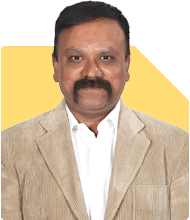
Patrick

Patrick Dsouza  |1441 Answers  |Ask -

CAT, XAT, CMAT, CET Expert - Answered on Jun 27, 2024

Patrick Dsouza is the founder of Patrick100.
Along with his wife, Rochelle, he trains students for competitive management entrance exams such as the Common Admission Test, the Xavier Aptitude Test, Common Management Admission Test and the Common Entrance Test.
They also train students for group discussions and interviews.
Patrick has scored in the 100 percentile six times in CAT. He achieved the first rank in XAT twice, in CET thrice and once in the Narsee Monjee Management Aptitude Test.
Apart from coaching students for MBA exams, Patrick and Rochelle have trained aspirants from the IIMs, the Jamnalal Bajaj Institute of Management Studies and the S P Jain Institute of Management Studies and Research for campus placements.
Patrick has been a panellist on the group discussion and panel interview rounds for some of the top management colleges in Mumbai.
He has graduated in mechanical engineering from the Motilal Nehru National Institute of Technology, Allahabad. He has completed his masters in management from the Jamnalal Bajaj Institute of Management Studies, Mumbai.... more

Yash Question by Yash on Jun 26, 2024Hindi
Listen
Career

Hello! Could you let me know the best Internationally recognized Online MBA degree program I can opt for, while in India?

Ans: Wharton, Kellogg, etc
Career

You may like to see similar questions and answers below

Latest Questions
Reetika

Reetika Sharma  |521 Answers  |Ask -

Financial Planner, MF and Insurance Expert - Answered on Feb 03, 2026

Money
Dear Sir, I'm 54 year old and My sons are 23 and 21 years old. I would like to know, in SBI Life Policies / any other brand of Life Policies, Term Insurance and Health Insurance. At present, specifically what are the best beneficial wealth policies, Term Insurance and Health Insurance Vs PPF, Vs MF, vs. NPS v FD vs Trading in the Share Market including ETFs, as well as with Sudden Death Protection, which suits for me and my both son's age and all of three income source, such as a salary of 6-8L /Annum. Pls.elaborate all these request with PROS and CONS on each segment for three of us including Retirement plan and policies/investments. .Thanks, from Chennai (1st Feb 2026)
Ans: Hi,

I understand that 3 of you come under salary bracket of 6 to 8 lakhs. And you want to know products suitable for you and both sons. Let us discuss pros and cons of each below along with other major necessities you should have:

- As a family, have a dedicated emergency fund of 6 months worth expenses in FD. If your monthly expense is 50k, have 3 lakhs FD and if monthly expense is 1 lakh, habe 6 lakhs worth FD. This fund will safeguard your expenses in case of any uncertain situation.
- As earning members, all of you should have a pure term cover of 1 crore each. Make sure to take proper term insurance and do not mix with any other rider / policy.
- Proper health insurance for family. Avoid mixing it with wealth policies and other policies. Buy proper health insurance for whole family. Can go for HDFC Ergo as it has the highest claim settlement ratio. Avoid going for cheaper premium policies.

Now, when these 3 requirements are done, start investing the surplus to meet your financial goals. Firstly, list all financial goals and invest.
- SBI Life policies - not recommended. Go for proper Term Insurance of Max Life or HDFC Life.
- Wealth Policies - not recommended as these come with high commission end products. It is always better to keep insurance and investment separate. One shall not expect insurance premiums as investment, insurance is always a cover against unforeseen risk and it should be kept like that.
Hence, do not mix your insurance with investment. Avoid all wealth policies and ULIPs and LIC policies.

For investment, choose the following:
- PPF - not recommended if you have an ongoing EPF.
- NPS - not for your sons as the amounts will be locked till 60 years.
- MF - recommended for all. you can choose from a variety of equity and debt instruments wrt your goals and risk capacity. It will generate upto 15% annual returns to meet your financial goals. Funds in MF is not locked and flexible.
- FD - use it only for emergency fund.
- Share market - not recommended. The way you will not google and cure yourself for an illness, same way you cannot google and invest. Take proper help.

You should work with an advisor who will understand your risk appetite and make an investment plan for your family.
Hence do consult a professional Certified Financial Planner - a CFP who can guide you with exact funds to invest in keeping in mind your age, requirements, financial goals and risk profile. A CFP periodically reviews your portfolio and suggest any amendments to be made, if required.

Let me know if you need more help.

Best Regards,
Reetika Sharma, Certified Financial Planner
https://www.instagram.com/cfpreetika/

...Read more

Ramalingam

Ramalingam Kalirajan  |11010 Answers  |Ask -

Mutual Funds, Financial Planning Expert - Answered on Feb 03, 2026

Money
I have invested in SBI silver ETF FoF Direct Fund Growth. In 30 days i was getting 60percent returns but silver rates down the return is only 28percent. So may i stay invested OR withdraw the investment.
Ans: Appreciate your timely observation and honesty in reviewing your investment. Many investors ignore such sharp movements. You noticed it early, which itself is a strength.

» Understanding What Happened
– Silver is a highly volatile asset
– Price movements are driven by global factors, not business growth
– Sharp rises are often followed by sharp corrections
– A 60 percent short-term rise was abnormal and not sustainable

» Nature of Silver as an Asset
– Silver does not generate earnings or cash flow
– Returns come only from price movement
– It does not compound like equity mutual funds
– Long-term wealth creation from silver is uncertain

» Risk of Staying Fully Invested
– High volatility can test patience and emotions
– Gains can reduce very fast, as you already experienced
– If markets turn against commodities, recovery may take long
– Silver should not be treated as a core long-term investment

» Direct Fund Concern
– You are holding a Direct Fund, which lacks professional handholding
– No Certified Financial Planner is guiding entry, exit, or allocation
– In volatile assets like silver, emotional decisions are common
– Regular funds through an MFD with CFP credential help manage timing and discipline

» Decision Insight: Stay or Withdraw
– If the investment was made for short-term profit, partial or full exit is sensible
– Booking gains protects capital and avoids regret
– If held for diversification, allocation should be very limited
– Silver exposure should never dominate a long-term portfolio

» Better Portfolio Alignment
– Long-term goals need assets that grow steadily
– Actively managed equity mutual funds adjust to market cycles
– They reduce downside risk through active decisions
– This supports your wealth goal better than commodities

» Tax Awareness
– Short-term gains on such investments can attract higher tax
– Frequent entry and exit reduces post-tax return
– Discipline matters more than timing in long-term planning

» Finally
– Do not let recent high returns anchor your decision
– Protect gains where the asset lacks compounding power
– Keep commodities as a small support, not a return engine
– Align investments with goals, not market excitement

Best Regards,

K. Ramalingam, MBA, CFP,

Chief Financial Planner,

www.holisticinvestment.in

https://www.youtube.com/@HolisticInvestment

...Read more

Ramalingam

Ramalingam Kalirajan  |11010 Answers  |Ask -

Mutual Funds, Financial Planning Expert - Answered on Feb 03, 2026

Asked by Anonymous - Feb 03, 2026Hindi
Money
Hi Sir, I'm 38 years old. Currently doing an SIP of 55000 in these funds in 2 separate portfolios (mine and wife's). My risk profile is moderate to high. I'm targeting to keep investing for next 9 years. Currently my mutual fund portfolio corpus is 24 lac. Target corpus is 1.75 Cr to 2 Cr in 2035. Is this achievable? Do I need any step-ups yearly? Portfolio 1: parag parikh flexicap - 12000 hdfc mid cap - 5500 mirae asset large & mid cap - 8000 sbi gold fund - 5000 sbi multi asset fund - 5500 Portfolio 2: invesco midcap - 5500 ICICI multi asset allocation - 2000 hdfc flexicap - 4500 icici pru nasdaq 100 - 6000 axis silver FOF - 1000 Please review and suggest any changes needed.
Ans: Appreciate your discipline and clarity at a young age. A monthly SIP of Rs 55,000 across two portfolios, a long holding period, and a clear target already put you ahead of many investors. Your question is practical and well-thought.

» Current Position and Direction
– Age 38 gives you time, which is the biggest strength in wealth creation
– Existing corpus of around Rs 24 lakh provides a good base
– Nine years is a meaningful but not very long horizon, so portfolio balance matters
– Moderate to high risk profile is suitable, but risk must be controlled, not pushed blindly

» Target Corpus Reality Check
– A target of Rs 1.75 Cr to Rs 2 Cr by 2035 is ambitious but possible
– With the current SIP alone, reaching the higher end will be challenging without increases
– Markets do not grow in straight lines; returns will be uneven across years
– The gap between “possible” and “comfortable” will be filled by step-ups, not by taking extra risk

» Need for Yearly Step-Ups
– Yearly SIP step-up is strongly recommended
– Even a small annual increase linked to income growth improves probability a lot
– Step-ups reduce pressure on returns and improve outcome consistency
– This approach respects your risk profile and avoids stress during market volatility

» Portfolio Structure Assessment
– Overall equity exposure is on the higher side, which suits your age
– Mid-oriented exposure is meaningful, but concentration risk must be watched
– Flexi and diversified equity funds play a stabilising role and should remain core
– Having two portfolios is fine, but both are moving in a similar direction

» Observations on Overseas and Passive-Style Exposure
– Exposure linked to overseas market trackers increases currency and policy risk
– Passive-style funds move exactly with the market and do not protect on the downside
– In falling or sideways markets, there is no decision-making support
– Actively managed equity funds can shift sectors, reduce cash burn, and manage risk better
– For long goals, active management adds value through discipline, not prediction

» Commodity-Linked Allocations Insight
– Gold and silver-linked funds are not growth assets
– They do not compound like equity over long periods
– Such allocations are useful only as small stabilisers, not return drivers
– Higher allocation here may slow your journey towards the target corpus

» Diversification and Overlap Check
– Multiple funds with similar styles may create overlap without adding value
– Too many themes dilute focus and tracking ability
– A cleaner structure with clear roles for each fund improves control
– Both portfolios can be aligned better to avoid duplication

» Tax Awareness for Long-Term Planning
– Equity mutual fund gains beyond Rs 1.25 lakh are taxed at 12.5% for long term
– Short-term equity gains attract higher tax, so holding discipline is important
– Churn and frequent switching reduce post-tax returns
– A stable portfolio is more tax-efficient than an active trading mindset

» What Changes Are Sensible
– Reduce dependence on passive or commodity-linked exposure
– Strengthen core actively managed diversified equity allocation
– Maintain balance between growth and stability, not themes
– Introduce annual SIP step-ups aligned with income growth
– Review once a year, not every market cycle

» Final Insights
– Your goal is achievable with discipline, not aggression
– Time, consistency, and step-ups will matter more than chasing returns
– Simplification will improve clarity and confidence
– Staying invested during dull phases will decide success more than fund selection

Best Regards,

K. Ramalingam, MBA, CFP,

Chief Financial Planner,

www.holisticinvestment.in

https://www.youtube.com/@HolisticInvestment

...Read more

Ramalingam

Ramalingam Kalirajan  |11010 Answers  |Ask -

Mutual Funds, Financial Planning Expert - Answered on Feb 02, 2026

Asked by Anonymous - Feb 01, 2026Hindi
Money
Hi Sir, i am 40 years age and started investing in mutual funds from last 6 months in sip around 30k. i am currently investing in motilal oswal mid cap, parig parak flexi cap, sbi contra fund, icici multi asset , nippon midcap . i can invest in long term around 5 to 10 years but currently not seeing any growth in these. is it good to continue in these funds or can i add or remove any other funds. please suggest. Thanks, Vamshi
Ans: Vamshi, it is good to see that you started early and are investing a steady Rs.30,000 every month. Beginning SIP at 40 and thinking long term shows maturity and patience. The concern you are feeling is common in the first year, and it does not mean you have done anything wrong.

» Time frame and expectations
– Six months is a very short period for equity mutual funds.
– Equity works best when given time to pass through ups and downs.
– In the early phase, SIP units get accumulated more than showing returns.
– Real growth usually becomes visible after a few years, not months.

» Why growth is not visible right now
– Markets do not move in a straight line. Sideways and volatile phases are normal.
– Mid-cap oriented funds move slower during uncertain periods.
– SIP is doing its job quietly by buying more units at different levels.
– Lack of short-term growth is not a sign of poor fund quality.

» Review of your current fund mix
– Your portfolio has strong exposure to mid-cap style funds.
– Mid-cap funds can give good returns but can test patience in short periods.
– You also have diversified and multi-asset style exposure, which adds balance.
– Overall, the structure is growth-oriented but slightly tilted towards higher volatility.

» Whether to continue or make changes
– Stopping or changing funds just because of 6-month performance is not advisable.
– Frequent changes usually hurt long-term returns.
– At this stage, continuation is more important than replacement.
– Any change should be based on asset balance, not recent returns.

» What can be improved going forward
– Add stability by increasing allocation to diversified large and flexible equity styles.
– Keep mid-cap exposure, but avoid adding too many similar funds.
– Ensure each fund plays a clear role, not overlapping the same stocks.
– Avoid chasing recent performers.

» SIP discipline and behaviour
– Continue SIP without interruption for at least a few years.
– Do not check portfolio too often; quarterly review is enough.
– Volatility in early years actually helps long-term investors.
– Patience is more valuable than timing.

» Risk and goal alignment
– A 5 to 10 year horizon is suitable for equity investing.
– If goals are closer to 5 years, balance is more important than aggression.
– If goals are closer to 10 years, staying invested matters more than short-term noise.
– Clear goal tagging will give confidence during weak phases.

» 360-degree perspective
– Ensure you have adequate emergency fund outside mutual funds.
– Health and term insurance should be in place to protect investments.
– Avoid using equity investments for short-term needs.
– Keep SIP amount flexible as income grows.

» Final Insights
– Your concern is natural, but your action so far is sensible.
– Six months is too early to judge equity mutual funds.
– Do not stop SIP or switch funds based on short-term returns.
– Improve balance slowly, not urgently.
– Consistency and patience will reward you over time.

Best Regards,

K. Ramalingam, MBA, CFP,
Chief Financial Planner,
www.holisticinvestment.in

https://www.youtube.com/@HolisticInvestment

...Read more

Ramalingam

Ramalingam Kalirajan  |11010 Answers  |Ask -

Mutual Funds, Financial Planning Expert - Answered on Feb 02, 2026

Money
I am 61 years; medical expense is zero; disciplined life style; and minimalist life style. - I stopped major investing; instead, I am withdrawing from the corpus. on a simple calculation the present expenses for 15 years is equal to my present corpus at market value. in this circumstances, I would like to know should I reduce or increase my SWP or this 15 years calculation is okay..!! please guide me.
Ans: Your discipline, simple lifestyle, and clear thinking at age 61 deserve genuine appreciation. Reaching a stage where your present corpus can support 15 years of expenses shows strong financial habits and self-control. This already puts you in a position of strength and choice.

» Understanding your current position
– You have minimal medical expenses today and follow a disciplined, minimalist life. This reduces pressure on your corpus.
– You have consciously stopped fresh investing and moved to withdrawal mode. This is natural at this life stage.
– Your current calculation shows that if expenses remain the same, the corpus can last around 15 years at today’s market value.
– This indicates balance, but it should not be treated as a fixed or permanent number.

» Why a straight 15-year calculation needs review
– Expenses rarely stay flat for 15 years, even with a simple lifestyle. Small increases add up over time.
– Health costs may be zero now, but ageing can change this suddenly, not gradually.
– Market value of corpus will move up and down. Withdrawal during weak phases can reduce longevity of money.
– Inflation silently reduces purchasing power, even for basic living costs.

» Assessment of your current SWP level
– If your SWP exactly matches today’s expenses, it is not aggressive, but it is also not conservative.
– A SWP that leaves no room for future uncertainty can slowly increase risk in later years.
– Your discipline is a big positive, but the plan should not depend only on discipline staying perfect forever.

» Should you reduce or increase your SWP
– Increasing SWP is not advisable at this stage unless there is surplus income from other safe sources.
– Maintaining the same SWP may work in the short term, but it needs regular review, not a one-time decision.
– A small reduction, even if not immediately needed, can add comfort and extend corpus life.
– The goal is not to maximise withdrawal, but to avoid regret in later years.

» How to think about SWP going forward
– Treat SWP as flexible, not fixed for 15 years.
– Review withdrawal once a year based on expenses, health, and market condition.
– During good market periods, you may continue smoothly.
– During weak market phases, be ready to pause or trim SWP slightly. This protects the core corpus.

» Health and contingency planning
– Even with zero medical expense today, a separate health buffer within the corpus is important.
– This buffer should not be touched for regular living costs.
– This reduces stress and avoids forced withdrawals during emergencies.

» Emotional comfort and quality of life
– Your minimalist life already supports peace of mind.
– A slightly conservative SWP often gives better sleep than an exact-match calculation.
– Financial plans at this stage should reduce anxiety, not test limits.

» Final Insights
– Your 15-year calculation is a good starting point, not a final answer.
– Avoid increasing SWP.
– Consider a modest reduction or at least keep flexibility to adjust.
– Annual review is more important than perfect maths today.
– Your discipline and simplicity are your biggest assets; protect them with a margin of safety.

Best Regards,

K. Ramalingam, MBA, CFP,
Chief Financial Planner,
www.holisticinvestment.in

https://www.youtube.com/@HolisticInvestment

...Read more

Naveenn

Naveenn Kummar  |243 Answers  |Ask -

Financial Planner, MF, Insurance Expert - Answered on Feb 01, 2026

Asked by Anonymous - Feb 01, 2026Hindi
Money
Dear Sir, My Son was born with Beta thalassemia major, at the age of 3yrs he under went BMT at Mazumdar Shaw NH Hospital Bangalore in 2013 which was successful, now he is 16.4yrs again he has been diagnosed once again with Beta thalassemia after a gap of 13yrs, his Doctor say it rare case of failure & once again he need to under go BMT, plz advise what we need to do , can we legally make a claim with hospital for failure of BMT. previously we paid more than 10lac now they are demanding 20 to 25lac, which difficult to arrange such huge amount.
Ans: First of all, I understand how overwhelming and frightening this situation feels. A second bone marrow transplant is not only a medical decision, it becomes an emotional and financial storm for the entire family.

Please take a deep breath. Right now, the most important thing is to move step by step, with clarity and support, instead of panic.

Let me guide you in the most sensible and practical way forward.

1. Do not agree immediately for a second BMT without full confirmation

Before taking such a high risk and costly step, it is extremely important to confirm whether this is truly relapse or graft failure.

Please ask the doctor urgently for these key tests:

Chimerism Test (this is the most important)
This will show whether the donor marrow is still functioning.

Hemoglobin electrophoresis or HPLC

Genetic confirmation of recurrence

Bone marrow evaluation

Full transplant summary from 2013

Sometimes what looks like “thalassemia again” may actually be mixed chimerism, which can sometimes be managed without a full second transplant.

Do not decide until this is clearly confirmed.

2. Take a second expert opinion within 7 to 10 days

A second transplant is a major step. A second opinion can completely change the treatment plan.

Some of the best transplant centers in India are:

CMC Vellore
Tata Memorial Hospital, Mumbai
Apollo Chennai
PGI Chandigarh
AIIMS Delhi

Ask your current hospital for all reports and records in one complete file and consult quickly.

3. Negotiate strongly with the hospital for financial support

Please remember this clearly:

Hospitals can reduce costs significantly under charity, CSR support, and welfare schemes.

You should immediately request:

Concessional package
CSR or charity quota support
Installment payment option
Government or NGO assistance

Go directly to the Patient Welfare Office or Medical Superintendent and say clearly:

“We cannot afford 25 lakhs. Please place us under financial assistance support.”

Many families get 30 to 50 percent reduction when they push firmly.

Ask for a written revised estimate.

4. Insurance roadmap that actually works

Do not just ask “Will it cover?”

Do this exact process:

Check your policy wording for:

Bone Marrow Transplant
Stem Cell Transplant
Day care procedures

Apply for pre authorization before admission

If rejected, file escalation immediately

Group insurance through employer usually has higher chance of approval

Even though thalassemia is genetic, continuous insurance often still covers hospitalization and transplant procedures.


5. Government funding options that work in real cases

Please apply immediately. Do not delay even one week.

Practical sources include:

Ayushman Bharat (PMJAY)
Karnataka CM Relief Fund
PM National Relief Fund (PMNRF)
Health Minister Discretionary Grant

Many transplant cases receive support through these funds.

Hospital social workers usually help with forms.

Start applications this week.

6. NGOs that genuinely help thalassemia patients

These organizations are active and supportive:

Sankalp India Foundation
Cure2Children Foundation
Thalassemia Patients Advocacy Group

They help with funding, donor support, and correct guidance.

Write to all three with reports and hospital estimate.

7. Crowdfunding is the fastest support route today

Many families are able to raise 10 to 20 lakhs within 2 to 4 weeks through:

Milaap
Ketto
ImpactGuru

You will need:

Doctor’s letter
Hospital estimate
Patient photo
ID proof

Hospitals also cooperate in documentation.

8. Legal action is not the priority right now

I will be honest with you.

A transplant functioning for 13 years is usually not treated as negligence easily.

Legal cases take years and will not solve today’s urgent need.

First focus on:

Correct diagnosis
Second opinion
Financial assistance
Insurance
Relief funds
NGO support

Legal route can be explored later only if clear malpractice evidence emerges.

9. Ask the doctor these 6 direct questions tomorrow

Please write these down:

Is this graft rejection or true recurrence?
What is the current chimerism percentage?
Are there non transplant options before a second BMT?
What is the success rate in his specific case?
Will the same donor work or is a new donor needed?
What is the minimum possible cost after concession?

Do not leave without clear answers.

10. Immediate checklist for today

Collect these documents urgently:

2013 discharge summary
Current reports and diagnosis
Doctor recommendation letter
Hospital cost estimate
Insurance card and policy copy
Income certificate (needed for relief funds)

These will be required everywhere.

Final words

Please remember, you are not helpless.
There are medical options, financial support routes, and real organizations that can help you.

Just do not take any rushed decision.

Take one step at a time:

Confirm diagnosis
Second opinion
Negotiate assistance
Apply for funds
Reach NGOs
Start crowdfunding if needed

Naveenn Kummar
Chief Financial Planner | AMFI Registered MFD
https://members.networkfp.com/member/naveenkumarreddy-vadula-chennai

...Read more

DISCLAIMER: The content of this post by the expert is the personal view of the rediffGURU. Investment in securities market are subject to market risks. Read all the related document carefully before investing. The securities quoted are for illustration only and are not recommendatory. Users are advised to pursue the information provided by the rediffGURU only as a source of information and as a point of reference and to rely on their own judgement when making a decision. RediffGURUS is an intermediary as per India's Information Technology Act.

Close  

You haven't logged in yet. To ask a question, Please Log in below
Login

A verification OTP will be sent to this
Mobile Number / Email

Enter OTP
A 6 digit code has been sent to

Resend OTP in120seconds

Dear User, You have not registered yet. Please register by filling the fields below to get expert answers from our Gurus
Sign up

By signing up, you agree to our
Terms & Conditions and Privacy Policy

Already have an account?

Enter OTP
A 6 digit code has been sent to Mobile

Resend OTP in120seconds

x