Home > Career > Question
Need Expert Advice?Our Gurus Can Help

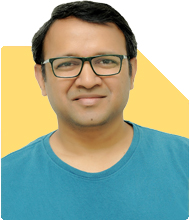
Neeraj

Neeraj Batra  | Answer  |Ask -

CA, CS, Commerce Expert - Answered on Aug 10, 2023

CA Neeraj Batra is a director and a faculty member at DGS CAPS Learning Private Limited, a coaching institute for Chartered Accountancy and Company Secretaryship.
He has been teaching mathematics to CA, CS and commerce aspirants for over 11 years.
He has taught accounts and finance to IRS officers at the National Academy of Direct Taxes for three years and conducted numerous seminars at schools, colleges and MBA institutes in India.
Under his mentorship, several students have topped the competitive exam and secured All India Ranks.
Batra topped CA Intermediate (PCC) exam from Nagpur in 2009 and completed his CA and CS at the age of 21.
He has also cleared CFA (USA) Level 1.... more

krupa Question by krupa on Jun 20, 2023Hindi
Listen
Career

HELLO ANKIT, my son recently completed BBI, now he is confused to decide further study. which is good for him, MBA or CFA?

Ans: Depends on Interest. CFA is towards stocks, portfolios, equity research, etc. MBA has varied options like HR, Finance, Marketing. Do find his inclination by going through syllabus, job profiles etc
Career

You may like to see similar questions and answers below
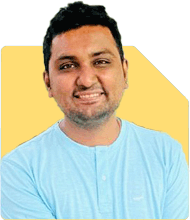
Abhishek

Abhishek Shah  | Answer  |Ask -

HR Expert - Answered on Jun 23, 2023

Listen
Career
Hello Abhishek, my son recently completed BBI, now he is confused to decide further study. which is good for him, MBA or CFA?
Ans: Hello Krupa,

I can provide some guidance to help your son make an informed decision between pursuing an MBA or a CFA (Chartered Financial Analyst) designation. Both paths have their own advantages and considerations, so it's important to assess your son's interests, career goals, and personal preferences.

MBA (Master of Business Administration):
An MBA is a versatile degree that offers a broader education in business and management. It covers various areas such as finance, marketing, strategy, operations, and leadership. Pursuing an MBA can be beneficial if your son aims to develop a well-rounded skill set, explore diverse business functions, and potentially move into management roles in various industries. It is particularly valuable for individuals seeking career advancement or aiming to start their own businesses.

CFA (Chartered Financial Analyst):
On the other hand, the CFA designation is highly specialized and focuses specifically on finance and investment management. It is a globally recognized certification that demonstrates expertise in areas such as investment analysis, portfolio management, financial planning, and ethics. If your son is passionate about finance, investments, or working in the investment industry, the CFA program can provide him with specialized knowledge and enhance his credibility in the field. It is particularly valuable for roles such as portfolio managers, research analysts, and investment advisors.

To make a decision, your son should consider the following factors:
Interests and Career Goals: Assess your son's specific interests within the broader business and finance field. If he enjoys a wider range of business functions and aspires to take on managerial positions, an MBA may be a better fit. If he has a strong passion for finance and desires a career focused on investment analysis and portfolio management, the CFA path may be more suitable.

Time and Commitment: Consider the time commitment required for each option. An MBA program typically lasts for one to two years, while the CFA program requires passing three levels of exams that can take several years to complete. Your son should evaluate his willingness to commit to the necessary time and effort for each path.

Networking and Industry Exposure: Evaluate the networking and industry exposure opportunities associated with each option. MBA programs often provide extensive networking opportunities through alumni networks and internship placements, while the CFA program offers access to a global community of finance professionals.

Financial Considerations: Assess the financial aspects of both options, including tuition fees, living expenses, and potential return on investment. MBA programs can be more expensive, but they may also lead to higher earning potential in the long run. The cost of pursuing the CFA designation primarily includes exam fees and study materials.

Ultimately, the decision between pursuing an MBA or a CFA depends on your son's career aspirations, personal interests, and long-term goals. Encourage him to thoroughly research and consider the pros and cons of each option, and perhaps seek advice from professionals currently working in the fields of finance and business management. This will help him make an informed choice that aligns with his interests and maximizes his career prospects.

Regards,
Abhishek Shah

..Read more

Latest Questions
Ramalingam

Ramalingam Kalirajan  |11091 Answers  |Ask -

Mutual Funds, Financial Planning Expert - Answered on Mar 31, 2026

Money
I am Snehansu Ranjan Roy. I am holding one Motilal oswal midcap mutual fund for more than One year now. Initially it was going well in 2024-25. By by end of 2025 the fund was loosing steam and now has lost almost 15% from its peak. Now I understand that due to low return in IT stocks in their port folio the fund is underperforming. I would like your advice as to hold on for some more time now or switch gradually from this fund to some Multi asset fund which are giving better returns in todays market, since I was thing of starting SwP from the fund since it is more than one year now. Thanking you, Snehansu Ranjan Roy.
Ans: You have taken a very thoughtful step by reviewing your mutual fund performance after one year and also thinking about starting SWP. This shows good financial awareness and discipline. Many investors react emotionally during mid-cap corrections, but you are analysing calmly. That is a strong positive sign.

Now let us evaluate your situation properly before deciding whether to hold or switch.

» Understanding why your midcap fund is correcting

– Midcap funds normally move faster up and also faster down compared to large cap funds
– A 15% fall from peak is not unusual in midcap category
– Underperformance due to sector exposure like IT is usually temporary, not permanent
– Fund performance should be judged across one full market cycle (minimum 3–5 years)

So one year is too short a time to judge a midcap strategy.

Many midcap funds corrected during late 2025 because valuations became high earlier. This correction is part of the cycle.

» Whether starting SWP from a midcap fund is suitable now

This is a very important point.

SWP works best when:

– fund volatility is low
– returns are stable
– downside risk is limited

Midcap funds do not match these conditions.

If SWP starts from a volatile fund:

– units get redeemed during market fall
– long-term growth reduces
– capital erosion risk increases

So starting SWP from a midcap fund is generally not ideal.

» Whether shifting gradually to a multi asset fund makes sense

Your thinking here is practical and mature.

Multi asset funds invest across:

– equity
– debt
– gold and sometimes other assets

Because of this:

– volatility reduces
– downside risk becomes lower
– SWP sustainability improves
– emotional comfort increases

This category is suitable especially when investor wants income stability along with moderate growth.

So your idea of gradual switching is sensible.

» How to switch in a safer way

Instead of switching full amount immediately:

– shift gradually in 4 to 6 stages
– spread switching across few months
– continue holding some portion in midcap for growth
– move SWP portion into multi asset category

This keeps balance between growth and stability.

» Tax impact before switching

Since your holding period crossed one year:

– gains become long term capital gains
– tax applies only if gains exceed Rs 1.25 lakh in a financial year
– LTCG tax rate is 12.5% beyond exemption limit

So gradual switching helps manage tax efficiently.

» A balanced strategy suitable for your stage

Considering your approach and your earlier planning style shared in previous discussions:

– keep midcap allocation for long-term growth
– move SWP portion into multi asset category
– maintain some exposure to flexi-cap category for stability plus growth
– avoid withdrawing aggressively during market correction phase

This creates both income comfort and capital protection.

» When you should continue holding the midcap fund

Continue holding if:

– investment horizon is more than 3 years
– fund management quality remains consistent
– correction is sector-specific not structural
– portfolio still aligned with your risk level

Selling only because of short-term underperformance is usually not beneficial.

» Finally

Your thinking about risk reduction before starting SWP is correct and timely. Instead of exiting the midcap fund completely, a partial and gradual shift towards a multi asset category is a more balanced and practical solution. This helps you protect capital, support SWP stability, and still keep long-term growth opportunity alive.

Best Regards,

K. Ramalingam, MBA, CFP,

Chief Financial Planner,

www.holisticinvestment.in

https://www.linkedin.com/in/ramalingamcfp/

...Read more

Ramalingam

Ramalingam Kalirajan  |11091 Answers  |Ask -

Mutual Funds, Financial Planning Expert - Answered on Mar 31, 2026

Money
I am 70 yrs old. No financial commitment right now. Retired from Bank 10 yrs ago. I am expecting around 1.00 cr from immovable property sale. Please suggest, where I can invest.
Ans: You are in a comfortable and strong position at age 70. Having no financial commitments and receiving about Rs 1 crore from property sale gives you a valuable opportunity to create stable income for life and protect capital for future medical needs and family support. This stage requires capital protection first, income second, growth third.

Below is a structured approach suitable for your age and situation.

» First Priority – Keep Emergency Medical Reserve Separate

Before investing the full amount:

– Keep about Rs 10–15 lakh in safe and liquid options
– This amount should be available immediately for health needs
– It should not be linked to market movement
– This gives peace of mind and avoids forced withdrawals later

At age 70, this step is very important.

» Second Priority – Monthly Income Planning

Your investment should generate regular income without risk to capital stability.

Suggested approach:

– Allocate around 40% into conservative mutual funds suitable for income withdrawal
– Start Systematic Withdrawal Plan (monthly income)
– Withdraw only moderate amount so capital lasts longer

This helps create pension-like income without locking money permanently.

» Third Priority – Stability Allocation

Another 30–35% can be placed in safe interest-oriented instruments like:

– senior citizen eligible deposit structures
– post office backed income options
– short-duration debt-oriented mutual funds

Purpose:

– predictable returns
– low volatility
– steady support income

» Fourth Priority – Growth Portion (Important Even at 70)

Even at age 70, some allocation to growth is necessary because:

– inflation reduces purchasing power
– medical costs rise every year
– life expectancy now extends beyond 85

So allocate about 20–25% into carefully selected diversified equity-oriented mutual funds through staggered investment.

This portion protects long-term wealth value.

» Avoid Investing Entire Amount in One Option

Many retirees make this mistake:

– putting full amount into deposits
– locking full amount into one scheme
– giving money for high-return private offers
– lending to relatives without structure

Diversification is the protection shield at this stage.

» Tax Efficiency Planning Is Important

Property sale creates capital gains implications.

So before investing:

– calculate capital gains tax properly
– explore legal reinvestment strategies available
– structure investments in phases instead of lump sum deployment

This preserves more of your wealth.

» Nomination and Estate Planning Must Be Updated

Since you have no commitments now:

– ensure nominee details are correct
– prepare a simple Will
– document investment structure clearly
– inform family members where records are stored

This prevents confusion later.

» Suggested Allocation Structure (Simple Model)

A balanced structure may look like:

– 10–15% emergency reserve
– 30–35% stable income options
– 40% income-support mutual funds
– 20–25% growth mutual funds

This creates:

– monthly income
– liquidity
– inflation protection
– capital safety balance

» Health Insurance Check

Even if you already have coverage:

– review whether coverage is sufficient today
– add top-up if required
– keep separate medical reserve anyway

Medical inflation is the biggest risk after retirement.

» Finally

At age 70, the goal is not maximum return. The goal is steady income, capital protection, and independence with dignity. With proper allocation of this Rs 1 crore, you can comfortably create reliable income support for the rest of your life while preserving wealth for future needs and family support.

Best Regards,

K. Ramalingam, MBA, CFP,

Chief Financial Planner,

www.holisticinvestment.in

https://www.linkedin.com/in/ramalingamcfp/

...Read more

DISCLAIMER: The content of this post by the expert is the personal view of the rediffGURU. Investment in securities market are subject to market risks. Read all the related document carefully before investing. The securities quoted are for illustration only and are not recommendatory. Users are advised to pursue the information provided by the rediffGURU only as a source of information and as a point of reference and to rely on their own judgement when making a decision. RediffGURUS is an intermediary as per India's Information Technology Act.

Close  

You haven't logged in yet. To ask a question, Please Log in below
Login

A verification OTP will be sent to this
Mobile Number / Email

Enter OTP
A 6 digit code has been sent to

Resend OTP in120seconds

Dear User, You have not registered yet. Please register by filling the fields below to get expert answers from our Gurus
Sign up

By signing up, you agree to our
Terms & Conditions and Privacy Policy

Already have an account?

Enter OTP
A 6 digit code has been sent to Mobile

Resend OTP in120seconds

x