Home > Career > Question
Need Expert Advice?Our Gurus Can Help

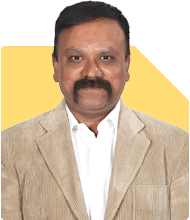
Nayagam P

Nayagam P P  |10958 Answers  |Ask -

Career Counsellor - Answered on Aug 11, 2025

Nayagam is a certified career counsellor and the founder of EduJob360.
He started his career as an HR professional and has over 10 years of experience in tutoring and mentoring students from Classes 8 to 12, helping them choose the right stream, course and college/university.
He also counsels students on how to prepare for entrance exams for getting admission into reputed universities /colleges for their graduate/postgraduate courses.
He has guided both fresh graduates and experienced professionals on how to write a resume, how to prepare for job interviews and how to negotiate their salary when joining a new job.
Nayagam has published an eBook, Professional Resume Writing Without Googling.
He has a postgraduate degree in human resources from Bhartiya Vidya Bhavan, Delhi, a postgraduate diploma in labour law from Madras University, a postgraduate diploma in school counselling from Symbiosis, Pune, and a certification in child psychology from Counsel India.
He has also completed his master’s degree in career counselling from ICCC-Mindler and Counsel, India.
... more
Abhinav Question by Abhinav on Aug 11, 2025Hindi

Career

I have completed class 12 from CBSE with 60% marks. I want to do B.Tech from CBSE and I have not given any other exam. Kindly tell me some college or university for BTech. And my budget is also 2 lakh per annum i.e. including hostel and mess along with tuition everything will come in 10 lakh. I belongs to general EWS category.

Ans: For a general EWS category student with 60% in CBSE Class 12 seeking B.Tech admission in Northern India within a budget of around ?2 lakh per annum inclusive of tuition, hostel, and mess fees, several private engineering colleges offer feasible options. Institutions like Chandigarh University, Lovely Professional University (LPU), and Shobhit University Mohan Nagar provide B.Tech programs with manageable fee structures near or slightly below ?2 lakh annually when including residential costs. These colleges maintain accreditation from bodies such as AICTE and UGC, ensuring regulated academic quality. They offer modern infrastructure, experienced faculty, and structured placement cells with tie-ups to industries for internships and job placements. Admission often occurs through merit-based evaluations for EWS category students without requiring competitive entrance exams like JEE in some management or merit quota seats, or via state-level entrance tests. These colleges emphasize a balanced academic curriculum with practical exposure and offer scholarships or financial aid to EWS students, easing fee burdens. While not among the highest-ranked institutes, they provide a credible platform for technical education with opportunities for campus placements in core and IT sectors, alongside supportive campus life and safety measures.

Recommendation: Choose private engineering colleges like Chandigarh University, Lovely Professional University, or Shobhit University for affordable, holistic B.Tech education within your financial framework. Evaluate their specific branch offerings aligned with your interests and consider direct admission sessions or management quota opportunities for EWS category seats, ensuring solid academic support and placement prospects. Engage early with college admission offices to confirm fee inclusions and scholarship eligibility for your category. All the BEST for a Prosperous Future!

Follow RediffGURUS to Know More on 'Careers | Money | Health | Relationships'.
Career

You may like to see similar questions and answers below

Latest Questions
Nayagam P

Nayagam P P  |10958 Answers  |Ask -

Career Counsellor - Answered on Mar 25, 2026

Career
Sir, My son studying in 10th std, is very much interested in Story writing and he wants to be a writer. He is academically good but he wants to pursue his career as writer. I too want to support his passion. In-order to excel in his passion. Below are my questions. 1. What are the bachelor courses to available after 12th std in India 2. Best colleges in India for the question no.1 3. Any specific entrance exams he needs to prepare? 4. Though he is academically good, he thinks studying Math and Science are of no use since he is going to become writer. How to make him to understand that academic performance also good? 5. He gives more time on his story writing instead of completing his home work or school assignments. How to make him understand current 10th std study is more important? Please advice
Ans: Rajesh Sir, (1) After completing 12th class, your son can choose bachelor’s degree courses of about 3–4 years such as BA English (Honours or Literature), BA Creative Writing, BFA Creative Writing, BA Journalism & Mass Communication, or other liberal arts or media courses related to story writing. (2) For Classes 11 and 12, the Arts (Humanities) stream will be the best choice for him. Subjects like English Literature, History, Political Science, Psychology, and Sociology will help him improve his language skills, creativity, and understanding of stories, which are important for a writing career. (3) Some well-known colleges he can consider are St. Xavier’s (Mumbai/Kolkata), Lady Shri Ram (Delhi), St. Stephen’s and Hindu College (Delhi University), Christ University (Bengaluru), Jadavpur University (Kolkata), Ashoka University (Sonepat), Symbiosis (Pune), JNU (Delhi), Srishti Manipal (Bengaluru), Loyola (Chennai), Kristu Jayanti (Bangalore), and Mount Carmel. (4) To get admission to central or state universities, he will need to appear for the CUET exam. For private universities or colleges, admission may be through CUET and/or their own entrance exams. (5) Help him understand that mathematics improves logical thinking, which helps in building strong story plots and arguments. Science can inspire ideas like science fiction and help with research for realistic stories. Good academic performance increases his chances of getting into good colleges, shows discipline that publishers respect, improves reading and analysis skills, and keeps more career options open. (6) He should follow a daily routine: first spend 2–3 hours on homework and studies, then 1 hour on writing practice. Also explain that his 10th board marks can influence his stream and college options, and later many colleges will check 12th marks and CUET scores. Low marks can reduce opportunities. (7) Monitor his weekly progress to ensure he balances studies and writing. Encourage him to join writing clubs after completing homework. Regular studies build knowledge and discipline, which support creative writing. Both academics and arts are equally important. ALL the BEST for Your Son's Prosperous Future!

Follow RediffGURUS to Know More on 'Careers | Money | Health | Relationships'.

...Read more

Ramalingam

Ramalingam Kalirajan  |11083 Answers  |Ask -

Mutual Funds, Financial Planning Expert - Answered on Mar 24, 2026

Money
Respected sir, I am 38 years old working in private company in Noida with own house in delhi. My salary is 65000 ruppes monthly . I have 25 lakhs in Fixed deposit, 4 lakhs in saving account, 8 lakhs in PPF account and 4 lakhs in EPS account. My wife, who is 34 years old, also earns with 40000 ruppes monthly salary as scholarship. We have no child yet. We are planning for child this year. I have just started Mutual funds 5000 ruppes SIP from january month. I have 1 old LIC policy that will mature in i think 2030 and will give 300000 rupees on maturity. I have only 2 lakhs health insurance cover form office. Though , I can cover it to 5 or 10 lakh. I have death cover of 2500000 rupees upon my death from my present company, which will be paid to my nominee. Please advise for them . Present Monthly SIP Amount -₹5,000 Active SIPs (4) 1. ICICI Prudential Pharma Healthcare and Diagnostics (P.H.D) Fund – Direct Growth ₹1,000 Due Date: 20 Feb 2. Parag Parikh Flexi Cap Fund – Direct Growth ₹1,000 Due Date: 21 Feb NAV date will be 23 Feb as 21 Feb to 22 Feb are holidays. 3. SBI Silver ETF FoF – Direct Growth ₹2,000 Due Date: 23 Feb 4. HDFC Balanced Advantage Fund – Direct Growth ₹1,000 Due Date: 26 Feb 5. Invest 10000 ruppes One time amount into HDFC Balanced Advantage Fund – Direct Growth mutual fund. Thanks
Ans: You have already built a strong financial base at age 38. Having Rs.25 lakhs in fixed deposits, Rs.8 lakhs in PPF, own house, and starting mutual fund SIP is a very solid position. Many families reach this stage much later. Since you are planning for a child this year, this is the correct time to structure your finances properly.

» Your present financial strengths

– Own house already available
– Rs.25 lakhs fixed deposit corpus
– Rs.4 lakhs savings account balance
– Rs.8 lakhs PPF investment
– EPS retirement benefit building
– Dual income family
– Started mutual fund SIP already

This creates a strong foundation for next 15–20 years planning.

» One important correction needed in your mutual fund selection

Currently your SIP structure is:

– Pharma sector fund Rs.1,000
– Flexi cap fund Rs.1,000
– Silver ETF FoF Rs.2,000
– Balanced advantage fund Rs.1,000

Here the issue is too much exposure to narrow and defensive themes and less exposure to core growth funds.

Suggested improvement:

– Continue flexi cap fund
– Continue balanced advantage fund
– Stop pharma sector fund SIP
– Stop silver ETF FoF SIP

Reason:

Sector funds and commodity-based funds are high risk and not suitable as core investments for long-term family planning.

Instead:

Add

– One large cap oriented fund
– One additional flexi cap oriented fund

This improves stability and growth.

Also, the one-time Rs.10,000 investment in balanced advantage fund is acceptable.

» Important observation about investing through Direct funds

You are investing through direct growth option funds.

Direct funds look attractive because of slightly lower expense ratio. But they also come with some practical challenges:

– No professional allocation guidance
– No periodic portfolio correction support
– No behaviour support during market correction
– Risk of selecting wrong fund category increases
– Risk of staying invested in weak fund increases

Regular mutual fund investing through an MFD supported by a Certified Financial Planner helps:

– Proper goal-based allocation
– Risk-level matching
– Fund replacement when required
– Portfolio monitoring support
– Behavioural discipline support

For long-term family planning, this support becomes very valuable.

» Insurance planning is the most urgent gap in your case

Currently:

– Health insurance only Rs.2 lakhs from employer
– Life cover Rs.25 lakhs from employer

This is not enough protection.

You should arrange immediately:

Health insurance

– Minimum Rs.10 to Rs.15 lakhs family floater policy

Reason:

Employer coverage stops if job changes.

Life insurance

– Independent term insurance cover outside employer
– At least Rs.1 crore protection required

Reason:

Future child responsibility coming soon.

» How your fixed deposit amount should be structured

You already have Rs.25 lakhs FD + Rs.4 lakhs savings.

This is strong liquidity but slightly over-concentrated.

Suggested structure:

– Keep 6 months expenses as emergency fund
– Keep expected child delivery expenses reserve
– Move remaining gradually into mutual fund SIP/STP structure

This improves long-term wealth growth.

» Planning for upcoming child

Since you are planning child this year:

Prepare for:

– Delivery expenses reserve
– Health insurance upgrade immediately
– Education fund SIP starting early

Even small SIP started today becomes powerful after 15 years.

» About your LIC policy maturing in 2030

Since maturity is near and amount is Rs.3 lakhs:

– Continue policy till maturity
– Do not stop now

After maturity:

– Reinvest proceeds into mutual funds for child education goal

» Suggested monthly investment structure for next step

Your current SIP Rs.5,000 can be increased gradually.

Ideal starting target:

– Rs.12,000 to Rs.18,000 monthly SIP over next 6 months

This is comfortable considering dual income family.

Later after child arrival planning stabilises, increase further.

» Finally

Your action plan can be simple and strong:

– Upgrade health insurance to Rs.10–15 lakhs
– Take independent term insurance cover
– Stop pharma fund SIP
– Stop silver ETF SIP
– Add large cap fund SIP
– Increase SIP gradually to Rs.12,000–18,000
– Keep emergency fund ready from FD
– Continue LIC policy till maturity

With these steps, your financial life becomes well prepared for child planning, education planning, and retirement security together.

If you share your monthly household expenses, I can suggest exact SIP amount suitable for your comfort level.

Best Regards,

K. Ramalingam, MBA, CFP,

Chief Financial Planner,

www.holisticinvestment.in

https://www.linkedin.com/in/ramalingamcfp/

...Read more

Ramalingam

Ramalingam Kalirajan  |11083 Answers  |Ask -

Mutual Funds, Financial Planning Expert - Answered on Mar 24, 2026

Money
I retired at an age of 58 from a private company and my PF contribution stopped. After 1 months I applied for Pension and I have started getting it from this month. I know that I can keep the amount for 3 years without contributing and it will earn interest. I know that the interest earned after contribution stopped will be taxable when I finally withdraw the PF- I want to know that is the tax rate is pre-determined or will be added under 'Income from other source ' and taxed as per my slab on that FY. Thank you
Ans: Your awareness about EPF rules even after retirement is appreciable. Many retirees miss this tax aspect. Planning this correctly will help you avoid surprises at withdrawal stage.

» Interest After Retirement – How It Is Treated
– Once you retire and contribution stops, EPF balance can continue for up to 3 years
– During this period, interest will still be credited
– However, this interest does not remain fully tax-free after retirement
– The tax treatment depends on your individual income tax slab

» Taxation of Interest Earned After Contribution Stops
– Interest earned after retirement is not taxed at a fixed rate
– It is not pre-determined like TDS percentage
– The interest amount will be treated as “Income from Other Sources”
– It will be added to your total income in that financial year
– Tax will be charged as per your applicable income tax slab

» Important Implication for Retirees
– If your pension income is low, tax impact may be minimal
– If you fall in higher slab due to pension or other income, tax may increase
– There is no special concessional rate for EPF post-retirement interest
– No automatic tax deduction may happen; you must declare it while filing return

» Withdrawal Timing Strategy
– Keeping money for 3 years gives additional interest
– But interest becomes taxable, reducing effective return
– If you do not need the money immediately, you may still hold for liquidity
– Compare post-tax return with alternative low-risk investments before deciding

» Cash Flow Planning
– If pension meets your expenses, you can keep EPF balance partly invested
– Withdraw gradually instead of full withdrawal if you want tax management
– Maintain sufficient emergency liquidity separately
– Avoid withdrawing entire corpus without reinvestment plan

» Finally
– Interest earned after retirement is taxable
– It is added under “Income from Other Sources”
– Tax is applied as per your slab in that financial year
– No fixed or pre-determined tax rate applies
– Plan withdrawal based on your income level and cash flow needs

Best Regards,

K. Ramalingam, MBA, CFP,

Chief Financial Planner,

www.holisticinvestment.in

https://www.linkedin.com/in/ramalingamcfp/

...Read more

Ramalingam

Ramalingam Kalirajan  |11083 Answers  |Ask -

Mutual Funds, Financial Planning Expert - Answered on Mar 24, 2026

Money
Hi Sir. I'm a 29 year old salaried employee working at top e-commerce company with a stable income, married with no kids as of writing this and a mother, do have my own house which is passed on from my father, free from any kind of debts and liabilities financially. I've been investing partly since 2020, when i was 23 basically during peaks of corona and high market volatility, but later discontinued and sold all the shares after gaining a reasonable profit in 2021, however started investing again in early 2023 and been disciplined enough to continue the same to this day. Please do find my portfolio as briefed below. 1. PPF: ₹ 1,70,000/- (from 2024) 2. EPF: ₹ 48,000/- (from 2024) 3. Mutual Funds: ₹ 41,000/- (from Dec 2025) I. Parag Parikh flexi cap fund: ₹ 31,000/-(SIP ₹1000 pm) II. ICICI Prudential Large Cap fund: ₹ 3000/- (SIP ₹1000 pm) III. Edelweiss mid cap fund: ₹ 6000/- (SIP ₹1000 pm) IV. Kotak Multi asset allocation fund: ₹ 1100/- (SIP ₹2000 pm) 4. Direct Stocks: ₹ 3,70,000/- 5. Bullion: ₹ ~5,00,000/- 6. Emergency fund: ₹ 1,00,000/- These are my total investments as of this moment and would like to explore NPS sooner or later along with a 1 Cr term life insurance as i do have a family floater health insurance. I'm presently expecting a baby and would like to hang to the cash for a while which might put a dent on the investing part. And i'm keen on retiring early by the age of 50, which might be suffice enough to let my kids finish their graduation, and to top that of i'm considering having retirement corpus of ₹ 10-15 Cr. Our monthly household expenses are just over 20,000 per month and might expect to hover over 30K if a baby is born and the incremental expenses going forward. With the information provided, Sir can you please suggest as to how i can continue building my wealth and acheive the retirement corpus by the age of 50 and what are the ideal routes of sustaining the wealth to pass onto the other generation without any relaince on debts.
Ans: Your financial discipline at age 29 is appreciable. Debt-free house, regular savings, and clear retirement target show strong clarity. Planning before your child is born gives you a powerful advantage. Your base is already strong and achievable with the right structure ????

» Overall Financial Position
– You have good diversification across PPF, EPF, mutual funds, stocks, bullion and emergency fund
– No liabilities reduces financial pressure significantly
– Household expenses are low compared to income potential
– Early retirement goal at 50 is ambitious but achievable with disciplined investing
– Current allocation is slightly tilted towards gold and direct stocks

» Asset Allocation Observation
– Bullion allocation is high compared to growth assets
– Direct stocks exposure is also large and concentrated risk may arise
– Mutual fund allocation is still small and needs to be increased gradually
– Retirement goal of Rs 10–15 Cr requires strong equity-oriented allocation over time
– PPF and EPF provide stability but growth may be limited

» Mutual Fund Portfolio Review
– You have good mix of large cap, flexi cap, mid cap and multi asset exposure
– SIP amounts are small compared to your long-term goal
– Increasing SIP gradually will improve compounding benefit
– Avoid adding too many schemes; focus on disciplined contributions
– Equity-oriented funds suit your long-term retirement horizon

» Direct Stocks Exposure
– Direct stocks need continuous monitoring and research
– Risk of concentration and emotional decisions is high
– Gradually shifting part of direct stocks to diversified mutual funds can reduce risk
– Mutual funds provide professional management and diversification
– This improves stability for long-term retirement planning

» Higher Allocation to Bullion
– Gold helps in stability but long-term growth is limited
– Large allocation may slow wealth creation
– Avoid adding more to bullion at this stage
– Future investments should focus more on growth-oriented assets
– Keep bullion only as diversification, not primary growth engine

» About Direct Mutual Fund Investments
– Direct plans require investor to track performance regularly
– Asset allocation changes often get delayed
– No guidance during market corrections
– Tax planning and rebalancing are usually missed
– Emotional decisions like stopping SIP may impact returns

» Benefits of Regular Funds Through MFD with CFP Credential
– Professional asset allocation based on goals like early retirement
– Periodic rebalancing to manage risk
– Behavioural guidance during volatility
– Tax-efficient withdrawal planning for early retirement
– Integration of child education, retirement and insurance planning
– Long-term discipline improves wealth creation

» Early Retirement Strategy (Target Age 50)
– Increase SIP every year in line with salary growth
– Focus on equity-oriented investments for long-term growth
– Avoid frequent portfolio changes
– Maintain moderate allocation to stable instruments
– Stay invested through market cycles

» Child Planning and Cash Flow Management
– Holding extra cash during childbirth is a good decision
– After expenses stabilize, resume SIP increase
– Start separate child education investment later
– Avoid using retirement corpus for child goals
– Maintain at least 6–9 months expenses as emergency fund

» Insurance and Protection Planning
– Term life insurance is important and timely decision
– Coverage should consider spouse, child and retirement goals
– Continue family floater health insurance
– Build separate medical buffer over time

» NPS Consideration
– NPS can support retirement discipline
– Long lock-in helps avoid premature withdrawals
– Equity exposure inside NPS supports long-term growth
– Use it as supplementary retirement tool, not main investment

» Wealth Transfer Planning
– Keep investments simple and well documented
– Nomination in all investments is essential
– Create a basic will for smooth transfer to next generation
– Avoid complex structures unless necessary
– Maintain family financial document file

» Finally
– You are on a very strong financial path
– Increase mutual fund SIP gradually to reach retirement goal
– Reduce concentration in direct stocks over time
– Avoid increasing bullion allocation further
– Maintain disciplined investing after child-related expenses settle
– Focus on long-term equity growth for early retirement corpus

Best Regards,

K. Ramalingam, MBA, CFP,

Chief Financial Planner,

www.holisticinvestment.in

https://www.linkedin.com/in/ramalingamcfp/

...Read more

Ramalingam

Ramalingam Kalirajan  |11083 Answers  |Ask -

Mutual Funds, Financial Planning Expert - Answered on Mar 24, 2026

Asked by Anonymous - Mar 12, 2026Hindi
Money
I am 52 years man, myvfinancial lifecis k8nd of jropardised; i ean rs. 35000 per month as salary and i have a hl of 26 lakhs, 4 l pl .90l crdtccard bill and total emies accumulates to rs. 55k. My wifecalso works and she helps me every month of my shortfalls but then i became exhusted to maintain dailyvcordes; now i reached a point for selling my ancestral land for 30l- no w plz advise me if i should clear all my debts,or i should utilise thiscfund to esrn arround rs 50k addly prr month to esse my burden- plz help what should i do and how i should do it!
Ans: You are taking a very honest and brave step by thinking deeply about this decision. Many people delay such decisions and the stress increases. You are trying to solve the problem now. That is the right direction.

Your situation shows one clear issue: monthly EMI is higher than your income capacity. This must be corrected first before thinking about creating extra income from investments.

» Your current financial position needs urgent correction

– Your salary is Rs.35,000 per month
– EMI total is Rs.55,000 per month
– Credit card outstanding is very high
– Personal loan interest is high
– You are depending on your wife every month
– Mental pressure is increasing

This situation cannot continue for long. First goal must be stability.

» Can Rs.30 lakh generate Rs.50,000 monthly income?

This is a very important question.

– To generate Rs.50,000 monthly, investment must produce around Rs.6 lakh yearly
– That means very high return expectation
– Safe investments cannot give this income
– Even moderate-risk investments cannot reliably give this income

So depending on Rs.30 lakh to generate Rs.50,000 monthly is not practical and not safe.

Trying this may create another financial problem.

» Best use of Rs.30 lakh in your situation

Priority should be reducing debt pressure.

Suggested order:

Step 1

– Close credit card outstanding immediately
This is the highest interest burden

Step 2

– Close personal loan of Rs.4 lakh
This also carries high interest

Step 3

– Reduce home loan principal partly
This reduces EMI burden

After doing this:

– Your monthly EMI will fall sharply
– Dependence on your wife reduces
– Stress level reduces
– Financial control returns

This is the strongest move at your age of 52.

» Why clearing loans is better than investing now

Currently:

– Loan interest is higher than investment return
– Cash flow is negative every month
– Retirement is approaching
– Risk-taking capacity is limited

So loan closure gives guaranteed benefit.

Investment for income works only when:

– Loans are under control
– Monthly expenses are stable
– Emergency fund exists

Right now priority is correction, not income creation.

» One more important step after clearing loans

Keep small emergency reserve from the land sale amount

Example:

– Keep around 3 to 6 months expenses separately
This prevents future credit card usage again

» Role of your wife’s income

Your wife supporting you monthly is a strong strength in your family financial system.

After loan reduction:

– Her support requirement reduces
– Household stability improves
– Future savings become possible

This is very valuable.

» Finally

Selling ancestral land is an emotional decision. But if the land sale removes high-interest debt and reduces EMI burden, it becomes a powerful financial reset for your life.

In your situation:

– Do not use Rs.30 lakh to generate monthly income
– Use it to close credit card and personal loan fully
– Reduce home loan significantly
– Keep emergency reserve

This will immediately reduce pressure and improve your financial life.

If you share:

– Home loan EMI amount
– Interest rate
– Remaining tenure

I can guide how much exactly should be prepaid and how much should be kept aside for stability.

Best Regards,

K. Ramalingam, MBA, CFP,

Chief Financial Planner,

www.holisticinvestment.in

https://www.linkedin.com/in/ramalingamcfp/

...Read more

Ramalingam

Ramalingam Kalirajan  |11083 Answers  |Ask -

Mutual Funds, Financial Planning Expert - Answered on Mar 24, 2026

Money
Hi, I'm 28 year old IT professional working in Hyderabad, and my family lives in pune, I'm the only earner in the family, and currently my family stays in a rented apartment in pune which costs 14K per month, I too pay a rent of around 16K myself in hyderabad, and considering other things my expenses for a month is typically between 1.3 - 1.4L per month, my salary is currently 2.6L per month as I switched my company about 2 months ago, I have been investing in SIPs for about 3 years now, I do 30-35K SIPs per month, now my family wants me to buy a house as they want me to get married, and we don't own any house yet, so I explored a few options for under contruction properties, and the price range for a 2bhk flat is about 75-85L in the area we're searching, I can manage about 10% as down payment and plan to take a home loan for the rest 90% of the cost, for 20 years, so my home loan emi would be roughly between 55-60K per month, and this got me thinking again if this is a good idea, as I'm not sure if I'll be moving to pune any time soon or get a job in pune, and my family would also like to live with me in Hyderabad for next couple of years, and anyways we'll be getting our flat only after 3 years, so maybe instead of investing in a flat, I would like to keep that money with me and buy a flat when I'm sure I'm going to use it, or the other idea I got was to buy a smaller flat like a 1BHK just for the sake of owning a flat, which would cost me about 40 - 50L, but then I would not enjoy living in a smaller place if I ever move to pune few years down the line, but I would not have any financial burden and could rent a bigger flat if needed. I need help, I'm really confused on what I should do, on paper it does look like I can afford a bigger flat that we've decided to buy, but I'm just worried of not having enough savings or capital and going for a bigger loan, and to me buying a smaller flat is not making too much sense either, should I just take a leap of faith and buy that house?
Ans: Your financial awareness at age 28 is appreciable. You are analysing affordability, future mobility and savings impact before taking a long-term commitment. This shows strong financial maturity.

» Current Financial Position Assessment
– Your monthly income is healthy and supports long-term wealth creation
– Expenses are also relatively high, leaving moderate surplus
– You are already investing Rs 30–35K through SIP which is good discipline
– You are the only earning member, so financial flexibility is very important
– No owned house currently, but mobility requirement is high

» Affordability vs Comfort
– On paper, you can afford EMI of Rs 55–60K
– However affordability alone should not drive the decision
– You already pay rent in two cities
– Adding EMI will reduce financial flexibility significantly
– Emergency savings and future goals may get impacted

» Risk of Buying Under Construction Property
– Possession is only after around 3 years
– During this period, your life situation may change
– Job location uncertainty exists
– You may continue paying rent even after committing to EMI
– This creates double financial pressure

» Mobility Factor is Very Important
– You are unsure about moving to Pune
– Your family may shift to Hyderabad temporarily
– Buying now may lock you into a location prematurely
– Real estate decisions should ideally match long-term usage clarity
– Flexibility at your age is valuable

» Buying a Smaller Flat – Practical Concerns
– Buying a 1BHK only for ownership may not serve long-term needs
– You may need to upgrade later
– This creates additional transaction cost and stress
– It may not solve your lifestyle requirement
– Emotionally also it may not feel satisfying

» Financial Impact of Large Home Loan
– EMI of Rs 55–60K for 20 years is a long commitment
– This reduces your investing capacity
– Early wealth creation may slow down
– Marriage, child, family relocation expenses may arise
– Being sole earner increases risk if income fluctuates

» Alternative Approach – Strengthening Financial Base
– Continue SIPs and increase gradually with salary growth
– Build larger down payment corpus over next few years
– Maintain strong emergency fund (at least 6–9 months expenses)
– Keep liquidity for marriage and family needs
– Revisit house purchase when location clarity improves

» Psychological Pressure vs Financial Prudence
– Family preference for owning house is understandable
– But buying at wrong time may create stress
– Renting gives flexibility at this stage
– Owning should be based on need, not urgency
– Delayed purchase with stronger finances reduces risk

» Finally
– Avoid taking large home loan when location is uncertain
– Buying under construction property now increases risk
– Smaller flat option may not meet future needs
– Continue investing and build stronger down payment corpus
– Revisit house decision when job and family location becomes clear
– Preserving flexibility now will support long-term wealth creation

Best Regards,

K. Ramalingam, MBA, CFP,

Chief Financial Planner,

www.holisticinvestment.in

https://www.linkedin.com/in/ramalingamcfp/

...Read more

Ramalingam

Ramalingam Kalirajan  |11083 Answers  |Ask -

Mutual Funds, Financial Planning Expert - Answered on Mar 24, 2026

Asked by Anonymous - Feb 18, 2026Hindi
Money
Dear Sir, I retired from PSU in December 2025 at the age of 60 yrs. However, I did not provide any input for further action on my NPS account both Tier 1&2 within 30 days of my retirement . Now, 1. Is it necessary to apply for shifting of PRAN to All Citizen of India Sector at this stage OR it will be automatically shifted to All Citizen of India Sector ? 2. Will there be any issue staying invested in NPS under said circumstances ?
Ans: You have done a very important review of your NPS status after retirement. Many retirees miss this step. Because you are checking now, you still have flexibility and control over your retirement corpus.

Let me answer your questions clearly.

» Whether shifting of PRAN to All Citizen Sector is required now

– After retirement from PSU service, your employer contribution stops
– Your PRAN does not automatically shift to All Citizen Sector
– It normally remains under the same sector unless you submit a request
– However, even without shifting, your account continues to remain active

So shifting is not compulsory immediately, but it is useful if you want to continue voluntary contribution in future.

If you do not plan further contributions, shifting is not necessary.

» Whether there will be any issue if you continue staying invested without shifting

There is no issue at all in staying invested.

Your situation remains safe because:

– Your accumulated corpus continues to stay invested
– Market-linked growth continues
– Fund management continues normally
– Withdrawal flexibility remains available as per retirement rules

So missing the 30-day window does not create any penalty or loss of benefits.

» When shifting to All Citizen Sector becomes useful

Shifting becomes helpful if:

– You want to continue fresh contributions after retirement
– You want flexibility in managing investments
– You want to keep account active for longer-term growth

Otherwise, it is optional.

» Important decision you should take now regarding your Tier 1 account

After age 60, normally:

– Up to 60 percent corpus can be withdrawn lump sum
– Balance portion stays invested as per retirement rules

However, you are allowed to keep the lump sum portion invested up to age 75 if not withdrawn immediately.

This provides:

– Continued market participation
– Potential corpus growth
– Flexibility in timing withdrawals

So staying invested can be a good strategy if pension income already supports your lifestyle.

» About your Tier 2 account after retirement

Tier 2 account is simple and flexible.

– It works like a normal investment account
– No restriction on withdrawal
– No compulsory conversion or shifting required
– You can withdraw anytime or continue investment

So there is no concern regarding Tier 2 continuation.

» Practical action steps suggested now

You may consider doing the following:

– Check your current asset allocation in NPS
– Review whether equity exposure matches your retirement comfort level
– Decide whether partial withdrawal is required now
– Decide whether to continue investment till age 70 or 75

These decisions improve retirement income stability.

» Finally

You are not facing any issue because you did not shift your PRAN within 30 days after retirement.

Your account remains valid and active.

Shift to All Citizen Sector only if you want to continue contributions. Otherwise, you can safely remain invested and take withdrawals based on your retirement income needs and comfort level.

If you share your approximate NPS corpus size and whether you already receive pension from your PSU service, I can guide whether continuing investment till age 70 or withdrawing partially now will be more suitable for your situation.

Best Regards,

K. Ramalingam, MBA, CFP,

Chief Financial Planner,

www.holisticinvestment.in

https://www.linkedin.com/in/ramalingamcfp/

...Read more

DISCLAIMER: The content of this post by the expert is the personal view of the rediffGURU. Investment in securities market are subject to market risks. Read all the related document carefully before investing. The securities quoted are for illustration only and are not recommendatory. Users are advised to pursue the information provided by the rediffGURU only as a source of information and as a point of reference and to rely on their own judgement when making a decision. RediffGURUS is an intermediary as per India's Information Technology Act.

Close  

You haven't logged in yet. To ask a question, Please Log in below
Login

A verification OTP will be sent to this
Mobile Number / Email

Enter OTP
A 6 digit code has been sent to

Resend OTP in120seconds

Dear User, You have not registered yet. Please register by filling the fields below to get expert answers from our Gurus
Sign up

By signing up, you agree to our
Terms & Conditions and Privacy Policy

Already have an account?

Enter OTP
A 6 digit code has been sent to Mobile

Resend OTP in120seconds

x