


Need Expert Advice?Our Gurus Can Help

Nayagam P P |10959 Answers |Ask -Follow
Career Counsellor - Answered on Jul 29, 2025
Nayagam is a certified career counsellor and the founder of EduJob360.
He started his career as an HR professional and has over 10 years of experience in tutoring and mentoring students from Classes 8 to 12, helping them choose the right stream, course and college/university.
He also counsels students on how to prepare for entrance exams for getting admission into reputed universities /colleges for their graduate/postgraduate courses.
He has guided both fresh graduates and experienced professionals on how to write a resume, how to prepare for job interviews and how to negotiate their salary when joining a new job.
Nayagam has published an eBook, Professional Resume Writing Without Googling.
He has a postgraduate degree in human resources from Bhartiya Vidya Bhavan, Delhi, a postgraduate diploma in labour law from Madras University, a postgraduate diploma in school counselling from Symbiosis, Pune, and a certification in child psychology from Counsel India.
He has also completed his master’s degree in career counselling from ICCC-Mindler and Counsel, India.
... more
He started his career as an HR professional and has over 10 years of experience in tutoring and mentoring students from Classes 8 to 12, helping them choose the right stream, course and college/university.
He also counsels students on how to prepare for entrance exams for getting admission into reputed universities /colleges for their graduate/postgraduate courses.
He has guided both fresh graduates and experienced professionals on how to write a resume, how to prepare for job interviews and how to negotiate their salary when joining a new job.
Nayagam has published an eBook, Professional Resume Writing Without Googling.
He has a postgraduate degree in human resources from Bhartiya Vidya Bhavan, Delhi, a postgraduate diploma in labour law from Madras University, a postgraduate diploma in school counselling from Symbiosis, Pune, and a certification in child psychology from Counsel India.
He has also completed his master’s degree in career counselling from ICCC-Mindler and Counsel, India.
... more
 Question by Nirmal on Jul 24, 2025Hindi
My child is in commerce what can be best option for future
Ans: Nirmal Sir, Commerce as a stream provides a wide spectrum of rewarding academic and career pathways in India, ranging from the traditional fields of finance, accountancy, and management to dynamic roles in digital marketing, business analytics, and e-commerce—sectors rising in demand as the Indian economy positions itself globally. After Class 12, prominent undergraduate options include Bachelor of Commerce (B.Com.), BBA, BBA LLB, Chartered Accountancy (CA), Company Secretary (CS), Cost & Management Accountancy (CMA), and specialized certifications in data analytics, actuarial science, financial planning, and digital enterprise. These courses open the door to careers as financial analysts, investment bankers, digital marketers, chartered accountants, auditors, HR professionals, entrepreneurs, risk managers, and more, with continued expansion projected in IT-enabled services, retail, fintech, logistics, and global commerce sectors. Entrance to leading colleges frequently relies on Class 12 marks, but competitive exams such as CUET (Common University Entrance Test), IPU CET, and dedicated entrance tests for professional programs (CA Foundation, CS Foundation, CMA Foundation) are essential for elite institutions and specialized streams. The curriculum for commerce degrees in India focuses on core disciplines—accountancy, economics, business law, statistics, and management—and often includes electives in entrepreneurship, analytics, and digital business to align with industry requirements. There is consistent industry demand for commerce graduates, as they drive pivotal roles in banking, insurance, consulting, government services, and the burgeoning startup economy. Institutional selection should prioritise accreditation, experienced faculty with industry exposure, robust infrastructure with digital and research facilities, active industry collaborations for internships/projects, and high transparency in placement support. Among India’s top commerce and management undergraduate colleges are Shri Ram College of Commerce (Delhi University), Hindu College (Delhi), St Xavier’s College (Mumbai/Kolkata), Loyola College (Chennai), Hansraj College (Delhi), Lady Shri Ram College (Delhi), Christ University (Bangalore), Narsee Monjee (Mumbai), Symbiosis College of Arts and Commerce (Pune), and Shaheed Sukhdev College of Business Studies (Delhi). Admission requirements typically involve a minimum 50–60% aggregate in Class 12 commerce subjects, with some colleges necessitating mathematics and qualifying entrance or aptitude scores as specified in institutional notifications. These colleges offer rigorous academic standards, dynamic teaching methods, campus placement cells with strong industry networks, and multidisciplinary opportunities, equipping students with both knowledge and real-world skills. The scope for commerce students remains strong, with high employability, opportunities for specialization, and excellent advancement within evolving sectors.
RECOMMENDATION: Commerce presents excellent future prospects for students due to its diverse course offerings, expanding career domains, robust placement opportunities, and adaptability to both conventional and digital enterprise. Prioritize top accredited institutes with experiential learning and dynamic industry-connect to maximize academic growth and career success for your child. All the BEST for a Prosperous Future!
Follow RediffGURUS to Know More on 'Careers | Money | Health | Relationships'.
RECOMMENDATION: Commerce presents excellent future prospects for students due to its diverse course offerings, expanding career domains, robust placement opportunities, and adaptability to both conventional and digital enterprise. Prioritize top accredited institutes with experiential learning and dynamic industry-connect to maximize academic growth and career success for your child. All the BEST for a Prosperous Future!
Follow RediffGURUS to Know More on 'Careers | Money | Health | Relationships'.
CareerReply


You may like to see similar questions and answers below
Nayagam P P |10959 Answers |Ask -Follow
Career Counsellor - Answered on Sep 17, 2024


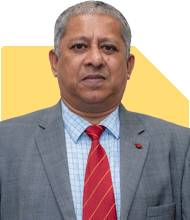
Prof Suvasish Mukhopadhyay | Answer |Ask -Follow
Career Counsellor - Answered on Apr 14, 2025

Latest Questions

Ramalingam Kalirajan |11091 Answers |Ask -Follow
Mutual Funds, Financial Planning Expert - Answered on Mar 31, 2026



Radheshyam Zanwar |6883 Answers |Ask -Follow
MHT-CET, IIT-JEE, NEET-UG Expert - Answered on Mar 31, 2026


Radheshyam Zanwar |6883 Answers |Ask -Follow
MHT-CET, IIT-JEE, NEET-UG Expert - Answered on Mar 31, 2026


Radheshyam Zanwar |6883 Answers |Ask -Follow
MHT-CET, IIT-JEE, NEET-UG Expert - Answered on Mar 31, 2026


Ramalingam Kalirajan |11091 Answers |Ask -Follow
Mutual Funds, Financial Planning Expert - Answered on Mar 31, 2026



Ravi Mittal |713 Answers |Ask -Follow
Dating, Relationships Expert - Answered on Mar 31, 2026


Chocko Valliappa |547 Answers |Ask -Follow
Tech Entrepreneur, Educationist - Answered on Mar 31, 2026



Shalini Singh |186 Answers |Ask -Follow
Dating Coach - Answered on Mar 31, 2026

Chocko Valliappa |547 Answers |Ask -Follow
Tech Entrepreneur, Educationist - Answered on Mar 31, 2026


Mayank Chandel |2660 Answers |Ask -Follow
IIT-JEE, NEET-UG, SAT, CLAT, CA, CS Exam Expert - Answered on Mar 30, 2026