Need Expert Advice?Our Gurus Can Help

Dr Karan Gupta | Answer |Ask -Follow
International Education Counsellor - Answered on Jul 22, 2025
Dr Karan Gupta is an internationally recognised education counsellor, TEDx speaker and the founder of Karan Gupta Consulting and the Karan Gupta Education Foundation.
An alumnus of Harvard Business School, he has advised thousands of students and professionals since 1999, helping them secure admission to top global universities.
He has been honoured by the governments of India and Spain for his contributions to education and women’s empowerment.
With a global perspective shaped by his education in the US, Europe and India, he is committed to empowering individuals through education, leadership and career development.
Dr Gupta holds a bachelor’s degree in law and a master’s degree in psychology from Mumbai University.
He has completed his general management programme at Harvard.
He earned his MBA from the IE Business School, Spain, and his PhD from Ecole Superieure Robert de Sorbon, France.
... more
An alumnus of Harvard Business School, he has advised thousands of students and professionals since 1999, helping them secure admission to top global universities.
He has been honoured by the governments of India and Spain for his contributions to education and women’s empowerment.
With a global perspective shaped by his education in the US, Europe and India, he is committed to empowering individuals through education, leadership and career development.
Dr Gupta holds a bachelor’s degree in law and a master’s degree in psychology from Mumbai University.
He has completed his general management programme at Harvard.
He earned his MBA from the IE Business School, Spain, and his PhD from Ecole Superieure Robert de Sorbon, France.
... more
Asked by Anonymous - May 20, 2025Hindi

I am BTech in Biotechnology and currently pursuing MTech in Materials Engineering. 10th score is 82%, 12th 72% and BTech 86%. I am working on research and would be done with nearly 5 papers, maybe a patent, also willing to initiate a startup, maybe later. Sir I want PhD from abroad. Sir with this academic background, kindly suggest me where I can take this forward and apply. Kindly also highlight about the financial aids.
Ans: Hi, with your Biotech + Materials background, strong academics, 5 research papers, and patent, you're well-suited for a PhD abroad in interdisciplinary fields like biomaterials, nanotech, or sustainable materials.
Where to Apply
USA – Top choice for research, full funding via RA/TA.
Germany – Strong in materials, DAAD-funded, no tuition.
Netherlands / Switzerland – Paid PhD positions, high research output.
UK – Apply with a research proposal, funded PhD projects available.
Financial Aid
• USA: Full tuition + monthly stipend
• Germany: DAAD, project-based funding (~€1200/month)
• UK: Commonwealth, university scholarships
• Europe overall: Most PhDs are salaried positions
Start shortlisting programs, prepare a strong SOP and CV, and contact professors whose research aligns with your goals.
Where to Apply
USA – Top choice for research, full funding via RA/TA.
Germany – Strong in materials, DAAD-funded, no tuition.
Netherlands / Switzerland – Paid PhD positions, high research output.
UK – Apply with a research proposal, funded PhD projects available.
Financial Aid
• USA: Full tuition + monthly stipend
• Germany: DAAD, project-based funding (~€1200/month)
• UK: Commonwealth, university scholarships
• Europe overall: Most PhDs are salaried positions
Start shortlisting programs, prepare a strong SOP and CV, and contact professors whose research aligns with your goals.
CareerReply


You may like to see similar questions and answers below
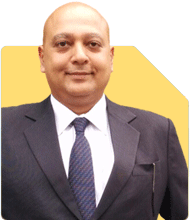
Sushil Sukhwani | Answer |Ask -Follow
Study Abroad Expert - Answered on Mar 27, 2024


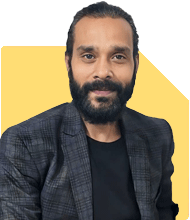
Dr Pananjay K Tiwari | Answer |Ask -Follow
Study Abroad Expert - Answered on Aug 13, 2024

Dr Pananjay K Tiwari | Answer |Ask -Follow
Study Abroad Expert - Answered on Aug 01, 2024

Dr Pananjay K Tiwari | Answer |Ask -Follow
Study Abroad Expert - Answered on Sep 02, 2024


Latest Questions
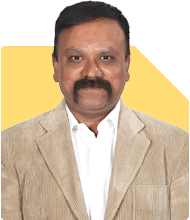
Dr Nagarajan J S K |2861 Answers |Ask -Follow
NEET, Medical, Pharmacy Careers - Answered on May 12, 2026


Dr Nagarajan J S K |2861 Answers |Ask -Follow
NEET, Medical, Pharmacy Careers - Answered on May 12, 2026


Dr Nagarajan J S K |2861 Answers |Ask -Follow
NEET, Medical, Pharmacy Careers - Answered on May 12, 2026
Dr Nagarajan J S K |2861 Answers |Ask -Follow
NEET, Medical, Pharmacy Careers - Answered on May 12, 2026


Dr Nagarajan J S K |2861 Answers |Ask -Follow
NEET, Medical, Pharmacy Careers - Answered on May 12, 2026
Dr Nagarajan J S K |2861 Answers |Ask -Follow
NEET, Medical, Pharmacy Careers - Answered on May 12, 2026

Dr Nagarajan J S K |2861 Answers |Ask -Follow
NEET, Medical, Pharmacy Careers - Answered on May 12, 2026
Dr Nagarajan J S K |2861 Answers |Ask -Follow
NEET, Medical, Pharmacy Careers - Answered on May 12, 2026

Dr Nagarajan J S K |2861 Answers |Ask -Follow
NEET, Medical, Pharmacy Careers - Answered on May 12, 2026


Dr Nagarajan J S K |2861 Answers |Ask -Follow
NEET, Medical, Pharmacy Careers - Answered on May 12, 2026