Home > Career > Question
Need Expert Advice?Our Gurus Can Help

Should I pursue a Master of Computer Applications (MCA) after completing a BCA?

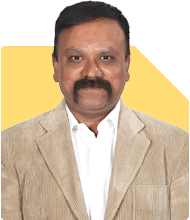
Dr Dipankar

Dr Dipankar Dutta  |1867 Answers  |Ask -

Tech Careers and Skill Development Expert - Answered on Jan 14, 2025

Dr Dipankar Dutta is an associate professor in the computer science and engineering department at the University Institute of Technology, the University of Burdwan, West Bengal.
He has 27 years of experience and his interests include AI, data science, machine learning, pattern recognition, deep learning and evolutionary computation.
Aside from his responsibilities at the college, he also delivers lectures and conducts webinars.
Dr Dipankar has published 25 papers in international journals, written book chapters, attended conferences, served as a board observer for WBJEE (West Bengal Joint Entrance Examination) exams and as a counsellor for engineering college admissions in West Bengal. He helps students choose the right college and stream for undergraduate, masters and PhD programmes.
A senior member of the Institute of Electrical and Electronics Engineers (SMIEEE), he holds a bachelor's degree in engineering from the Jalpaiguri Government Engineering College and a an MTech degree in computer technology from Jadavpur University.
He completed his PhD in engineering from IIEST, Shibpur (formerly BE College).... more
Abu Question by Abu on Jan 13, 2025Hindi
Listen
Career

BCA

Ans: Try to increase your qualification by doing MCA etc. Develop your skill set on advance topics like AI, DS etc by doing online course. Then probability of getting job will increase.
Career

You may like to see similar questions and answers below
Latest Questions
Ramalingam

Ramalingam Kalirajan  |11131 Answers  |Ask -

Mutual Funds, Financial Planning Expert - Answered on Apr 11, 2026

Money
My MF statement shows two types of return one is absolute return and the other one is simplified annualised return. Which one actually depics my return on investment.
Ans: It is very good that you are reading your mutual fund statement carefully and trying to understand the meaning of different return numbers. This habit itself helps investors take better long-term decisions.

» What is Absolute Return

– Absolute return shows how much your investment has grown in total from the starting date to today.
– It does not consider how long you stayed invested.
– Example understanding: if investment becomes Rs 1.20 lakh from Rs 1 lakh, absolute return is 20%.
– It is useful mainly when the investment period is less than 1 year.
– It is simple to read but not fully useful for long-term evaluation.

» What is Simplified Annualised Return

– Simplified annualised return shows average yearly growth of your investment.
– It adjusts the return based on how long your money stayed invested.
– It helps you compare performance across different funds and time periods.
– It is more meaningful for investments held for more than 1 year.
– It gives a better idea of how efficiently your money is working every year.

» Which One Actually Depicts Your Real Return

– If your investment duration is below 1 year, absolute return is more relevant.
– If your investment duration is above 1 year, simplified annualised return gives a clearer picture.
– For SIP investments especially, annualised return helps you understand performance better.
– Long-term wealth creation decisions should be based mainly on annualised return.

» How You Should Interpret Returns in Practice

– Do not judge performance using only one statement period.
– Review returns across different market cycles.
– Compare your returns with your financial goals timeline.
– Check whether your portfolio is aligned with retirement, children education, and emergency planning needs.
– Continue disciplined investing during market fluctuations because temporary return changes are normal.

» Finally

– Absolute return shows total growth.
– Simplified annualised return shows yearly efficiency of growth.
– For most long-term investors like you, annualised return is the better indicator of actual investment performance.

Best Regards,

K. Ramalingam, MBA, CFP,

Chief Financial Planner,

www.holisticinvestment.in

https://www.linkedin.com/in/ramalingamcfp/

...Read more

Naveenn

Naveenn Kummar  |265 Answers  |Ask -

Financial Planner, MF, Insurance Expert - Answered on Apr 10, 2026

Money
Dear Naveenn, I am just retired at the age of 60 yrs with no liability of EMI and ofcousre no pension as well. I have requirement of around 200,000 INR/month and wish to seek your opinion on the same. a) I have corpus in MF/Shares/RBI bond of around 1,15,00,000. I am planning to seek 20K/month as SWP from here b) FD in bank is around 2,25,00,00 on quarterly pay-out of interest c) PPF of around 21,00,000....so far no action on this. d) ULIP and others 20,00,000.... so far no action on this So far quarterly payout and SWP donot bring to the level of 200,000 INR/month Let me seek your opinion and way forward best regards,
Ans: Dear madam,

Now that you have entered retirement, this is an important phase where your financial decisions need to be approached in a holistic and well-structured manner.

At this stage, the focus should not only be on generating monthly income, but also on ensuring long-term sustainability, capital protection, and peace of mind.

As advised, it would be beneficial to consult a Certified Retirement Advisor who can study your complete financial situation in detail and guide you with a structured plan suited to your needs.

This would include understanding your family situation, their financial independence, your post-retirement goals such as travel, lifestyle or charitable interests, your preferred place of settlement, and how you would like to plan legacy transfer over time.

Health insurance also plays a very important role at this stage. It is essential to review whether you and your family members are adequately covered, so that any medical contingency does not disturb your financial stability.

A detailed analysis would also cover maintaining an adequate emergency fund, aligning investments to your requirements and risk appetite, and incorporating your personal wishes into the plan. This would include creating a Will and ensuring proper succession planning for your family.

From an investment perspective, a few key actions can be considered.

On maturity of your PPF, you may look at deploying the funds into the Senior Citizens Savings Scheme, which can provide stable and predictable income.

If you are currently invested in ULIPs, it would be advisable to continue them till maturity and then exit. Fresh investments into ULIPs may be avoided. If life cover is still required and eligibility permits, a plain term insurance plan would be a more suitable and cost-effective option.

If you are planning systematic withdrawals from mutual funds, the schemes and withdrawal rate need to be carefully evaluated so that your income needs are met without gradually eroding your principal.

Also, since a significant portion of your funds is parked in fixed deposits, please review whether the exposure in each bank is within the DICGC insurance limit of ?5 lakh per bank, including joint holdings. If required, spreading deposits across banks can help reduce risk.

At the same time, it is important to take into account the financial position of your family members and any additional needs or contingencies that may arise over time including will and sucession planning

The overall objective is simple… to create a structure where your income is steady, your capital is protected, and your financial life remains stress-free.

Warm regards,

Naveenn Kummar
AMFI Registered Mutual Fund Distributer Arn -284662| Qualified personal Financial Professional |Certified Retirement Advisor
https://members.networkfp.com/member/naveenkumarreddy-vadula-chennai

...Read more

DISCLAIMER: The content of this post by the expert is the personal view of the rediffGURU. Investment in securities market are subject to market risks. Read all the related document carefully before investing. The securities quoted are for illustration only and are not recommendatory. Users are advised to pursue the information provided by the rediffGURU only as a source of information and as a point of reference and to rely on their own judgement when making a decision. RediffGURUS is an intermediary as per India's Information Technology Act.

Close  

You haven't logged in yet. To ask a question, Please Log in below
Login

A verification OTP will be sent to this
Mobile Number / Email

Enter OTP
A 6 digit code has been sent to

Resend OTP in120seconds

Dear User, You have not registered yet. Please register by filling the fields below to get expert answers from our Gurus
Sign up

By signing up, you agree to our
Terms & Conditions and Privacy Policy

Already have an account?

Enter OTP
A 6 digit code has been sent to Mobile

Resend OTP in120seconds

x