Home > Career > Question
Need Expert Advice?Our Gurus Can Help
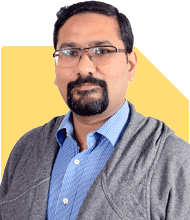
Shekhar

Shekhar Kumar  | Answer  |Ask -

Leadership, HR Expert - Answered on May 09, 2024

Shekhar Kumar is senior manager, talent acquisition, at the Shri Venkateshwara University in Gajraula, Uttar Pradesh. He has 18 years of expertise in the search and placement of executive leadership talent across various industries.
He has also mentored middle and senior management professionals for leadership positions and guided them in career development.
Shekhar has a bachelor's degree in business management from Magadh University, Bihar, and a master's degree in human resource management from Annamalai University, Tamil Nadu.... more

Apoorva Question by Apoorva on May 07, 2024Hindi

Listen
Career

Hi Sir, I have 12 years of experience, I have started as a team lead and now advancing to be a manager soon with a new organization, but I do not have enough expertise and looking for a starting point. Kindly suggest on leadership and managerial courses (including even the required softskills). I would appreciate 1 to 1 coaching as well.

Ans: Congratulations on your career advancement! Transitioning into a managerial role can be both exciting and challenging, but there are numerous courses and resources available to help you develop the leadership and managerial skills necessary for success. Here are some suggestions for leadership and managerial courses, as well as options for 1-to-1 coaching. MDPs provide comprehensive training in various aspects of management, including leadership development, team building, communication skills, and conflict resolution. Look for programs offered by reputable business schools or professional training organizations. Many business schools offer executive education programs specifically designed for mid-career professionals transitioning into leadership roles. These programs cover topics such as strategic leadership, organizational behavior, change management, and decision-making. Obtaining a PMP certification can enhance your project management skills and prepare you for effectively managing teams and projects in your managerial role. The certification covers areas such as project planning, execution, monitoring, and closing. Consider hiring an executive coach who specializes in leadership development and managerial effectiveness. An executive coach can provide personalized guidance, feedback, and support to help you navigate the challenges of your new role and accelerate your professional growth. Seek out experienced leaders within your organization or industry who can serve as mentors and provide valuable insights and advice as you transition into your managerial role. A mentorship relationship can be a valuable source of support and learning throughout your career journey. Many organizations offer professional development programs that include 1-to-1 coaching or mentoring as part of their leadership development initiatives. Take advantage of these opportunities to receive personalized guidance and support from experienced leaders within your organization. By investing in your leadership and managerial development through courses, workshops, and coaching, you'll be better equipped to excel in your new role and drive positive outcomes for your team and organization. Remember to approach your learning journey with an open mind, a willingness to learn and adapt, and a commitment to continuous improvement.
Career

You may like to see similar questions and answers below
Aashish

Aashish Sood  |127 Answers  |Ask -

CAT, Management Expert - Answered on Jan 07, 2024
Asked by Anonymous - Oct 27, 2023Hindi
Listen
Career
Dear Sir, I am in job from July 2003 and have over 20 years of experience, In this 20 years of job, first 16 years i have been in sales and distribution, and last 4 years i have been in operations (Supply chain, addressing and solving customer issue), I feel some how i am lacking in leadership skills related to IT field, as this are in demand now. Can u please help me in providing and suggesting any good course to update myself in this domain. I am MBA pass out in 2003 and did Executive Management program last year with one of the reputed B school in India...
Ans: Since you have already completed an Executive Management program, consider building on that foundation with these specialized courses.

Also, look for programs offered by reputable institutions or professional organizations that provide certifications recognized in the IT industry. Online learning platforms like Coursera, edX, and LinkedIn Learning offer a variety of courses in these areas.

You may consider pursuing certifications like Project Management Professional (PMP) or Certified ScrumMaster (CSM). These certifications are valuable for individuals leading projects in IT.

Toy can focusing on enhancing your general leadership and communication skills through courses that focus on effective communication, team building, and leadership in a technology-driven environment.

In the meanwhile, gain a foundational understanding of AI and ML to stay informed about emerging technologies. Many online platforms offer introductory courses on these topics.

..Read more

Aasif Ahmed Khan

Aasif Ahmed Khan   | Answer  |Ask -

Tech Career Expert - Answered on Sep 09, 2024

Asked by Anonymous - Sep 09, 2024Hindi
Listen
Career
Hello Sir, Currently I am carrying 13+ years of experience in software industry and leading a team of 10 software developers. I would like to transition into leadership/project management roles in software industry. Could you please share your recommendations on the list of courses/certifications to upskill myself that would help me transition to the leadership roles? Thanks in advance!
Ans: These certifications and courses can help you build the necessary skills and knowledge to transition into leadership roles.

1-Agile and Scrum Certifications
Certified ScrumMaster (CSM): Offered by Scrum Alliance, this certification is ideal if you’re working in an Agile environment.
PMI Agile Certified Practitioner (PMI-ACP): This certification covers various Agile methodologies and is offered by PMI.
SAFe Agilist Certification: For those working in large-scale Agile environments.

2-IT Management and Leadership Certifications
Certified Information Technology Manager (CITM): This certification focuses on IT management and leadership skills.
Certified Software Development Professional (CSDP): Offered by IEEE, this certification is for experienced software development practitioners.
ITIL Foundation Certification: This certification covers IT service management and is widely recognized.

3-General Management and Leadership Courses
AMA Certified Professional in Management: This certification covers professional effectiveness, relationship management, business acumen, and analytical intelligence.
Leadership and Management Courses on Udemy: Courses like “Software Engineering: From Developer to Tech Lead” can be very useful.
edX: Provides courses from institutions like MIT and Harvard on management and leadership.
LinkedIn Learning: Offers a wide range of courses on leadership, project management, and technical skills.

..Read more

Latest Questions
Ramalingam

Ramalingam Kalirajan  |11014 Answers  |Ask -

Mutual Funds, Financial Planning Expert - Answered on Feb 04, 2026

Money
I am investing in UTI flexi cap fund since2021 @3000INR/month. Now the accumulated amount is 2,09,000/- . the yield is only 6%. Please advise if i have to switch fund? .if so, please advise fund
Ans: Appreciate you for continuing your SIP with discipline since 2021. Staying invested for more than three years itself shows commitment and patience, which are very important for long-term wealth creation.

» Understanding the Current Return Experience
– A 6% return over this period can feel disappointing, especially when expectations from equity are higher
– Equity-oriented funds do not move in a straight line; different market phases impact returns differently
– The last few years included sharp rallies, corrections, and sector rotations, which affected diversified strategies unevenly
– Short- to medium-term returns alone should not be the only reason for an immediate decision

» Time Horizon vs Fund Behaviour
– Such funds are designed to perform well over a full market cycle, usually 7 years or more
– Performance between 3 to 4 years can remain muted even if the long-term potential is intact
– Your SIP amount is modest, which means consistency and time will play a bigger role than switching frequently

» Should You Switch Based Only on 6% Return
– Switching only because of recent low returns may lock in underperformance
– It is important to check whether the fund still follows its stated strategy and risk control
– If the fund has become inconsistent, or your overall portfolio lacks balance, then a change can be considered
– Any switch should be part of a broader portfolio improvement, not an isolated action

» Portfolio-Level Assessment Is More Important
– One fund should not be judged in isolation
– A 360-degree view should include:

Overall equity exposure

Allocation between growth-oriented and stability-oriented strategies

Your age, income stability, and future goals
– If your portfolio is dependent on only one equity style, returns may appear slow during certain phases

» What to Do Going Forward
– Instead of fully stopping, you may:

Continue the existing SIP for long-term compounding

Gradually add another actively managed equity strategy with a different approach
– Actively managed funds offer flexibility to shift sectors and reduce downside risk, which is not possible in index-based options
– Active management helps manage volatility better during uncertain markets

» Tax and Cost Awareness
– Any switch in equity funds may trigger capital gains tax
– If held for more than one year, gains above Rs 1.25 lakh are taxed at 12.5%
– Short-term exits attract 20% tax, which can reduce effective returns
– Hence, switching should be value-driven, not emotion-driven

» Finally
– Your investment journey is still on track, and this phase does not define long-term success
– With the right diversification, patience, and periodic review, equity investing rewards discipline
– A structured review with a Certified Financial Planner can help align your SIPs with goals and market realities
– Focus on process, not just recent performance

Best Regards,

K. Ramalingam, MBA, CFP,

Chief Financial Planner,

www.holisticinvestment.in

https://www.youtube.com/@HolisticInvestment

...Read more

Ramalingam

Ramalingam Kalirajan  |11014 Answers  |Ask -

Mutual Funds, Financial Planning Expert - Answered on Feb 04, 2026

Asked by Anonymous - Feb 04, 2026Hindi
Money
Dear Sir, I am a medico currently working overseas. My present income is relatively high, but I expect my earnings to reduce over the next 1–2 years due to career transitions and further examinations. Also, I may be starting a family of my own in the near future. I have recently started investing and would like your opinion on whether my overall strategy is sound and how I should prepare for lower-income years ahead. Current situation (approximate): Monthly investment capacity: ₹3 lakh (at present) Expected future investment capacity: ₹1-1.25 lakh per month Existing expenditure: No debts at present, ~approx 1 lakh per month to support parents, 1.5 L per year in their insurance, 50-55k per month on rent, food, and miscellaneous Emergency fund: being built separately, started SBI life during my postgrad years and invested 7.5 L over 5 years, and expected to mature by 2028. Current investment approach: Equity-oriented mutual funds via SIP and lump sum Allocation across flexi-cap, multi-cap, large & mid-cap, mid-cap, small-cap funds Small allocation to liquid funds for short-term needs Investment horizon: long term (10+ years) Fund Allocation % Share Parag Parikh Flexi Cap ₹75,000 25% Kotak Multicap Fund ₹60,000 20% Kotak Large & Mid Cap ₹60,000 20% Axis Midcap ₹45,000 15% Axis Small Cap ₹30,000 10% ICICI Liquid Fund ₹30,000 10% My primary goals are: Long-term wealth creation Financial stability during periods of reduced income Maintaining flexibility for career-related expenses and exams I would be grateful for your views on: Whether this equity-heavy approach is appropriate given future income uncertainty How I should gradually adjust asset allocation as income reduces Any mistakes you commonly see investors like me make at this stage Thank you for your time and guidance.
Ans: Appreciate the clarity with which you have shared your income pattern, responsibilities, and future plans. Starting early, investing seriously, and thinking ahead about income reduction already puts you in a strong position.

» Overall View of Your Current Strategy
– Your present high savings rate is a big advantage and should be used wisely
– Long-term orientation of more than 10 years suits equity-oriented investing
– Supporting parents, planning exams, and future family needs show mature financial thinking
– Your strategy is growth-focused, but it needs better protection for the income transition phase

» Suitability of an Equity-Heavy Approach
– High equity exposure is suitable when income is strong and stable
– Future income uncertainty means volatility tolerance may reduce emotionally, even if risk capacity is high
– Equity-heavy portfolios can show sharp short-term falls, which may be stressful during exam or career pressure periods
– The approach is directionally right, but timing and balance need fine-tuning

» Managing the Next 1–2 Years of Income Reduction
– Use the current high-income phase to build strong safety layers
– Increase allocation to low-volatility and short-term holding options meant only for stability
– Create a clear separation between:

Long-term wealth money (do not touch)

Career transition and exam-related money (capital protection focus)
– As income reduces, SIP amounts can be lowered without stopping investments fully

» Asset Allocation Adjustments Over Time
– Gradually reduce exposure to higher volatility segments as income visibility reduces
– Maintain core equity exposure for long-term goals, but avoid over-dependence on aggressive segments
– Avoid frequent switching based on short-term market movement
– Asset allocation discipline matters more than chasing higher returns

» Liquidity and Flexibility Planning
– Ensure emergency and opportunity money is fully ready before income reduces
– Liquid and low-risk options should cover at least all non-negotiable expenses
– This gives confidence to stay invested in equity during market corrections
– Flexibility reduces the risk of forced withdrawals at the wrong time

» Insurance and Protection Review
– Review the existing investment-cum-insurance policy started during postgraduation
– Such policies are usually low on returns and high on cost
– If surrender conditions are reasonable, consider exiting and redirecting money into more efficient options
– Keep pure insurance and investments separate for better clarity and control

» Common Mistakes Seen at This Stage
– Investing aggressively without enough liquidity buffer
– Reducing investments fully instead of adjusting amounts during income dips
– Overexposure to similar equity styles leading to hidden concentration risk
– Ignoring future life changes like marriage, children, and relocation costs

» Tax and Exit Awareness
– Equity fund exits within one year attract 20% tax on gains
– Long-term equity gains above Rs 1.25 lakh are taxed at 12.5%
– This makes planned withdrawals and phased rebalancing more efficient than sudden exits

» Finally
– Your financial foundation is strong and well thought out
– With better balance between growth and stability, you can manage income changes smoothly
– Focus on structure, liquidity, and discipline rather than only return numbers
– A periodic review with a Certified Financial Planner will help you stay aligned as life evolves

Best Regards,

K. Ramalingam, MBA, CFP,

Chief Financial Planner,

www.holisticinvestment.in

https://www.youtube.com/@HolisticInvestment

...Read more

Ramalingam

Ramalingam Kalirajan  |11014 Answers  |Ask -

Mutual Funds, Financial Planning Expert - Answered on Feb 04, 2026

Asked by Anonymous - Feb 03, 2026Hindi
Money
Hi Sir, I'm 38 years old. Currently doing an SIP of 55000 in these funds in 2 separate portfolios (mine and wife's). My risk profile is moderate to high. I'm targeting to keep investing for next 9 years. Currently my mutual fund portfolio corpus is 24 lac. Target corpus is 1.75 Cr to 2 Cr in 2035. Is this achievable? Do I need any step-ups yearly? Portfolio 1: parag parikh flexicap - 12000 hdfc mid cap - 5500 mirae asset large & mid cap - 8000 sbi gold fund - 5000 sbi multi asset fund - 5500 Portfolio 2: invesco midcap - 5500 ICICI multi asset allocation - 2000 hdfc flexicap - 4500 icici pru nasdaq 100 - 6000 axis silver FOF - 1000 Please review and suggest any changes needed.
Ans: You have done very well to start early, invest regularly, and build a sizeable corpus of around Rs.24 lakh by age 38. Investing as a couple, keeping a long-term view, and accepting moderate-to-high risk clearly show discipline and maturity. This itself puts you ahead of many investors.

» Target Feasibility and Time Horizon
– A 9-year horizon is reasonably good for equity-oriented investing, especially when SIP amount is strong and discipline is visible.
– With a monthly SIP of around Rs.55,000 and an existing corpus already in place, the target range of Rs.1.75 Cr to Rs.2 Cr by 2035 is achievable, but it will not happen by default.
– Market returns will not be even every year. Some years will test patience. Staying invested matters more than timing.
– To improve certainty and reduce pressure in later years, annual step-up is strongly advisable.

» Need for SIP Step-Up
– Without increasing SIP, the gap between effort and target may widen, especially if markets give average returns.
– A yearly step-up of even 8% to 10% can make a big difference over 9 years.
– Step-up should ideally match salary growth, bonuses, or business income rise.
– This keeps lifestyle stable while wealth grows silently in the background.

» Portfolio Structure Assessment
– Overall, your asset mix shows good balance across growth-oriented equity, stability-oriented allocation, and some global exposure.
– Splitting investments between spouses is sensible for long-term planning and tax efficiency.
– Exposure to mid-sized companies adds growth, but it also adds volatility. Your risk profile supports this, but allocation must be controlled.
– Flexibility-oriented funds give stability during market cycles and help reduce sharp drawdowns.
– Multi-asset exposure helps in volatile phases, but too many similar allocations can reduce clarity.

» Observations on Equity Allocation
– There is overlap in categories across both portfolios, especially in flexi and mid-cap styles.
– Too many funds in similar categories do not always improve returns; they often dilute conviction.
– A slightly more streamlined structure can improve monitoring and discipline.
– Growth funds should remain the core, but risk concentration must be watched as the goal year approaches.

» Gold, Silver, and Overseas Exposure
– Limited allocation to precious metals is fine as a stabiliser, not as a return driver.
– Keeping this allocation capped avoids drag on long-term growth.
– Overseas equity exposure adds diversification and currency hedge, but it should not dominate the portfolio.
– Periodic review is important as regulations and valuations change.

» What Changes Can Be Considered
– Reduce duplication across similar equity styles between both portfolios.
– Keep one clear growth-oriented core and one stability-oriented support structure.
– Gradually increase allocation to relatively stable equity styles after age 42–43 to protect accumulated corpus.
– Ensure each fund has a clear role; if the role is unclear, the fund may not be needed.

» Risk Management and Goal Alignment
– As the corpus grows, protecting gains becomes as important as chasing returns.
– Around the last 3 years, volatility management should take priority over aggressive growth.
– Periodic rebalancing is essential, especially after sharp market rallies.
– Emergency fund, health cover, and term protection should be adequate so investments are never disturbed mid-way.

» Tax Awareness While Investing
– Equity mutual fund gains held long term are taxed only beyond the exempt threshold, which supports long-term discipline.
– Short-term exits are costly from a tax point of view and should be avoided unless absolutely necessary.
– Asset allocation discipline reduces unnecessary churn and tax leakage.

» Finally
– Your goal is realistic, your discipline is strong, and your starting point is solid.
– Annual SIP step-up is not optional; it is the key enabler for reaching the upper end of your target.
– Simplification, role clarity of funds, and periodic review will improve outcomes without increasing stress.
– Staying invested with patience will matter more than reacting to short-term market noise.

Best Regards,

K. Ramalingam, MBA, CFP,

Chief Financial Planner,

www.holisticinvestment.in

https://www.youtube.com/@HolisticInvestment

...Read more

DISCLAIMER: The content of this post by the expert is the personal view of the rediffGURU. Investment in securities market are subject to market risks. Read all the related document carefully before investing. The securities quoted are for illustration only and are not recommendatory. Users are advised to pursue the information provided by the rediffGURU only as a source of information and as a point of reference and to rely on their own judgement when making a decision. RediffGURUS is an intermediary as per India's Information Technology Act.

Close  

You haven't logged in yet. To ask a question, Please Log in below
Login

A verification OTP will be sent to this
Mobile Number / Email

Enter OTP
A 6 digit code has been sent to

Resend OTP in120seconds

Dear User, You have not registered yet. Please register by filling the fields below to get expert answers from our Gurus
Sign up

By signing up, you agree to our
Terms & Conditions and Privacy Policy

Already have an account?

Enter OTP
A 6 digit code has been sent to Mobile

Resend OTP in120seconds

x