Home > Money > Question
Need Expert Advice?Our Gurus Can Help

Sold Agricultural Land: Mother's Share Deposited and Transferred - Tax Implications?

Milind

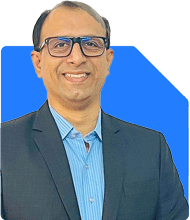
Milind Vadjikar  | Answer  |Ask -

Insurance, Stocks, MF, PF Expert - Answered on Sep 07, 2024

Milind Vadjikar is an independent MF distributor registered with Association of Mutual Funds in India (AMFI) and a retirement financial planning advisor registered with Pension Fund Regulatory and Development Authority (PFRDA).
He has a mechanical engineering degree from Government Engineering College, Sambhajinagar, and an MBA in international business from the Symbiosis Institute of Business Management, Pune.
With over 16 years of experience in stock investments, and over six year experience in investment guidance and support, he believes that balanced asset allocation and goal-focused disciplined investing is the key to achieving investor goals.... more
Asked by Anonymous - Mar 04, 2024Hindi

Listen
Money

we had sale the agriculture land, and the mother's share of amount is Rs. 3500000 deposited in my account, but next day I have transfer the same amount to her account so in this case is it consider my Income? and also can I liable to pay the Tax on said amount? pl. advice.

Ans: No. Keep your passbook/bank statement records handy in case you get IT query regarding this.
DISCLAIMER: The content of this post by the expert is the personal view of the rediffGURU. Users are advised to pursue the information provided by the rediffGURU only as a source of information to be as a point of reference and to rely on their own judgement when making a decision.
Money

You may like to see similar questions and answers below
Mahesh

Mahesh Padmanabhan  | Answer  |Ask -

Tax Expert - Answered on Feb 04, 2023

Listen
Money
Hello Sunil ji, I am kedar & age 61, asking a question regarding the taxation on the amount of inheritance to my wife. After death my father in law (sasur ji) few years back, My mother in law (my sasu ma) had taken a decision regarding the agricultural land in their small town, which was purchased by the grandfather of my wife (father of my father in law) is develped and made it in the NA plots as per town planning scheme. these plots are now ready to sale. My sasu ma want to disribute the amont sold of these real estate plots., to her three married daughters including my wife. sir, here please guid us, regarding the amount recieved to my wife through her mother's house, is liable for any tax like capital gain or it will be treated as gift tax free amonut from mother's house as a stri-dhan (स्त्री-धन) and treated a tax free inheritance amont from her parants. kindly guide. thanks.
Ans: Hi Kedarji
Based on your question, apparently on property records, your mother-in-law is the owner of the land. I do not wish to get into the legal heirship aspect of the land post your father-in-law's demise and hence i would restrict my answer within the perspective of your query.

As your MIL is the legal owner and she is the person selling the land, she will be the person liable to tax for the capital gain arising on sale of the NA land.

The distribution of the net sale proceeds to the 3 daughters could be treated as gift backed up with the relevant paper work such as executing the gift deed etc., to ensure that there is no further taxability to the 3 daughters

..Read more

Ramalingam

Ramalingam Kalirajan  |11062 Answers  |Ask -

Mutual Funds, Financial Planning Expert - Answered on May 09, 2024

Listen
Money
Dear Sir/Madam My mother is pension holder and senior citizen. My father passed away. Her land was given to developer and in return she got ownership of some flats in the same building. Now she is selling those flats to third party. Is the amount got through this selling will be treated as income. She did not open capital gain account. The amount is transferred to savings account. Please advise. Regards
Ans: Here's a breakdown of the tax implications for your mother's situation:

Sale of Flats:

The sale proceeds from selling the flats will likely be considered a capital gain. Since she received these flats in exchange for her land, the cost price for calculating the capital gain will be the cost of the original land.
Tax Treatment:

Long-Term Capital Gains (LTCG): If your mother held the flats for more than 2 years before selling, the capital gains will be considered LTCG. For senior citizens (over 60 years), LTCG from the sale of any type of capital asset (including land or buildings) is exempt from tax.

Short-Term Capital Gains (STCG): If she held the flats for 2 years or less, the gains will be considered STCG. However, there's no separate capital gains account required for seniors.

Exemption for Senior Citizens:

The good news is that since your mother is a senior citizen, LTCG from the sale of the flats is exempt from tax irrespective of whether she opened a capital gains account or not.
Recommendations:

It's advisable to consult a tax advisor for a more personalized assessment. They can consider factors like the specific holding period of the flats, any applicable exemptions, and filing requirements for senior citizens.
Additional Points:

Even though LTCG is exempt, it's still recommended to maintain records of the original land cost, sale proceeds, and ownership period for future reference.
If the sale proceeds are significant, tax implications on other income sources might need to be considered while filing the ITR.
I hope this clarifies the situation!

Best Regards,
K. Ramalingam, MBA, CFP,
Chief Financial Planner,
www.holisticinvestment.in

..Read more

Latest Questions
Ramalingam

Ramalingam Kalirajan  |11062 Answers  |Ask -

Mutual Funds, Financial Planning Expert - Answered on Mar 14, 2026

Money
I am 61, minimalist with no bad habits in the life style of NO PILL; NO ILL. Now, the market is down and NAV falls down. my investments are comfortably positive even in the negative market. becuase the investment started very early and unis purchased at very low price. Now, the question is should I withdraw the funds; a portion of profit and invest in the downward trend so that I will get more units and i will not loose the capital because I am planning to withdraw only the portion of the profits. Please guide me should I need to reshuffle by withdrawing and re investing ..!!
Ans: Your disciplined lifestyle and long investing journey are truly inspiring. Starting early and holding investments patiently has created a comfortable cushion for you. Even when the market is falling, your portfolio remains positive. That itself shows the power of long-term investing.

Now your question is about withdrawing profit and reinvesting during the market fall. Let us examine this carefully.

» Understanding What You Are Trying To Do

Your idea is:

– Withdraw only the profit portion
– Reinvest when NAV is lower
– Get more units
– Protect original capital

This approach looks logical on the surface. But in practice it becomes very difficult to execute consistently.

» The Challenge of Timing the Market

To succeed in this strategy two things must happen correctly.

– You must sell at the right time
– You must reinvest at the correct lower level

Predicting market movement precisely is extremely difficult. Even experienced investors struggle with this.

If markets suddenly recover after you redeem, you may lose the opportunity of further growth.

» Impact of Taxes on Withdrawal

Whenever you redeem equity mutual funds:

– Long term capital gains above Rs 1.25 lakh are taxed at 12.5%
– Short term capital gains are taxed at 20%

So withdrawing profit may trigger tax liability. This reduces the benefit of trying to buy more units.

Frequent reshuffling can quietly reduce long-term wealth.

» Your Age and Investment Objective

At 61, your goal should shift slightly.

Earlier the focus was:

– Maximum growth

Now the focus should be:

– Capital protection
– Controlled growth
– Income stability

So instead of frequent buying and selling, gradual portfolio balance is more suitable.

» A Better Approach for Your Situation

Rather than timing the market, consider this approach:

– Keep the core long-term equity investments untouched
– If equity allocation has grown very large, slowly shift small portion into safer assets
– Continue enjoying compounding from existing units purchased at low prices

This maintains growth while protecting accumulated wealth.

» Systematic Withdrawal Planning

If you need regular income later:

– You can withdraw small amounts periodically
– This reduces market timing risk
– Portfolio continues to grow while providing income

This is usually more comfortable for retired investors.

» Emotional Discipline

Your biggest strength so far has been patience.

The temptation to reshuffle during market movements often disturbs long-term success.

Many investors lose wealth not because of bad investments but because of unnecessary switching.

» Finally

Since your investments were made early and units were bought at very low prices, the best strategy is usually to stay invested and allow compounding to continue.

Avoid frequent profit booking and reinvestment based on market movements.

Instead:

– Maintain a balanced asset allocation
– Protect capital gradually
– Allow long-term equity investments to keep growing

Your disciplined journey has already created strong financial security. Preserving that strength is now more important than trying to capture short-term opportunities.

Best Regards,

K. Ramalingam, MBA, CFP,

Chief Financial Planner,

www.holisticinvestment.in

https://www.youtube.com/@HolisticInvestment

...Read more

Ramalingam

Ramalingam Kalirajan  |11062 Answers  |Ask -

Mutual Funds, Financial Planning Expert - Answered on Mar 14, 2026

Money
I am a retired doctor with 1lac pension kindly suggest to invest 30000per month
Ans: Your disciplined habit of investing even after retirement is very encouraging. With a pension of Rs 1 lakh per month, planning to invest Rs 30,000 shows that you are thinking about preserving and growing your wealth in a structured manner.

At this stage of life, the focus should be balanced between safety, regular growth, and liquidity.

» Understanding Your Financial Stage

You are a retired professional receiving steady pension income.

This means:

– Your regular expenses are already supported
– Investment goal is wealth preservation and moderate growth
– Liquidity for health and family needs is important

So the investment approach should be balanced and not aggressive.

» Emergency and Medical Reserve

Before starting monthly investment, ensure:

– At least 12 months of expenses kept in safe liquid instruments
– Adequate health insurance coverage

Medical expenses increase with age. Having a dedicated medical reserve prevents disturbance to investments.

» Balanced Investment Approach

For a retired person, full equity exposure is not suitable. But avoiding equity completely also reduces growth.

A balanced structure is ideal.

For the Rs 30,000 monthly investment:

– Around Rs 15,000 in actively managed diversified equity mutual funds
– Around Rs 10,000 in short duration or conservative debt mutual funds
– Around Rs 5,000 in gold allocation for diversification

This structure provides growth with stability.

» Importance of Actively Managed Funds

Actively managed mutual funds are suitable because:

– Fund managers actively select strong companies
– They adjust portfolio when market conditions change
– Aim to generate better returns than the market

This professional management helps investors who prefer not to monitor markets regularly.

» Investment Horizon and Liquidity

Even after retirement, investments can continue for 10 to 15 years.

So:

– Continue SIP regularly
– Review portfolio once every year
– Keep sufficient liquidity for emergencies

Avoid locking large amounts into instruments with long lock-in periods.

» Tax Awareness

If you redeem equity mutual funds:

– Long term capital gains above Rs 1.25 lakh taxed at 12.5%
– Short term gains taxed at 20%

Debt mutual fund gains are taxed as per your income tax slab.

Planning withdrawals carefully can reduce tax impact.

» Finally

Your plan to invest Rs 30,000 monthly is a strong step toward maintaining financial independence.

A balanced portfolio with equity, debt, and gold can help:

– Preserve your wealth
– Provide moderate growth
– Maintain liquidity for future needs

Regular review with a Certified Financial Planner can ensure that your investments remain aligned with your lifestyle and health needs during retirement.

Best Regards,

K. Ramalingam, MBA, CFP,

Chief Financial Planner,

www.holisticinvestment.in

https://www.youtube.com/@HolisticInvestment

...Read more

DISCLAIMER: The content of this post by the expert is the personal view of the rediffGURU. Investment in securities market are subject to market risks. Read all the related document carefully before investing. The securities quoted are for illustration only and are not recommendatory. Users are advised to pursue the information provided by the rediffGURU only as a source of information and as a point of reference and to rely on their own judgement when making a decision. RediffGURUS is an intermediary as per India's Information Technology Act.

Close  

You haven't logged in yet. To ask a question, Please Log in below
Login

A verification OTP will be sent to this
Mobile Number / Email

Enter OTP
A 6 digit code has been sent to

Resend OTP in120seconds

Dear User, You have not registered yet. Please register by filling the fields below to get expert answers from our Gurus
Sign up

By signing up, you agree to our
Terms & Conditions and Privacy Policy

Already have an account?

Enter OTP
A 6 digit code has been sent to Mobile

Resend OTP in120seconds

x