Home > Career > Question
Need Expert Advice?Our Gurus Can Help

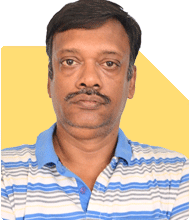
Nayagam P

Nayagam P P  |10860 Answers  |Ask -

Career Counsellor - Answered on Aug 28, 2025

Nayagam is a certified career counsellor and the founder of EduJob360.
He started his career as an HR professional and has over 10 years of experience in tutoring and mentoring students from Classes 8 to 12, helping them choose the right stream, course and college/university.
He also counsels students on how to prepare for entrance exams for getting admission into reputed universities /colleges for their graduate/postgraduate courses.
He has guided both fresh graduates and experienced professionals on how to write a resume, how to prepare for job interviews and how to negotiate their salary when joining a new job.
Nayagam has published an eBook, Professional Resume Writing Without Googling.
He has a postgraduate degree in human resources from Bhartiya Vidya Bhavan, Delhi, a postgraduate diploma in labour law from Madras University, a postgraduate diploma in school counselling from Symbiosis, Pune, and a certification in child psychology from Counsel India.
He has also completed his master’s degree in career counselling from ICCC-Mindler and Counsel, India.
... more
ABHIJIT Question by ABHIJIT on Aug 26, 2025Hindi

Career

WBJEE RANK 19091 GENERAL CASTE WHICH GOVERNMENT COLLEGE CAN HAVE A CHANCE OF ADMISSION

Ans: Abhijit, With a WBJEE General GMR rank of 19 091, admission to core branches in most premier government colleges is unlikely, but seats remain in several state-run institutions. Alipurduar Government Engineering and Management College closes Civil Engineering at rank 22 350 and Electrical Engineering at 21 890 offering viable options. Cooch Behar Government Engineering College ends Civil Engineering at 25 412 and Electrical Engineering at 23 501 ensuring admission possibilities. Ramkrishna Mahato Government Engineering College, Purulia, admits Civil Engineering up to rank 20 105 and Electrical Engineering up to 22 381. Kalyani Government Engineering College opens Civil Engineering at rank 19 457 and Mechanical Engineering at 18 234. Jalpaiguri Government Engineering College enrolls Civil Engineering up to rank 24 890. Among private institutions, Techno India, Salt Lake, accepts Civil Engineering up to rank 31 000. Heritage Institute of Technology closes Civil Engineering at 18 500. Institute of Engineering & Management, Kolkata, offers Civil Engineering seats to rank 20 000. Narula Institute of Technology admits Civil Engineering up to rank 28 000 and Electrical Engineering up to rank 23 000. Haldia Institute of Technology opens Electrical Engineering seats up to rank 55 201. Recommendation: Opt for Civil or Electrical Engineering at Alipurduar or Ramkrishna Mahato Government Engineering Colleges for assured government seats within your rank range and consider Heritage Institute of Technology and Techno India Salt Lake as reliable private alternatives to secure admission and align with your academic goals. All the BEST for a Prosperous Future!

Follow RediffGURUS to Know More on 'Careers | Money | Health | Relationships'.
Career

You may like to see similar questions and answers below

Nayagam P

Nayagam P P  |10860 Answers  |Ask -

Career Counsellor - Answered on Aug 29, 2025

Career
In wbjee a rank of 71943 can get which private college?
Ans: Prerna, With a general merit WBJEE rank of 71943, admission to top government colleges for competitive branches like CSE, IT, or ECE is unlikely, but several private engineering colleges remain accessible. Private colleges with feasible admissions near this rank in West Bengal include Narula Institute of Technology (CSE cutoff ~29000-40000), Bengal Institute of Technology (rank up to 65000+), Guru Nanak Institute of Technology (IT ~48931-85251), Camellia Institute of Technology (various branches up to 70000+), BCET Durgapur (branches cutoff up to ~70000+), Techno India University (cutoff between 50000-75000), Millennium Institute of Engineering and Technology (cutoff up to 75000), Aliah University for IT and CSE (cutoff ranks ~30000-50000), and MCA Kolkata Institute of Engineering and Management (branches ~60000-90000). Admission chances increase if opting for less competitive branches like Electrical, Mechanical, or Civil engineering. These colleges typically have AICTE approval, adequate academic infrastructure, placement support (60-70% campus placements), and industry connections with local and regional companies offering internships and jobs.

Recommendation: Consider Narula Institute of Technology, Bengal Institute of Technology, or Techno India University for assured admission with decent infrastructure and placement support, while exploring IT or ECE branches with a realistic approach based on rank. All the BEST for a Prosperous Future!

Follow RediffGURUS to Know More on 'Careers | Money | Health | Relationships'.

..Read more

Nayagam P

Nayagam P P  |10860 Answers  |Ask -

Career Counsellor - Answered on Aug 29, 2025

Latest Questions

Ramalingam

Ramalingam Kalirajan  |10925 Answers  |Ask -

Mutual Funds, Financial Planning Expert - Answered on Dec 24, 2025

Money
Hello sir , I am 62 yrs and now have 25 lakh surplus money , where to invest if mutual fuds please recommend the good funds to me with %.thanks
Ans: Your discipline in building surplus funds deserves genuine appreciation.
Reaching this stage reflects patience, planning, and financial maturity.
At 62, your focus rightly shifts toward stability and steady income.
At the same time, growth must continue to fight inflation.
A balanced approach is therefore very important now.

» Age, Life Stage, and Investment Context
You are in the early retirement transition phase.
Capital protection becomes more important than aggressive growth.
Regular income matters more than high returns now.
Volatility should be controlled carefully.
Liquidity should be available for emergencies.
Tax efficiency must be managed smartly.

Mutual funds still suit this phase well.
They offer flexibility, transparency, and diversification.
They also allow gradual withdrawals when needed.

» Core Investment Philosophy at 62
Your money must work without stressing you.
Every rupee should have a clear purpose.
Risk should be measured and intentional.
Returns should be reasonable and repeatable.
Cash flow should feel predictable.

Avoid chasing market highs at this age.
Avoid locking funds for very long periods.
Avoid complicated structures and opaque products.

» Recommended Asset Allocation for Rs.25 Lakh
This allocation balances safety, income, and growth.
It also manages market ups and downs.

– Equity-oriented mutual funds: 35%
– Debt-oriented mutual funds: 55%
– Hybrid-oriented mutual funds: 10%

This structure keeps volatility under control.
It also allows reasonable growth over time.

» Role of Equity Mutual Funds at Your Age
Equity is still necessary even after 60.
Inflation reduces purchasing power every year.
Medical costs rise faster than general inflation.
Equity helps your money stay relevant.

However, equity exposure must be limited.
It must also be diversified and disciplined.

» Equity Mutual Fund Allocation – 35%
This equals around Rs.8.75 lakh.

Suggested internal split is as follows.

– Large, established companies focused funds: 25%
– Flexibly managed equity strategies: 10%

Large company exposure provides stability.
Business models are proven and resilient.
Earnings visibility is generally better.

Flexible equity strategies add adaptability.
Fund managers adjust based on market conditions.
This reduces risk during market corrections.

Avoid aggressive mid and small company focus now.
They bring sharp volatility and emotional stress.

» Why Actively Managed Equity Funds Matter
Markets are not always efficient in India.
Corporate governance quality varies widely.
Sector cycles change unpredictably.

Active managers can avoid weak businesses.
They can reduce exposure during excess valuations.
They can increase quality bias during uncertainty.

This flexibility matters more after retirement.

» Debt Mutual Funds as the Stability Anchor
Debt funds will form your portfolio backbone.
They provide stability and predictable behaviour.
They also support regular income planning.

At 62, debt allocation should dominate.
It protects capital during equity market falls.

» Debt Mutual Fund Allocation – 55%
This equals around Rs.13.75 lakh.

Suggested internal structure is below.

– Short maturity focused debt strategies: 25%
– Medium duration debt strategies: 15%
– Conservative income-oriented debt strategies: 15%

Short maturity funds reduce interest rate risk.
They are suitable for near-term needs.
They offer better predictability.

Medium duration funds balance return and risk.
They work well for three to five years horizon.

Income-oriented debt strategies support steady cash flow.
They also smooth overall portfolio returns.

Avoid credit risk heavy strategies at this stage.
Chasing extra yield can damage capital.

» Tax View on Debt Mutual Funds
Debt fund gains are taxed at slab rates.
This applies to both short and long holding periods.
Plan withdrawals in lower income years.
This improves post-tax outcomes.

» Hybrid Mutual Funds – Limited but Useful
Hybrid funds combine equity and debt exposure.
They reduce volatility through internal balancing.
They simplify allocation management.

However, allocation must remain limited.

» Hybrid Mutual Fund Allocation – 10%
This equals around Rs.2.5 lakh.

Choose conservative hybrid orientation only.
Debt portion should dominate clearly.
Equity portion should be controlled.

This segment acts as a shock absorber.
It also supports smoother returns.

» Liquidity and Emergency Planning
Always keep liquid access available.
Unexpected medical or family needs can arise.

Ensure at least twelve months expenses remain accessible.
This can be through savings or liquid-oriented funds.
Do not invest entire surplus tightly.

» Withdrawal Strategy Planning
Investment is only half the journey.
Withdrawal planning matters equally now.

Use a staggered withdrawal approach.
Avoid redeeming equity during market downturns.
Withdraw debt portion first during volatility.

This protects long-term growth potential.

» Market Volatility and Emotional Comfort
Market corrections are unavoidable.
Your portfolio must allow peaceful sleep.

The suggested allocation reduces panic risk.
It avoids sharp portfolio swings.

Emotional comfort is a hidden return.
It matters greatly after retirement.

» Rebalancing Discipline
Portfolio balance will change over time.
Equity may grow faster in bull markets.

Review allocation once every year.
Shift excess equity gains into debt.
This protects accumulated profits.

Do not rebalance too frequently.
Avoid reacting to short-term noise.

» Inflation Protection Over Retirement Years
Inflation silently erodes fixed incomes.
Medical inflation is especially dangerous.

Equity exposure counters this risk.
Active management further improves protection.

Without equity, retirement corpus shrinks in real terms.

» Estate and Nomination Discipline
Ensure nominations are updated everywhere.
This includes mutual funds and bank accounts.

Create a clear will if absent.
This avoids future family disputes.

Review beneficiaries regularly.

» What Not to Do at This Stage
Avoid chasing high return promises.
Avoid locking funds into illiquid structures.
Avoid concentration in single themes.
Avoid frequent portfolio tinkering.

Simplicity supports longevity planning.

» Monitoring and Review Framework
Review portfolio annually, not daily.
Track alignment with life needs.
Adjust only if life circumstances change.

Market noise should not guide actions.

» Final Insights
You have reached a position of strength.
Your surplus reflects years of discipline.
The goal now is sustainability, not speed.

A balanced mutual fund approach fits well.
It offers growth, income, and flexibility.
It respects your age and responsibilities.

With proper allocation and patience,
your money can support you comfortably.

Stay invested with clarity and confidence.

Best Regards,

K. Ramalingam, MBA, CFP,

Chief Financial Planner,

www.holisticinvestment.in

https://www.youtube.com/@HolisticInvestment

...Read more

DISCLAIMER: The content of this post by the expert is the personal view of the rediffGURU. Investment in securities market are subject to market risks. Read all the related document carefully before investing. The securities quoted are for illustration only and are not recommendatory. Users are advised to pursue the information provided by the rediffGURU only as a source of information and as a point of reference and to rely on their own judgement when making a decision. RediffGURUS is an intermediary as per India's Information Technology Act.

Close  

You haven't logged in yet. To ask a question, Please Log in below
Login

A verification OTP will be sent to this
Mobile Number / Email

Enter OTP
A 6 digit code has been sent to

Resend OTP in120seconds

Dear User, You have not registered yet. Please register by filling the fields below to get expert answers from our Gurus
Sign up

By signing up, you agree to our
Terms & Conditions and Privacy Policy

Already have an account?

Enter OTP
A 6 digit code has been sent to Mobile

Resend OTP in120seconds

x