Home > Career > Question
Need Expert Advice?Our Gurus Can Help

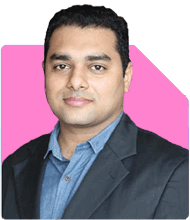
Dr Dipankar

Dr Dipankar Dutta  |1847 Answers  |Ask -

Tech Careers and Skill Development Expert - Answered on Jul 28, 2025

Dr Dipankar Dutta is an associate professor in the computer science and engineering department at the University Institute of Technology, the University of Burdwan, West Bengal.
He has 27 years of experience and his interests include AI, data science, machine learning, pattern recognition, deep learning and evolutionary computation.
Aside from his responsibilities at the college, he also delivers lectures and conducts webinars.
Dr Dipankar has published 25 papers in international journals, written book chapters, attended conferences, served as a board observer for WBJEE (West Bengal Joint Entrance Examination) exams and as a counsellor for engineering college admissions in West Bengal. He helps students choose the right college and stream for undergraduate, masters and PhD programmes.
A senior member of the Institute of Electrical and Electronics Engineers (SMIEEE), he holds a bachelor's degree in engineering from the Jalpaiguri Government Engineering College and a an MTech degree in computer technology from Jadavpur University.
He completed his PhD in engineering from IIEST, Shibpur (formerly BE College).... more

mukesh Question by mukesh on Jul 25, 2025Hindi

Career

My son is persuing 4th year ECE program from NSUT Delhi main campus, he scoring 7.97 CGPA yet , what should he do after completion his Btech

Ans: M.Tech from IITs
Career

You may like to see similar questions and answers below

Nayagam P

Nayagam P P  |10894 Answers  |Ask -

Career Counsellor - Answered on Jun 14, 2025

Career
SIR, MY SON DOING ECE AND CLEARED FIRST SEMESTER ,WHAT ADDITIONAL COURSES HE SHOULD DO FOR HIS BETTER PROSPECTS ,KINDLY NAME THE SITE OR INSTITUTE HE CAN DO THESE ADDITIONAL COURSES
Ans: Manish Sir, Your son should focus on industry-relevant skill development through specialized certification courses that align with current market demands. Essential courses include VLSI Design through NIELIT's free government program and MOSartsLabs' IIT Bhubaneswar certified course, Embedded Systems via ARM's professional certificate program, PCB Design from Altium Education and TCS iON, Python Programming through NIELIT's free courses, IoT certification from IISDT, MATLAB/Simulink from NIELIT, Signal Processing from MIT OpenCourseWare and ARM, Machine Learning specializations, and RF/Microwave Engineering courses . Top platforms offering these courses include NPTEL (free IIT/IISc courses), Coursera (university partnerships), edX (academic rigor), Udemy (practical applications), NIELIT (government-recognized free courses), and Simplilearn's SkillUP (free certifications) . These additional qualifications significantly improve placement prospects as ECE graduates with specialized skills in VLSI, embedded systems, and programming languages demonstrate 80-100% placement rates compared to traditional core ECE placements . Recommendation: Prioritize VLSI Design and Embedded Systems courses from NIELIT and ARM respectively, supplement with Python programming and PCB design certifications, utilizing free government platforms like NPTEL and NIELIT for cost-effective skill development while maintaining strong academic performance. STRATEGIC ADVISORY: Encourage your son to establish a comprehensive professional LinkedIn profile immediately, leveraging the platform's job alert functionality to monitor industry trends and market dynamics. This proactive approach will enable him to strategically align his skill development initiatives with emerging market demands throughout his undergraduate tenure, ultimately optimizing his positioning for campus recruitment opportunities in his final academic year.

Key Implementation Steps
Profile Optimization: Develop a polished LinkedIn presence showcasing academic achievements, project work, and technical competencies relevant to his ECE specialization, ensuring visibility to potential recruiters and industry professionals.

Market Intelligence: Configure targeted job alerts for ECE-related positions across preferred companies and locations, allowing continuous monitoring of skill requirements, compensation trends, and emerging technology demands in the electronics and communication sector.

Strategic Skill Development: Utilize insights gathered from job market analysis to prioritize relevant certifications and technical skills acquisition, focusing on high-demand areas such as VLSI design, embedded systems, IoT applications, and programming languages throughout his four-year academic journey.

Network Building: Actively engage with industry professionals, alumni networks, and technical communities on LinkedIn to expand professional connections and gain insights into career trajectories and industry best practices.

This systematic approach transforms passive academic learning into strategic career preparation, ensuring your son remains competitive and well-informed about industry expectations by the time campus placements commence in his final year. All the BEST for your Son's Prosperous Future!

Follow RediffGURUS to Know More on 'Careers | Money | Health | Relationships'.

..Read more

Latest Questions
T S Khurana

T S Khurana   |546 Answers  |Ask -

Tax Expert - Answered on Jan 27, 2026

Ramalingam

Ramalingam Kalirajan  |10997 Answers  |Ask -

Mutual Funds, Financial Planning Expert - Answered on Jan 27, 2026

Money
If I have 1 crore financial crisis how I pay if i get one crore
Ans: You are thinking responsibly. Asking this question itself shows maturity and awareness. A sudden Rs 1 crore inflow during a financial crisis can solve the problem, only if it is handled with clarity and discipline.

» First understand the nature of the Rs 1 crore
– Is this money received as inheritance, insurance claim, bonus, business sale, or asset liquidation
– Is the crisis short-term (medical, business loss, job loss) or long-term (debt overload, income mismatch)
– Do not rush to use the full amount immediately

Clarity first, action later.

» Priority-based usage of the Rs 1 crore
– Medical emergencies should be settled immediately
– High-interest personal loans and credit card dues should be cleared first
– Business or income-stopping issues should be stabilised next
– Do not deploy money emotionally or under pressure

The aim is stability, not quick fixes.

» How to pay liabilities smartly
– Clear unsecured and high-cost debts fully
– Avoid closing long-term low-cost loans in one shot
– Keep sufficient liquidity for next 12 months
– Do not exhaust the full Rs 1 crore at once

Liquidity gives confidence during crisis.

» Protection before investment
– Ensure adequate health insurance is active
– Ensure sufficient pure life insurance cover
– Emergency fund must be parked safely

Without protection, another crisis can repeat.

» Where not to put this Rs 1 crore
– Do not put entire amount in equity at one time
– Do not chase high-return promises
– Do not lock full money in illiquid products
– Do not mix insurance and investment

Safety first, growth later.

» How to deploy the balance amount
– Keep part of money in low-risk instruments for stability
– Invest remaining amount gradually into equity-oriented options
– Use phased investing instead of lump sum
– Choose actively managed funds due to flexibility and downside control

Active management matters more during uncertain times.

» Tax awareness while using the money
– If you sell investments to manage crisis, tax may apply
– Equity short-term exits attract higher tax
– Plan withdrawals in a tax-aware manner
– Avoid unnecessary churn

Taxes silently reduce available money.

» Emotional discipline during crisis
– Crisis creates fear-based decisions
– Money received suddenly can disappear fast without plan
– Write down priorities before spending
– Review every big payment calmly

Money solves crisis only when mind is steady.

» Finally
– Rs 1 crore is a powerful support, not a permanent solution
– Use it to restore stability, not lifestyle
– Protect, stabilise, then grow
– A structured plan converts crisis money into long-term security

Best Regards,

K. Ramalingam, MBA, CFP,

Chief Financial Planner,

www.holisticinvestment.in

https://www.youtube.com/@HolisticInvestment

...Read more

Ramalingam

Ramalingam Kalirajan  |10997 Answers  |Ask -

Mutual Funds, Financial Planning Expert - Answered on Jan 27, 2026

Asked by Anonymous - Jan 26, 2026Hindi
Money
Dear Sir, I do have decent exposure to Mutual fund investments, I am doing SIPs since 8-9 years however I am really clueless about future of Quants funds. I started SIPs in Quant Small and Mid fund from June 2024, both funds are in negative, appreciations are -8% and -15% respectively. I have Mid fund's SIP. Looking forward to you what to next, shall I continue Small Cap's SIP and keep Mid Cap in AMC for future appreciation or withdraw the fund.
Ans: You have done well by staying invested for 8–9 years. That itself shows discipline and patience. Temporary negative returns can shake confidence, but they do not erase your long-term effort. Your question is valid and many long-term investors are thinking the same.

» Understanding what is happening now
– You started these SIPs only from June 2024
– The investment period is still short
– Mid and small segments are more volatile
– Recent market corrections have hit these segments more

Negative returns in the first 1–2 years are not unusual in such funds.

» About strategy-driven funds and future visibility
– These funds follow a fast-changing investment style
– They may move sharply up and down
– Performance comes in phases, not steadily
– When the market does not suit the strategy, returns can stay weak

This does not mean the strategy has failed, only that the cycle is not supportive right now.

» Evaluating your small-cap SIP
– Small-cap investing needs long holding capacity
– Minimum useful horizon is 7–10 years
– SIPs during weak phases help lower average cost
– Stopping SIP after a fall usually hurts future returns

If this SIP is meant for long-term goals, it should continue.

» Evaluating your mid-cap investment
– Mid-cap funds usually recover faster than small caps
– Holding without SIP still allows recovery participation
– No urgency to exit just because current returns are negative
– Selling now converts temporary loss into permanent loss

Holding patiently is better than reacting emotionally.

» Should you withdraw now
– Withdrawing after recent decline locks in loss
– You miss recovery when the cycle turns
– Taxes may also apply depending on holding period
– Decision should be goal-based, not return-based

Exit only if the fund no longer fits your goal or risk level, not due to short-term pain.

» What you should do instead
– Continue SIP in small-cap if goal horizon is long
– Keep mid-cap investment and review annually
– Avoid frequent switching based on 6–12 month returns
– Ensure these funds are not too large a part of total portfolio

Balance and patience matter more than timing.

» Risk control and portfolio view
– Mid and small caps should not dominate portfolio
– Large and flexible equity styles add stability
– Debt and gold bring balance during equity stress
– Asset allocation should guide decisions, not fund performance

A calm structure reduces future stress.

» Tax angle to remember if you sell
– Equity selling within short term attracts higher tax
– Long-term gains above Rs 1.25 lakh are taxable
– Unplanned exits increase tax leakage

Tax should not be the main reason to stay or exit, but it must be considered.

» Finally
– Your investing habit is strong
– Current underperformance is a phase, not a verdict
– Staying invested usually rewards patience
– Review with a clear goal lens, not daily NAV movement
– Long-term wealth is built by staying calm during such periods

Best Regards,

K. Ramalingam, MBA, CFP,

Chief Financial Planner,

www.holisticinvestment.in

https://www.youtube.com/@HolisticInvestment

...Read more

Ramalingam

Ramalingam Kalirajan  |10997 Answers  |Ask -

Mutual Funds, Financial Planning Expert - Answered on Jan 27, 2026

Asked by Anonymous - Jan 23, 2026Hindi
Money
Mujhe 100 crore ka fund 10 saal m bnane ke liye kya kya Krna chahiye jabki meri investment capacity 25000/- monthly hai
Ans: I appreciate your ambition and honesty. Big goals give direction in life. At the same time, financial planning works best when dreams are aligned with mathematical reality. This clarity will protect you from disappointment and wrong decisions.

» First, understand the gap between goal and capacity
– Your desire is Rs 100 crore in 10 years
– Your current investment capacity is Rs 25,000 per month
– This goal cannot be achieved through normal investing routes
– Even very high market returns cannot bridge this gap

This is not about lack of effort, but about scale.

» Why Rs 100 crore in 10 years is not realistic with SIP investing
– SIP works well for wealth creation, but needs time and higher capital
– Markets do not give miracle returns consistently
– Anyone promising such growth is misleading you
– Chasing such promises usually leads to losses or fraud

Being realistic is the first step to becoming truly wealthy.

» What Rs 25,000 monthly investment can actually do
– It can build strong long-term financial security
– It can help you reach crores over a longer time
– It can give freedom, stability, and dignity
– It can change your family’s financial future

This is powerful, even if it is not Rs 100 crore.

» If Rs 100 crore is your life dream, what must change
– Investment alone is not enough
– You need income growth, not just savings
– Business ownership, entrepreneurship, or equity participation is required
– Your earning capacity must multiply many times

Wealth of this scale comes from value creation, not SIPs.

» Where investing still plays an important role
– Investing protects and grows surplus money
– Mutual funds help compound wealth over time
– Actively managed mutual funds are suitable for disciplined growth
– SIPs build habit and long-term discipline

Investing supports wealth; it does not replace income growth.

» A practical and healthy approach going forward
– Continue SIP of Rs 25,000 consistently
– Increase SIP amount whenever income increases
– Focus on skill growth and career expansion
– Explore additional income streams carefully
– Avoid shortcuts and unrealistic return expectations

This path builds real and lasting wealth.

» What you must strictly avoid
– Avoid schemes promising guaranteed high returns
– Avoid trading or speculation to chase big money
– Avoid borrowing to invest for unrealistic goals
– Avoid comparing your journey with social media stories

Peace of mind is also wealth.

» Finally
– Rs 100 crore in 10 years is not achievable with Rs 25,000 monthly investment
– This truth protects you from financial harm
– Focus on increasing income and steady investing
– Build achievable milestones first
– Wealth is a journey, not a single number

If you stay disciplined, informed, and patient, your financial life will still be successful and stress-free.

Best Regards,

K. Ramalingam, MBA, CFP,

Chief Financial Planner,

www.holisticinvestment.in

https://www.youtube.com/@HolisticInvestment

...Read more

Ramalingam

Ramalingam Kalirajan  |10997 Answers  |Ask -

Mutual Funds, Financial Planning Expert - Answered on Jan 27, 2026

Money
i am 46yrs old investing in MF-SIP , Mirae Asset Large & Midcap Dir Gr-5k, Parag Parikh Flexi Cap Fund- Direct plan-8k, DSP Mid cap fund - Direct Plan-5k, HDFC midcap oppurtinuty fund growth-5k,Bajaj Finserv Flexi cap fund growth- Direct plan-6k and Jio BlackRock Flexi Cap-6k plz advice for continuing SIP and by 2036 i need 1.5cr. also i had 20,00,000/- in hand ( ULIP maturity amount) where i have to invest this amount plz advice
Ans: I appreciate your discipline and clarity. At 46, having a clear target of Rs 1.5 crore by 2036 and running SIPs regularly shows strong intent. You are not late. With the right corrections, the goal is achievable.

» Your current SIP structure – what it shows
– You are investing regularly and consistently
– Exposure is largely towards equity, which suits your time horizon
– Portfolio is tilted more towards mid-cap and flexi-cap styles
– This gives growth potential but also higher volatility

The effort is right, but structure needs refinement.

» One important observation on your existing SIPs
– You are holding too many similar equity styles
– Overlap risk is high when funds follow similar strategies
– Monitoring and rebalancing becomes difficult over time
– More funds do not mean better diversification

Simplification will improve control and results.

» Direct plans – a reality you should understand
– Direct plans look cheaper, but they lack guidance
– No professional support during market falls
– No discipline support during emotional phases
– No ongoing review or rebalancing advice

Regular funds through a Mutual Fund Distributor with CFP credential provide behaviour control, review support, and long-term discipline, which matters more than small cost difference.

» How you should restructure SIPs going forward
– Reduce the number of equity funds
– Maintain a balance between large, flexi, and mid-cap exposure
– Avoid frequent fund changes based on recent performance
– Increase SIP amount gradually instead of adding new funds

Consistency and clarity beat complexity.

» Can you reach Rs 1.5 crore by 2036
– Time horizon of around 10 years is reasonable
– Goal is achievable with disciplined SIP continuation and step-ups
– Equity volatility will come, but staying invested is critical
– Portfolio must be reviewed annually, not emotionally

Your behaviour will decide success more than market returns.

» About the Rs 20 lakh ULIP maturity amount
– It is good that ULIP has already matured
– This amount should not be parked fully in bank deposits
– Do not invest the entire amount in equity at one time
– Use a staggered approach to reduce timing risk

This money is a powerful booster for your goal.

» How to deploy the Rs 20 lakh smartly
– Keep a small portion in liquid or low-risk instruments for stability
– Gradually move the remaining amount into equity-oriented mutual funds
– Align investments with your 2036 goal, not short-term market views
– Ensure liquidity is available for emergencies

This balances growth and peace of mind.

» Risk management you must not ignore
– Ensure adequate term insurance cover
– Health insurance should be independent of employer
– Emergency fund must be clearly set aside
– These protect your investments from forced withdrawals

Protection comes before returns.

» What to avoid from now till 2036
– Avoid chasing new or trending funds
– Avoid stopping SIPs during market corrections
– Avoid overexposure to mid and small caps
– Avoid investing without periodic review

Calm discipline is your biggest asset.

» Final Insights
– Continue SIPs, but simplify and rebalance the portfolio
– Shift from direct plans to regular plans for long-term guidance
– Use ULIP maturity amount in a phased and structured manner
– Annual review is essential, not frequent changes
– With discipline, Rs 1.5 crore by 2036 is realistic

Best Regards,

K. Ramalingam, MBA, CFP,

Chief Financial Planner,

www.holisticinvestment.in

https://www.youtube.com/@HolisticInvestment

...Read more

Ramalingam

Ramalingam Kalirajan  |10997 Answers  |Ask -

Mutual Funds, Financial Planning Expert - Answered on Jan 27, 2026

Money
On fd i am getting only 7 present. Where i will get more intrest than bank deposit.
Ans: You are rightly questioning whether keeping money at around 7 percent is efficient, especially when inflation and tax reduce real returns. This thinking itself helps wealth grow steadily.

» First, understand the trade-off clearly
– Higher return always comes with higher risk
– Bank deposits give safety but poor post-tax growth
– The goal is not chasing the highest rate, but improving risk-adjusted return
– Money should be placed based on time horizon and purpose

Once this is clear, decisions become calm and logical.

» Better alternatives to bank deposits for stable money
– High-quality debt-oriented mutual funds can give better post-tax efficiency
– Returns may look similar on paper, but taxation works in your favour
– Suitable for money needed after 2–3 years or more
– Liquidity is higher compared to fixed deposits

These are good substitutes for medium-term deposits.

» Corporate fixed-income instruments – caution needed
– They offer higher interest than bank deposits
– Credit risk exists and cannot be ignored
– Avoid concentrating large amounts in one issuer
– Only suitable if you understand the risk fully

Higher return here is compensation for higher uncertainty.

» Equity-oriented investments for long-term money
– Equity is the only asset that can clearly beat inflation over time
– Best suited for goals beyond 5–7 years
– Volatility is normal, but long-term trend is positive
– SIP route reduces timing stress

This is not a replacement for FD, but a growth engine.

» Why actively managed mutual funds are better than index funds
– Index funds move exactly with the market, up and down
– No protection during market falls
– No flexibility to avoid weak sectors
– Active fund managers aim to control downside and rebalance

In uncertain markets, judgement matters more than automation.

» Tax reality you should not ignore
– FD interest is fully taxable every year
– Debt mutual fund gains are taxed only on withdrawal
– Equity mutual funds get favourable long-term taxation
– Post-tax return matters more than headline rate

Many investors lose money only because of tax ignorance.

» How to restructure FD money smartly
– Keep emergency fund in bank deposits
– Short-term needs can stay in safe debt options
– Long-term surplus should gradually move to equity mutual funds
– Avoid shifting everything at one time

Gradual movement keeps peace intact.

» What to avoid while chasing higher interest
– Avoid unregulated schemes promising high returns
– Avoid concentrating money only for interest income
– Avoid locking long-term money without exit flexibility

Safety plus growth must go together.

» Finally
– Bank deposits are fine for safety, not for wealth creation
– Better post-tax returns are possible with proper asset allocation
– Actively managed mutual funds suit long-term goals well
– A mix of debt and equity works better than chasing interest
– The right structure beats the highest interest rate

Best Regards,

K. Ramalingam, MBA, CFP,

Chief Financial Planner,

www.holisticinvestment.in

https://www.youtube.com/@HolisticInvestment

...Read more

Ramalingam

Ramalingam Kalirajan  |10997 Answers  |Ask -

Mutual Funds, Financial Planning Expert - Answered on Jan 27, 2026

Asked by Anonymous - Jan 25, 2026Hindi
Money
I am 43. I am the only earning member. I have 4 family members. At present, I have 1.2 cr cash asset in shares, mf, ppf, epf, kvp, fd etc.. A flat for which i am paying 24k emi per month for last 2 years . Total loan 24 lacs.presently it is empty. My son is in class 8. I have a separate own house for living. I have no other loans. At present i am saving 1. 21k p.m in sip 2. 3 lacs in ppf yearly 3. 16k p.m in vpf (total epf contribution is 42k p.m ) 4. 5k p m in nps 6. 50k lic policies yearly 7. 25k for personal heath insurance ( addtional to office heathe insurance) At present my monthly expense in 60k. My current yearly package is 40lpa. I am passionate about traveling. I have a desire to by a car. 1. What is the earliest time i can retire so that child education and medical coverage is covered 2. How do i need to plan to achive point 1.
Ans: I truly appreciate the discipline and clarity you have shown. At 43, being the sole earning member, having built Rs 1.2 crore of financial assets, maintaining high savings, and still thinking about early retirement shows strong intent and control. You are already far ahead of most people at your age.

» Your current financial strength in simple terms
– Strong income of around Rs 40 lakh per year
– High monthly savings across SIP, EPF, VPF, PPF, and NPS
– Well-diversified assets across equity and fixed-income
– No major liabilities except one manageable home loan
– Separate own house for living, which reduces future stress
– Insurance awareness is good with personal health cover

This is a solid foundation for early retirement planning.

» Family responsibilities you must fully cover
– You are the only earning member, so margin for error must be low
– Child education is a non-negotiable goal in the next 8–10 years
– Medical coverage must continue lifelong, even after retirement
– Lifestyle needs include travel and a car, which add joy but need planning

Early retirement is possible only if these are ring-fenced properly.

» The earliest practical retirement window
– With your current asset base and savings rate, early retirement before traditional age is realistic
– However, complete work stoppage before your child’s higher education phase is risky
– A more balanced option is partial or flexible retirement first
– Full retirement becomes safer after child education funding is secured

This approach reduces pressure and protects peace of mind.

» How your existing savings are helping you
– SIPs and equity exposure are doing the heavy lifting for long-term growth
– EPF and VPF create strong retirement stability
– PPF adds tax-efficient safety
– NPS gives structure but should remain a supporting pillar, not the core

Your asset mix already supports long-term independence.

» Important review point – LIC policies
– LIC policies are low-growth and long-term locking products
– They do not align well with early retirement goals
– You should evaluate surrender value and future benefit
– If returns are weak, consider exiting and redirecting money into mutual funds

This single step can improve long-term outcomes meaningfully.

» Managing the unused flat wisely
– EMI of Rs 24,000 is manageable, but the flat is currently idle
– An empty property creates cash outflow without benefit
– You should either generate rental income or reassess holding it
– Do not let emotional attachment weaken cash flow discipline

Assets must support goals, not slow them down.

» How to plan for early retirement step by step
– Separate child education fund completely from retirement corpus
– Keep retirement investments untouched for any other goal
– Maintain higher equity exposure while income is active
– Gradually reduce risk only after education goal is secured
– Build a clear post-retirement monthly income plan

Clarity brings confidence.

» Medical security after retirement
– Continue personal family health insurance without break
– Keep cover independent of employer policy
– Build a separate medical contingency fund over time
– This avoids touching retirement corpus during health events

Health planning is as important as wealth planning.

» Lifestyle goals – travel and car
– Travel should be planned as a recurring lifestyle expense, not impulse spending
– A car purchase is fine if done without disturbing long-term SIPs
– Avoid large upfront cash usage from long-term investments

Enjoyment is important, but not at the cost of future freedom.

» What you must avoid to protect early retirement
– Avoid stopping SIPs during market volatility
– Avoid increasing fixed commitments unnecessarily
– Avoid locking too much money in low-return products
– Avoid assuming one-time corpus is enough without cash-flow planning

Early retirement fails due to small mistakes, not big ones.

» Final Insights
– You are on a strong path toward early retirement
– Partial retirement can be explored earlier; full retirement should wait until education goal is secured
– Fine-tuning asset allocation and exiting inefficient LIC policies will accelerate progress
– Medical security and cash flow clarity are critical
– With discipline and periodic review, stress-free retirement is achievable

Best Regards,

K. Ramalingam, MBA, CFP,

Chief Financial Planner,

www.holisticinvestment.in

https://www.youtube.com/@HolisticInvestment

...Read more

DISCLAIMER: The content of this post by the expert is the personal view of the rediffGURU. Investment in securities market are subject to market risks. Read all the related document carefully before investing. The securities quoted are for illustration only and are not recommendatory. Users are advised to pursue the information provided by the rediffGURU only as a source of information and as a point of reference and to rely on their own judgement when making a decision. RediffGURUS is an intermediary as per India's Information Technology Act.

Close  

You haven't logged in yet. To ask a question, Please Log in below
Login

A verification OTP will be sent to this
Mobile Number / Email

Enter OTP
A 6 digit code has been sent to

Resend OTP in120seconds

Dear User, You have not registered yet. Please register by filling the fields below to get expert answers from our Gurus
Sign up

By signing up, you agree to our
Terms & Conditions and Privacy Policy

Already have an account?

Enter OTP
A 6 digit code has been sent to Mobile

Resend OTP in120seconds

x