Home > Career > Question
Need Expert Advice?Our Gurus Can Help

1st Year Student: Job or MTech from IIT or Study Abroad?
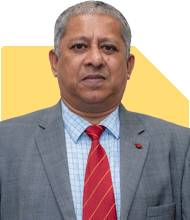
Prof Suvasish

Prof Suvasish Mukhopadhyay  | Answer  |Ask -

Career Counsellor - Answered on Nov 11, 2024

Professor Suvasish Mukhopadhyay, fondly known as ‘happiness guru’, is a mentor and author with 33 years of teaching experience.
He has guided and motivated graduate and postgraduate students in science and technology to choose the right course and excel in their careers.
Professor Suvasish has authored 47 books and counselled thousands of students and individuals about tackling challenges in their careers and relationships in his three-decade-long professional journey.... more
Asked by Anonymous - Jun 24, 2024Hindi

Listen
Career

I am currently a 1st year student and in my college there are placements opportunities like 80 to 90 % and that's good like 15lpa but should I do mtech from IIT or go out of the country to pursue m tech [which I think is not possible] or just do job or so what should I do anyone please tell me

Ans: First thing is that right from first year don't be over worried about placement. It's a disease of the new generation. The present generation and the parents think too much about placement right from day one. M.Tech won't help you for a better placement, on the contrary for having specialization your job field will be narrow. In foreign countries there is no M.Tech, it is MS and an MS from US needs 80 lakh to 1 crore rupees. If you get 15 lpa you should be very much happy with that. Just follow me here and join me in LINKEDIN for having permanent relationship for time to time counselling. I am always there for you. GOD BLESS YOU. Professor................:)
Career

You may like to see similar questions and answers below
Latest Questions
Reetika

Reetika Sharma  |440 Answers  |Ask -

Financial Planner, MF and Insurance Expert - Answered on Dec 24, 2025

Money
Hello Vivek Sir, I am 48 year having privet Job. I have started investment from 2017, current value of investment is 82L and having monthly 50K SIP as below. My goal to have 2.5Cr corpus at the age of 58. Please advice... 1. Nippon India small cap -Growth Rs 5,000 2. Sundaram Mid Cap fund Regular plan-Growth Rs 5,000 3. ICICI Prudential Small Cap- Growth Rs 10,000 4. ICICI Prudential Large Cap fund-Growth Rs 5,000 5. ICICI Prudential Balanced Adv. fund-Growth Rs 5,000 6. DSP Small Cap fund Regular Growth Rs 5,000 7. Nippn India Pharma Fund- Growth Rs 5,000 8. SBI focused Fund Regular plan- Growth Rs 5,000 9. SBI Dynamic Asset Allocation Active FoF-Regular-Growth Rs 5,000
Ans: Hi Sanjay,

It is great that you are investing since 2017. Long investments and patience always gives results.
You can easily achieve your goal corpus by the time you turn 58, if investment done correctly.
The funds you mentioned have so much overlapping and scattered. It needs rework and complete reallocation. Maximum of 5 funds should be there. Take the help of a professional to align your portfolio with your goal and customized profile.
A random portfolio like yours can create an opposite impact.
Also try to increase the monthly SIP by 10% each year. This will take care of inflation power.

Hence do consult a professional Certified Financial Planner - a CFP who can guide you with exact funds to invest in keeping in mind your age, requirements, financial goals and risk profile. A CFP periodically reviews your portfolio and suggest any amendments to be made, if required.

Let me know if you need more help.

Best Regards,
Reetika Sharma, Certified Financial Planner
https://www.instagram.com/cfpreetika/

...Read more

Ramalingam

Ramalingam Kalirajan  |10925 Answers  |Ask -

Mutual Funds, Financial Planning Expert - Answered on Dec 24, 2025

Money
Hello sir , I am 62 yrs and now have 25 lakh surplus money , where to invest if mutual fuds please recommend the good funds to me with %.thanks
Ans: Your discipline in building surplus funds deserves genuine appreciation.
Reaching this stage reflects patience, planning, and financial maturity.
At 62, your focus rightly shifts toward stability and steady income.
At the same time, growth must continue to fight inflation.
A balanced approach is therefore very important now.

» Age, Life Stage, and Investment Context
You are in the early retirement transition phase.
Capital protection becomes more important than aggressive growth.
Regular income matters more than high returns now.
Volatility should be controlled carefully.
Liquidity should be available for emergencies.
Tax efficiency must be managed smartly.

Mutual funds still suit this phase well.
They offer flexibility, transparency, and diversification.
They also allow gradual withdrawals when needed.

» Core Investment Philosophy at 62
Your money must work without stressing you.
Every rupee should have a clear purpose.
Risk should be measured and intentional.
Returns should be reasonable and repeatable.
Cash flow should feel predictable.

Avoid chasing market highs at this age.
Avoid locking funds for very long periods.
Avoid complicated structures and opaque products.

» Recommended Asset Allocation for Rs.25 Lakh
This allocation balances safety, income, and growth.
It also manages market ups and downs.

– Equity-oriented mutual funds: 35%
– Debt-oriented mutual funds: 55%
– Hybrid-oriented mutual funds: 10%

This structure keeps volatility under control.
It also allows reasonable growth over time.

» Role of Equity Mutual Funds at Your Age
Equity is still necessary even after 60.
Inflation reduces purchasing power every year.
Medical costs rise faster than general inflation.
Equity helps your money stay relevant.

However, equity exposure must be limited.
It must also be diversified and disciplined.

» Equity Mutual Fund Allocation – 35%
This equals around Rs.8.75 lakh.

Suggested internal split is as follows.

– Large, established companies focused funds: 25%
– Flexibly managed equity strategies: 10%

Large company exposure provides stability.
Business models are proven and resilient.
Earnings visibility is generally better.

Flexible equity strategies add adaptability.
Fund managers adjust based on market conditions.
This reduces risk during market corrections.

Avoid aggressive mid and small company focus now.
They bring sharp volatility and emotional stress.

» Why Actively Managed Equity Funds Matter
Markets are not always efficient in India.
Corporate governance quality varies widely.
Sector cycles change unpredictably.

Active managers can avoid weak businesses.
They can reduce exposure during excess valuations.
They can increase quality bias during uncertainty.

This flexibility matters more after retirement.

» Debt Mutual Funds as the Stability Anchor
Debt funds will form your portfolio backbone.
They provide stability and predictable behaviour.
They also support regular income planning.

At 62, debt allocation should dominate.
It protects capital during equity market falls.

» Debt Mutual Fund Allocation – 55%
This equals around Rs.13.75 lakh.

Suggested internal structure is below.

– Short maturity focused debt strategies: 25%
– Medium duration debt strategies: 15%
– Conservative income-oriented debt strategies: 15%

Short maturity funds reduce interest rate risk.
They are suitable for near-term needs.
They offer better predictability.

Medium duration funds balance return and risk.
They work well for three to five years horizon.

Income-oriented debt strategies support steady cash flow.
They also smooth overall portfolio returns.

Avoid credit risk heavy strategies at this stage.
Chasing extra yield can damage capital.

» Tax View on Debt Mutual Funds
Debt fund gains are taxed at slab rates.
This applies to both short and long holding periods.
Plan withdrawals in lower income years.
This improves post-tax outcomes.

» Hybrid Mutual Funds – Limited but Useful
Hybrid funds combine equity and debt exposure.
They reduce volatility through internal balancing.
They simplify allocation management.

However, allocation must remain limited.

» Hybrid Mutual Fund Allocation – 10%
This equals around Rs.2.5 lakh.

Choose conservative hybrid orientation only.
Debt portion should dominate clearly.
Equity portion should be controlled.

This segment acts as a shock absorber.
It also supports smoother returns.

» Liquidity and Emergency Planning
Always keep liquid access available.
Unexpected medical or family needs can arise.

Ensure at least twelve months expenses remain accessible.
This can be through savings or liquid-oriented funds.
Do not invest entire surplus tightly.

» Withdrawal Strategy Planning
Investment is only half the journey.
Withdrawal planning matters equally now.

Use a staggered withdrawal approach.
Avoid redeeming equity during market downturns.
Withdraw debt portion first during volatility.

This protects long-term growth potential.

» Market Volatility and Emotional Comfort
Market corrections are unavoidable.
Your portfolio must allow peaceful sleep.

The suggested allocation reduces panic risk.
It avoids sharp portfolio swings.

Emotional comfort is a hidden return.
It matters greatly after retirement.

» Rebalancing Discipline
Portfolio balance will change over time.
Equity may grow faster in bull markets.

Review allocation once every year.
Shift excess equity gains into debt.
This protects accumulated profits.

Do not rebalance too frequently.
Avoid reacting to short-term noise.

» Inflation Protection Over Retirement Years
Inflation silently erodes fixed incomes.
Medical inflation is especially dangerous.

Equity exposure counters this risk.
Active management further improves protection.

Without equity, retirement corpus shrinks in real terms.

» Estate and Nomination Discipline
Ensure nominations are updated everywhere.
This includes mutual funds and bank accounts.

Create a clear will if absent.
This avoids future family disputes.

Review beneficiaries regularly.

» What Not to Do at This Stage
Avoid chasing high return promises.
Avoid locking funds into illiquid structures.
Avoid concentration in single themes.
Avoid frequent portfolio tinkering.

Simplicity supports longevity planning.

» Monitoring and Review Framework
Review portfolio annually, not daily.
Track alignment with life needs.
Adjust only if life circumstances change.

Market noise should not guide actions.

» Final Insights
You have reached a position of strength.
Your surplus reflects years of discipline.
The goal now is sustainability, not speed.

A balanced mutual fund approach fits well.
It offers growth, income, and flexibility.
It respects your age and responsibilities.

With proper allocation and patience,
your money can support you comfortably.

Stay invested with clarity and confidence.

Best Regards,

K. Ramalingam, MBA, CFP,

Chief Financial Planner,

www.holisticinvestment.in

https://www.youtube.com/@HolisticInvestment

...Read more

DISCLAIMER: The content of this post by the expert is the personal view of the rediffGURU. Investment in securities market are subject to market risks. Read all the related document carefully before investing. The securities quoted are for illustration only and are not recommendatory. Users are advised to pursue the information provided by the rediffGURU only as a source of information and as a point of reference and to rely on their own judgement when making a decision. RediffGURUS is an intermediary as per India's Information Technology Act.

Close  

You haven't logged in yet. To ask a question, Please Log in below
Login

A verification OTP will be sent to this
Mobile Number / Email

Enter OTP
A 6 digit code has been sent to

Resend OTP in120seconds

Dear User, You have not registered yet. Please register by filling the fields below to get expert answers from our Gurus
Sign up

By signing up, you agree to our
Terms & Conditions and Privacy Policy

Already have an account?

Enter OTP
A 6 digit code has been sent to Mobile

Resend OTP in120seconds

x