Home > Career > Question
Need Expert Advice?Our Gurus Can Help

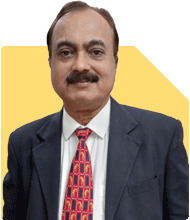
Nayagam P

Nayagam P P  |10894 Answers  |Ask -

Career Counsellor - Answered on Aug 07, 2025

Nayagam is a certified career counsellor and the founder of EduJob360.
He started his career as an HR professional and has over 10 years of experience in tutoring and mentoring students from Classes 8 to 12, helping them choose the right stream, course and college/university.
He also counsels students on how to prepare for entrance exams for getting admission into reputed universities /colleges for their graduate/postgraduate courses.
He has guided both fresh graduates and experienced professionals on how to write a resume, how to prepare for job interviews and how to negotiate their salary when joining a new job.
Nayagam has published an eBook, Professional Resume Writing Without Googling.
He has a postgraduate degree in human resources from Bhartiya Vidya Bhavan, Delhi, a postgraduate diploma in labour law from Madras University, a postgraduate diploma in school counselling from Symbiosis, Pune, and a certification in child psychology from Counsel India.
He has also completed his master’s degree in career counselling from ICCC-Mindler and Counsel, India.
... more
naresh Question by naresh on Aug 07, 2025Hindi

Career

Sir I have already been allotted BITS Goa cse. I am on verge of getting Mathematics and computing at Bits pilani pilani campus. Should I freeze or opt for mathematics and computing at Bits pilani

Ans: BITS Pilani’s Mathematics and Computing program at the Pilani campus stands out for its rigorous blend of applied mathematics, programming, and quantitative analysis, equipping graduates for high-demand roles in analytics, software, fintech, and research. Pilani enjoys a prestigious reputation, an extensive alumni network, and attracts over 350 recruiters annually; in 2024, the placement rate for First Degree students was 82.75%, with top firms such as Google, Microsoft, Amazon, and Goldman Sachs participating. BITS Goa CSE is also highly reputed, achieving 83.01% placements for First Degree students in 2024 and an average package comparable to Pilani’s programs, with leading tech companies recruiting and a vibrant, innovative campus environment. Both programs offer excellent education, modern infrastructure, and industry connections, but Pilani’s legacy, the versatility of Mathematics and Computing, and the broader career and research options make it especially appealing for those seeking roles beyond core software, such as finance, data science, and higher studies.

Recommendation: Choose Mathematics and Computing at BITS Pilani if you are open to a broader spectrum of tech and analytical careers, value institutional legacy, and seek greater flexibility for higher studies or interdisciplinary sectors. Opt for BITS Goa CSE if your exclusive focus is software engineering or if you have strong geographic or cultural preferences for Goa’s campus. Both choices ensure outstanding long-term opportunities. All the BEST for a Prosperous Future!

Follow RediffGURUS to Know More on 'Careers | Money | Health | Relationships'.
Asked on - Aug 08, 2025 | Answered on Aug 08, 2025
Thanks for your kind response.
Ans: Welcome.
Career

You may like to see similar questions and answers below

Nayagam P

Nayagam P P  |10894 Answers  |Ask -

Career Counsellor - Answered on Jul 18, 2025

Asked by Anonymous - Jul 17, 2025Hindi
Career
I had option of iiith cse and bits pilani cse (main campus) . I have chosen bits now. Is this decision correct?
Ans: IIIT Hyderabad’s CSE program boasts a 99 percent placement rate with an average package of ?31.98 LPA and highest offers up to ?128 LPA, underpinned by its NAAC A++ accreditation, AICTE approval, and strong industry partnerships that regularly recruit from top global tech firms. The institute’s research focus is evident in regular high-impact publications and dedicated innovation labs. BITS Pilani’s CSE branch reports around 97 percent placement for B.E. CSE students, supported by an extensive Practice School internship program, over 350 recruiters, and an average package near ?20 LPA. Its experienced faculty, multi-campus infrastructure, global alumni network, and dual-degree international collaborations enhance academic rigor and employability. IIIT Hyderabad offers a technologically rich urban environment in Gachibowli, while BITS Pilani provides a prestigious residential campus with strong peer communities and international exposure.

Recommendation: Choosing BITS Pilani CSE aligns with strong alumni connections, integrated internship opportunities, and dual-campus global networks that enrich long-term career growth, making your decision well placed. For a tech-centric urban setting with slightly higher placement averages and cutting-edge research, IIIT Hyderabad remains an excellent alternative. All the BEST for a Prosperous Future!

Follow RediffGURUS to Know More on 'Careers | Money | Health | Relationships'.

..Read more

Latest Questions
Ramalingam

Ramalingam Kalirajan  |10995 Answers  |Ask -

Mutual Funds, Financial Planning Expert - Answered on Jan 27, 2026

Asked by Anonymous - Jan 23, 2026Hindi
Money
Mujhe 100 crore ka fund 10 saal m bnane ke liye kya kya Krna chahiye jabki meri investment capacity 25000/- monthly hai
Ans: I appreciate your ambition and honesty. Big goals give direction in life. At the same time, financial planning works best when dreams are aligned with mathematical reality. This clarity will protect you from disappointment and wrong decisions.

» First, understand the gap between goal and capacity
– Your desire is Rs 100 crore in 10 years
– Your current investment capacity is Rs 25,000 per month
– This goal cannot be achieved through normal investing routes
– Even very high market returns cannot bridge this gap

This is not about lack of effort, but about scale.

» Why Rs 100 crore in 10 years is not realistic with SIP investing
– SIP works well for wealth creation, but needs time and higher capital
– Markets do not give miracle returns consistently
– Anyone promising such growth is misleading you
– Chasing such promises usually leads to losses or fraud

Being realistic is the first step to becoming truly wealthy.

» What Rs 25,000 monthly investment can actually do
– It can build strong long-term financial security
– It can help you reach crores over a longer time
– It can give freedom, stability, and dignity
– It can change your family’s financial future

This is powerful, even if it is not Rs 100 crore.

» If Rs 100 crore is your life dream, what must change
– Investment alone is not enough
– You need income growth, not just savings
– Business ownership, entrepreneurship, or equity participation is required
– Your earning capacity must multiply many times

Wealth of this scale comes from value creation, not SIPs.

» Where investing still plays an important role
– Investing protects and grows surplus money
– Mutual funds help compound wealth over time
– Actively managed mutual funds are suitable for disciplined growth
– SIPs build habit and long-term discipline

Investing supports wealth; it does not replace income growth.

» A practical and healthy approach going forward
– Continue SIP of Rs 25,000 consistently
– Increase SIP amount whenever income increases
– Focus on skill growth and career expansion
– Explore additional income streams carefully
– Avoid shortcuts and unrealistic return expectations

This path builds real and lasting wealth.

» What you must strictly avoid
– Avoid schemes promising guaranteed high returns
– Avoid trading or speculation to chase big money
– Avoid borrowing to invest for unrealistic goals
– Avoid comparing your journey with social media stories

Peace of mind is also wealth.

» Finally
– Rs 100 crore in 10 years is not achievable with Rs 25,000 monthly investment
– This truth protects you from financial harm
– Focus on increasing income and steady investing
– Build achievable milestones first
– Wealth is a journey, not a single number

If you stay disciplined, informed, and patient, your financial life will still be successful and stress-free.

Best Regards,

K. Ramalingam, MBA, CFP,

Chief Financial Planner,

www.holisticinvestment.in

https://www.youtube.com/@HolisticInvestment

...Read more

Ramalingam

Ramalingam Kalirajan  |10995 Answers  |Ask -

Mutual Funds, Financial Planning Expert - Answered on Jan 27, 2026

Money
i am 46yrs old investing in MF-SIP , Mirae Asset Large & Midcap Dir Gr-5k, Parag Parikh Flexi Cap Fund- Direct plan-8k, DSP Mid cap fund - Direct Plan-5k, HDFC midcap oppurtinuty fund growth-5k,Bajaj Finserv Flexi cap fund growth- Direct plan-6k and Jio BlackRock Flexi Cap-6k plz advice for continuing SIP and by 2036 i need 1.5cr. also i had 20,00,000/- in hand ( ULIP maturity amount) where i have to invest this amount plz advice
Ans: I appreciate your discipline and clarity. At 46, having a clear target of Rs 1.5 crore by 2036 and running SIPs regularly shows strong intent. You are not late. With the right corrections, the goal is achievable.

» Your current SIP structure – what it shows
– You are investing regularly and consistently
– Exposure is largely towards equity, which suits your time horizon
– Portfolio is tilted more towards mid-cap and flexi-cap styles
– This gives growth potential but also higher volatility

The effort is right, but structure needs refinement.

» One important observation on your existing SIPs
– You are holding too many similar equity styles
– Overlap risk is high when funds follow similar strategies
– Monitoring and rebalancing becomes difficult over time
– More funds do not mean better diversification

Simplification will improve control and results.

» Direct plans – a reality you should understand
– Direct plans look cheaper, but they lack guidance
– No professional support during market falls
– No discipline support during emotional phases
– No ongoing review or rebalancing advice

Regular funds through a Mutual Fund Distributor with CFP credential provide behaviour control, review support, and long-term discipline, which matters more than small cost difference.

» How you should restructure SIPs going forward
– Reduce the number of equity funds
– Maintain a balance between large, flexi, and mid-cap exposure
– Avoid frequent fund changes based on recent performance
– Increase SIP amount gradually instead of adding new funds

Consistency and clarity beat complexity.

» Can you reach Rs 1.5 crore by 2036
– Time horizon of around 10 years is reasonable
– Goal is achievable with disciplined SIP continuation and step-ups
– Equity volatility will come, but staying invested is critical
– Portfolio must be reviewed annually, not emotionally

Your behaviour will decide success more than market returns.

» About the Rs 20 lakh ULIP maturity amount
– It is good that ULIP has already matured
– This amount should not be parked fully in bank deposits
– Do not invest the entire amount in equity at one time
– Use a staggered approach to reduce timing risk

This money is a powerful booster for your goal.

» How to deploy the Rs 20 lakh smartly
– Keep a small portion in liquid or low-risk instruments for stability
– Gradually move the remaining amount into equity-oriented mutual funds
– Align investments with your 2036 goal, not short-term market views
– Ensure liquidity is available for emergencies

This balances growth and peace of mind.

» Risk management you must not ignore
– Ensure adequate term insurance cover
– Health insurance should be independent of employer
– Emergency fund must be clearly set aside
– These protect your investments from forced withdrawals

Protection comes before returns.

» What to avoid from now till 2036
– Avoid chasing new or trending funds
– Avoid stopping SIPs during market corrections
– Avoid overexposure to mid and small caps
– Avoid investing without periodic review

Calm discipline is your biggest asset.

» Final Insights
– Continue SIPs, but simplify and rebalance the portfolio
– Shift from direct plans to regular plans for long-term guidance
– Use ULIP maturity amount in a phased and structured manner
– Annual review is essential, not frequent changes
– With discipline, Rs 1.5 crore by 2036 is realistic

Best Regards,

K. Ramalingam, MBA, CFP,

Chief Financial Planner,

www.holisticinvestment.in

https://www.youtube.com/@HolisticInvestment

...Read more

Ramalingam

Ramalingam Kalirajan  |10995 Answers  |Ask -

Mutual Funds, Financial Planning Expert - Answered on Jan 27, 2026

Money
On fd i am getting only 7 present. Where i will get more intrest than bank deposit.
Ans: You are rightly questioning whether keeping money at around 7 percent is efficient, especially when inflation and tax reduce real returns. This thinking itself helps wealth grow steadily.

» First, understand the trade-off clearly
– Higher return always comes with higher risk
– Bank deposits give safety but poor post-tax growth
– The goal is not chasing the highest rate, but improving risk-adjusted return
– Money should be placed based on time horizon and purpose

Once this is clear, decisions become calm and logical.

» Better alternatives to bank deposits for stable money
– High-quality debt-oriented mutual funds can give better post-tax efficiency
– Returns may look similar on paper, but taxation works in your favour
– Suitable for money needed after 2–3 years or more
– Liquidity is higher compared to fixed deposits

These are good substitutes for medium-term deposits.

» Corporate fixed-income instruments – caution needed
– They offer higher interest than bank deposits
– Credit risk exists and cannot be ignored
– Avoid concentrating large amounts in one issuer
– Only suitable if you understand the risk fully

Higher return here is compensation for higher uncertainty.

» Equity-oriented investments for long-term money
– Equity is the only asset that can clearly beat inflation over time
– Best suited for goals beyond 5–7 years
– Volatility is normal, but long-term trend is positive
– SIP route reduces timing stress

This is not a replacement for FD, but a growth engine.

» Why actively managed mutual funds are better than index funds
– Index funds move exactly with the market, up and down
– No protection during market falls
– No flexibility to avoid weak sectors
– Active fund managers aim to control downside and rebalance

In uncertain markets, judgement matters more than automation.

» Tax reality you should not ignore
– FD interest is fully taxable every year
– Debt mutual fund gains are taxed only on withdrawal
– Equity mutual funds get favourable long-term taxation
– Post-tax return matters more than headline rate

Many investors lose money only because of tax ignorance.

» How to restructure FD money smartly
– Keep emergency fund in bank deposits
– Short-term needs can stay in safe debt options
– Long-term surplus should gradually move to equity mutual funds
– Avoid shifting everything at one time

Gradual movement keeps peace intact.

» What to avoid while chasing higher interest
– Avoid unregulated schemes promising high returns
– Avoid concentrating money only for interest income
– Avoid locking long-term money without exit flexibility

Safety plus growth must go together.

» Finally
– Bank deposits are fine for safety, not for wealth creation
– Better post-tax returns are possible with proper asset allocation
– Actively managed mutual funds suit long-term goals well
– A mix of debt and equity works better than chasing interest
– The right structure beats the highest interest rate

Best Regards,

K. Ramalingam, MBA, CFP,

Chief Financial Planner,

www.holisticinvestment.in

https://www.youtube.com/@HolisticInvestment

...Read more

Ramalingam

Ramalingam Kalirajan  |10995 Answers  |Ask -

Mutual Funds, Financial Planning Expert - Answered on Jan 27, 2026

Asked by Anonymous - Jan 25, 2026Hindi
Money
I am 43. I am the only earning member. I have 4 family members. At present, I have 1.2 cr cash asset in shares, mf, ppf, epf, kvp, fd etc.. A flat for which i am paying 24k emi per month for last 2 years . Total loan 24 lacs.presently it is empty. My son is in class 8. I have a separate own house for living. I have no other loans. At present i am saving 1. 21k p.m in sip 2. 3 lacs in ppf yearly 3. 16k p.m in vpf (total epf contribution is 42k p.m ) 4. 5k p m in nps 6. 50k lic policies yearly 7. 25k for personal heath insurance ( addtional to office heathe insurance) At present my monthly expense in 60k. My current yearly package is 40lpa. I am passionate about traveling. I have a desire to by a car. 1. What is the earliest time i can retire so that child education and medical coverage is covered 2. How do i need to plan to achive point 1.
Ans: I truly appreciate the discipline and clarity you have shown. At 43, being the sole earning member, having built Rs 1.2 crore of financial assets, maintaining high savings, and still thinking about early retirement shows strong intent and control. You are already far ahead of most people at your age.

» Your current financial strength in simple terms
– Strong income of around Rs 40 lakh per year
– High monthly savings across SIP, EPF, VPF, PPF, and NPS
– Well-diversified assets across equity and fixed-income
– No major liabilities except one manageable home loan
– Separate own house for living, which reduces future stress
– Insurance awareness is good with personal health cover

This is a solid foundation for early retirement planning.

» Family responsibilities you must fully cover
– You are the only earning member, so margin for error must be low
– Child education is a non-negotiable goal in the next 8–10 years
– Medical coverage must continue lifelong, even after retirement
– Lifestyle needs include travel and a car, which add joy but need planning

Early retirement is possible only if these are ring-fenced properly.

» The earliest practical retirement window
– With your current asset base and savings rate, early retirement before traditional age is realistic
– However, complete work stoppage before your child’s higher education phase is risky
– A more balanced option is partial or flexible retirement first
– Full retirement becomes safer after child education funding is secured

This approach reduces pressure and protects peace of mind.

» How your existing savings are helping you
– SIPs and equity exposure are doing the heavy lifting for long-term growth
– EPF and VPF create strong retirement stability
– PPF adds tax-efficient safety
– NPS gives structure but should remain a supporting pillar, not the core

Your asset mix already supports long-term independence.

» Important review point – LIC policies
– LIC policies are low-growth and long-term locking products
– They do not align well with early retirement goals
– You should evaluate surrender value and future benefit
– If returns are weak, consider exiting and redirecting money into mutual funds

This single step can improve long-term outcomes meaningfully.

» Managing the unused flat wisely
– EMI of Rs 24,000 is manageable, but the flat is currently idle
– An empty property creates cash outflow without benefit
– You should either generate rental income or reassess holding it
– Do not let emotional attachment weaken cash flow discipline

Assets must support goals, not slow them down.

» How to plan for early retirement step by step
– Separate child education fund completely from retirement corpus
– Keep retirement investments untouched for any other goal
– Maintain higher equity exposure while income is active
– Gradually reduce risk only after education goal is secured
– Build a clear post-retirement monthly income plan

Clarity brings confidence.

» Medical security after retirement
– Continue personal family health insurance without break
– Keep cover independent of employer policy
– Build a separate medical contingency fund over time
– This avoids touching retirement corpus during health events

Health planning is as important as wealth planning.

» Lifestyle goals – travel and car
– Travel should be planned as a recurring lifestyle expense, not impulse spending
– A car purchase is fine if done without disturbing long-term SIPs
– Avoid large upfront cash usage from long-term investments

Enjoyment is important, but not at the cost of future freedom.

» What you must avoid to protect early retirement
– Avoid stopping SIPs during market volatility
– Avoid increasing fixed commitments unnecessarily
– Avoid locking too much money in low-return products
– Avoid assuming one-time corpus is enough without cash-flow planning

Early retirement fails due to small mistakes, not big ones.

» Final Insights
– You are on a strong path toward early retirement
– Partial retirement can be explored earlier; full retirement should wait until education goal is secured
– Fine-tuning asset allocation and exiting inefficient LIC policies will accelerate progress
– Medical security and cash flow clarity are critical
– With discipline and periodic review, stress-free retirement is achievable

Best Regards,

K. Ramalingam, MBA, CFP,

Chief Financial Planner,

www.holisticinvestment.in

https://www.youtube.com/@HolisticInvestment

...Read more

Ramalingam

Ramalingam Kalirajan  |10995 Answers  |Ask -

Mutual Funds, Financial Planning Expert - Answered on Jan 27, 2026

Money
if my sale proceeds on property are 2 crores. can i reinvest 1.75 crores on property purchase and remaining 25 lakhs invest capital gain bonds?
Ans: I appreciate your practical thinking. You are not only looking at saving tax, but also at using the money in a structured and lawful way. That clarity itself reduces future stress.

» First, understand what matters for capital gains
– Tax is calculated on capital gains, not on total sale value
– Reinvestment rules allow mixing of options, if conditions are followed
– The law looks at how much capital gain is reinvested, not just where the sale money goes

This gives you flexibility.

» Can property reinvestment and capital gain bonds be combined
– Yes, it is allowed to split the capital gains
– One part of capital gains can be used for purchase of another residential property
– The remaining capital gains can be invested in capital gain bonds
– Both benefits can be claimed together, if timelines are met

So your idea is conceptually correct.

» Important conditions you must respect
– Property purchase must be within the permitted time window
– Capital gain bonds must be invested within the prescribed months from sale
– Capital gain bonds have a maximum investment limit per financial year
– Bonds come with a mandatory lock-in period

Missing timelines can lead to loss of exemption.

» Very important point many people miss
– Exemption is linked to capital gain amount, not sale proceeds
– If capital gains are lower than Rs 2 crore, exemption is limited to that gain
– Excess investment beyond capital gains does not give extra tax benefit

This needs careful calculation before execution.

» Liquidity and lifestyle reality check
– Capital gain bonds are locked and give low returns
– They are good for tax saving, not for growth
– Property reinvestment again blocks liquidity
– After this transaction, ensure you still have liquid funds

Tax saving should not create cash-flow pressure.

» Strategic perspective beyond tax saving
– Do not reinvest blindly only to save tax
– Ask whether another property suits your life stage and cash needs
– Ensure emergency funds and retirement money are not compromised
– Balance tax efficiency with flexibility and peace of mind

A tax-efficient decision must also be a life-efficient decision.

» Final Insights
– Yes, you can reinvest Rs 1.75 crore in property and remaining Rs 25 lakh in capital gain bonds
– Ensure the split aligns with actual capital gains and legal limits
– Timelines are critical and non-negotiable
– Keep liquidity and future needs clearly in mind
– Proper sequencing avoids tax, stress, and regret

Best Regards,

K. Ramalingam, MBA, CFP,

Chief Financial Planner,

www.holisticinvestment.in

https://www.youtube.com/@HolisticInvestment

...Read more

Ramalingam

Ramalingam Kalirajan  |10995 Answers  |Ask -

Mutual Funds, Financial Planning Expert - Answered on Jan 27, 2026

Money
what should be the best investments nowadays where world's economy is so volatile
Ans: When the world economy looks unstable, asking the right questions itself protects your money. Volatility is uncomfortable, but it also rewards disciplined and patient investors.

» Understanding volatility in simple terms
– Global events create short-term fear and sharp market moves
– News-driven markets fluctuate more than business fundamentals
– Volatility does not destroy wealth; panic decisions do
– Long-term investors benefit if they stay consistent

The goal is not to avoid volatility, but to manage it wisely.

» The core principle during uncertain times
– Avoid putting all money in one type of asset
– Focus on quality, balance, and time horizon
– Liquidity and flexibility are as important as returns
– Investments should match your life goals, not headlines

Stability comes from structure, not predictions.

» Equity investments – how to approach now
– Equity remains essential to beat inflation over long periods
– Volatile phases favour disciplined SIP investing
– Actively managed equity mutual funds are better suited now
– Fund managers can shift sectors and reduce downside risk
– This active approach helps during uncertain market cycles

Index funds simply follow the market up and down without control.

» Why index funds are not ideal in volatile markets
– They fall fully when markets correct
– No flexibility to move away from weak sectors
– No human judgement during crisis periods
– Suitable mainly when markets are stable and trending

Actively managed funds aim for smoother performance.

» Debt-oriented investments – the stabilising layer
– Debt investments bring balance and lower fluctuations
– They help protect capital during equity corrections
– Useful for short to medium-term goals
– Also provide mental comfort during market swings

Stability reduces emotional decisions.

» Gold as a portfolio stabiliser
– Gold helps during global uncertainty and inflation phases
– It should be used only as a supporting asset
– Overexposure can reduce long-term growth
– Allocation should be limited and goal-based

Gold is protection, not growth.

» Emergency and liquidity planning
– Keep sufficient funds easily accessible
– This avoids forced selling of long-term investments
– Liquidity gives confidence during job or market stress

Peace comes from preparedness.

» What not to do in volatile times
– Do not stop SIPs due to short-term fear
– Do not shift money frequently based on news
– Do not chase high-return themes or trends
– Do not keep all savings in bank deposits alone

Inaction and overreaction both harm wealth.

» Finally
– Volatile times reward discipline and patience
– A balanced mix of equity, debt, and gold works best
– Actively managed mutual funds suit uncertain markets better
– SIP investing reduces timing risk and stress
– With the right structure, volatility becomes your ally

The best investment today is not one product, but a well-thought-out plan that you can follow calmly.

Best Regards,

K. Ramalingam, MBA, CFP,

Chief Financial Planner,

www.holisticinvestment.in

https://www.youtube.com/@HolisticInvestment

...Read more

Ramalingam

Ramalingam Kalirajan  |10995 Answers  |Ask -

Mutual Funds, Financial Planning Expert - Answered on Jan 27, 2026

Asked by Anonymous - Jan 24, 2026Hindi
Money
Hello sir,I am a government teacher in u.p. earning approx 70000 p.m. without any deduction.i have not taken any pension policy or health insurance. My husband works in a it company earning approximately 24 lakh annually in hand his company covers health insurance and also 1.5 lakh deducted towards ppf and 50 k towards nps .we have a home loan balance of 10 lakh and personal loan of 30 lakh which we took recently for purchase of a flat from which we are earning rent 18000 p.m. .except these our monthly expenses comes approx 35000 .we want to start sip but we have no idea how much and in which way we should start . As we are in job i want no stress after retirement ,we are 34 years old .please guide us regarding investment and insurance
Ans: I truly appreciate the clarity with which you have shared your family income, loans, and goals. At 34, thinking seriously about stress-free retirement already puts you far ahead. You both are earning well, expenses are controlled, and this is a very strong base to build long-term comfort.

» Your current financial picture
– Dual income family with stable jobs
– Good monthly surplus even after loans and expenses
– One government job gives long-term stability
– IT income gives growth but needs planning discipline
– Loans are present, but cash flow is healthy
– No personal health cover and no retirement-focused investments yet

This means action taken now can create very high comfort later.

» First priority – risk protection before investment
– Your husband’s company health cover is good, but it is job-linked
– You must take an independent family health insurance immediately
– This protects you even if there is job change or career break
– Term insurance should be taken for your husband and also for you
– Insurance amount should cover loans, children’s future, and income replacement

Insurance is not an investment, but it protects every investment you make later.

» Loan structure – important reality check
– Home loan of Rs 10 lakh is manageable
– Personal loan of Rs 30 lakh is expensive and high pressure
– Rental income of Rs 18,000 helps but does not fully offset EMI stress
– Priority should be to reduce personal loan faster than home loan
– Any future surplus or bonus should partly go towards loan reduction

Lower debt means lower stress after retirement.

» Monthly surplus – where you truly stand
– Your household income is strong
– Monthly expenses are controlled at around Rs 35,000
– Even after EMIs, there is room to start SIPs comfortably
– Starting early is more important than starting big

Consistency matters more than amount.

» How to start SIP the right way
– Start SIPs in a staggered manner, not all at once
– Focus on long-term growth oriented mutual funds managed actively
– Equity exposure is suitable at your age due to long time horizon
– Debt-oriented funds can be used for stability and short-term goals
– SIP amount should increase every year as income grows

Avoid chasing past returns or popular names.

» Why actively managed mutual funds suit you
– Index funds move exactly like the market, no downside control
– In volatile markets, index funds fall fully with the market
– Active funds aim to reduce downside through fund manager decisions
– Professional monitoring is helpful when both of you are busy working
– Over long periods, good active funds help smoother journey

Peace of mind is as important as returns.

» Retirement planning – your biggest advantage
– You both are only 34, time is on your side
– Government job gives one layer of stability
– Private job income must be converted into long-term assets
– SIPs meant for retirement should not be touched for other goals
– Avoid mixing short-term needs with retirement investments

Clear separation of goals reduces future anxiety.

» What to avoid at this stage
– Avoid starting investments without insurance cover
– Avoid stopping SIPs for short-term market fear
– Avoid over-dependence on employer benefits
– Avoid complex products you do not fully understand

Simple and disciplined approach works best.

» Finally
– Put insurance in place first, without delay
– Create a structured SIP plan aligned to retirement and family goals
– Gradually reduce high-interest personal loan
– Review investments once a year, not every month
– If done properly, retirement can be peaceful and independent

You are at the right age, with the right income, to build a stress-free future.

Best Regards,

K. Ramalingam, MBA, CFP,

Chief Financial Planner,

www.holisticinvestment.in

https://www.youtube.com/@HolisticInvestment

...Read more

Ramalingam

Ramalingam Kalirajan  |10995 Answers  |Ask -

Mutual Funds, Financial Planning Expert - Answered on Jan 27, 2026

Asked by Anonymous - Jan 24, 2026Hindi
Money
Should I sell my business. The reason is to get my 2 children married and get settled. I am 60 years old . Have no liquidity . Don't want to take loans at this stage of my life Will be left with enough liquidity for myself
Ans: At 60, wanting to see your children settled without debt and stress is thoughtful and responsible. You are clearly thinking not only about today, but also about your dignity and peace in the years ahead.

» Your current situation in simple terms
– You have a running business but limited liquid cash
– You need a sizeable one-time amount for two children’s marriages and settlement
– You do not want loans at this age, which is a wise and disciplined stand
– You are confident that even after selling the business, you will have enough for your own needs

This already shows maturity in financial thinking.

» The emotional and financial reality of selling a business
– A business is not just an asset; it carries identity, pride, and years of effort
– At the same time, a business is meant to serve life goals, not become a burden
– If the business value is locked and not supporting major life priorities, reassessment is practical
– Using business value to settle children and yourself is not a failure; it is wealth being put to use

» When selling the business makes sense
– If the business requires your full energy and health, which may reduce over time
– If profits are irregular or reinvested back, leaving you cash-poor
– If selling can give clean liquidity without future obligations
– If the sale leaves you debt-free and financially independent

In such cases, selling is a strategic decision, not an emotional one.

» Risks of holding on only for sentiment
– Liquidity stress during important family events
– Pressure to borrow at an age when income certainty reduces
– Business value risk if health or market conditions change
– Children’s settlement getting delayed or compromised

These risks are often ignored due to attachment, but they are real.

» A balanced approach you should evaluate
– Full sale if the business is people-dependent and needs your daily involvement
– Partial exit if possible, where you retain some income without responsibility
– Timing the sale when valuation is fair, not under urgency
– Keeping a clear buffer for your own lifetime needs before allocating for children

The key is that your financial independence must come first.

» Life after selling the business
– Ensure steady cash flow for monthly living expenses
– Keep adequate emergency funds for health and contingencies
– Invest surplus in well-managed, actively managed mutual fund solutions suited for your age and risk comfort
– Avoid locking money again into illiquid or complex products

At this stage, simplicity, liquidity, and control matter more than high returns.

» Your role after children’s settlement
– Being financially independent gives you confidence and authority
– You can support emotionally, not financially, going forward
– You avoid becoming dependent on children, which preserves relationships

This is often the biggest hidden benefit of such a decision.

» Final Insights
– Selling your business for children’s marriage and settlement is sensible if it secures your own future first
– Avoid decisions driven by urgency; clarity and structure are important
– Your priority order should be: your financial independence, children’s settlement, then wealth preservation
– Peace of mind at 60 is more valuable than holding assets that do not serve life goals

Best Regards,

K. Ramalingam, MBA, CFP,

Chief Financial Planner,

www.holisticinvestment.in

https://www.youtube.com/@HolisticInvestment

...Read more

Nayagam P

Nayagam P P  |10894 Answers  |Ask -

Career Counsellor - Answered on Jan 27, 2026

Career
Hello sir, my son has written jee mains on 24th Jan and expected 260 marks. Is this enough marks for to secure top NITs and CS. We are general category. Or should he take second session to improve his scores or should he divert his energy towards advance
Ans: Nagesh Sir, Your son's expected 260 marks (approximately 95th percentile, rank ~5,000-8,000) guarantee admission to top-tier NITs for Computer Science Engineering based on JoSAA 2023-2025 closing rank data, where NIT Trichy CS closed at ranks 1,449-4,463, NIT Surathkal CS at 1,191-1,827, NIT Warangal CS at 1,521-2,409, and NIT Rourkela CS at 2,442-3,431, all significantly below his expected rank. More likely to get admission in NIT Calicut (Tier 1) at 6,200-7,100 & MNIT Jaipur (Tier 1) at 5,200-5,400. Better not attempt the second JEE Main session—there is minimal improvement headroom above 260 marks and substantial regression risk, wasting critical preparation time. Instead, directly invest 4 months in focused JEE Advanced preparation (January 27 - June 2, 2026), requiring systematic study of Advanced-specific topics (modern physics, electromagnetic induction, complex organic synthesis, 3D coordinate geometry) through structured phases: Foundation Strengthening (Phase 1: Jan 27-Feb 26), Conceptual Deepening (Phase 2: Feb 27-Mar 26), Integrated Problem-Solving (Phase 3: Mar 27-Apr 26), and Final Exam Simulation (Phase 4: Apr 27-Jun 2), with weekly milestones, 2-3 full-length mock tests every 7-10 days, and targeting consistent 150+ marks across consecutive mocks to qualify Advanced. This strategic approach simultaneously secures guaranteed top-tier NIT admission while pursuing the additional IIT consideration pathway through disciplined, focused preparation. (Important Disclaimer: The admission probability assessments provided are estimates based on historical data and should be considered indicative only. Opening and closing ranks experience annual fluctuations due to multiple dynamic factors, including exam difficulty variations, candidate participation rates, performance distributions, institutional seat matrix adjustments, policy modifications in reservation criteria, evolving student preferences across disciplines, shifting institutional rankings, historical cutoff influences, economic trends affecting branch demand, and multi-round counselling processes. Strategic Recommendation: To optimize son's admission prospects, we strongly encourage maintaining a diversified application portfolio by preparing/appearing for 4-5 additional engineering entrance examinations for private institutions alongside JEE/JoSAA. This comprehensive approach ensures multiple pathways to quality engineering education beyond the highly competitive IIT/NIT/IIIT/GFTI ecosystem). All the BEST for Your Son's Prosperous Future!

Follow RediffGURUS to Know More on 'Careers | Money | Health | Relationships'.

...Read more

Dr Dipankar

Dr Dipankar Dutta  |1847 Answers  |Ask -

Tech Careers and Skill Development Expert - Answered on Jan 26, 2026

Career
Dear Sir Mine is studies and career related query. I am from Kolkata. My son is 12+years old, studying in class - VII of St. Xavier School which is amongst the top rated schools. Sir, the school is ICSE board and the syllabus are vast compared to CBSE board and the schools seems quite tough in studies as because they want to maintain the school's name and fame. But my son is an average student and loves activities and play more than studies since his early childhood. All these things putting together are making things very difficult. We are very much afraid that he might fail in final exam. If he is promoted to class 8 this year then I wish to put him in some other school of CBSC board but my wife doesn't want to go ahead with this. She is afraid of losing a good school. She says that my son will do well in future and has now become a little serious in studies but I doubt this as because I have seen no significant improvements in his studies over the period of time and to my mind any thing very good in future seems only an illusion. I have explained myself and my wife as well that if he becomes serious in studies and does good in future, may be he will just be an average student in St. Xavier but in other school he may be very good student and thereby that would boost his confidence. But if that change doesn't happen in him then he will fail in this school and that may affect his confidence very badly. Even today I see him lacking in confidence because I have seen that he feels he is behind many in class. Sir, please guide..... 1. Am i write in my views if I think I should put him in a CBSE school that would be easier in comparison with St. Xavier and ICSE.? 2. Will it be wise to be an average student of a top school than a good student in an reputed but easy going school.? 3. Am i right when i think that if he starts doing well, he may become one of the top boys in other school but in Xavier he would be only an ordinary student. ( as of now he is not showing any remarkable interest in studies so can't expect him to show any exceptional change ). 4. Over all do you feel that it would be wise to change the school and also the board at this point of time as after this it will be class -9 and that would become very difficult... ? 5. Please guide some good CBSE schools in Kolkata, if you feel switching school would be a wise decision. Sir please guide.....
Ans: There is no need to change the school. My daughter studied at St. Xaviers Burdwan from KG to Class 12. She was an average student initially; however, in Class 12 she stood first in her stream in Burdwan. She is now at IISER.

My son is also studying at St. Xaviers Burdwan and is currently in Class 7. He is also like your son—don’t worry. Children usually mature by Class 9, not before that.

...Read more

DISCLAIMER: The content of this post by the expert is the personal view of the rediffGURU. Investment in securities market are subject to market risks. Read all the related document carefully before investing. The securities quoted are for illustration only and are not recommendatory. Users are advised to pursue the information provided by the rediffGURU only as a source of information and as a point of reference and to rely on their own judgement when making a decision. RediffGURUS is an intermediary as per India's Information Technology Act.

Close  

You haven't logged in yet. To ask a question, Please Log in below
Login

A verification OTP will be sent to this
Mobile Number / Email

Enter OTP
A 6 digit code has been sent to

Resend OTP in120seconds

Dear User, You have not registered yet. Please register by filling the fields below to get expert answers from our Gurus
Sign up

By signing up, you agree to our
Terms & Conditions and Privacy Policy

Already have an account?

Enter OTP
A 6 digit code has been sent to Mobile

Resend OTP in120seconds

x