Home > Career > Question
Need Expert Advice?Our Gurus Can Help

Mechanical Engineer with 1-Year Reliance Refinery Experience Seeks Job After Family-Driven Career Change: What's Next?
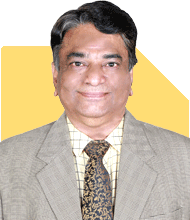
Maxim

Maxim Emmanuel  | Answer  |Ask -

Soft Skills Trainer - Answered on Jun 16, 2024

Maxim Emmanuel is the marketing director of Maxwill Zeus Expositions.
An alumnus of the Xavier Institute of Management and Research, Mumbai, Maxim has over 30 years of experience in training young professionals and corporate organisations on how to improve soft skills and build interpersonal relationships through effective communication.
He also works with students and job aspirants offering career guidance, preparing them for job interviews and group discussions and teaching them how to make effective presentations.... more

Mohammad Question by Mohammad on May 29, 2024Hindi

Listen
Career

I'm b.tech mechanical engineering student.. pass out in 2021 and I have 1 experienced in reliance refinery plant in Gujarat..but now some family issues..i will switched the job.. then now no job..so help me sir

Ans: I believe I have replied to you earlier, please check my earlier reply!?

However if you need professional advice happy to assist!

https://m.me/maxim.emmanuel.2024
Career

You may like to see similar questions and answers below

Nayagam P

Nayagam P P  |10926 Answers  |Ask -

Career Counsellor - Answered on Nov 06, 2025

Asked by Anonymous - Nov 01, 2025Hindi
Career
Dear sir /Madam My name is Bisal from West Bengal.I m35 years old.I did normaly Plain graduate honours degree.I had experience with automobile sector and others field. I have keen interest on automobile sector.but currently last 5 years i engaged my profession with government sponser low income duty as a civic volunteer in west bengal that jobs neither increase salary nor promotion and we also used for leading party duty under police department and also pressurized filthy language by senior officer. I have decided many times to quit this job but friends family told me that is government job little bit pressure but still secure job for 60 years of age..but now i m feeling very depressed about my career sometimes i think can switch the job and learning automobile engineering and started new career or others locals job.. therefore i requested you to guide me as soon as possible.. because i marrying soon and therefore no cance to move .
Ans: Career transitions at age 35 are increasingly common and successful in India, particularly when transitioning from stressful government positions to passion-aligned sectors. The automobile industry in India is experiencing significant growth, with the EV sector projected to expand at 20% CAGR (compound annual growth rate) through 2030, creating substantial employment opportunities for mid-career professionals with technical qualifications.?
Option 1: Short-Term Diploma/Certificate in Automobile Technology (Recommended). Timeline: 6-12 months | Investment: INR 50,000–1.5 lakh | Salary Trajectory: INR 2–4.5 LPA immediately; INR 5–8 LPA within 3 years. This route is your fastest, most practical path given marriage timelines. Rather than pursuing a full 4-year B.Tech, enroll in a Polytechnic Diploma in Automobile Engineering or Certificate courses in EV Technology or Automotive Repair & Maintenance (available as 6-month accelerated programs across West Bengal institutions). Your existing work experience and administrative background provide maturity that employers value—essential for employment at 35+.? WBengal's automobile industry actively recruits EV technicians, automotive service advisors, and mechanics. CCurrent job postings in Kolkata and Hooghly offer monthly positions for diploma-qualified technicians with salaries ranging from INR 9,000 to 25,000. Major employers include Cummins Inc., Bhandari Automotive, and emerging EV manufacturers in Chunchura. Government initiatives like PM-KAUSHAL VIKAS YOJANA and NASSCOM's skill development programs offer mentorship and potential startup funding (up to INR 2–5 lakhs) for establishing small service-based businesses post-employment.? Option 2: Lateral Entry into Automotive Service Management. Timeline: Immediate (3–6 months) | Investment: Minimal (INR 10,000 for certification) | Salary: INR 4–6 LPA; management roles: INR 8–12 LPA within 3 years. Your five years of government administration, stakeholder management, and civic volunteer experience represent directly transferable skills for managing automotive dealerships and service centers. Companies like Maruti Suzuki, Hyundai, and Toyota actively recruit managers with administrative discipline and operational expertise.?
Complete an online ISO automotive certification or 6-8 week basic automotive management course (INR 5,000–15,000). West Bengal dealerships currently recruit for Service Managers and Automotive Service Advisors positions. This pathway allows faster salary growth while you simultaneously explore entrepreneurship—dealership partnerships or authorized service centers become feasible within 3–5 years of management experience.?
Option 3: Hybrid Approach—Immediate Income + Skill Development. Timeline: Immediate | Investment: INR 30,000–50,000 | Income: INR 2–4 LPA while studying; scaling to 5–8 LPA post-diploma. Begin freelance automotive consulting or digital marketing for automobile dealers (2–3 hours daily) via platforms like Upwork, Fiverr, and LinkedIn while enrolling in part-time or weekend diploma programs. This generates supplementary income before marriage while building your professional portfolio and funding your education.?
Simultaneously explore government entrepreneurship schemes: NASSCOM startup mentorship, DDU-GKY program, or West Bengal state-level initiatives offering business loans up to INR 5 lakhs for automotive service ventures.?
Addressing Mental Health—Essential Priority: YOur depression and workplace stress require immediate professional attention rather than postponement. PPlatforms like Click2Pro, TalkToAngel, and Manochikitsa offer online career therapy combined with mental health counseling for INR 500–1,500 per session, with many providing structured 4–6 week packages specifically designed to address career-transition anxiety. Professional guidance clarifies decision confidence before marriage discussions and ensures psychological resilience during transition.? Recommendation: Pursue Option 1 (Diploma) + Option 3 (hybrid income) simultaneously. Please consider enrolling in a short-term diploma starting next month, generating supplementary freelance income immediately, and exploring government startup schemes. This integrated strategy: maintains financial stability during marriage preparation, positions you for INR 5–8 LPA roles within 18–24 months, and establishes a practical pathway toward entrepreneurial goals within 3–5 years post-marriage. Simultaneously, seek professional mental health counseling to address depression and enhance psychological clarity for the significant life decisions that lie ahead. Accordingly, it would be prudent to maintain your current employment until you have thoroughly evaluated and committed to one of the three pathways outlined and are confident of achieving sustainable career satisfaction and financial stability. All the BEST for Your Prosperous Future!

Follow RediffGURUS to Know More on 'Careers | Money | Health | Relationships'.

..Read more

Latest Questions
Ramalingam

Ramalingam Kalirajan  |11045 Answers  |Ask -

Mutual Funds, Financial Planning Expert - Answered on Feb 27, 2026

Asked by Anonymous - Feb 27, 2026Hindi
Money
I am a corporate IT employee working as a senior development lead in an MNC with 17 years of experience. I am 40 years old with 6 years old son. My current portfolio includes the following. 1. PF balance is 26 lakhs 2. company shares worth 19lakhs. 3. mutual funds worth 1.4 crores. 4. I have life insurance policy worth 20 lakhs as asset 5. NPS corpus 14 lakhs 6. Home worth 1 crores I have a home loan outstanding of rupees 63 lakhs for 12 years and EMI of which is 68000 rupees with 8.5 percent ROI. My gross salary is 3.75 lakhs and in-hand salary is Rs 221000. I get a bonus of 15 percent of my gross salary and a annual raise of 7 percent. My basic salary is Rs. 128000. I do mutual fund SIP of 1 lakh a month. Other savings in each month includes or deducted are Pf 31k, NPS 17k and company share 16k. . I want to retire in 3/5 years. Also keep in mind that : 1. My current Monthly expenses of 50k is excluding loan emi. 2. I will keep SIP 1 lakhs and will not prepay home loan till I retire or suggest should I prepay or grow my Mutual fund instead. 3. The retirement expenses should rise as per inflation and a bit more for lifestyle upgrade. 4.Also I have a term insurance of 50lakhs which I will continue post retirement aswell. 5. I am planning to settle my home loan outstanding with my gratuity, company share and full and final settlement when I leave company. Assuming my monthly current expenses as 50k and can be increased with inflation and lifestyle upgrade and having own home, Suggest if I can retire in 3 or 5 years taking into consideration of my loan outstanding liability and 1 kid of 6 years old's future expenses like study and marriage and my retirement expenses ?
Ans: You have built a very strong financial base at 40. Your savings rate is excellent. Your discipline in SIP, PF, NPS and equity exposure shows maturity. Very few people at your age reach this level of corpus. That is a big positive.

Now let us evaluate this calmly and practically.

» Your Current Financial Position

– Mutual Funds: Rs 1.4 crore
– PF: Rs 26 lakhs
– NPS: Rs 14 lakhs
– Company Shares: Rs 19 lakhs
– Home Value: Rs 1 crore
– Outstanding Loan: Rs 63 lakhs
– Monthly Expense (excluding EMI): Rs 50,000
– EMI: Rs 68,000

Your total financial assets are strong. But retirement decision depends on cash flow sustainability, not just asset size.

» Retirement in 3 Years – Is It Practical?

If you retire at 43:

– Your son will be only 9 years old.
– You will have at least 40+ years of post-retirement life.
– Education costs will rise sharply after 5–10 years.
– Inflation will steadily increase your lifestyle expenses.

Today expense is Rs 50k. In 10–12 years it can easily double or more. Also lifestyle upgrade is expected, as you rightly mentioned.

Even if you clear the home loan using gratuity, shares and settlement:

– Your investible corpus will reduce.
– You will depend fully on investments for income.
– No salary cushion.
– Child education peak years not yet started.

Retiring in 3 years looks aggressive and financially tight.

» Retirement in 5 Years – More Realistic?

If you work till 45:

– Your MF corpus may grow significantly with continued Rs 1 lakh SIP.
– PF and NPS will also grow.
– Bonus and annual increment will add strength.
– You will reduce risk of sequence of return shock.

By 45, if your corpus grows meaningfully and loan is closed, early retirement becomes more realistic.

Even then, you must evaluate whether corpus can generate inflation-adjusted income for 40+ years without erosion.

» Home Loan – Prepay or Continue?

Current loan rate: 8.5%

You are investing heavily in equity mutual funds.

Long-term equity returns historically beat 8.5%. So from a pure mathematical view, continuing SIP instead of prepaying makes sense.

But retirement planning is not only maths. It is about risk comfort.

If your plan is to close loan using:

– Gratuity
– Company shares
– Final settlement

That is a reasonable strategy. It preserves compounding now and gives mental freedom at retirement.

I would not suggest aggressive prepayment now if retirement corpus growth is priority.

» Child Education & Marriage Planning

Your son is 6.

– Higher education likely in 12 years.
– Marriage maybe 20+ years later.

Education cost inflation is higher than normal inflation.

You must mentally earmark a separate corpus within your mutual funds for:

– Graduation
– Post graduation (if abroad, very high cost)

This amount should not be mixed with retirement corpus.

If this segregation is not done, early retirement becomes risky.

» Risk in Company Shares

You have Rs 19 lakhs in company shares.

– This is concentration risk.
– Your salary and wealth both depend on same company.

Before retirement, gradually reduce this exposure and diversify into professionally managed mutual funds.

» Term Insurance

You mentioned:

– Rs 50 lakh term cover
– Rs 20 lakh life policy (investment type)

At 40 with dependent child and non-working spouse, Rs 50 lakh term cover is on the lower side.

If you retire early, income stops. But responsibility remains.

You may need to review total risk cover adequacy before retirement decision.

» Retirement Income Sustainability

Today expense Rs 50k.

After loan closure and lifestyle upgrade, assume:

– Rs 70k–80k in near future
– With inflation, it may cross Rs 1.5–2 lakh per month in 20–25 years.

Retirement corpus must survive:

– Market volatility
– Inflation
– Child education withdrawal
– Medical inflation
– 40+ years longevity risk

Early retirement at 43 needs a very large cushion. At present, it appears borderline unless markets perform very strongly.

» What I Would Suggest

– Target retirement at 45 instead of 43.
– Continue Rs 1 lakh SIP strictly.
– Do not prepay loan now.
– Close loan fully at exit using settlement and shares.
– Reduce company stock concentration slowly.
– Separate child education corpus mentally and structurally.
– Review term cover adequacy.
– Keep 2 years expenses in safe instruments before retirement to manage market volatility.

» Important Behavioural Question

Ask yourself:

Do you want complete retirement?
Or financial independence with option to consult, freelance, part-time?

At 45, shifting to lower stress income option may be wiser than full retirement.

That reduces pressure on corpus.

» Final Insights

– You are financially disciplined and ahead of many peers.
– Retirement in 3 years looks risky.
– Retirement in 5 years can be possible if markets support and corpus grows strongly.
– Child education and longevity are the biggest risk factors.
– Loan closure at retirement is a good psychological move.
– Focus on building bigger margin of safety.

Early retirement is possible for you. But it should be done with strength, not stress.

Best Regards,

K. Ramalingam, MBA, CFP,
Chief Financial Planner,
www.holisticinvestment.in

https://www.youtube.com/@HolisticInvestment

...Read more

Dr Dipankar

Dr Dipankar Dutta  |1856 Answers  |Ask -

Tech Careers and Skill Development Expert - Answered on Feb 26, 2026

Ramalingam

Ramalingam Kalirajan  |11045 Answers  |Ask -

Mutual Funds, Financial Planning Expert - Answered on Feb 26, 2026

Money
Hi Ramalingam Sir, Very fond of your guidance. I`ve invested in ICICI Prudential Guranteed Income Plan with PPT of 10 Years & Policy Term is 11 Years. The Yearly Premium is 5 lakhs with Guaranteed Early Income i.e which started from 2nd year onwards is 1.19 Lacs. After 11th year Guaranteed Yearly Income will be 6.38 Lacs. I started this Policy in 2022. Very soon I realized that this is not worth of investing my money. I decided to stop Premium after 2 years which made my Policy as Paid up status which means all benefits are reduced but Policy is Active. I changed myself as I did mistakes in Past (by taking this policy) and now I read each clause very carefully. Now in this case If i surrender, the Surrender value is calculated based on Guaranteed factor X Total premium paid - Income already Paid. Now currently Surrender value is 2.9 Lacs as GV factor is 50%. This factor will improve Gradually with time and by 9th year it will went to 90%. I want to Surrender but now will incur heavy loss (approx. 4.8 lacs) ( to me while in 9th year at least I`ll get 90% of my Premiums back. So pl. advice what is right approach as when should i think for Surrender. As of now by God grace I`m not in any financial emergency. Further is my understanding correct that SV will rise with time. Thanks in advance for your guidance.
Ans: It is very good that you have started reading your policy papers so closely now. Most people do not take the time to understand the fine print, but you have already taken a big step by identifying that this plan does not match your long-term goals. Your ability to stop the premium early shows you are now in control of your money.

» Understanding your paid-up policy and surrender value

Your understanding of how the Surrender Value (SV) works is mostly right. In these types of plans, the Guaranteed Surrender Value factor does go up as the years pass. However, there is a catch. While the percentage factor increases, the insurance company also deducts the income they have already paid out to you from the final amount. Even if you wait until the 9th year to get 90% of your premiums back, you are losing out on the "time value" of that money. Money sitting in a low-yield environment for nine years loses its buying power because of inflation.

» The math behind surrendering now versus later

If you surrender today, you take a big loss of Rs. 4.8 lakhs. This feels painful. But if you keep the money locked in just to avoid the loss, you are essentially letting the company hold your remaining Rs. 2.9 lakhs for several more years at a very low return. A 360-degree view suggests that if you take the money out now and put it into a productive asset like a diversified portfolio of actively managed mutual funds, that money can work much harder for you. Actively managed funds are great because a professional fund manager chooses the best stocks to beat the market, unlike other options that just follow a fixed list.

» Why regular funds and expert guidance matter

Since you mentioned you want to be careful now, it is better to invest through regular plans with the help of a Certified Financial Planner. Many people think direct funds are better because of lower fees, but they often end up making emotional mistakes or picking the wrong funds without a guide. A regular plan gives you access to professional advice and periodic reviews, which ensures you stay on track. This expert support is worth much more than the small cost difference, especially when you are trying to recover from a past investment mistake.

» Opportunity cost and your next steps

Since you do not have a financial emergency, you have a great chance to build wealth. Instead of waiting years just to get your original 5 lakhs back, you can take what is left and start a Systematic Investment Plan (SIP). Over the next seven to eight years, a well-managed equity fund could potentially grow that small amount into something much larger than what the insurance policy would ever pay. The loss you take today is the "fees" for a valuable lesson, but staying in the plan is a continuous cost.

» Tax rules to keep in mind

When you move your money to equity mutual funds, remember the tax rules. If you hold your investment for more than a year, it is called Long Term Capital Gain (LTCG). Any profit above Rs. 1.25 lakh is taxed at 12.5%. If you sell before one year, the profit is taxed at 20%. This is still very efficient compared to many other products.

» Finally

The best approach is usually to exit such low-yield insurance-cum-investment plans as soon as possible. Since your policy is already paid-up, it is not eating new money, but it is wasting your old money. Surrendering now and moving the funds into actively managed mutual funds through a regular plan will likely put you in a much stronger position by the 11th year compared to waiting for the policy to mature.

Best Regards,

K. Ramalingam, MBA, CFP,

Chief Financial Planner,

www.holisticinvestment.in
https://www.youtube.com/@HolisticInvestment

...Read more

Ramalingam

Ramalingam Kalirajan  |11045 Answers  |Ask -

Mutual Funds, Financial Planning Expert - Answered on Feb 26, 2026

Money
Dear Sir, Wanted to know if Iam right in my thinking. I want to accumulate 3.5 cr in 15 years. For that , I am planning to start an SIP of 40 k in a small cap mutual fund which have easily beaten small cap index benchmarks last 15 yr/20 yr time frames and generated superior returns( Although I understand past performance may or may not replicate similar performance) However I have noticed that bigger compouding or multibagger return from Mutual funds have come largely only from small and mid caps. Large caps may not come closer to what small caps or a mid cap can generate. So by staying disciplined with sip of 40k everymonth in small cap and continue till 15 years be good plan to accumulate 3.5 cr. 15 years in a small cap fund i believe will be decent hold time for reaching such corpus riding various market cycles etc. risk can be largely minimized. Also if the target is nearing in the 14th yr, the entire corpus can be moved to a short term debt fund as a safer strategy then. Please advise. Thank you
Ans: It is great to see your clear vision for building a corpus of Rs. 3.5 cr over the next 15 years. Your decision to start a monthly SIP of Rs. 40,000 shows strong financial discipline. Planning for a 15-year horizon is a smart move because it gives your money enough time to grow and handle different market ups and downs.

» Assessing the small cap strategy

Choosing small cap funds for long-term growth is an interesting choice. You are right that small and mid-cap companies often have more room to grow compared to large-cap companies. This can lead to higher returns over a long period. However, small cap funds can be very volatile. This means the value of your investment might go up and down a lot more than a large-cap fund. Since you have a 15-year window, you have the time to stay invested through these cycles, which is a good way to manage that risk.

» The value of active management over index benchmarks

You mentioned that the funds you are looking at have beaten the small cap index benchmarks. This is a very important observation. In the Indian market, especially in the small cap space, index funds have many disadvantages. Index funds simply track a basket of stocks regardless of their quality. This means they include both good and bad companies.

Actively managed funds are much better because a professional fund manager carefully picks stocks. They can identify high-quality companies with strong growth potential and avoid those with poor governance or weak financials. This active selection is why many managed funds consistently outperform the index. By choosing active funds, you get the benefit of expert research which is crucial in the complex small cap segment.

» Portfolio structure and diversification

While small caps offer high growth, relying only on one category might be risky. A 360-degree financial solution usually suggests a bit more balance. Even though you want high returns, having some exposure to mid-cap or multicap funds could provide a smoother journey without sacrificing too much growth. This helps in staying disciplined because the portfolio won't swing as wildly during market corrections.

» Risk management and the exit strategy

Your plan to move the corpus to a short-term debt fund in the 14th year is a very wise strategy. As a Certified Financial Planner, I see this as a great way to protect your gains. When you are close to your goal, you do not want a sudden market drop to reduce your 15-year hard work. Shifting to safer debt instruments ensures that your Rs. 3.5 cr target is locked in and available when you need it.

» Taxation on your gains

When you eventually move your money or withdraw it, keep the tax rules in mind. For equity mutual funds, Long-Term Capital Gains (LTCG) above Rs. 1.25 lakh are taxed at 12.5%. If you sell any units before one year, the Short-Term Capital Gains (STCG) are taxed at 20%. For the debt funds you plan to use in the final year, the gains will be taxed according to your income tax slab.

» Final Insights

Your plan is solid and your goal is achievable with the discipline you are showing. By sticking to your Rs. 40,000 SIP and choosing actively managed funds, you are putting yourself in a strong position. Regularly reviewing the progress with a Certified Financial Planner will help ensure you stay on track and make any small changes needed along the way.

Best Regards,

K. Ramalingam, MBA, CFP,

Chief Financial Planner,

www.holisticinvestment.in
https://www.youtube.com/@HolisticInvestment

...Read more

DISCLAIMER: The content of this post by the expert is the personal view of the rediffGURU. Investment in securities market are subject to market risks. Read all the related document carefully before investing. The securities quoted are for illustration only and are not recommendatory. Users are advised to pursue the information provided by the rediffGURU only as a source of information and as a point of reference and to rely on their own judgement when making a decision. RediffGURUS is an intermediary as per India's Information Technology Act.

Close  

You haven't logged in yet. To ask a question, Please Log in below
Login

A verification OTP will be sent to this
Mobile Number / Email

Enter OTP
A 6 digit code has been sent to

Resend OTP in120seconds

Dear User, You have not registered yet. Please register by filling the fields below to get expert answers from our Gurus
Sign up

By signing up, you agree to our
Terms & Conditions and Privacy Policy

Already have an account?

Enter OTP
A 6 digit code has been sent to Mobile

Resend OTP in120seconds

x