


विशेषज्ञ की सलाह चाहिए?हमारे गुरु मदद कर सकते हैं

Abhishek

Ramalingam Kalirajan11185 Answers |Ask - Follow
Mutual Funds, Financial Planning Expert - Answered on Feb 26, 2026
Asked on - Feb 26, 2026

Hi Ramalingam Sir,
Very fond of your guidance. I`ve invested in ICICI Prudential Guranteed Income Plan with PPT of 10 Years & Policy Term is 11 Years. The Yearly Premium is 5 lakhs with Guaranteed Early Income i.e which started from 2nd year onwards is 1.19 Lacs. After 11th year Guaranteed Yearly Income will be 6.38 Lacs. I started this Policy in 2022. Very soon I realized that this is not worth of investing my money. I decided to stop Premium after 2 years which made my Policy as Paid up status which means all benefits are reduced but Policy is Active.
I changed myself as I did mistakes in Past (by taking this policy) and now I read each clause very carefully. Now in this case If i surrender, the Surrender value is calculated based on Guaranteed factor X Total premium paid - Income already Paid. Now currently Surrender value is 2.9 Lacs as GV factor is 50%. This factor will improve Gradually with time and by 9th year it will went to 90%. I want to Surrender but now will incur heavy loss (approx. 4.8 lacs) ( to me while in 9th year at least I`ll get 90% of my Premiums back.
So pl. advice what is right approach as when should i think for Surrender. As of now by God grace I`m not in any financial emergency.
Further is my understanding correct that SV will rise with time.
Thanks in advance for your guidance.
Ans: It is very good that you have started reading your policy papers so closely now. Most people do not take the time to understand the fine print, but you have already taken a big step by identifying that this plan does not match your long-term goals. Your ability to stop the premium early shows you are now in control of your money.
» Understanding your paid-up policy and surrender value
Your understanding of how the Surrender Value (SV) works is mostly right. In these types of plans, the Guaranteed Surrender Value factor does go up as the years pass. However, there is a catch. While the percentage factor increases, the insurance company also deducts the income they have already paid out to you from the final amount. Even if you wait until the 9th year to get 90% of your premiums back, you are losing out on the "time value" of that money. Money sitting in a low-yield environment for nine years loses its buying power because of inflation.
» The math behind surrendering now versus later
If you surrender today, you take a big loss of Rs. 4.8 lakhs. This feels painful. But if you keep the money locked in just to avoid the loss, you are essentially letting the company hold your remaining Rs. 2.9 lakhs for several more years at a very low return. A 360-degree view suggests that if you take the money out now and put it into a productive asset like a diversified portfolio of actively managed mutual funds, that money can work much harder for you. Actively managed funds are great because a professional fund manager chooses the best stocks to beat the market, unlike other options that just follow a fixed list.
» Why regular funds and expert guidance matter
Since you mentioned you want to be careful now, it is better to invest through regular plans with the help of a Certified Financial Planner. Many people think direct funds are better because of lower fees, but they often end up making emotional mistakes or picking the wrong funds without a guide. A regular plan gives you access to professional advice and periodic reviews, which ensures you stay on track. This expert support is worth much more than the small cost difference, especially when you are trying to recover from a past investment mistake.
» Opportunity cost and your next steps
Since you do not have a financial emergency, you have a great chance to build wealth. Instead of waiting years just to get your original 5 lakhs back, you can take what is left and start a Systematic Investment Plan (SIP). Over the next seven to eight years, a well-managed equity fund could potentially grow that small amount into something much larger than what the insurance policy would ever pay. The loss you take today is the "fees" for a valuable lesson, but staying in the plan is a continuous cost.
» Tax rules to keep in mind
When you move your money to equity mutual funds, remember the tax rules. If you hold your investment for more than a year, it is called Long Term Capital Gain (LTCG). Any profit above Rs. 1.25 lakh is taxed at 12.5%. If you sell before one year, the profit is taxed at 20%. This is still very efficient compared to many other products.
» Finally
The best approach is usually to exit such low-yield insurance-cum-investment plans as soon as possible. Since your policy is already paid-up, it is not eating new money, but it is wasting your old money. Surrendering now and moving the funds into actively managed mutual funds through a regular plan will likely put you in a much stronger position by the 11th year compared to waiting for the policy to mature.
Best Regards,
K. Ramalingam, MBA, CFP,
Chief Financial Planner,
www.holisticinvestment.in
https://www.youtube.com/@HolisticInvestment
(more)
» Understanding your paid-up policy and surrender value
Your understanding of how the Surrender Value (SV) works is mostly right. In these types of plans, the Guaranteed Surrender Value factor does go up as the years pass. However, there is a catch. While the percentage factor increases, the insurance company also deducts the income they have already paid out to you from the final amount. Even if you wait until the 9th year to get 90% of your premiums back, you are losing out on the "time value" of that money. Money sitting in a low-yield environment for nine years loses its buying power because of inflation.
» The math behind surrendering now versus later
If you surrender today, you take a big loss of Rs. 4.8 lakhs. This feels painful. But if you keep the money locked in just to avoid the loss, you are essentially letting the company hold your remaining Rs. 2.9 lakhs for several more years at a very low return. A 360-degree view suggests that if you take the money out now and put it into a productive asset like a diversified portfolio of actively managed mutual funds, that money can work much harder for you. Actively managed funds are great because a professional fund manager chooses the best stocks to beat the market, unlike other options that just follow a fixed list.
» Why regular funds and expert guidance matter
Since you mentioned you want to be careful now, it is better to invest through regular plans with the help of a Certified Financial Planner. Many people think direct funds are better because of lower fees, but they often end up making emotional mistakes or picking the wrong funds without a guide. A regular plan gives you access to professional advice and periodic reviews, which ensures you stay on track. This expert support is worth much more than the small cost difference, especially when you are trying to recover from a past investment mistake.
» Opportunity cost and your next steps
Since you do not have a financial emergency, you have a great chance to build wealth. Instead of waiting years just to get your original 5 lakhs back, you can take what is left and start a Systematic Investment Plan (SIP). Over the next seven to eight years, a well-managed equity fund could potentially grow that small amount into something much larger than what the insurance policy would ever pay. The loss you take today is the "fees" for a valuable lesson, but staying in the plan is a continuous cost.
» Tax rules to keep in mind
When you move your money to equity mutual funds, remember the tax rules. If you hold your investment for more than a year, it is called Long Term Capital Gain (LTCG). Any profit above Rs. 1.25 lakh is taxed at 12.5%. If you sell before one year, the profit is taxed at 20%. This is still very efficient compared to many other products.
» Finally
The best approach is usually to exit such low-yield insurance-cum-investment plans as soon as possible. Since your policy is already paid-up, it is not eating new money, but it is wasting your old money. Surrendering now and moving the funds into actively managed mutual funds through a regular plan will likely put you in a much stronger position by the 11th year compared to waiting for the policy to mature.
Best Regards,
K. Ramalingam, MBA, CFP,
Chief Financial Planner,
www.holisticinvestment.in
https://www.youtube.com/@HolisticInvestment
Ramalingam Kalirajan11185 Answers |Ask - Follow
Mutual Funds, Financial Planning Expert - Answered on Feb 25, 2026
Asked on - Feb 25, 2026
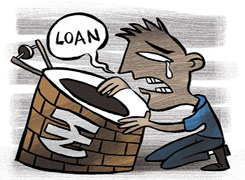
Hi, I`m planning to buy a SUV costing around 22 Lakhs. Should I go for Car Loan or with my own savings. Which is more beneficial.
Ans: This is a very sensible question. The fact that you are comparing options before buying shows financial maturity. A car is a lifestyle decision, so the goal is to enjoy it without hurting long-term financial comfort.
Below is a clear, practical comparison to help you decide.
Option 1: Buying the SUV using your own savings
Advantages
– No interest outflow at all
– Full ownership from day one
– Peace of mind, no monthly EMI pressure
– Better cash flow freedom in future months
Concerns
– Large one-time outgo can disturb emergency fund or long-term investments
– If savings are pulled out from growth assets, you lose future compounding
– Liquidity risk if an unexpected expense comes soon after purchase
When this makes sense
– You still have a strong emergency fund even after paying
– You are using idle money lying in savings / low-return deposits
– Your long-term investments remain untouched
Option 2: Buying the SUV using a car loan
Advantages
– Preserves your savings and investment momentum
– Better liquidity and safety buffer
– EMI is predictable and manageable
– Useful if your money is already productively invested
Concerns
– Interest cost increases total car cost
– EMI reduces monthly flexibility
– Risk of taking a longer loan just to reduce EMI
When this makes sense
– Your savings are invested for long-term goals
– EMI comfortably fits within your monthly surplus
– Loan tenure is kept short (not stretched unnecessarily)
The key point most people miss
A car always depreciates.
So the real question is not loan vs cash, but:
– Will paying fully in cash disturb your financial safety or investments?
– Or will taking a loan create stress in monthly cash flow?
A balanced and practical approach (often the best)
– Pay a large down payment from savings
– Take a small, short-tenure loan for the balance
– Avoid touching long-term investments
– Close the loan early if cash flow stays strong
This gives ownership comfort and financial flexibility.
What you should clearly avoid
– Withdrawing long-term equity investments for a car
– Taking a long loan just to show low EMI
– Using emergency funds for a depreciating asset
– Buying purely because loan is “available easily”
Simple decision guide
– Strong surplus + idle savings → Prefer own funds
– Savings invested + stable income → Prefer partial loan
– Uncertain income / thin emergency fund → Avoid full cash payment
Final thought
The best choice is the one that lets you enjoy the SUV without regret 2–3 years later.
Financial comfort matters more than interest saved or paid.
Best Regards,
K. Ramalingam, MBA, CFP,
Chief Financial Planner,
www.holisticinvestment.in
https://www.youtube.com/@HolisticInvestment
(more)
Below is a clear, practical comparison to help you decide.
Option 1: Buying the SUV using your own savings
Advantages
– No interest outflow at all
– Full ownership from day one
– Peace of mind, no monthly EMI pressure
– Better cash flow freedom in future months
Concerns
– Large one-time outgo can disturb emergency fund or long-term investments
– If savings are pulled out from growth assets, you lose future compounding
– Liquidity risk if an unexpected expense comes soon after purchase
When this makes sense
– You still have a strong emergency fund even after paying
– You are using idle money lying in savings / low-return deposits
– Your long-term investments remain untouched
Option 2: Buying the SUV using a car loan
Advantages
– Preserves your savings and investment momentum
– Better liquidity and safety buffer
– EMI is predictable and manageable
– Useful if your money is already productively invested
Concerns
– Interest cost increases total car cost
– EMI reduces monthly flexibility
– Risk of taking a longer loan just to reduce EMI
When this makes sense
– Your savings are invested for long-term goals
– EMI comfortably fits within your monthly surplus
– Loan tenure is kept short (not stretched unnecessarily)
The key point most people miss
A car always depreciates.
So the real question is not loan vs cash, but:
– Will paying fully in cash disturb your financial safety or investments?
– Or will taking a loan create stress in monthly cash flow?
A balanced and practical approach (often the best)
– Pay a large down payment from savings
– Take a small, short-tenure loan for the balance
– Avoid touching long-term investments
– Close the loan early if cash flow stays strong
This gives ownership comfort and financial flexibility.
What you should clearly avoid
– Withdrawing long-term equity investments for a car
– Taking a long loan just to show low EMI
– Using emergency funds for a depreciating asset
– Buying purely because loan is “available easily”
Simple decision guide
– Strong surplus + idle savings → Prefer own funds
– Savings invested + stable income → Prefer partial loan
– Uncertain income / thin emergency fund → Avoid full cash payment
Final thought
The best choice is the one that lets you enjoy the SUV without regret 2–3 years later.
Financial comfort matters more than interest saved or paid.
Best Regards,
K. Ramalingam, MBA, CFP,
Chief Financial Planner,
www.holisticinvestment.in
https://www.youtube.com/@HolisticInvestment