Home > Career > Question
Need Expert Advice?Our Gurus Can Help

Should I shift my focus from PCM to PCB after dropping Maths in CET from PCM in 12th?

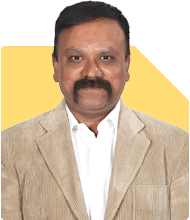
Radheshyam

Radheshyam Zanwar  |6825 Answers  |Ask -

MHT-CET, IIT-JEE, NEET-UG Expert - Answered on Feb 22, 2025

Radheshyam Zanwar is the founder of Zanwar Classes which prepares aspirants for competitive exams such as MHT-CET, IIT-JEE and NEET-UG.
Based in Aurangabad, Maharashtra, it provides coaching for Class 10 and Class 12 students as well.
Since the last 25 years, Radheshyam has been teaching mathematics to Class 11 and Class 12 students and coaching them for engineering and medical entrance examinations.
Radheshyam completed his civil engineering from the Government Engineering College in Aurangabad.... more
Asked by Anonymous - Feb 21, 2025Hindi
Listen
Career

Sir I'm a pcb student but in cet from I have apper for pcm in my 12 i have dropped maths

Ans: Hello dear
If you have dropped Maths, then how can appear PCM CET? Your question is not clear. Please ask again in the follow-up section.
If you like the reply, please follow me else ask again without hesitation.
Thanks
Radheshyam
Career

You may like to see similar questions and answers below

Nayagam P

Nayagam P P  |10931 Answers  |Ask -

Career Counsellor - Answered on Aug 25, 2025

Asked by Anonymous - Aug 25, 2025Hindi
Career
Can you suggest me courses only PCB student can do
Ans: 1. Medical Degree (MBBS) and Allied Medical Courses.
Course: MBBS (Bachelor of Medicine, Bachelor of Surgery)

Eligibility: 12th pass with PCB subjects, with minimum 50-60% aggregate marks depending on the college.

Entrance Exams: NEET (National Eligibility Entrance Test) is compulsory for admission in MBBS in India.

Admission Process: Based on NEET rank, centralized counseling by medical authorities.

Competition Level: Very high; NEET is extremely competitive with lakhs of applicants vying for limited seats.

Duration: 5.5 years including internship.

Other Allied Courses: BDS (Dental), B.Sc Nursing, BPT (Physiotherapy), Pharmacy (B.Pharm), B.Sc Medical Lab Technology, Optometry.

Entrance Exams for Allied: Some colleges have their own entrance exams; others accept NEET or merit-based admission.

Career Prospects: High demand in hospitals, clinics, research, pharmaceuticals, and healthcare sectors.

2. B.Sc. in Biotechnology.
Eligibility: Passed 12th with PCB; some colleges require minimum 50-60% marks.

Admission Process: Direct admission or through university-level entrance tests such as CUET, PU CET, KIIT EE.

Entrance Exams: Varies by university; many popular universities conduct entrance exams.

Competition Level: Moderate to high, varies by institute.

Duration: 3 years.

Course Overview: Combines biology and technology for applications in healthcare, agriculture, environment, and research.

Career Prospects: Research, pharmaceuticals, healthcare industry, academics, and biotech startups.

3. B.Sc. in Microbiology / Genetics / Biochemistry / Zoology / Botany.
Eligibility: 12th pass with PCB.

Admission Process: Merit-based or entrance test (e.g., DUET in Delhi University).

Entrance Exams: Entrance based on university.

Competition Level: Moderate.

Duration: 3 years.

Career Prospects: Research, diagnostics, public health, teaching, and industry roles.

4. B.Sc. in Forensic Science.
Eligibility: 12th pass with PCB, sometimes minimum percentage requirement.

Admission Process: Entrance exams conducted by some universities.

Entrance Exams: University-specific.

Competition Level: Moderate.

Duration: 3 years.

Course Overview: Focuses on crime scene investigation, forensic analysis, laws, and criminalistics.

Career Prospects: Police departments, forensic labs, legal firms, private security.

5. B.Sc. in Nutrition and Dietetics.
Eligibility: Pass 12th with PCB.

Admission Process: Merit-based or entrance test.

Duration: 3-4 years.

Career Prospects: Hospitals, wellness centers, research, food industry.

6. B.Pharm (Bachelor of Pharmacy).
Eligibility: 12th with PCB, often with minimum 50%.

Admission Process: Through entrance exams like NIPER, GPAT, or state CETs.

Competition Level: Moderate to high.

Duration: 4 years.

Career Prospects: Pharmaceuticals, drug development, research labs, healthcare.

7. Bachelor in Physiotherapy (BPT).
Eligibility: 12th pass with PCB.

Admission Process: NEET or institute-level entrance exams.

Competition Level: Moderate.

Duration: 4.5 years including internship.

Career Prospects: Clinics, hospitals, rehabilitation centers.

8. B.Sc. in Environmental Science / Forestry.
Eligibility: 12th pass with PCB.

Admission Process: Merit-based or entrance exams in some colleges.

Duration: 3-4 years.

Career Prospects: Environmental agencies, sustainability consultancies, government bodies.

9. B.Sc. in Audiology and Speech Language Pathology.
Eligibility: 12th with PCB.

Admission Process: Entrance exams or merit.

Duration: 3-4 years.

Career Prospects: Hospitals, schools, speech therapy clinics.

10. Other Healthcare & Allied Courses.
B.Sc Medical Lab Technology (MLT)
B.Sc Radiology
B.Sc Optometry

Diploma courses in Nursing, Physiotherapy, Pharmacy, Emergency Medical Technology.

Eligibility Criteria Summary for PCB Courses: Minimum 50-60% aggregate in Physics, Chemistry, and Biology in 12th standard (depends on course and institute).

Physics, Chemistry, and Biology are mandatory core subjects.

Mathematics is usually not required but may be needed for some niche courses like Biochemistry or Environmental Science.

Some courses require clearing specific entrance exams.

For medical and dental courses, NEET scores are compulsory.

For professional paramedical and allied health courses, entrance exams may vary by university.

Admission Process for PCB Courses.
Direct Admission: Based on 12th board exam marks if no entrance exam.

Entrance Exam-Based: Universities conduct their own exams such as:

NEET (for MBBS, BDS, some paramedical courses),

CUET for central universities,

University-specific CETs (e.g., PU CET, KIIT EE),

State-level medical or health science entrance exams.

Counseling usually follows entrance exam results.

Some institutes also allow management quota seats (private colleges).

Competition Level:
The highest competition is for MBBS and BDS seats primarily due to limited availability and large number of applicants.

Moderate competition exists for Biotechnology, Pharmacy, and Nursing courses.

Other B.Sc. life science degrees and allied courses typically have less competitive admission but require strong academic performance.

Entrance exam difficulty varies by institute and course popularity.

Important Entrance Exams for PCB Students.
NEET: For medical courses MBBS, BDS, BAMS, BHMS, etc.

AIIMS, JIPMER, AFMC: Other premier medical entrance exams (recently merged with NEET in many cases).

CUET (Common University Entrance Test): For admission in various B.Sc Honours courses across central universities.

PU CET, KIIT EE, BHU UET: University-specific exams for Biotechnology and Sciences.

NIPER JAM: For postgraduate Pharma courses.

GPAT: For Pharmacy admissions.

Additional Relevant Information:
Many healthcare and biological science courses emphasize practical learning and lab work.

Some courses like Forensic Science and Biomedical Engineering combine biology with technology and law.

Scholarships and reservations are available for reserved categories based on government norms.

Global opportunities: PCB students can pursue similar courses abroad with equivalent admission criteria emphasizing PCB background.

Professional growth in PCB fields requires continuous learning and skill development, especially in research and technology.

Non-NEET alternatives provide good options but require proactive career planning and exploration.

Conclusion:
There are abundant specialized courses exclusively for PCB students beyond the conventional MBBS path. These cover medical, paramedical, biotechnology, environmental sciences, forensic science, nutrition, pharmacy, and allied health domains. Each course has defined eligibility based on PCB subjects with competitive or merit-based admission guided by entrance exams relevant to the course and institution. This diversity offers PCB students many paths aligned with their interests and long-term goals, with promising career prospects in healthcare, research, industry, and academia. All the BEST for a Prosperous Future!

Follow RediffGURUS to Know More on 'Careers | Money | Health | Relationships'.

..Read more

Latest Questions
Nayagam P

Nayagam P P  |10931 Answers  |Ask -

Career Counsellor - Answered on Mar 02, 2026

Career
Hello sir I am currently in class 12th pcm stream and confused which college to chose as I want to pursue cse from a reputable college. I scored less in my jee mains january attempt so I am considering taking a drop too but since I mostly prepared for boards for my entire year I am looking forward to get a seat in SASTRA university in Thanjavur I am from Uttar Pradesh though can you guide me what should I do and what other college options based on class 12th marks will be best for me. I am from isc board.
Ans: Kartikeya, You are from UP. I'm curious to know—what draws you to SASTRA in Thanjavur, TN? Do you have specific reasons? Northern India offers excellent alternatives like LPU, Thapar, Galgotias, Amity, GLA, and Sharda, many accepting ISC marks too.

Apply to 6-7 more reputed colleges as backup options instead of relying only on Sastra & Government Institutions. Consider a drop only if you're confident of the 95+ percentile next year. All the BEST for Your Prosperous Future!

Follow RediffGURUS to Know More on 'Careers | Money | Health | Relationships'.

...Read more

Ramalingam

Ramalingam Kalirajan  |11047 Answers  |Ask -

Mutual Funds, Financial Planning Expert - Answered on Mar 02, 2026

Money
I have borrow a 36.50 lakh loan against property from hdfc bank. is property inssurance mandatory for the mortgage loan on property?
Ans: You have taken a Loan Against Property of Rs 36.50 lakh. First, I appreciate that you are checking the legal and financial side carefully. That shows responsibility.

Now let us understand clearly.

» Is Property Insurance Mandatory for Loan Against Property?

– Legally, property insurance is not compulsory under Indian law.
– But practically, most banks including HDFC Bank insist on insuring the property.
– It is usually mentioned in the loan agreement as a condition.

So technically it is not a government rule. But contractually, the bank can make it compulsory.

Why? Because the property is the security for your loan.

» Why Bank Insists on Property Insurance

– The property is pledged to the bank.
– If there is fire, flood, earthquake or major damage, the value reduces.
– If the property is damaged badly, the bank’s security becomes weak.

Insurance protects both you and the bank.

So from risk management point of view, it is practical and sensible.

» Is It Mandatory to Buy Insurance From the Same Bank?

– No bank can force you to buy insurance only from their partner company.
– You are free to choose any general insurance company.
– You only need to assign the policy in favour of the bank.

If bank is forcing bundled insurance, you can politely request separate policy.

» What Type of Insurance Is Needed?

For mortgage loan, usually:

– Structure insurance (building insurance) is required.
– Contents insurance is optional but useful.

If it is an apartment:

– The society may already have a master policy.
– Still, individual unit insurance is better.

Do not confuse this with loan protection insurance (life cover). That is different.

» Should You Take It Even If Not Forced?

Yes, I strongly recommend taking it.

Why?

– Property is a large asset.
– One accident can destroy years of savings.
– Premium is very small compared to property value.

It is not an expense. It is protection.

» Check These Points Carefully

– Insured value should match reconstruction cost, not market value.
– Natural calamities must be covered.
– Policy should be renewed every year without fail.
– Bank clause (assignment clause) must be correctly mentioned.

Do not ignore renewal. If policy lapses, risk comes back to you.

» 360 Degree Protection View

Since you have a loan:

– Ensure you have adequate term insurance to cover outstanding loan.
– Ensure you have proper health insurance.
– Maintain emergency fund for EMI continuity.

If something happens to income, EMI must not suffer.

Property insurance protects asset.
Term insurance protects family.
Emergency fund protects EMI discipline.

All three together create safety.

» Finally

Property insurance may not be legally compulsory, but practically it is required and financially wise.

Do not see it as bank pressure. See it as risk control.

A small premium today can prevent a huge financial shock tomorrow.

Best Regards,

K. Ramalingam, MBA, CFP,

Chief Financial Planner,

www.holisticinvestment.in

https://www.youtube.com/@HolisticInvestment

...Read more

Ramalingam

Ramalingam Kalirajan  |11047 Answers  |Ask -

Mutual Funds, Financial Planning Expert - Answered on Mar 02, 2026

Money
Hello Sir, I am 43 year old, having investment in 1. Own House-No Loan 2. MF holding 14.0 Lac, 3. FD 44.0 Lac, 4. Pure Gold 40.0 Lac, 5. PPF 5.0 Lac, 6. EPF 27.5 Lac, 7. NPS 9.0 Lac 8. Bank Account 10.0 Lac 9. Monthly SIP 44000 Rs [Multicap, Two Mid Cap, Two Small Cap, Large and Mid Cap] 10. Term Plan 50.0 Lac My child is 16 years old, i need your advice for my child education, marriage as well as my retirement.
Ans: You have built a very strong foundation at 43. Own house without loan, good savings in FD, gold, EPF and mutual funds – this shows discipline and stability. Many people at your age struggle with liabilities. You are in a safe position. Now we must organise it properly for your child’s higher education, marriage and your retirement.

» Current Financial Position – Overall Assessment

– Own house without loan gives you emotional security.
– Total financial assets are well diversified across FD, gold, PF and mutual funds.
– Large allocation to FD and gold gives safety but lower long-term growth.
– Mutual fund exposure is moderate and SIP is healthy at Rs 44,000 per month.
– Term cover of Rs 50 lakh is on the lower side considering child age and future costs.

You are financially stable. Now the focus must shift to growth and protection.

» Child Higher Education – 2 to 4 Year Planning Window

Your child is already 16. That means higher education funding is very near.

– Education corpus should not depend on equity-heavy assets now.
– Avoid taking high risk in small and mid caps for this goal.
– Start segregating money required in next 2–3 years into safe instruments like short-term debt or high-quality fixed income.
– Do not disturb EPF and NPS for education unless absolutely necessary.

If needed, you can use part of FD and bank balance. Education goal is priority one.

Important: Avoid selling equity mutual funds in panic. If you sell equity funds:
– LTCG above Rs 1.25 lakh is taxed at 12.5%.
– STCG is taxed at 20%.

Plan redemption carefully and gradually.

» Child Marriage – Long-Term Goal (8–12 Years)

Marriage is not urgent. So this can stay in growth assets.

– Continue SIP.
– You are currently investing across multicap, midcap, smallcap and large-midcap. That is fine for long term.
– But review allocation. Too much mid and small cap increases volatility.

Keep marriage goal in a separate mutual fund bucket. Track it independently.

» Retirement Planning – The Most Important Goal

You are 43. You have around 15–17 years for retirement.

Current retirement assets:
– EPF Rs 27.5 lakh
– NPS Rs 9 lakh
– PPF Rs 5 lakh
– Mutual Funds Rs 14 lakh

This is a decent start but not enough for long retirement life.

You must:

– Increase retirement-focused equity allocation gradually.
– Continue EPF contribution strongly.
– Continue NPS for tax and discipline, but do not depend fully on it.
– Increase SIP gradually every year, at least 5–10% step-up.

At your age, growth is still required. Too much FD and gold will reduce long-term wealth creation.

» Asset Allocation Correction

Current allocation shows heavy weight in:

– FD Rs 44 lakh
– Gold Rs 40 lakh

Gold and FD together form a very large portion. Gold does not give income. FD gives safety but post-tax returns are moderate.

Suggestion:

– Do not exit gold fully. Keep reasonable allocation.
– Slowly reduce excess FD over next few years and move towards diversified equity mutual funds for long-term goals.
– Keep emergency fund of 6–9 months in bank and FD. Beyond that, excess idle cash should work harder.

» Insurance Review

Term cover of Rs 50 lakh is low.

– Considering child age and inflation in education, you should review and increase total term cover.
– Aim for at least 10–12 times annual income protection.

Health insurance is not mentioned. If not adequate, increase family floater coverage.

» Risk Management & Behaviour Discipline

– Do not frequently change funds based on market noise.
– Review once a year.
– Keep goals separated mentally and financially.

Your SIP structure is good. Just rebalance and align with time horizon.

» Tax Awareness

– Equity mutual fund gains above Rs 1.25 lakh (long term) are taxed at 12.5%.
– Short term gains are taxed at 20%.
– Debt fund gains are taxed as per slab.

So plan withdrawals smartly. Do not redeem in one single financial year if avoidable.

» Action Plan – Next 12 Months

– Separate education corpus immediately.
– Increase term insurance.
– Gradually rebalance FD surplus into long-term mutual funds.
– Step-up SIP yearly.
– Create clear written retirement number target.
– Review NPS asset allocation to ensure enough equity exposure.

» Finally

You are not late. You are actually ahead in discipline and savings. Only re-alignment is required.

Education funding needs safety now.
Marriage needs growth.
Retirement needs structured and increasing equity exposure.

If you implement these corrections calmly, you can achieve all three goals without stress.

Best Regards,

K. Ramalingam, MBA, CFP,

Chief Financial Planner,

www.holisticinvestment.in

https://www.youtube.com/@HolisticInvestment

...Read more

DISCLAIMER: The content of this post by the expert is the personal view of the rediffGURU. Investment in securities market are subject to market risks. Read all the related document carefully before investing. The securities quoted are for illustration only and are not recommendatory. Users are advised to pursue the information provided by the rediffGURU only as a source of information and as a point of reference and to rely on their own judgement when making a decision. RediffGURUS is an intermediary as per India's Information Technology Act.

Close  

You haven't logged in yet. To ask a question, Please Log in below
Login

A verification OTP will be sent to this
Mobile Number / Email

Enter OTP
A 6 digit code has been sent to

Resend OTP in120seconds

Dear User, You have not registered yet. Please register by filling the fields below to get expert answers from our Gurus
Sign up

By signing up, you agree to our
Terms & Conditions and Privacy Policy

Already have an account?

Enter OTP
A 6 digit code has been sent to Mobile

Resend OTP in120seconds

x