Home > Career > Question
Need Expert Advice?Our Gurus Can Help
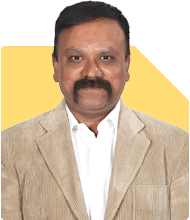
Shekhar

Shekhar Kumar  | Answer  |Ask -

Leadership, HR Expert - Answered on May 09, 2024

Shekhar Kumar is senior manager, talent acquisition, at the Shri Venkateshwara University in Gajraula, Uttar Pradesh. He has 18 years of expertise in the search and placement of executive leadership talent across various industries.
He has also mentored middle and senior management professionals for leadership positions and guided them in career development.
Shekhar has a bachelor's degree in business management from Magadh University, Bihar, and a master's degree in human resource management from Annamalai University, Tamil Nadu.... more
Sumita Question by Sumita on Mar 26, 2024Hindi

Listen
Career

Hello Sir, My son is passing out in this year july in Computer science Engineering. His first priority is getting a job,but in 80% cases, in aptitude round he is not getting selected. My question is, how to improve the aptitude test. Second question is, parallely he wants to apply for M.tech. In India, how many entrance exams are there for Mtech? Thank you Sir.

Ans: Improving performance in aptitude tests and preparing for M.Tech. entrance exams are both important goals for your son's career advancement. Improving aptitude test performance requires regular practice, which is essential to improving speed and accuracy. Kindly encourage your son to identify his weaker areas within the aptitude sections and work on them. This can be done through practice tests or by analyzing previous test performances. There are numerous resources available online, such as books, websites, and mobile apps, that offer aptitude test practice questions and solutions. Recommending reliable resources can aid his preparation. As you know, aptitude tests are typically timed, so learning effective time management strategies is crucial. Encourage him to practice under timed conditions to improve his pacing during the actual test. In India, there are several entrance exams for M.Tech. programs. Some of the most prominent ones include GATE (Graduate Aptitude Test in Engineering), CEED (Common Entrance Examination for Design), and PGCET (Post Graduate Common Entrance Test), also known as PGCET. Karnataka PGCET, AP PGCET, and TS PGCET, and university-specific entrance exams. 

Encourage your son to research the specific requirements and syllabus for each exam he plans to take, and to start preparing well in advance to maximize his chances of success.
Career

You may like to see similar questions and answers below

Latest Questions
Ramalingam

Ramalingam Kalirajan  |11130 Answers  |Ask -

Mutual Funds, Financial Planning Expert - Answered on Apr 10, 2026

Asked by Anonymous - Apr 09, 2026Hindi
Money
I am 40 years old working in a Bank. My net salary is 1.05 lacs. Presently have no loan. I have MF investment of 50 lacs done through SIP and lumpsum since 2020 and present XIRR of 12.5%. Due to market fluctuations in last 1 and half year, XIRR has reduced from almost 21 to 12.5% but I am continuing all the SIPS . Presently I have monthlySIP of 30000. I also have 35 lacs in NPS and 20 lacs in PF. I have also invested around 5 lacs in share. I have term plan of 1.5 crores. I have health cover from my bank. I am planning to avail a housing loan and monthly EMI will come to Rs. 45000 for 1.10 crs housing loan and EMI will start from June 26. My SIP contribution will reduce to 15000 per month. I have my wife, 1 son of 10 years and daughter of 3 years. Is my financial planning on right path?
Ans: It is very positive to see that at age 40 you already created a strong financial base with mutual funds, PF, NPS, equity investments and insurance protection. Continuing SIP even after market fluctuations shows maturity in investing behaviour. You are moving in the right direction overall.

» Understanding Your Current Financial Strength
– Mutual fund corpus around Rs 50 lakhs is a strong growth asset
– Retirement assets like PF Rs 20 lakhs and NPS Rs 35 lakhs add stability
– Direct equity exposure of Rs 5 lakhs is manageable in size
– Term insurance cover of Rs 1.5 crores provides family protection
– No existing loans till now shows disciplined financial life

Your total financial foundation is already healthy for your age.

» About Reduction In XIRR From 21% To 12.5%
This situation is normal in equity investing

– Markets move in cycles
– SIP investors always see return fluctuations
– Long-term investors benefit from such corrections
– Continuing SIP during such phases improves future returns

Your decision to continue SIP is correct and should continue.

» Impact Of Upcoming Housing EMI Rs 45,000
Taking EMI at this stage is manageable but needs planning adjustment

– Net salary Rs 1.05 lakhs
– EMI Rs 45,000 will take large portion of income
– SIP reducing from Rs 30,000 to Rs 15,000 is practical decision
– Maintain investment continuity even at reduced level

The key is to avoid stopping investments completely.

» Retirement Planning Position
Your retirement base is already developing well

– PF and NPS together form strong retirement support
– Mutual fund corpus will act as growth engine
– Continuing even Rs 15,000 SIP helps future retirement strength

Try to increase SIP again after income grows in future years.

» Children Education Planning Requirement
You have two young children aged 10 and 3

This is an important responsibility stage

– Education corpus planning should be done separately
– Equity-oriented mutual funds should support this goal
– Avoid mixing retirement and education investments

Goal-based investment allocation improves clarity.

» Insurance Planning Review
Your protection planning is mostly correct

– Term insurance Rs 1.5 crores is good coverage
– Health cover from employer is useful but not sufficient alone

Consider one additional personal health insurance policy for family security independent of job.

» Emergency Fund Planning Before EMI Starts
Before June 2026 EMI begins, create liquidity buffer

– Keep minimum 6 months expenses including EMI ready
– Avoid depending only on mutual funds for emergencies
– Maintain separate emergency reserve account

This protects investment continuity during unexpected events.

» Mutual Fund Contribution Strategy After EMI Starts
Reducing SIP from Rs 30,000 to Rs 15,000 is acceptable temporarily

But follow these steps

– Continue SIP without interruption
– Increase SIP whenever salary increases
– Avoid withdrawing existing mutual fund corpus
– Maintain balance between growth and stability categories

Consistency matters more than amount size.

» Overall Financial Direction Assessment
Your financial planning is largely on the correct path

Strength areas

– Strong investment discipline
– Good retirement assets already built
– Insurance protection available
– Controlled equity exposure
– Responsible decision to continue SIP even during market fall

Improvement areas

– Add personal health insurance cover
– Create emergency fund before EMI start
– Plan children education corpus separately
– Increase SIP gradually after income growth

» Finally
Your financial structure is stable and well progressing for your life stage. Even after housing EMI begins, continuing SIP and protecting retirement investments will help you reach long-term goals comfortably. With small improvements in emergency planning and child education allocation, your financial plan becomes stronger and safer for your family.

Best Regards,

K. Ramalingam, MBA, CFP,

Chief Financial Planner,

www.holisticinvestment.in

https://www.linkedin.com/in/ramalingamcfp/

...Read more

Ramalingam

Ramalingam Kalirajan  |11130 Answers  |Ask -

Mutual Funds, Financial Planning Expert - Answered on Apr 10, 2026

Asked by Anonymous - Apr 10, 2026Hindi
Money
Hi, I am 28 years old. I am earning 1.2 Lakhs per month after taxes and PF. I have 6 lakhs in FD, 4.21 lakhs in mutual funds spread over largecap(10k per month), midcap(5k per month), smallcap(5k per month), flexicap(5k per month) and all are direct plans, 8 lakhs in PF(20k per month), 3.5 lakhs in NPS(16k per month), 1.76 lakhs in PPF(12500 per month) and 23000 in direct stocks. Right now I do not have any liquid savings and my expenditures have increased such that I am living paycheck to paycheck every month. Due to travel and health insurance and other expenditures, my savings account is nil at the moment. I have two questions. How can I start building a savings corpus of atleast 50000? How soon can I achieve 1 Crore wealth? Could you please review and provide me changes I should incorporate?
Ans: It is very good to see that at age 28 you already built assets across PF, NPS, PPF, mutual funds and FD. Many people start much later. Your structure shows discipline. Only one gap is liquidity planning. Once that improves, your plan becomes very strong.

» Your Current Financial Strength
– Monthly income Rs 1.2 lakh after tax and PF is a solid base
– Total investments already near Rs 24 lakh including retirement assets
– You are investing regularly across multiple instruments
– Long investment horizon of more than 25 years available

This is an excellent starting stage for wealth creation.

» Why Savings Account Balance Became Zero
Your issue is not income shortage. It is liquidity allocation issue.

– Too much money is locked into long-term investments
– Retirement instruments like PF, NPS, PPF cannot support emergencies
– SIP commitments are slightly high compared to cash reserve level
– No emergency fund buffer created earlier

So first priority now is liquidity correction.

» How To Build Rs 50,000 Savings Corpus Quickly
Follow a simple 3-step approach

– Temporarily reduce SIP amount by Rs 5,000 to Rs 8,000 per month
– Keep FD of Rs 6 lakh untouched as emergency support layer
– Save minimum Rs 10,000 per month into savings account first

Within about 5 months you can create Rs 50,000 safety buffer comfortably.

After this, restore SIP gradually.

» Ideal Emergency Fund Structure For You
At your income level, ideal emergency reserve should be higher

– Target at least 4 months expenses as savings buffer
– Keep first layer in savings account
– Keep second layer in short-term deposit
– Avoid investing emergency fund into market-linked options

This protects you from future stress cycles.

» Review Of Your Mutual Fund Structure
Your allocation across large, mid, small and flexi categories is balanced for your age

However one important improvement is required

You are investing in direct plans

Direct plans may look lower cost but they create practical challenges

– No professional monitoring support
– No portfolio correction guidance during market changes
– No behaviour support during market volatility
– Asset allocation mistakes remain unnoticed
– Withdrawal strategy planning becomes difficult later

Regular mutual fund investing through a Mutual Fund Distributor supported by a Certified Financial Planner improves long-term discipline and outcome consistency. Many investors benefit from structured reviews and guidance especially during income growth years like yours.

» Role Of PF, NPS And PPF In Your Plan
You already have strong retirement discipline

– PF contribution is excellent foundation
– NPS improves long-term retirement stability
– PPF adds safe long-term diversification

Continue all three without change.

This combination builds retirement strength automatically.

» How Soon You Can Reach Rs 1 Crore Wealth
Based on your current savings behaviour

– Existing investment base already strong
– Monthly investment level is healthy
– Long time horizon available

You can reasonably target Rs 1 crore within about 7 to 9 years if investments continue consistently and income increases support future SIP growth.

If SIP increases every year with salary growth, timeline becomes faster.

» What Changes You Should Do Immediately
Priority actions for next 6 months

– Build Rs 50,000 savings buffer first
– Maintain FD as emergency backup layer
– Slightly reduce SIP temporarily if required
– Avoid increasing stock exposure now
– Continue PF, NPS and PPF without interruption
– Shift mutual fund investments gradually into regular plans through structured guidance support

These changes will stabilise your monthly cash flow.

» Long-Term Strategy For Strong Wealth Creation
For next 10 years focus on three pillars

– Increase SIP whenever salary increases
– Maintain emergency fund discipline always
– Keep proper allocation between growth and stability investments

This approach can help you build multi-crore wealth comfortably over time.

» Finally
Your income level, investment habit and early start age are powerful advantages. Only liquidity balance needs correction. Once emergency savings discipline is restored, your path towards Rs 1 crore and beyond becomes very achievable and stable.

Best Regards,

K. Ramalingam, MBA, CFP,

Chief Financial Planner,

www.holisticinvestment.in

https://www.linkedin.com/in/ramalingamcfp/

...Read more

Ramalingam

Ramalingam Kalirajan  |11130 Answers  |Ask -

Mutual Funds, Financial Planning Expert - Answered on Apr 10, 2026

Money
dear Sir, i m 56 year old and will be retired after 2 years. i have two daughter and both are married and no financial and social liabities. at present i m investing 1 lac per month in mutual fund and also investing in NPS and post office. total investment value currently is 1.36 Cr plus NPS & Post -15 lacs. considering my present monthly expense per month -60K What should be of my investment after reitrement and is there any additional requirement to invest money per month. what should be ideally SWP after retirement looking to my investment after reitrement say approx.2 Cr or more and considering montly expense.
Ans: It is very good to see your disciplined investing of around Rs 1 lakh per month at age 56 and also that you have no financial liabilities now. This gives you strong retirement stability and flexibility.

» Your Present Retirement Position
– Current investment value around Rs 1.36 Cr plus NPS and Post Office about Rs 15 lakh is already a strong base
– With 2 more years of investment at Rs 1 lakh per month, your retirement corpus can reasonably move close to Rs 2 Cr or more
– Monthly expense of Rs 60,000 is comfortable compared to your expected corpus size
– No dependent children and no loans reduces retirement pressure

This puts you in a healthy retirement category.

» Expected Monthly Income Requirement After Retirement
– Today expense is Rs 60,000 per month
– After retirement, assume expense may slowly rise due to inflation
– A safer planning level is around Rs 80,000 per month after retirement
– Your expected corpus of about Rs 2 Cr can support this level comfortably if invested properly

So your retirement income situation looks stable.

» Ideal Investment Structure After Retirement
After retirement, your money should be divided into three parts

– Safety bucket for 3 years expenses in low-risk options like Post Office or similar instruments
– Income bucket for next 5 to 7 years in balanced mutual fund category
– Growth bucket for long-term inflation protection in equity-oriented mutual funds

This structure helps income continuity and reduces market risk impact.

» Ideal SWP Strategy After Retirement
Systematic Withdrawal Plan should be planned carefully

– With a corpus near Rs 2 Cr, a monthly SWP between Rs 70,000 to Rs 85,000 is generally comfortable
– This level supports your present lifestyle and future inflation
– Keep SWP mainly from balanced and growth-oriented mutual funds
– Avoid withdrawing fully from safe instruments early

This approach helps your corpus last longer across retirement years.

» Should You Continue Monthly Investment Now
Yes, continue your Rs 1 lakh monthly investment till retirement

– These 2 years are very valuable wealth-building years
– They improve your retirement comfort level
– They increase your SWP safety margin
– They help create an emergency buffer also

Even small extra accumulation now gives long-term benefit later.

» Role Of NPS And Post Office Investments
Your NPS and Post Office investments already support stability

– Use Post Office investments for short-term income support
– Use NPS partly for long-term retirement income planning
– Keep mutual funds as the main inflation protection engine

This combination gives balance between safety and growth.

» Health Fund And Emergency Planning
Before starting SWP after retirement

– Keep at least 2 to 3 years of expenses separately
– Maintain strong health insurance coverage
– Keep one separate emergency reserve for unexpected needs

This prevents disturbance to your retirement income flow.

» Finally
Based on your current corpus, zero liabilities, daughters settled, and continued investing discipline, your retirement looks financially comfortable. Continue present investment for 2 more years. After retirement, start a controlled SWP between Rs 70,000 to Rs 85,000 monthly with proper asset allocation support. This structure can support both income stability and long-term wealth protection.

Best Regards,

K. Ramalingam, MBA, CFP,

Chief Financial Planner,

www.holisticinvestment.in

https://www.linkedin.com/in/ramalingamcfp/

...Read more

Dr Dipankar

Dr Dipankar Dutta  |1864 Answers  |Ask -

Tech Careers and Skill Development Expert - Answered on Apr 09, 2026

DISCLAIMER: The content of this post by the expert is the personal view of the rediffGURU. Investment in securities market are subject to market risks. Read all the related document carefully before investing. The securities quoted are for illustration only and are not recommendatory. Users are advised to pursue the information provided by the rediffGURU only as a source of information and as a point of reference and to rely on their own judgement when making a decision. RediffGURUS is an intermediary as per India's Information Technology Act.

Close  

You haven't logged in yet. To ask a question, Please Log in below
Login

A verification OTP will be sent to this
Mobile Number / Email

Enter OTP
A 6 digit code has been sent to

Resend OTP in120seconds

Dear User, You have not registered yet. Please register by filling the fields below to get expert answers from our Gurus
Sign up

By signing up, you agree to our
Terms & Conditions and Privacy Policy

Already have an account?

Enter OTP
A 6 digit code has been sent to Mobile

Resend OTP in120seconds

x