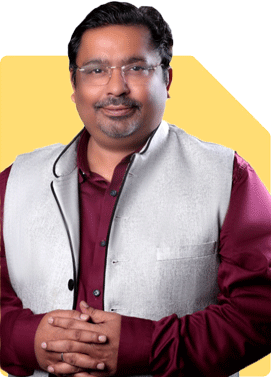
Need Expert Advice?Our Gurus Can Help
Ramalingam

Ramalingam Kalirajan  |11497 Answers  |Ask -

Mutual Funds, Financial Planning Expert - Answered on Sep 22, 2026

Ramalingam Kalirajan has over 26 years of experience in MF distribution and wealth management. He holds an MBA in Finance from the University of Madras and is a CFP (Certified Financial Planner) credentialed professional. He is the Director of Holistic Investment, a Chennai-based AMFI-registered Mutual Fund Distribution (ARN-4188) and APMI-registered PMS Distribution firm (APRN07386), helping clients build long-term wealth through mutual funds and other investment solutions.... more
Deepak Question by Deepak on Sep 21, 2026
Money

I have started a Mutual fund 2 years before and till now invested nearly 4 lakh, I invested in ICICI prudential business cycle fund , icici prudential manufacturing fund and SBI contra fund. The overall Absolute return of my portfolio is 1.52% and XIRR is 1.23%. Have I invested correct? When I ask my agent, they say that market has been down for last two years i should hold for next two year more atleast to see growth. This is the first time i invested in mutual fund, but i have lost trust. Am i stuck in wrong funds? Please advise.

Ans: You have started with a meaningful investment of nearly Rs.4 lakh, and the concern is understandable, especially when this is your first mutual fund experience. A low return after two years does not by itself mean that you selected wrong funds.

» What your current return tells you

– An absolute return of 1.52% and XIRR of 1.23% after around two years is certainly disappointing.

– However, judging an equity mutual fund portfolio only after two years can give a misleading picture.

– Equity investments can go through long periods of weak returns. The important question is not only what happened in the last two years, but whether the portfolio is suitable for your goal and investment horizon.

– So, I would not suggest exiting all your investments only because the current return is low.

» The bigger issue in your portfolio

Your three investments are not three completely different types of exposure.

– Business-cycle and manufacturing-oriented funds can have a strong sector or theme bias.

– A contra-oriented fund follows a different investment approach, but it is still an equity-oriented portfolio.

– Therefore, your Rs.4 lakh portfolio has meaningful dependence on particular investment styles and economic sectors.

This is more important than the fact that the return is currently low.

For a first-time mutual fund investor, I would generally prefer a well-diversified core portfolio rather than having a large portion concentrated in thematic or strategy-oriented categories.

» Should you hold for another two years?

Your agent is partly right that equity mutual funds should normally be given a longer horizon.

But simply saying "market was down, so wait two more years" is not enough.

The portfolio should be reviewed for:

– Your investment objective.

– Your total investment horizon.

– Your monthly SIP amount.

– Equity allocation required for your goals.

– Category diversification.

– Portfolio overlap.

– Risk level you can actually tolerate.

– Performance compared with the appropriate category and benchmark over a suitable period.

If these factors are satisfactory, continuing can make sense. If the portfolio structure itself is unsuitable, waiting another two years will not solve the underlying problem.

» Are you stuck in wrong funds?

I would not call them "wrong funds" merely because they have given low returns over two years.

The more relevant concern is whether they are the right categories for your overall financial plan.

A thematic or strategy-based fund can perform very differently from the broader equity market. Sometimes the theme works very well. Sometimes it can remain weak for a considerable period.

For a first-time investor, this can also create a psychological problem. When the portfolio does not perform, confidence falls quickly.

So, your loss of trust is understandable. But avoid making a second mistake by stopping equity investing completely because of a two-year experience.

» What I would do now

– Do not redeem everything immediately.

– Do not add fresh money blindly just because NAV has fallen or returns are low.

– Review the three holdings together as one portfolio.

– Identify how much of your total investment is concentrated in business-cycle and manufacturing themes.

– Build a stronger diversified core if your investment horizon is 7-10 years or more.

– Keep thematic exposure limited rather than allowing it to dominate the portfolio.

– Continue SIPs only after the overall asset allocation is reviewed.

– Keep money required within the next 3-5 years away from aggressive equity investments.

» Your first mutual fund experience

One important point here.

You have invested nearly Rs.4 lakh in two years. That is a good beginning towards creating long-term wealth.

Do not judge your entire mutual fund journey based on the first two years.

The real benefit of mutual funds comes from disciplined investing over a long period, proper diversification and staying aligned with your goals.

At the same time, "stay invested for the long term" should never become an excuse for not reviewing the portfolio.

A good investment professional should be able to explain why each category is being held, what role it has in your portfolio and what action should be taken if the investment does not perform as expected.

» What information is needed for a proper review

For a 360-degree assessment, I would need:

– Your age.

– Monthly income and monthly expenses.

– Current SIP amount in each fund.

– Present value of each investment.

– Your investment objective.

– When you need this money.

– Existing EPF, PPF, FD and other investments.

– Emergency fund availability.

– Insurance protection.

– Whether you have any loans.

With this information, the portfolio can be assessed as a complete financial plan rather than simply judging the present XIRR.

» Final Insights

Your current 1.23% XIRR is not a reason by itself to conclude that you are stuck in bad investments.

The bigger lesson is that your first portfolio appears to have meaningful thematic exposure. It deserves a proper category and asset-allocation review before you decide whether to continue, reduce or restructure.

Do not lose trust in mutual funds because of two weak years. But also do not continue blindly for two more years without understanding what you own and why you own it.

Best Regards,

K. Ramalingam, MBA, CFP,

AMFI-Registered MFD – ARN 4188

www.holisticinvestment.in

https://www.linkedin.com/in/ramalingamcfp/
DISCLAIMER: The content of this post by the expert is the personal view of the rediffGURU. Users are advised to pursue the information provided by the rediffGURU only as a source of information to be as a point of reference and to rely on their own judgement when making a decision.
Money

You may like to see similar questions and answers below

Omkeshwar

Omkeshwar Singh  | Answer  |Ask -

Head, Rank MF - Answered on Mar 17, 2020

Money
I HAVE BEEN INVESTING IN MUTUAL FUNDS FOR THE LAST SEVERAL YEARS BUT THE RETURNS HAVE NOT BEEN ENCOURAGING. I WOULD LIKE TO KNOW IF I AM INVESTING IN THE RIGHT FUNDS OR SHOULD I SHIFT TO OTHER MFs TO MAXIMISE MY RETURNS. GIVE BELOW IS MY CURRENT HOLDING OF MFs. Fund name Catgory Star Rating Ravindra Kumar     ·Aditya Birla Sun Life Pure Value Fund -Growth -Direct Plan Equity - Value Funds: 1 ·Aditya Birla Sun Life Pure Value Fund -Growth -Regular Plan Equity - Value Funds: 1 ·Canara Rebeco Emerging Equities - Regular Growth Equity - Large & Mid Cap Fund 4 ·Franklin India Smaller Companies Fund - Growth Equity - Small cap Fund 2 ·HDFC Equity Fund - Regular Plan - Growth  Equity - Multi Cap Funds: 2  ·HDFC Mid-Cap Opportunities Fund -Regular Plan Growth  Equity - Mid Cap Funds: 2  ·ICICI Prudendial Banking and Financial Services Fund - Growth Equity - Sectoral Fund - Banks & Financial Services 2 ·Mirae Asset Focused Fund - Direct Plan - Growth Equity - Multi Cap Funds: 2 ·Mirae Asset Large Cap Fund - Direct Plan - Growth Equity - Large Cap Funds: 4 ·NIPPON INDIA MULTI CAP FUND- DIRECT GROWTH PLAN GROWTH OPTION Equity - Multi Cap Funds: 2
Ans: You may continue with the 4 rated funds; however for others better alternatives are available

Equity - Multi Cap Funds:

- Motilal Oswal Multicap 35 Fund (MOF35)-Regular Plan-Growth Option

- JM Multicap Fund - Growth option

- UTI - Equity Fund-Growth Option

Equity - Mid Cap Funds:

- Motilal Oswal Midcap 30 Fund (MOF30)-Regular Plan-Growth Option

- DSP Midcap Fund - Regular Plan - Growth

Equity - Sectoral Fund - Banks & Financial Services:

- LIC MF BANKING AND FINANCIAL SERVICES FUND-REGULAR PLAN-GROWTH

- Tata Banking And Financial Services Fund-Regular Plan-Growth

- SBI BANKING & FINANCIAL SERVICES FUND - REGULAR PLAN - GROWTH

Equity - Small Cap Fund:Axis Small Cap Fund - Regular Plan - Growth

Equity - Large & Mid Cap Funds:

- BOI AXA Large & Mid Cap Equity Fund Regular Plan- Growth

- Canara Robeco Emerging Equities - Regular Plan - GROWTH

- Tata Large & Mid Cap Fund- Regular Plan - Growth

..Read more

Ramalingam

Ramalingam Kalirajan  |11497 Answers  |Ask -

Mutual Funds, Financial Planning Expert - Answered on May 01, 2024

Listen
Money
Hello, I'm 37 years old and I have started investing into mutual funds since last year. My current portfolio is at 1.62 lacs. My Target is 1.5 CR in 10 years. I'm investing 10k in quant Elss, 5k Tata small cap, my wife is investing 10k in Quant flexi cap. And I want to invest 60k per month for the next 3 years in SBI contra 20k, PPAFS flexi cap 20k and ICICI multi asset 20k. Please advise if I'm going in the right direction. Noel
Ans: Noel, it's fantastic to see your commitment to building wealth through mutual funds. Your diversified portfolio showcases a strategic approach to investing across different market segments.

By investing in ELSS, small-cap, and flexi-cap funds, you're harnessing the potential for growth across various sectors and market capitalizations. These funds offer opportunities for capital appreciation over the long term, aligning well with your goal of reaching 1.5 crores in 10 years.

Your plan to increase investments to 60k per month for the next 3 years further demonstrates your dedication to achieving your financial objectives. SBI Contra, PPAFS Flexi Cap, and ICICI Multi Asset are reputable funds known for their performance and diversification benefits, providing a solid foundation for your portfolio expansion.

However, it's essential to periodically review your investments, monitor performance, and reassess your financial goals to ensure you remain on track. Consider consulting with a Certified Financial Planner to fine-tune your strategy and make any necessary adjustments along the way.

With discipline, patience, and strategic planning, you're well-positioned to progress towards your target of 1.5 crores in the next decade. Keep up the excellent work, and stay focused on your long-term financial success.

..Read more

Ramalingam

Ramalingam Kalirajan  |11497 Answers  |Ask -

Mutual Funds, Financial Planning Expert - Answered on May 15, 2024

Money
Hi Sir, My name is Krishna & I am 38 years old and I have a savings of around 40Lakhs in bank in FD's and I started investing 20000 every month from Jan-2024 in these mutual funds [DSP Nifty 50 Equal Weight Index Fund Direct-Growth, HDFC Index Fund Nifty 50 Plan - Direct Plan, Nippon India Large Cap Fund - Direct Plan, Edelweiss Large Cap Fund - Direct Plan, ICICI Prudential Bluechip Fund - Direct Plan-Growth, Kotak Emerging Equity Fund - Direct Plan, Motilal Oswal Midcap Fund - Direct Plan,Axis Small Cap Fund - Direct Plan, Kotak Multi Asset Allocator FoF - Dynamic - Direct Plan, Edelweiss Aggressive Hybrid Fund - Direct Plan]. I checked through money control and value research before investing in these mutual funds. Please let me know if my investments are good?
Ans: Hello Krishna,

Your commitment to financial planning and investment is commendable. Let's analyze your mutual fund portfolio to ensure it aligns with your goals and risk tolerance.

Portfolio Composition
Your portfolio comprises a diverse range of mutual funds, spanning various categories including large-cap, mid-cap, small-cap, index funds, and hybrid funds. This diversified approach spreads risk across different market segments and investment styles.

Fund Selection
Index Funds: Investments in index funds like DSP Nifty 50 Equal Weight Index Fund and HDFC Index Fund Nifty 50 Plan provide exposure to the broader market, capturing the performance of the Nifty 50 index constituents.

Active vs. Passive Management:
While you've included both actively managed mutual funds and index funds (ETFs) in your portfolio, it's important to understand the differences between the two. Actively managed funds aim to outperform the market through active stock selection and portfolio management, while index funds passively track a specific index's performance.
Benefits of Actively Managed Funds:
Actively managed funds offer the potential for higher returns compared to index funds, especially during market inefficiencies or when skilled fund managers can identify lucrative investment opportunities. Additionally, active management allows for flexibility in portfolio construction and adjustments based on market conditions.
Potential Disadvantages of Index Funds:
While index funds offer low expense ratios and broad market exposure, they may lack the potential for outperformance compared to actively managed funds. Additionally, they're subject to tracking error, which occurs when the fund's performance deviates from the index it's designed to replicate.

Large Cap Funds: Nippon India Large Cap Fund, Edelweiss Large Cap Fund, and ICICI Prudential Bluechip Fund offer stability and growth potential by investing in established companies with strong fundamentals.

Mid Cap and Small Cap Funds: Motilal Oswal Midcap Fund and Axis Small Cap Fund aim to capitalize on the growth potential of mid-sized and small-sized companies, albeit with higher volatility.

Hybrid and Multi-Asset Funds: Kotak Multi Asset Allocator FoF - Dynamic and Edelweiss Aggressive Hybrid Fund provide a blend of equity and debt exposure, suitable for investors seeking balanced returns with lower risk.

There are some advantages to consider direct funds, and the cost savings can be significant in the long run. However, there are some potential benefits to using a regular MFD:
Advantages of Investing Through a Mutual Fund Distributor (MFD):
• Personalized Advice: MFDs can be helpful for beginners or those who lack investment knowledge. They can assess your risk tolerance, financial goals, and investment horizon to recommend suitable mutual funds. This personalized guidance can be valuable, especially if you're new to investing.
• Convenience: MFDs handle all the paperwork and transactions on your behalf, saving you time and effort. They can help with account setup, SIP registrations, and managing your portfolio across different funds.
• Investor Support: MFDs can be a point of contact for any questions or concerns you may have about your investments. They can provide ongoing support and guidance throughout your investment journey.

Fund Research
Cross-referencing your fund selections with reputable sources like Moneycontrol and Value Research is a prudent approach. These platforms offer valuable insights into fund performance, risk metrics, and portfolio composition, aiding informed investment decisions.

However, relying solely on mutual fund ratings overlooks individual financial goals and risk tolerance. Ratings may not account for changing market conditions or long-term performance. Blindly following ratings can lead to a mismatched portfolio, potentially resulting in suboptimal returns and increased investment risk over time.

Continuous Monitoring
Regularly reviewing your portfolio's performance, fund ratings, and market dynamics ensures alignment with your financial goals and risk appetite. Periodic rebalancing and adjustments may be necessary to optimize returns and manage risk effectively.

Conclusion
Your mutual fund portfolio exhibits diversity and a thoughtful selection process, indicating a sound investment strategy. By staying informed, maintaining a disciplined approach, and periodically reassessing your investments, you're well-positioned to achieve your financial objectives.

Best Regards,

K. Ramalingam, MBA, CFP
Chief Financial Planner
www.holisticinvestment.in

..Read more

Ramalingam

Ramalingam Kalirajan  |11497 Answers  |Ask -

Mutual Funds, Financial Planning Expert - Answered on Jan 16, 2025

Money
I am currently investing in 9 mutual funds : 1. Quant small cap 1000 2. Nippon small cap 3500 3. Motilal mid cap 2000 4. Parag parikh flexi cap 2500 5. Icici nasdaq 100 1000 6. Quant large and mid cap 2000 7. Hdfc pharma and healthcare fund 2000 8. Icici technology fund 1000. Investing since may 2024 . Please advice if i shud hold or change. returns till now 0%
Ans: It’s great that you have started investing in mutual funds. You have chosen a variety of funds, but your returns are currently at 0%. This could be due to several factors, including market conditions, asset class performance, and time horizon. Let’s evaluate your portfolio and determine whether you should hold or change your investments.

Portfolio Breakdown
You have spread your investments across multiple asset classes: small-cap, mid-cap, flexi-cap, sectoral funds, and international exposure. Here’s a quick look at the funds you have invested in:

Small-Cap Funds: Quant Small Cap and Nippon Small Cap
Mid-Cap Funds: Motilal Mid Cap
Flexi-Cap Fund: Parag Parikh Flexi Cap
Sectoral Funds: HDFC Pharma and Healthcare Fund, ICICI Technology Fund
International Exposure: ICICI Nasdaq 100
Large & Mid-Cap Fund: Quant Large and Mid Cap
This diversified approach is beneficial in balancing risks across various sectors. However, the question arises: is this the most efficient allocation for your goals?

Fund Performance and Timing
Your funds have delivered 0% returns so far. The performance could reflect the current market conditions. Markets, especially equity markets, can be volatile in the short term, and returns take time to materialize. The 0% return does not necessarily indicate a poor investment choice.

Given that you’ve been invested only since May 2024, this is still a relatively short period. Mutual fund returns often need 3-5 years to show significant growth, especially in small-cap and sectoral funds.

Key Observations
Small-Cap Funds:

Small-cap funds tend to be more volatile but have the potential for high returns over time. They can experience significant fluctuations, especially in the short term.
If you have a long-term horizon, holding on to them could be wise. However, ensure your exposure to small-cap funds does not exceed your risk tolerance.
Mid-Cap Funds:

Mid-cap funds have the potential to offer balanced returns by being less volatile than small-cap funds.
These funds usually work well for medium-term investments (5-7 years).
Flexi-Cap Funds:

Flexi-cap funds are diversified and invest across market caps. Parag Parikh Flexi Cap is generally known for strong long-term performance.
Holding this fund makes sense for stability and diversification in your portfolio.
Sectoral Funds:

Sector-specific funds like pharma and technology are more volatile and can offer high returns during industry booms.
However, they are risky and should ideally make up a small portion of your portfolio (not more than 10-15%).
You may want to reassess if these are essential to your portfolio or if diversification into broader funds is better.
International Exposure:

ICICI Nasdaq 100 offers exposure to international markets, particularly the US tech sector.
While international funds have growth potential, they are subject to currency risks and economic cycles outside India. Diversifying internationally can be a good move, but it should be balanced.
Large & Mid-Cap Funds:

These funds strike a balance between growth and stability. They offer exposure to both large-cap and mid-cap stocks, providing both safety and growth potential.
Quant Large and Mid Cap can serve as a stabilizer in your portfolio.
Evaluating Your Current Portfolio
Diversification: Your portfolio is diversified across small-cap, mid-cap, flexi-cap, sector-specific, and international funds. This is generally a good approach to managing risk.
Sectoral Overload: The allocation to sectoral funds (HDFC Pharma and ICICI Technology) could be reduced. These funds can underperform if their respective sectors face a downturn.
Risk Profile: Given your relatively young age (24 years) and the long-term nature of your retirement goal, it’s acceptable to have a higher risk exposure. However, the current allocation might have too much focus on small-cap and sectoral funds, which could be volatile in the short term.
Performance Tracking: Your portfolio’s performance should be reviewed annually. If funds show consistent underperformance, you might need to switch to better-performing funds.
Investment Strategy Moving Forward
Reduce Sectoral Exposure:

Consider reducing investments in sectoral funds like pharma and technology, as they are highly dependent on sector-specific factors and market cycles.
Reallocate this amount to diversified flexi-cap or large-cap funds.
Increase Allocation to Mid and Large-Cap Funds:

Mid-cap and large-cap funds are generally less volatile compared to small-cap funds. These will provide stability to your portfolio.
Flexi-cap funds can also provide exposure to a broader market, including large, mid, and small-cap stocks.
Increase Exposure to Actively Managed Funds:

Actively managed funds, especially in large and mid-cap categories, tend to perform better over the long run due to the active decision-making involved. These funds are more focused on stock selection and can mitigate risks better than passive options.
Review the International Fund Exposure:

ICICI Nasdaq 100 could be beneficial for diversification, but the US market has risks. A better approach might be exposure to emerging markets or other international funds to balance risk.
Regular Investment Review:

Review your portfolio every 6 months or annually to ensure it is aligned with your goals.
Track the performance of each fund. If a fund consistently underperforms, it may be time to exit and switch to a better alternative.
Asset Allocation Recommendation
Equity Funds: 60-70%
Diversify across large-cap, mid-cap, and flexi-cap funds.
Debt Funds: 20-30%
For stability and regular income, consider allocating some portion to debt funds or hybrid funds.
International Funds: 5-10%
Consider reducing exposure to sector-specific international funds and increase exposure to broad-based international funds.
Final Insights
Your portfolio has the potential to perform well over the long term, but there are some areas that could benefit from fine-tuning. The key is to balance between high-risk, high-reward investments (small-cap, sectoral funds) and more stable, diversified funds (mid-cap, large-cap, flexi-cap). Regular reviews and adjustments, along with maintaining discipline in SIPs, will help you achieve your financial goals.

Best Regards,

K. Ramalingam, MBA, CFP,

Chief Financial Planner,

www.holisticinvestment.in
https://www.youtube.com/@HolisticInvestment

..Read more

Latest Questions
Dr Shakeeb Ahmed

Dr Shakeeb Ahmed Khan  |207 Answers  |Ask -

Physiotherapist - Answered on Nov 06, 2026

Asked by Anonymous - Oct 01, 2026
Health
I have diabetes, and over the last few months I've noticed that my hands sometimes start shaking when I’m holding something for a while, such as a cup of tea, a phone, or even a small object. It’s more noticeable when I'm trying to keep my hand steady, and sometimes I feel a little weakness or tiredness in my hands as well. I've heard that diabetes can sometimes affect nerves and muscles, but I'm not sure whether this kind of shaking could be related to that or if it is simply due to muscle weakness or poor grip strength. Could you assess whether there is a physical or muscular reason for this and suggest some safe exercises to improve my hand strength and stability? Also, are there any signs that would mean I should see a doctor or neurologist rather than relying only on physiotherapy?
Ans: Thank you for your query. A physiotherapist with MPTh in neurology can assess your hand strength, grip, and nerve related changes, and teach safe exercises like squeezing a soft ball, slowly opening and closing the fingers, gentle wrist bends, and holding a light cup for short periods. Please see a physiotherapist with MPTh in neurology along with a neurologist and a diabetologist for better management of diabetes, as this team approach covers nerve, muscle, and blood sugar control together. See a doctor or neurologist promptly if the shaking worsens, or you get numbness, sudden weakness, muscle wasting, falls, or trouble with walking, speech, or vision. Wishing you quick recovery

...Read more

DISCLAIMER: The content of this post by the expert is the personal view of the rediffGURU. Investment in securities market are subject to market risks. Read all the related document carefully before investing. The securities quoted are for illustration only and are not recommendatory. Users are advised to pursue the information provided by the rediffGURU only as a source of information and as a point of reference and to rely on their own judgement when making a decision. RediffGURUS is an intermediary as per India's Information Technology Act.

Close  

You haven't logged in yet. To ask a question, Please Log in below
Login

A verification OTP will be sent to this
Mobile Number / Email

Enter OTP
A 6 digit code has been sent to

Resend OTP in120seconds

Dear User, You have not registered yet. Please register by filling the fields below to get expert answers from our Gurus
Sign up

By signing up, you agree to our
Terms & Conditions and Privacy Policy

Already have an account?

Enter OTP
A 6 digit code has been sent to Mobile

Resend OTP in120seconds

x