Need Expert Advice?Our Gurus Can Help
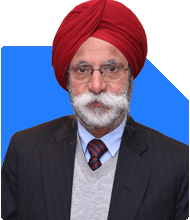
T S Khurana |536 Answers |Ask -Follow
Tax Expert - Answered on Apr 29, 2025
A certified management accountant since 1993, T S Khurana is a fellow member of The Institute of Cost Accountants of India. His areas of expertise are income tax, specifically litigation cases, and GST.
Since the last 21 years, he has also been providing expert advice on financial matters, including investments and diversification of funds, and wealth building in the long term to his clients.
He believes that investment in real estate is the safest way for better returns and wealth generation over a period of time.
A former chairman of the Chandigarh Chapter of Institute of Cost Accountants of India, T S Khurana has also served as member of its technical committee.... more
Since the last 21 years, he has also been providing expert advice on financial matters, including investments and diversification of funds, and wealth building in the long term to his clients.
He believes that investment in real estate is the safest way for better returns and wealth generation over a period of time.
A former chairman of the Chandigarh Chapter of Institute of Cost Accountants of India, T S Khurana has also served as member of its technical committee.... more
Asked by Anonymous - Apr 14, 2025

Should a parent give gift deed to the son to buy a property in UAE
Ans: You may prepare a Gift Deed. This shall avoid many legal complications.
Most welcome for any further clarifications. Thanks.
Most welcome for any further clarifications. Thanks.
DISCLAIMER: The content of this post by the expert is the personal view of the rediffGURU. Users are advised to pursue the information provided by the rediffGURU only as a source of information to be as a point of reference and to rely on their own judgement when making a decision.
MoneyReply


You may like to see similar questions and answers below

Milind Vadjikar | Answer |Ask -Follow
Insurance, Stocks, MF, PF Expert - Answered on Sep 29, 2024
Asked by Anonymous - Sep 08, 2024Hindi


Ramalingam Kalirajan |10876 Answers |Ask -Follow
Mutual Funds, Financial Planning Expert - Answered on May 15, 2025


Vipul Bhavsar | Answer |Ask -Follow
Tax Expert - Answered on May 15, 2025
Asked by Anonymous - Apr 15, 2025
Ramalingam Kalirajan |10876 Answers |Ask -Follow
Mutual Funds, Financial Planning Expert - Answered on Jun 02, 2025
Ramalingam Kalirajan |10876 Answers |Ask -Follow
Mutual Funds, Financial Planning Expert - Answered on Jul 08, 2025

Latest Questions

Radheshyam Zanwar |6740 Answers |Ask -Follow
MHT-CET, IIT-JEE, NEET-UG Expert - Answered on Dec 09, 2025


Naveenn Kummar |234 Answers |Ask -Follow
Financial Planner, MF, Insurance Expert - Answered on Dec 09, 2025


Ramalingam Kalirajan |10876 Answers |Ask -Follow
Mutual Funds, Financial Planning Expert - Answered on Dec 09, 2025


Ramalingam Kalirajan |10876 Answers |Ask -Follow
Mutual Funds, Financial Planning Expert - Answered on Dec 09, 2025

Radheshyam Zanwar |6740 Answers |Ask -Follow
MHT-CET, IIT-JEE, NEET-UG Expert - Answered on Dec 09, 2025

Radheshyam Zanwar |6740 Answers |Ask -Follow
MHT-CET, IIT-JEE, NEET-UG Expert - Answered on Dec 09, 2025

Nayagam P P |10853 Answers |Ask -Follow
Career Counsellor - Answered on Dec 09, 2025


Mayank Chandel |2569 Answers |Ask -Follow
IIT-JEE, NEET-UG, SAT, CLAT, CA, CS Exam Expert - Answered on Dec 08, 2025

Mayank Chandel |2569 Answers |Ask -Follow
IIT-JEE, NEET-UG, SAT, CLAT, CA, CS Exam Expert - Answered on Dec 08, 2025
Asked by Anonymous - Nov 18, 2025Hindi

Sir I passed class 12th from Maharashtra board (PCMB + English) I scored 48 in chemistry 52 in physics and 46 in biology I have a marksheet from Nios board which consists only one subject biology in which I scored 58 marks , My question is am I eligible for admission in mbbs ( govt college ) if I score good in Neet 2026 ??? Can I combine state board (PCB)marksheet + Nios ( biology marksheet) to fullfill 50% PCB aggregate score ?? I am from general Ews category please resolve my query
Ans: I recommend appearing for all 5 subjects through NIOS
Asked on - Dec 08, 2025 | Answered on Dec 08, 2025
Am I ineligible for mbbs?? Will they reject me?
Ans: Might be as you gave PCMB already from MS board. There is not concrete answer in counselling brochure.
Mayank Chandel |2569 Answers |Ask -Follow
IIT-JEE, NEET-UG, SAT, CLAT, CA, CS Exam Expert - Answered on Dec 08, 2025