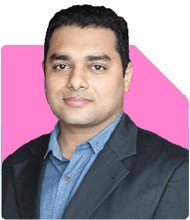
Need Expert Advice?Our Gurus Can Help
Ramalingam

Ramalingam Kalirajan  |11484 Answers  |Ask -

Mutual Funds, Financial Planning Expert - Answered on Jul 27, 2026

Ramalingam Kalirajan has over 26 years of experience in MF distribution and wealth management. He holds an MBA in Finance from the University of Madras and is a CFP (Certified Financial Planner) credentialed professional. He is the Director of Holistic Investment, a Chennai-based AMFI-registered Mutual Fund Distribution (ARN-4188) and APMI-registered PMS Distribution firm (APRN07386), helping clients build long-term wealth through mutual funds and other investment solutions.... more
Dr Question by Dr on Jul 15, 2026
Money

Good morning. Me and my wife are both 44 years old, professional. Combined monthly income - 5 to 6 lakhs. House- one ancestral,one apartment (market value 90 lakh),loan closed. Liabilities - car loan 1.5 lakh ( will close this month). Insurance - Term plan- myself 2 crores,wife 1 crore. Mediclaim- Me,spouse,daughter- 10 lakh base policy with 60 lakh super top up. Parents- 10 lakh base policy,25 lakhs super top up. Finance status- Stocks- 1.8 crore.( Buy sell continues). MF- 95 lakhs.( Sip 80k per month). PPF - 37 lakh( ongoing with 1 lakh per head annual contribution), to be continued next 12 years. Gold and Bonds- 15 lakhs( to be matured in 2031). Daughter- 12 years, plan to have 85 lakh(present cost) after 7 years for higher education Average monthly expenses- 1 lakh. Would like to retire at around 55 to 60 years age( both). How can we plan further?

Ans: You have built a very strong financial foundation by age 44. Very few families reach this stage with zero home loan, high income, good insurance cover and a sizeable investment portfolio. Your next phase is less about creating wealth and more about protecting it, growing it steadily and preparing for a smooth retirement.

» Overall Financial Assessment

– Combined monthly income of Rs.5–6 lakh gives excellent savings capacity.
– Monthly expenses of around Rs.1 lakh are well under control.
– Home loan is closed and car loan is also ending.
– Insurance coverage is adequate for both life and health.
– Strong mix of stocks, mutual funds, PPF and gold.
– Your financial discipline is clearly visible.

From here, the focus should be on goal-based investing rather than only wealth accumulation.

» Retirement Planning

– Retirement between 55 and 60 looks very much achievable.
– Continue investing aggressively while both of you are earning.
– Increase investments whenever income increases.
– Build a retirement corpus that can generate regular cash flow without disturbing the capital.
– About 5 years before retirement, gradually reduce equity exposure and increase stability.

This will reduce the impact of market volatility near retirement.

» Review Your Equity Exposure

Your investments are heavily tilted towards equities.

– Stocks worth around Rs.1.8 crore.
– Mutual funds worth around Rs.95 lakh.

This has helped wealth creation. But it also increases concentration risk.

– Slowly reduce dependence on individual stocks over the coming years.
– Shift fresh investments more towards well-managed diversified mutual funds.
– Avoid emotional attachment to winning stocks.
– Review stock allocation every year.

A diversified portfolio usually gives better peace of mind after retirement.

» Daughter's Higher Education

You have around seven years available.

– Keep this goal completely separate from retirement money.
– Continue investing regularly towards this goal.
– As the education year comes closer, gradually move part of the money to safer investments.
– Avoid depending only on equity during the last two years.

This reduces the risk of market corrections affecting an important goal.

» PPF Strategy

Your PPF corpus is already impressive.

– Continue annual contributions as planned.
– It adds stability to the portfolio.
– It also improves diversification.
– Continue till maturity if cash flow permits.

» Emergency Reserve

Even though your income is strong, maintain a dedicated emergency fund.

– Keep at least one year of family expenses easily accessible.
– Avoid using long-term investments for emergencies.

This protects your long-term wealth.

» Insurance Review

Your insurance planning is well thought out.

– Term insurance looks adequate.
– Family health cover is also strong.
– Review both every few years.
– Keep nominee details updated.

Also prepare a Will if not already done.

» Tax Planning

Since you actively buy and sell stocks,

– Track capital gains carefully.
– Equity mutual fund long-term gains above Rs.1.25 lakh are taxed at 12.5%.
– Short-term gains are taxed at 20%.
– Plan redemptions across financial years wherever possible.

Good tax planning can improve your overall returns.

» Lifestyle Planning

Financial freedom is not only about money.

– Think about how you want to spend your retired life.
– Plan hobbies, travel and healthcare.
– Keep some money aside for experiences.
– Retirement should be enjoyable, not just financially secure.

» Finally

– You are already on a very strong financial path.
– Continue your disciplined investing.
– Gradually reduce dependence on individual stocks.
– Keep retirement, daughter's education and lifestyle goals separate.
– Review the portfolio once every year.
– Work with an experienced Investment professional who is an AMFI-registered MFD for periodic portfolio reviews and timely asset allocation changes.

Best Regards,

K. Ramalingam, MBA, CFP,

AMFI-Registered MFD – ARN 4188

www.holisticinvestment.in

https://www.linkedin.com/in/ramalingamcfp/
DISCLAIMER: The content of this post by the expert is the personal view of the rediffGURU. Users are advised to pursue the information provided by the rediffGURU only as a source of information to be as a point of reference and to rely on their own judgement when making a decision.
Money

You may like to see similar questions and answers below

Ramalingam

Ramalingam Kalirajan  |11484 Answers  |Ask -

Mutual Funds, Financial Planning Expert - Answered on Jun 25, 2024

Asked by Anonymous - Jun 20, 2024Hindi
Money
Hello Sir, Me and my wife are both 35 years old. We earn a total of Rs. 3.50L per month. We have a house loan of 15L for which we pay an emi of 15k per month. We both also have ppf accounts with combined amount of 7L and starting july 2024 will be investing 12500 rs in each account. We also have lum-sum mf deposited of Rs. 2L and 3L each (a year back). Currently have a combined SIP of 10000 monthly in equity + debt. We have 2 properties for one receives rental of Rs. 12500 per month and other one we stay. We also have FD of around 20L and have a seperate amount of Rs. 5L kept as emergency fund. Also we have NPS account and per year we invest Rs. 50000 each in our accounts. We have a Term plans for both of us at 1-1cr each. Our company PF balnce combined to be around 25L. We have a 6 year old son. We wish to retire by age of 50 years, with a handsome amount which can generate an income of 1.5-2L. Please help us how can we work towards achieving this goal.
Ans: First, I want to commend you and your wife for being financially proactive and disciplined. Your combined monthly income of Rs. 3.50 lakhs and structured investments show a solid foundation. Your goal to retire by 50 with an income of Rs. 1.5-2 lakhs per month is achievable with strategic planning. Let’s explore how you can optimize your current finances to reach this goal.

Current Financial Snapshot
House Loan:

Outstanding loan: Rs. 15 lakhs
EMI: Rs. 15,000 per month
PPF Accounts:

Combined balance: Rs. 7 lakhs
Monthly investment from July 2024: Rs. 12,500 each (total Rs. 25,000)
Mutual Funds:

Lump sum: Rs. 2 lakhs and Rs. 3 lakhs
Monthly SIP: Rs. 10,000 in equity and debt
Properties:

One rental property generating Rs. 12,500 per month
Primary residence
Fixed Deposits:

Total: Rs. 20 lakhs
Emergency Fund:

Total: Rs. 5 lakhs
NPS Accounts:

Annual contribution: Rs. 50,000 each (total Rs. 1 lakh)
Term Insurance:

Sum assured: Rs. 1 crore each
Provident Fund:

Combined balance: Rs. 25 lakhs
With this strong financial base, let’s assess how to align your assets and investments towards your retirement goal.

Setting Clear Retirement Goals
Your goal is to retire at 50, with a steady monthly income of Rs. 1.5-2 lakhs. To achieve this, we need to:

Estimate Retirement Corpus:

We need to calculate how much you’ll need to generate Rs. 1.5-2 lakhs per month, considering inflation and longevity.
Optimize Current Investments:

Evaluate and adjust your current investments for growth and stability.
Increase Investment Contributions:

Plan to increase your savings and investments to meet the desired retirement corpus.
Estimating Your Retirement Corpus
Assuming you need Rs. 1.5-2 lakhs per month in today’s terms, we must account for inflation. Typically, a 6-7% annual inflation rate is reasonable for long-term planning.

Inflation-Adjusted Income:

Rs. 1.5 lakhs today will be much higher in 15 years due to inflation. For example, at 6% inflation, Rs. 1.5 lakhs will be around Rs. 3.6 lakhs in 15 years.
Corpus Calculation:

To generate Rs. 3.6 lakhs per month, you need a substantial retirement corpus. Typically, using a safe withdrawal rate of 4-5%, you’ll need a corpus of approximately Rs. 9-10 crores.
Optimizing Your Current Investments
To build this corpus, let’s review and optimize your existing investments and strategies.

Paying Off the Home Loan
Low-Interest Priority:

Your home loan of Rs. 15 lakhs with an EMI of Rs. 15,000 is manageable. If the interest rate is low, continue paying the EMI. Use surplus funds for higher growth investments rather than prepaying the loan.
Focus on Higher Returns:

Redirecting extra money towards investments with higher returns than your loan’s interest rate can be more beneficial.
Leveraging PPF Accounts
Consistent Contributions:

You plan to invest Rs. 25,000 per month in PPF. This provides safe, tax-free returns, which is great for a portion of your portfolio. Continue these contributions for stability and security.
Long-Term Growth:

PPF’s tax-free nature and stable returns make it a strong long-term investment. It’s perfect for balancing your riskier investments.
Enhancing Mutual Fund Investments
Review Lump Sum Investments:

Your Rs. 2 lakhs and Rs. 3 lakhs in mutual funds need reviewing. Ensure these funds are aligned with your risk tolerance and goals. Prefer funds with a good track record of consistent returns.
Increase SIPs:

You currently invest Rs. 10,000 monthly in SIPs. To meet your retirement goals, consider increasing your SIPs gradually. Target Rs. 20,000-30,000 monthly as your income allows.
Focus on Growth:

Prioritize equity mutual funds for higher returns, balanced with some debt funds for stability. Actively managed funds can outperform index funds, providing better growth potential.
Fixed Deposits and Emergency Fund
Emergency Fund:

Your Rs. 5 lakhs emergency fund is excellent. It’s crucial to keep this liquid and accessible. This provides security and peace of mind.
Reassess Fixed Deposits:

With Rs. 20 lakhs in FDs, you have stability, but returns may be lower. Consider reallocating a portion to higher-yielding investments, keeping some for short-term needs and safety.
NPS Contributions
Tax Benefits:

Your annual Rs. 50,000 each in NPS is beneficial for tax savings and retirement planning. Continue these contributions for long-term retirement benefits.
Growth Potential:

NPS offers good growth with a mix of equity and debt. It’s a great supplement to your retirement corpus, providing steady growth and tax benefits.
Investment Strategy to Achieve Retirement Goals
To retire comfortably by 50, focus on growing your wealth while managing risks. Here’s a strategic plan:

Maximize Equity Exposure:

At your age, focus on equity investments for higher growth. Increase your SIPs in equity mutual funds and ensure a diversified portfolio.
Rebalance Periodically:

Regularly review and rebalance your portfolio to stay aligned with your goals. Adjust allocations based on market conditions and your risk tolerance.
Leverage Professional Management:

Actively managed funds can provide higher returns through expert stock selection and management. Consider funds with good track records and professional managers.
Increase Contributions Over Time:

As your income grows, gradually increase your SIPs and other investments. Aim to invest a larger portion of your salary towards your retirement corpus.
Utilize Tax-Efficient Investments:

Maximize contributions to PPF and NPS for tax savings. Also, consider tax-efficient mutual funds and equity investments.
Diversify Across Asset Classes:

Balance your portfolio with a mix of equities, debt, and safe instruments like PPF and FDs. Diversification reduces risk and enhances returns.
Managing Risks and Ensuring Stability
Risk management is crucial in your journey towards early retirement. Here’s how you can mitigate risks while pursuing your goals:

Adequate Insurance Coverage:

Your term plans of Rs. 1 crore each provide a safety net for your family. Ensure you have adequate health insurance to cover medical emergencies.
Emergency Fund Maintenance:

Keep your Rs. 5 lakhs emergency fund intact. This protects against unexpected expenses without disturbing your investments.
Regular Financial Check-Ups:

Periodically review your financial plan and investments. This helps in adapting to changing circumstances and staying on track.
Plan for Inflation:

Consider the impact of inflation on your retirement needs. Ensure your investments grow faster than inflation to maintain purchasing power.
Building a Sustainable Retirement Plan
Creating a sustainable retirement plan involves both growing your corpus and planning for a stable income post-retirement. Here’s how:

Target a Diversified Corpus:

Aim for a retirement corpus that includes a mix of equity, debt, and fixed-income investments. This provides growth and stability.
Consider Systematic Withdrawal Plans:

Post-retirement, consider using Systematic Withdrawal Plans (SWPs) from mutual funds to generate a steady income. This allows you to withdraw money systematically while keeping your capital invested and growing.
Explore Annuity Options:

Though not the focus, evaluate annuities for a portion of your retirement corpus for guaranteed income. They provide stability and reduce the risk of outliving your savings.
Maintain a Balance Between Safety and Growth:

As you approach retirement, gradually shift to safer investments to protect your corpus while keeping some exposure to growth assets.
Final Insights
Your goal to retire at 50 with a monthly income of Rs. 1.5-2 lakhs is ambitious but achievable. Here’s a summary of how to work towards it:

Focus on Equity for Growth:

Increase your equity investments through SIPs and lump-sum mutual fund investments. This provides the growth needed to build a large corpus.
Maintain Diversification and Stability:

Balance your portfolio with PPF, FDs, and NPS for stability and tax benefits. Keep your emergency fund intact for security.
Increase Investments Over Time:

Gradually increase your investment contributions as your income grows. This accelerates your wealth-building process.
Leverage Professional Management:

Utilize actively managed mutual funds and the expertise of Certified Financial Planners. They help in optimizing your investments and staying on track.
Regularly Review and Rebalance:

Periodically review your financial plan and investments. Rebalance your portfolio to stay aligned with your goals and risk tolerance.
Starting early and maintaining a disciplined approach will lead you to a comfortable and financially secure retirement at 50. Your proactive steps today will pave the way for a fulfilling and worry-free future.

Best Regards,

K. Ramalingam, MBA, CFP,

Chief Financial Planner,

www.holisticinvestment.in
..Read more

Ramalingam

Ramalingam Kalirajan  |11484 Answers  |Ask -

Mutual Funds, Financial Planning Expert - Answered on Jun 04, 2025

Money
Good evening. Me and my wife ate both 42 years old. Both are working professionals. We have combined income around 4 to 4.5 lakhs per month. Average total monthly expenses for family around 85k(total 5 members). Investment- Shares- 1.45 Cr(present value) MF- 82 lakhs(present value) Monthly Sip- 22 k running(small cap,multicap,flexicap) Health insurance- 25 lakh floater woth 1 Cr super top up. Term plan- 2 crore for each Apartment cost - 90 lakhs(loan closed) Own home price- around 65 lakhs 10 years old daughter i have. Planning for future studies after 6 years- around 60 lakhs(inflation not calculated). Would like to retire at 58 to 60 years of age. Considering moderate lifestyles, how should I plan further? Thanks
Ans: You and your spouse have built a strong base. Your discipline is truly helpful for long-term wealth creation. Now, let us assess everything from a 360-degree angle. We'll look at all goals, risks, and gaps step-by-step.

Income and Expenses Stability Check
Your monthly income is around Rs. 4 to 4.5 lakh.

Your total monthly spending is Rs. 85,000 only.

This gives a healthy monthly surplus of around Rs. 3.2 to 3.7 lakh.

That shows high savings potential. This is a big strength.

Your expense-to-income ratio is low. That gives long-term flexibility.

Maintain this ratio even after your child’s education expenses increase.

Emergency Fund and Liquidity Planning
You did not mention emergency fund or cash reserve separately.

Please keep at least 6 months’ expenses in a savings-linked liquid fund.

That is around Rs. 5 to 6 lakh minimum.

You may also keep 1 month expenses in bank for quick use.

Do not mix this with equity, shares, or SIPs.

This fund should not have lock-in, and must be easy to redeem.

Health and Life Insurance Coverage
You have Rs. 25 lakh floater health insurance.

Plus Rs. 1 crore super top-up. That is very good coverage.

You and spouse also have Rs. 2 crore term plans each.

That is adequate for your income level and future goals.

Review term plan once every 3 to 4 years.

No need to buy any insurance-investment products like ULIPs or endowments.

Current Investments Assessment
Rs. 1.45 crore in shares is a large direct equity holding.

Rs. 82 lakh is in mutual funds. SIP of Rs. 22,000 per month is ongoing.

Your equity portion is close to Rs. 2.25 crore.

You have clearly taken good risk and built strong growth assets.

However, direct shares bring concentration risk.

Mutual funds, especially regular ones, offer better diversification.

It is safer to slowly shift more into mutual funds over time.

Use guidance from a CFP to build a proper large, mid, small-cap balance.

SIP Evaluation and Adjustments Needed
Monthly SIP of Rs. 22,000 seems low for your savings potential.

With a surplus of Rs. 3 lakh+ per month, SIP can be increased.

Ideal monthly SIP should be Rs. 1.25 to 1.5 lakh or more.

Diversify across multi-cap, flexi-cap, and sectoral opportunities.

Focus more on regular mutual funds through a Certified Financial Planner.

Avoid direct funds as they lack proper goal tracking.

Direct funds also offer no ongoing rebalancing or reviews.

Child’s Education Planning (after 6 years)
Target education cost is Rs. 60 lakh after 6 years.

This is a short-term goal with inflation sensitivity.

A pure equity portfolio may carry high risk here.

Allocate funds to hybrid mutual funds and debt-oriented categories.

Use STP from equity to safer funds 3 years before goal year.

Your daughter’s goal must be planned with zero compromise approach.

Do not wait till last 1 year to move funds to low-risk options.

Retirement Planning – Age 58 to 60
Retirement is about 16 to 18 years away.

You already have Rs. 2.25 crore in financial assets.

Plus, monthly surplus allows compounding with increased SIPs.

Retirement corpus should ideally reach Rs. 6 to 7 crore by age 58.

Based on moderate lifestyle, this should be enough for 85+ age.

Keep a part of retirement funds in stable hybrid mutual funds.

Avoid real estate as a post-retirement asset unless self-used.

Property is hard to sell and not liquid during emergencies.

Mutual Fund Taxation Awareness
All mutual fund sales after 1 year are taxed at 12.5% if gains cross Rs. 1.25 lakh.

Short-term mutual fund gains (under 1 year) are taxed at 20%.

Debt mutual funds are taxed as per your income slab.

So, plan redemptions wisely using long-term horizon.

Do not redeem large amounts in one go unless for a goal.

Use systematic withdrawal post-retirement to control tax.

Real Estate in Your Portfolio
You have an apartment worth Rs. 90 lakh (loan closed).

Plus own home worth Rs. 65 lakh.

Keep only one for personal living. Other is illiquid.

Try not to depend on property for retirement corpus.

Real estate lacks regular income and takes time to sell.

Rental returns are also low compared to mutual funds.

Estate Planning and Will Writing
You are parents of one child. Future must be protected.

Please write a registered Will for all major assets.

Include mutual funds, shares, properties, term plans, and bank accounts.

Also update nominees in each investment.

Will is not just for old age. It protects your child’s future.

Ideal Asset Allocation Strategy
Reduce direct share holding to under 50% over 5 years.

Increase mutual fund portion gradually through lumpsum + SIPs.

Add hybrid mutual funds for safety in medium-term goals.

Equity mutual funds for long-term goals like retirement.

Keep 10-15% in short-term debt funds for emergencies.

Do annual rebalancing with help from Certified Financial Planner.

What You Can Do from Today
Increase SIP amount to minimum Rs. 1 lakh per month.

Set separate SIPs for daughter’s education and retirement.

Stop fresh direct share investments unless backed by analysis.

Use lumpsum investments into mutual funds when markets correct.

Shift to regular funds via Certified Financial Planner for reviews and guidance.

Set up automatic asset review once every 6 months.

Create a digital record of all your investments with passwords.

Review health cover and term plan once in 3 years.

Plan to become debt-free for life, which you already are.

Review of Risk Factors
Direct equity concentration is a risk if unmanaged.

Underinvestment in mutual funds may lower growth.

Daughter’s education is a near-term goal, needs safe path.

Real estate is non-liquid. Cannot be used for emergencies.

Retirement needs inflation-adjusted planning till age 85+.

Your lifestyle may change after retirement, so plan for flexibility.

Family Support Planning
You have 5 family members. Elder care needs may come up.

Keep a separate emergency fund for medical needs of parents.

Review health insurance annually. Upgrade if hospitalization trends increase.

Talk to spouse and involve in financial planning discussions.

Keep family members informed of investments and nominations.

Finally
You have created an excellent foundation already.

Increase SIPs based on your strong savings surplus.

Shift more from shares to mutual funds with proper planning.

Give your daughter’s education goal a dedicated low-risk strategy.

Plan your retirement using diversified mutual funds, not real estate.

Work with a CFP who will guide you across all life stages.

Regular funds through an expert ensure goal matching, rebalancing, and reviews.

This protects your future wealth and gives peace of mind.

Keep updating your plan every year. Keep it goal-based, not return-based.

Retirement success depends on balance between growth and safety.

Best Regards,
K. Ramalingam, MBA, CFP
Chief Financial Planner,
www.holisticinvestment.in
https://www.youtube.com/@HolisticInvestment

..Read more

Purshotam

Purshotam Lal  | Answer  |Ask -

Financial Planner, MF and Insurance Expert - Answered on Oct 25, 2025

Money
Good morning. Me and my spouse are both 43 years old. Working professionals. Have a 11 years old daughter and my parents. 80 years and 67 years respectively. Combined monthly income around 4 to 4.5 lakh(professional). Currnet financial status(COMBINED) PPF- 39 LAKHS(TO BE CONTINUED FOR NEXT 12 YEARS MORE WITH CONTRIBUTION) EUQUITY- 1.25 Cr Mutual fund - 87 lakhs Gold- ETF and SGB LICs(old ones) - maturity value around 35 lakhs at different times. Savings- around 12 lakhs. Emergency fund- 11 lakhs Monthly SIPs- 35000(euity MF)- will increase. stocks buying - long and short term Insurance. Term plan- 2.25 cr and 1 cr Health insurance- self ,spouse and kid- 10 lakh with 90 lakh super top up. Parents- 10 lakh base policy with 20 lakh super top up. Have 2 houses.(one anceatral and one apartment). Need around 65 lakhs for daughter higher education after 7 years. Present monthly expenses around 80 to 85k including everything. Please suggest how we could make it more favourable to retire with peace at around 60 years. Though will continue to work at our capacity after 60. Thanks. Regards.
Ans: Congratulations on being able to have such a wonderful financial discipline and very sound position you currently are in. You current net income shall be more than 2 Lac per month even after your monthly household expenses and also providing for your current MF SIP etc and also providing for additional MF SIP for 7 years of Rs 65700 per month for providing higher education to your daughter as your current estimated education expenses will increase from 65 L to 130 L (@8% education inflation rate) approx after 7 years. This SIP you can continue even after 7 years till your age 60. Equity mutual fund annualised return is presumed to be 13% pa. However there is no assurance as to achievement of the same returns as MF investments are subject to market risk. After 17 Years from now at age 60 you are bound have a very sound corpus to live comfortable retired life. Good Luck.

Purshotam, CFP®, MBA, CAIIB, FIII
Certified Financial Planner
Insurance advisor
www.finphoenixinvest.com

..Read more

Ramalingam

Ramalingam Kalirajan  |11484 Answers  |Ask -

Mutual Funds, Financial Planning Expert - Answered on May 29, 2026

Asked by Anonymous - May 29, 2026Hindi
Money
Good morning. Me and my wife are both 44 years old. Our daughter is 12 years old. Parents are with me 81 years and 70 years respectively. Current financial status. Direct equity- 1.8 crore. Mutual fund- 1 crore. PPF - 48 lakhs. Savings accounts- 11 lakhs. Other policies (older)- 25 lakhs(maturing in 4 years. 2 houses- one ancestral. One apartment - 90 lakh present value(loan closed in 5 years). Gold bond- 4 lakhs invested( maturing in 2030). Present debt- nil. Monthly income - around 4 lakhs together(varies since we are professionals). Present investment - 50k in mutual fund SIP with good amount lump sums in dip. Equity - 75% Debt 25% Current holding. Rest invest in stocks. Monthly expenses- around 1 lakh altogether per month. Insurance - Term insurance- 2 crores for both of us Health insurance- Self /wife/kid- 10 lakh base policy with 90 l super top up. Parents- 10 lakh base policy with 20 lakh super top up each. Present goal- daughter education- after 6 years,around 50 lakh at present day valuation Keeping in mind about present expenses,how should I plan further to take comfortable retirement at 55. I can work upto any age,being a surgeon by profession. But don't want it to be compulsive working. Thanks Regards
Ans: You have built a very strong financial foundation with disciplined investing, low liabilities, and diversified assets. Your planning quality is clearly visible. The biggest positive is that your financial life is already moving from “wealth creation” towards “wealth preservation and independence.”

» Current Financial Position – Strong and Stable

Positives:

Debt-free status
High monthly surplus
Large equity and mutual fund corpus
Significant PPF accumulation
Good insurance structure
Multiple asset classes
No forced dependency on future income

Your current monthly expense of around Rs 1 lakh against income of around Rs 4 lakh gives excellent savings capacity.

» Retirement at 55 – Looks Achievable

Based on your present corpus, profession, and investment discipline, retiring comfortably at 55 appears realistic.

Most importantly:

You are not starting late
You already have sizeable growth assets
Your profession allows optional income even after formal retirement

This creates flexibility and reduces retirement pressure.

» Daughter’s Education Goal

Your daughter’s higher education requirement after 6 years is manageable with your current financial profile.

But since the goal is now entering medium-term range:

Avoid taking excessive additional equity risk for this goal
Gradually separate this corpus mentally and financially from retirement assets

As goal nears:

Shift part of the education corpus towards safer allocation

This protects against market volatility near withdrawal time.

» Equity Allocation – Slight Moderation May Help

Current allocation of 75% equity is fine for wealth creation, but as you move towards age 50:

Gradual rebalancing may improve stability
Extreme equity exposure may not be necessary now

You have already won the “asset creation” phase.

Now focus should slowly move towards:

Capital protection
Cash-flow stability
Tax efficiency
Stress-free retirement income

» Direct Equity Exposure – Important Observation

Rs 1.8 crore in direct equity is substantial.

Please ensure:

Proper diversification
No overconcentration in few sectors/stocks
Periodic profit booking and rebalancing

As retirement nears, unmanaged direct equity volatility can become emotionally stressful.

» Healthcare Planning – Very Well Structured

Your health insurance setup is quite strong and thoughtfully structured, especially considering elderly parents.

Still:

Maintain separate medical contingency reserve
Healthcare inflation will remain one of the biggest retirement risks

This is especially important because longevity risk exists strongly in your family.

» Retirement Income Planning

Since your expenses are already controlled, future retirement sustainability becomes easier.

Your future income streams may come from:

SWP from mutual funds
PPF maturity
Interest/debt allocation
Continued optional professional income
Rental or secondary cash flow if needed

This creates excellent flexibility.

» One Important Area – Increase SIP Gradually

Your present SIP of Rs 50k is good, but relative to income and assets, you still have room to increase systematic investments gradually.

Especially because:

Your income is variable
Markets reward consistency more than opportunistic investing alone

Continue lump sum deployment during corrections, but maintain strong SIP discipline too.

» Finally

Financial independence by 55 appears very achievable
Your current structure is already strong and mature
Main focus now should be wealth preservation and retirement income sustainability
Gradually reduce portfolio volatility as retirement approaches
Separate daughter’s education corpus from retirement planning
Maintain disciplined investing even if active work continues beyond 55

Your biggest strength is not only income — it is your controlled lifestyle, debt-free status, and disciplined financial behaviour.

Best Regards,

K. Ramalingam, MBA, CFP,

Chief Financial Planner,

www.holisticinvestment.in
https://www.linkedin.com/in/ramalingamcfp/

..Read more

Latest Questions
Ramalingam

Ramalingam Kalirajan  |11484 Answers  |Ask -

Mutual Funds, Financial Planning Expert - Answered on Oct 13, 2026

Asked by Anonymous - Oct 10, 2026
Money
I am a 54 year old male working abroad. I have below investments. I have below investments so far: PPF 55 lakhs,EPF 36 lakhs, MF (total cumulative) 5.5 crores ,Employee superannuity+gratuity 14.5 lakhs, NPS 17 lakhs Monthly MF SIP ongoing 2 lakhs Company FD 10 lakhs Gold 16 lakhs. I am well covered in life insurance as well as medical insurance. My question is 1) My wife is getting a one time windfall of Rs .80 Lakhs as part of her share in her ancestral property. a)Pls guide me on how to invest this money b) what are the ways to save on tax eg. rbi relief bonds etc? c) if rbi relief bonds how much is the maximum limit d) beyond that limit where should i remaining balance?
Ans: Thank you for sharing your investment details. You have built a substantial investment portfolio through regular investing. The key now is to invest your wifes Rs.80 lakh windfall in a tax-efficient manner without adding unnecessary risk.

» Assessment of Your Current Portfolio

– Your existing investments are spread across mutual funds, EPF, PPF, NPS, company deposits and gold.

– Your mutual fund corpus is already substantial, with an ongoing SIP of Rs.2 lakh per month.

– Therefore, the entire windfall need not go into equity mutual funds. Your decision should depend on your retirement age, expected expenses, tax residency and the level of risk you are comfortable taking.

– Since you are working abroad, your residential status under Indian tax laws is important. The tax treatment of your investments and interest income can differ based on whether you qualify as a resident, NRI or RNOR.

» 1. How to Invest the Rs.80 Lakh Windfall

First, keep the money in your wifes name if she is the legal recipient of the ancestral property proceeds. Maintain proper documents showing the source of funds.

Consider dividing the money into three broad purposes:

– Safety and liquidity: Keep a suitable amount in bank deposits or other low-risk instruments for emergencies and expenses expected in the next few years.

– Stable income: Consider suitable government-backed or high-quality fixed-income options, after checking eligibility, taxation, lock-in and withdrawal rules.

– Long-term growth: Invest a portion in diversified, actively managed equity mutual funds if the money is not required for at least 7–10 years.

Since your existing mutual fund corpus is already Rs.5.5 crore, avoid putting the entire Rs.80 lakh into equity without reviewing your overall asset allocation. Your present equity exposure may already be sufficient for your retirement goals.

» 2. Can You Save Tax Through RBI Bonds?

It is important to distinguish between tax-saving investments and investments that offer safety or regular interest income.

RBI Floating Rate Savings Bonds are generally considered for investors seeking government-backed interest income. However, they are not a tax-saving instrument.

– Interest earned is taxable according to the applicable income tax rules.

– Investing in these bonds does not automatically provide a deduction under Section 80C.

– The bonds have a seven-year maturity period for ordinary individual investors, with premature encashment permitted only under specified conditions for eligible senior citizens.

– Interest rates are reset periodically, so the income may change over time.

Hence, these bonds can be considered for the safety and income portion of the portfolio, but not as a way to reduce tax on the windfall itself.

» 3. What Is the Maximum Investment Limit in RBI Bonds?

– There is no maximum investment limit in RBI Floating Rate Savings Bonds.

– However, these bonds are available to eligible resident individuals and HUFs. If your wife is an NRI, she would not be eligible to invest in these bonds under the current eligibility rules. Confirm her residential status before proceeding.

– The interest rate for July–December 2026 is 8.05% per annum, payable half-yearly. The rate is reset periodically.

– The maturity period is seven years, and liquidity is limited. Premature encashment is allowed only for eligible senior citizens after the specified lock-in period.

Therefore, these bonds may suit the stable-income portion of your wifes portfolio, provided she is eligible and can accept the lock-in.

» 4. Can You Save Capital Gains Tax on the Ancestral Property?

This is an important point to clarify before investing the money.

– If your wife received the property through inheritance, the inheritance itself is generally not taxable as income.

– However, if the ancestral property was sold and Rs.80 lakh represents her share of the sale proceeds, capital gains tax may arise. The taxable gain is not necessarily the entire amount received.

– Depending on the facts, Section 54EC capital gains bonds may offer tax relief when eligible long-term capital gains arise from the sale of land or a building.

– The maximum investment eligible for this exemption is Rs.50 lakh, subject to the applicable conditions and timelines. The investment must generally be made within six months of the transfer.

– These are different from RBI Floating Rate Savings Bonds. Section 54EC bonds are meant for eligible capital gains exemption, whereas RBI Floating Rate Savings Bonds provide taxable interest income.

If the property has already been sold, please check the sale date immediately. The deadline for claiming an exemption may be important.

» 5. Where Should You Invest the Remaining Amount?

If your wife is eligible for Section 54EC bonds and has sufficient eligible capital gains, up to Rs.50 lakh may be considered for that purpose.

The remaining amount can be allocated based on your financial goals.

– Bank deposits or other suitable fixed-income investments for short-term needs and capital safety.

– High-quality fixed-income instruments for the portion meant to provide stability.

– Diversified, actively managed equity mutual funds for long-term growth, if your overall portfolio review shows that additional equity exposure is appropriate.

Do not invest in a particular product only because it offers a tax benefit. Consider liquidity, taxation, maturity and the purpose of the investment.

» 6. My Final Assessment

Your family already has a strong investment base. At age 54, retirement planning, tax efficiency and asset allocation deserve more attention than simply maximising returns.

Before investing the Rs.80 lakh, please clarify these three points:

– Is the Rs.80 lakh received from an actual sale of ancestral property, or has your wife received the property itself as her share?

– Is your wife an Indian resident or an NRI for income-tax purposes?

– When was the property sold, if a sale has taken place?

These details will help determine whether capital gains tax applies, whether Section 54EC bonds are suitable, and how the remaining money can be invested efficiently.

Best Regards,

K. Ramalingam, MBA, CFP,

AMFI-Registered MFD – ARN 4188

www.holisticinvestment.in

https://www.linkedin.com/in/ramalingamcfp/

...Read more

Ramalingam

Ramalingam Kalirajan  |11484 Answers  |Ask -

Mutual Funds, Financial Planning Expert - Answered on Oct 13, 2026

Money
my father is 75 years old and my mother is 70 years old, she has stent in the heart, can you recommend which is the best health insurance policy for them. thanks
Ans: Thank you for sharing your parents details. Having health insurance at this age is important, especially when your mother has a heart stent.

» Health Insurance for Your Parents

– At 75 and 70 years, getting a new health insurance policy may be difficult. Premiums can also be high, and some insurers may not accept the application.

– Your fathers health condition and your mothers heart history will be considered during underwriting. Since your mother has a heart stent, the insurer may impose waiting periods, exclusions or other conditions.

– Do not choose a policy based on premium alone. Check the coverage, room rent limits, co-payment, disease-wise limits and claim conditions carefully.

» What You Should Check Before Buying

– Look for a senior citizen health insurance policy that accepts applicants of their ages and offers reasonable hospitalisation coverage.

– For your mother, disclose the heart stent procedure and all related medical details honestly. Ask the insurer in writing whether future cardiac treatment will be covered and from when.

– Check the co-payment clause. If the policy has a 20% co-payment, you may have to pay 20% of eligible hospital expenses yourself.

– Check pre-existing disease waiting periods. Existing heart conditions may not be covered immediately.

– Check whether the policy has limits on ICU charges, room rent, specific treatments or the total amount payable for certain illnesses.

» Consider These Alternatives

– If your parents already have health insurance, check whether it can be continued or enhanced. Keeping existing coverage may be more useful than buying a new policy.

– Check whether they have any employer-sponsored, government-sponsored or other eligible health coverage.

– If new insurance is unavailable or too costly, maintain a separate medical emergency fund. This will help meet hospital expenses not covered by insurance.

» My Assessment

At their ages, I would first check existing insurance and its continuation options. Then compare new policies based on actual coverage and exclusions.

For your mother, written confirmation about cardiac coverage is especially important. Do not assume that a policy will cover heart-related treatment simply because the insurer accepts her application.

Please share these three details for a more suitable assessment:

– Do your parents currently have any health insurance? If yes, what is the sum insured?

– Which city do they live in?

– Does your mother have any other medical conditions apart from the heart stent?

With these details, we can narrow down the available options and identify the most practical way to protect your parents from large medical expenses.

Best Regards,

K. Ramalingam, MBA, CFP,

AMFI-Registered MFD – ARN 4188

www.holisticinvestment.in

https://www.linkedin.com/in/ramalingamcfp/

...Read more

Krishna

Krishna Kumar  |430 Answers  |Ask -

Workplace Expert - Answered on Oct 12, 2026

Asked by Anonymous - Oct 12, 2026
Career
In my office, there are times when a colleague gets stuck with some work or makes a mistake, and I try to help them so that the work gets completed on time. Sometimes, I even put my own work aside to help them because I feel that we should support each other as a team. But when I am busy with my own tasks and need some help, the same colleagues are not always available. They may say they are busy or ask me to manage it myself. I don’t want to stop helping others because of this, as I feel it is important to maintain good relationships at work. At the same time, I sometimes feel that people take my helpful nature for granted, and my own work gets delayed because of it. I also worry that if I start refusing to help, my colleagues may think I have become selfish or uncooperative.
Ans: Dear

Very good question.

Few things let's get it clear. Each one is hired for a particular role and deliverables and they are paid for that.

You are hired first to do your work and deliverables assigned to you. Helping colleagues with their work, while letting your work aside is akin to not doing your responsibility.

My suggestion would be first focus on your work, if someone approaches you with a help and assistance for their work, you can provide them with guidance but do not end up doing their work.

If you are in the midst of your work and someone approaches you, you can politely yet firmly tell them that you are in mids if an important work and once done you will call them. DO NOT set aside your work for someone else. Remember you are working in a corporate world and not some social charitable organisation where any one can do everyone's work.

Hope this helps. All the best.

Warm Regards
KK

...Read more

DISCLAIMER: The content of this post by the expert is the personal view of the rediffGURU. Investment in securities market are subject to market risks. Read all the related document carefully before investing. The securities quoted are for illustration only and are not recommendatory. Users are advised to pursue the information provided by the rediffGURU only as a source of information and as a point of reference and to rely on their own judgement when making a decision. RediffGURUS is an intermediary as per India's Information Technology Act.

Close  

You haven't logged in yet. To ask a question, Please Log in below
Login

A verification OTP will be sent to this
Mobile Number / Email

Enter OTP
A 6 digit code has been sent to

Resend OTP in120seconds

Dear User, You have not registered yet. Please register by filling the fields below to get expert answers from our Gurus
Sign up

By signing up, you agree to our
Terms & Conditions and Privacy Policy

Already have an account?

Enter OTP
A 6 digit code has been sent to Mobile

Resend OTP in120seconds

x