Home > Money > Question
Need Expert Advice?Our Gurus Can Help

Ramalingam

Ramalingam Kalirajan  |10872 Answers  |Ask -

Mutual Funds, Financial Planning Expert - Answered on May 29, 2025

Ramalingam Kalirajan has over 23 years of experience in mutual funds and financial planning.
He has an MBA in finance from the University of Madras and is a certified financial planner.
He is the director and chief financial planner at Holistic Investment, a Chennai-based firm that offers financial planning and wealth management advice.... more
Asked by Anonymous - May 25, 2025

Money

Hi I am having 30 lakhs of debts , all are unsecured loans and I am unable to manage with 70k/ month salary . Can anyone guide me. Is there any debt consolidation agencies are there or debt settlement agencies? Currently I have cibil of 650-700 and please guide me on a emergency note. I am having many pressures to pay it

Ans: You are facing a serious financial challenge. But with a structured and practical approach, it is manageable. You can turn it around with right steps. Let me guide you professionally, step by step.

Current Debt Situation Assessment
Your total debt is Rs. 30 lakhs.

These are all unsecured loans. No collateral involved.

You earn Rs. 70,000 per month.

This means your EMI commitments are likely more than 60% of your income.

This is financially unsustainable.

Your credit score is between 650 and 700.

This shows some payment delays or defaults may have happened.

You are also under mental and emotional pressure. This is understandable.

Debt Management Priority Planning
First, stop borrowing more to pay existing loans.

Do not use credit cards or instant apps now.

Your first focus should be to regain cash flow stability.

List all your loans in one place: amount, EMI, interest, lender name.

Note down which loan is the costliest. Also note which one is defaulted.

Prioritise loans with higher interest and legal impact.

If you are already defaulting EMIs, speak to your lenders.

Ask for temporary moratorium or restructuring.

Keep all communications documented. Send follow-ups by email also.

Try to avoid legal escalation. That brings long-term damage.

Debt Consolidation Evaluation
Yes, there are agencies who help in loan consolidation.

These are not regulated fully. Be careful in choosing them.

You can also talk to banks or NBFCs directly.

Some banks give top-up personal loans to close other loans.

But your credit score may be a hurdle for such loans.

If you have a trustworthy family member with better credit, consider loan on their name.

That loan can be used to pay off your high-cost debts.

Try to convert high-interest loans to lower-interest ones.

For example, a credit card interest of 36% can be replaced with 14% loan.

But take new loan only if it reduces your monthly EMI burden.

And don’t use new loans for spending. Use it only to close earlier loans.

Debt Settlement Possibilities
Debt settlement is an option when repayment is not possible.

You can offer a lump sum to close the loan at lower amount.

But this impacts your credit score severely.

It is shown as “settled” in your CIBIL for 7 years.

Use this option only when you are completely out of options.

Speak to the bank’s collection team for settlement negotiation.

Some agencies also help in negotiation. But they charge high fees.

Be cautious of frauds. Don’t pay upfront fees to unknown agents.

If you use settlement, start rebuilding credit immediately.

Budget Optimisation and Expense Control
Next, create a monthly spending plan. Every rupee should have a purpose.

Eliminate all unnecessary expenses. Focus only on needs.

Cut down lifestyle and avoid non-essential EMI purchases.

Avoid eating out, entertainment, shopping, and weekend trips.

Don’t use BNPL or UPI credit services.

Try to live on Rs. 30,000 per month.

Use balance Rs. 40,000 for minimum EMIs and emergency.

Avoid using credit card to meet shortfall.

Emergency Support Actions
If you have gold jewellery, consider gold loan. Not gold sale.

Gold loan can be taken at 8%–10% rate. This is much cheaper than credit cards.

Use gold loan only to repay high interest unsecured loans.

You can repay the gold loan slowly and safely.

Avoid pawn brokers. Go to banks or approved NBFCs.

Income Enhancement Actions
Explore freelance or part-time work options. Even Rs. 5,000 helps.

Sell any unused items: electronics, gadgets, appliances.

Use online resale platforms. Small amounts add up.

If family members can contribute income, include that temporarily.

Try to improve your job skill and aim for salary hike in 6 months.

Long term recovery needs higher income, not just lower expenses.

Mental Health and Family Communication
You are under pressure. Please talk to someone close.

Mental stress can harm both money and health.

Share your situation with family members if possible.

Get emotional and moral support. It makes a big difference.

Don’t isolate yourself. Speak to one person daily.

Credit Score Repair Strategy
Once EMI payments are stable, credit score will start improving.

Make minimum payments on time every month.

Don’t close old credit cards if they are not overdue.

Avoid new credit applications for next 12 months.

Keep one secured credit line open. Eg: fixed deposit backed credit card.

Keep credit utilisation low. Below 30% of the limit.

Check CIBIL report once every quarter. Correct any errors.

Avoid These Common Mistakes
Don’t take advice from agents or YouTube without checking background.

Don’t share PAN, OTP, or bank details with any unknown party.

Don’t trust anyone who promises “loan wipe off” or “instant CIBIL fix.”

Avoid investing in unknown schemes now. Focus only on reducing debt.

Don’t take LIC policy loans unless policy is close to maturity.

Future Plan Once Loans Are Settled
Once your cash flow is clear, create emergency fund of 6 months income.

Start SIP in actively managed mutual funds through MFD with CFP certification.

Regular funds give guidance and support when markets are volatile.

Direct funds look cheaper, but they lack professional guidance.

Wrong direct fund choices may cost more than regular fund commissions.

Focus on wealth building only after clearing liabilities.

Insurance must be separate. Buy term plan only.

Don’t mix insurance and investment. ULIPs and endowment are not suitable.

Finally
Your situation is hard. But not impossible.

You need a clear plan, daily focus, and patience.

You can turn around your life in 24 to 36 months.

Many have done this before. You can do it too.

Take one action per day. Progress will follow.

Best Regards,

K. Ramalingam, MBA, CFP

Chief Financial Planner

www.holisticinvestment.in
https://www.youtube.com/@HolisticInvestment
DISCLAIMER: The content of this post by the expert is the personal view of the rediffGURU. Users are advised to pursue the information provided by the rediffGURU only as a source of information to be as a point of reference and to rely on their own judgement when making a decision.
Money

You may like to see similar questions and answers below

Ramalingam

Ramalingam Kalirajan  |10872 Answers  |Ask -

Mutual Funds, Financial Planning Expert - Answered on Oct 28, 2024
Asked by Anonymous - Oct 26, 2024Hindi
Money
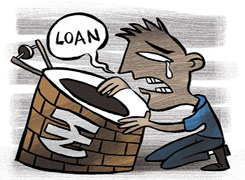
Dear All, My age is 27 and I have a Job, however I am in debt which are going out of control. I reached my friends relatives to have some help for short period of time so that I can settle my loans but no one is coming to support. Banks are not offering debt consolidation loan. I am in dire stress, depression. I can simply loan if just get a debt consolidation loan but nothing available. Please suggest any way out of it. It is runing my life.
Ans: Being in debt can be overwhelming. A focused approach is essential to manage it effectively. Your determination to resolve the issue is commendable and is a solid first step.

Analyse Current Debts and Prioritise Payments

The first step is listing all current debts, including amounts, interest rates, and deadlines. This will help you get a clear picture of which debts need immediate attention.

List Debt by Interest Rates: Rank each loan or credit card by interest rate. Tackling high-interest debts first often saves more in the long run.

Focus on High-Interest Loans First: Prioritise high-interest loans, as they increase the debt burden more rapidly. Paying these off first can significantly reduce monthly interest costs.

Create a Realistic Repayment Plan

Having a clear, simple repayment plan eases financial stress. This plan can be aligned with your monthly income to manage cash flow efficiently.

Minimum Payments on Lower-Interest Debts: Pay only the minimum amount on low-interest loans while focusing on high-interest ones. This allows you to pay off critical debts faster without defaulting.

Consider a Fixed Payment System: Establish a regular, fixed payment that goes toward debt repayment. Over time, this system builds a routine and reduces total outstanding amounts.

Explore Alternative Income Sources

Increasing income during this period will help pay off debt faster and relieve financial strain. Small side-income activities can make a big difference over time.

Part-Time Work Options: Consider freelance or part-time opportunities that align with your skills. The additional income can go directly toward debt repayment.

Skill-Based Gigs or Online Work: Simple tasks like tutoring, content creation, or technical support can provide extra income without needing significant time investment.

Seek Non-Bank Loan Alternatives

Banks may deny consolidation loans, but other avenues could still offer help. Being cautious while evaluating options is essential to avoid any risk of high interest or hidden charges.

Speak with Credit Unions or Cooperatives: Credit unions or cooperative societies sometimes offer low-interest loans to members. These loans are more flexible and come with manageable terms.

Employer Advances: Check if your employer offers salary advances. Some companies have policies for interest-free loans to help employees in financial distress.

Debt Management with Financial Counsellors

If you’re feeling stuck, certified financial planners can guide you through debt management strategies. Working with a professional offers personalised solutions and often relieves stress.

Certified Financial Planners: Professionals can review your debt, income, and expenses to create a practical and sustainable plan. They also provide accountability, which can be encouraging.

Credit Counsellors: Credit counselling agencies help negotiate lower payments with creditors. They also offer structured payment plans, making it easier to handle debts without any new loans.

Develop a Spending Control System

Spending control can prevent the debt from rising further. Limiting unnecessary expenses will maximise funds available for debt repayment.

Basic Budget: Track expenses and avoid discretionary spending for now. Aim to limit spending to essentials until debts are under control.

Use Cash for Daily Expenses: Avoid credit card use for daily expenses. Paying with cash can curb spending habits and reinforce control over money.

Explore Peer-to-Peer Lending Options Carefully

Peer-to-peer lending (P2P) can be an alternative for small loans. However, these platforms charge high-interest rates, so use this option only after carefully reviewing all terms.

Low Principal Loans: If necessary, choose a minimal loan that can assist in paying off a specific debt. Ensure repayment within a short period to avoid a long-term commitment.

Avoid Long-Term Debt Cycles: High-interest P2P loans can lead to a cycle of debt. Use only for short-term needs and focus on paying off as quickly as possible.

Build a Positive Mindset

Debt can take a mental toll. Practising stress relief activities can help manage anxiety, allowing you to focus on repayment goals with a clearer mind.

Physical Activity and Breathing Exercises: Regular exercise and deep breathing exercises help reduce stress, making it easier to stay focused.

Reward Small Achievements: Celebrate small milestones, such as paying off a credit card or reducing a loan amount. Recognising progress keeps motivation high.

Consider Family Support Without Monetary Aid

Though family members may not offer direct financial support, they may assist in other ways, like providing emotional support or covering minor expenses temporarily.

Discussing Financial Strategies: Talk to family members about your goals. Emotional support helps alleviate stress and allows a more focused approach.

Temporary Shelter or Shared Resources: If feasible, moving in with family for a while or sharing resources can help reduce rent and other monthly costs.

Final Insights

Facing debt is tough, but with a structured approach, it is manageable. Focus on each step, be patient, and progress will come. Debt freedom is achievable with discipline and careful planning.

Best Regards,

K. Ramalingam, MBA, CFP,

Chief Financial Planner,

www.holisticinvestment.in
https://www.youtube.com/@HolisticInvestment

..Read more

Ramalingam

Ramalingam Kalirajan  |10872 Answers  |Ask -

Mutual Funds, Financial Planning Expert - Answered on Jun 02, 2025

Asked by Anonymous - May 18, 2025Hindi
Money
Hello. I have a debt problem. I have a house loan emi of 54000 and top up loan emi 10000. Additionally my other debt is 20 lakh with total emi of 110000. I am unable to get debt consolidation loan due to liabilities. My monthly salary is 113000. Please suggest.
Ans: You’ve taken the first right step by asking for help.
You are under a very high debt burden.

Your monthly salary is Rs. 1,13,000.

But your monthly EMIs total Rs. 1,10,000.

You are left with only Rs. 3,000 each month.

This is financially risky.

You are walking on a financial knife’s edge.

Now let’s look at this from a full 360-degree view.

Current Debt Assessment

Home loan EMI is Rs. 54,000.

Top-up loan EMI is Rs. 10,000.

Other loans total Rs. 20 lakh. EMI is Rs. 46,000.

Total EMI burden is Rs. 1,10,000 per month.

Salary is Rs. 1,13,000. Surplus is only Rs. 3,000.

Debt-to-income ratio is extremely high. Over 95%.

Your credit score may already be affected.

Debt consolidation loans are not available.

You are financially stuck. But not helpless.

Cash Flow Analysis

Your expenses are locked due to EMIs.

You are unable to save or invest anything.

Emergency fund is likely nil or very low.

Any job loss or health issue may push you into default.

Financial stress is silently growing each month.

You may feel emotionally drained. That’s understandable.

Let us now look at a practical and detailed solution.

Step 1: Create a Simple Household Budget

List your fixed and essential monthly expenses.

Cut all non-essential expenses like dining out, OTT, travel.

Stop all discretionary spends immediately.

Share your plan with your family. Seek their support.

Keep your basic needs within Rs. 15,000 if possible.

This can free some small cash flow.

Step 2: Review Your Loan Types

Home loan is secured. Try not to default on this.

Top-up loan may also be secured.

Other Rs. 20 lakh debt is likely personal loans or credit card dues.

These usually carry high interest. 18% to 36%.

You must focus on reducing these debts first.

Step 3: Approach Existing Lenders for Restructuring

Visit the banks or NBFCs of your personal loans.

Request loan tenure extension to reduce EMI.

Seek temporary moratorium or EMI pause, if allowed.

Convert credit card dues to EMI-based loans if not already done.

Explain your situation with documents.

Many lenders offer hardship relief plans.

Step 4: Consider Liquidating Idle Assets

Do you have any unused gold jewellery?

Gold can be pledged with banks for lower interest.

Use that to prepay high interest loans.

Avoid gold loans from NBFCs or pawnbrokers.

If you have any old fixed deposits, use them wisely.

But don’t break emergency funds below Rs. 50,000.

Step 5: Explore Support From Family

Speak to close family members for interest-free support.

Avoid embarrassment. Be honest and transparent.

Even Rs. 1 lakh from 2-3 members helps greatly.

Use that money to prepay high EMI loans first.

Make a clear written repayment plan for family loans.

Step 6: Prioritise Loan Repayments

Pay home loan and secured loans on time.

Delay or pay minimum for high-cost loans temporarily.

Focus on clearing smaller loans first.

Use the debt avalanche or snowball method.

Every cleared loan will reduce pressure quickly.

Step 7: Start a Monthly Expense Tracker

Write every expense daily in a diary.

This builds spending awareness.

Most people spend blindly and get into trouble.

Once you track, control becomes easier.

Use basic apps or paper diary – anything that works.

Step 8: Increase Income Streams

Consider part-time weekend freelancing or teaching.

Rent out a room or vehicle if possible.

Explore online micro tasks.

Any extra Rs. 5,000–10,000 per month helps a lot.

Ask your spouse if she can also support for a few months.

Step 9: Avoid New Loans or Balance Transfers

Do not apply for new loans now.

Every new loan reduces your credit score further.

Balance transfers look attractive but may have hidden costs.

Focus on repaying existing loans only.

Don’t fall for quick fix online ads for loans.

Step 10: Rebuild Your Financial Foundation Slowly

Once you clear 2-3 EMIs, keep Rs. 5,000 as monthly savings.

Build Rs. 1 lakh emergency fund over one year.

Then start SIPs in regular mutual funds through MFDs.

Avoid direct mutual funds now.

Direct plans have no advisor support.

Regular plans with MFD give guidance from a Certified Financial Planner.

That support is needed in your situation.

Step 11: Insurance Check and Risk Cover

Check if you have term life insurance of Rs. 50 lakh minimum.

If not, take one after 3–6 months once EMIs reduce.

Medical cover for family is also important.

Without it, one illness can wipe out all progress.

Step 12: Mental Well-being and Stress Management

Don’t suffer silently. Talk to trusted friends.

Join simple meditation or yoga.

Take daily walks. Keep yourself active.

These help your mind stay stable under pressure.

Debt is financial. But it can affect health too.

Step 13: Stay Disciplined for 24 Months

This is not a quick fix. It needs time.

Stay focused for 18 to 24 months.

Each repaid loan gives peace and hope.

Avoid any risky investment schemes.

Avoid crypto, trading, or chit funds.

Don’t mix insurance with investment.

Step 14: Build Habits for the Long Term

After stabilising debt, increase SIPs slowly.

Review finances every quarter.

Take support from a Certified Financial Planner yearly.

Track net worth growth yearly.

Keep liabilities low and assets strong.

Step 15: Talk to a Certified Financial Planner

A CFP can help you structure a realistic repayment plan.

They offer 360-degree financial planning, not product selling.

They also keep you accountable.

Make it a goal to be debt-free in 3 years.

Finally

You are facing a tough situation. But not a hopeless one.

Your courage to share shows strength.

You must act now. Delay will worsen things.

Avoid shortcuts and stick to the right steps.

Each month you move forward is progress.

And financial freedom will be yours, step by step.

Best Regards,

K. Ramalingam, MBA, CFP,

Chief Financial Planner,

www.holisticinvestment.in
https://www.youtube.com/@HolisticInvestment

..Read more

Ramalingam

Ramalingam Kalirajan  |10872 Answers  |Ask -

Mutual Funds, Financial Planning Expert - Answered on Jul 10, 2025
Asked by Anonymous - Jul 09, 2025Hindi
Money
Hi I have 8 Lakhs Personal Loan and 18 Lakhs in Credit Card debts. I trusted a debt consolidation agency and they cheated me. Now I became defaulter on all my loans. I am not able understand how can I get out of this. I have mothnly salary of 1.2 Lakhs , Still not able to manage the finances.Now the banks are continuously calling and thretening my relatives and friends. I dont know how to manage this. Can you suggest any method I can follow to come out this situation.
Ans: I truly appreciate your courage to ask for help. Let’s go step-by-step and see how we can rebuild your financial life completely.

Understand the Real Problem

– Total debt is Rs.26 lakhs (Rs.8 lakh personal loan + Rs.18 lakh credit card debt)
– Your salary is Rs.1.2 lakh monthly
– You trusted a wrong debt consolidation agency
– Now, you have defaulted on loans
– Lenders are calling and even troubling your family

This is serious. But you can come out of it. It needs planning and full commitment.

Immediate Financial Reality Check

– You have no savings now
– Your credit score must be very low now
– Legal notices or collection threats may already be coming
– Credit card interest is usually over 36% annually
– Personal loan rates can be 12–18% per year
– This creates a debt trap quickly

Your monthly salary is Rs.1.2 lakh.
But loan repayments + living expenses are more than this.
That’s why things are spiralling out of control.
You need a 360-degree recovery strategy now.

Don’t Panic – Start Taking Back Control

– Stop taking any more loans from friends or apps
– Avoid thinking emotionally now
– Focus on logic and step-by-step action
– Speak to your family honestly and ask for moral support
– Don’t hide from the banks – face the issue
– Ignoring banks makes things worse
– You must take initiative before legal action starts

It’s important to take the first step today.

List and Prioritise All Your Debts

Make a simple list:

– Bank Name
– Type (credit card or personal loan)
– Amount outstanding
– EMI or minimum due
– Interest rate

This will give a full picture.
From this, we can decide what to handle first.
Generally, credit cards must be handled first due to high interest.

Talk to Banks – Not Collection Agents

– Avoid speaking with collection agents
– They have no power to restructure or settle
– Always ask to speak directly with the bank's recovery or settlement department
– Go to the bank branch directly if needed
– Explain your full situation truthfully
– Ask for a restructuring or settlement offer

They may give:

– Longer repayment period
– Lower EMI
– Part payment settlement
– Interest waiver if paid in lump sum

You must document every discussion in writing.
Never agree to anything on just phone calls.

Debt Restructuring Can Help

If you approach the banks professionally:

– You may get a structured EMI plan
– Or even a one-time settlement offer
– This stops further harassment calls
– This shows your intention to repay
– Banks are more supportive to honest borrowers

You may need to submit:

– Salary slips
– Bank statements
– Employment letter
– Budget plan

If you show your full income and expense chart, they will listen better.

Avoid Third Party Agents or Fake Companies

– Do not trust unknown debt settlement companies again
– Many such agencies are not registered or legal
– They charge upfront but never help
– Some even misuse your data
– Always approach banks directly

Never give legal power or authority to third-party consultants without checking.

Make a Realistic Monthly Budget

Your monthly income is Rs.1.2 lakh.
Let’s try to break this:

– Basic household expenses: Rs.35,000 (rent, food, utility)
– EMI and credit repayment: To be negotiated
– Transportation: Rs.5,000
– Communication and essentials: Rs.3,000
– Emergency fund: Rs.2,000 (even if small)

Try to cut down every possible luxury.
Cancel subscriptions, avoid dining out, no shopping unless urgent.
Live very simply for next 2 years.
Use every extra rupee to repay debt.

Start Emergency Fund – Even Small Helps

Even Rs.2,000–3,000 per month can help.
Keep this in a separate savings account.
Never touch this for EMI or loans.
This will help handle surprise expenses.
If you touch credit card again, your recovery will be delayed.

Debt Avalanche or Debt Snowball Strategy

Choose one method to repay debt:

– Debt Avalanche: Pay highest interest rate debt first
– Debt Snowball: Pay smallest balance first, then next one

Both methods work.
Pick the one that gives mental peace and shows early progress.
You must feel like you are winning each month.

Try for Support from Employer (if possible)

– Some companies offer employee salary advance
– Or low-interest personal loans
– If this is available, check with HR or accounts team
– Repayments can be deducted monthly from salary
– Better than credit card interest

But only borrow if terms are clear and documented.

Avoid Credit Card Usage for Now

– Stop using credit cards immediately
– Deactivate auto-debit features
– Cut physical cards if needed
– Don’t take new cards to repay old ones
– This is a loop that never ends

Use only debit cards or cash for next 2 years.

Understand Legal Rights – Don’t Get Scared by Threats

– Bank can file legal case, but it takes time
– They cannot harass your family or friends
– Police cannot arrest you for civil loan defaults
– Only court can order any legal action
– Record all calls and messages
– File police complaint if anyone uses abusive language

Stand firm but be polite.
Show willingness to repay, but not fear.

Don’t Fall for Loan Apps or Instant Credit Promises

Many fake loan apps exist.
They offer fast credit but collect huge interest.
They harass customers if you delay.
Never borrow from unknown apps or online platforms again.
Keep your data and contacts safe.

Impact on Credit Score – Accept and Plan Forward

Yes, your credit score is damaged.
But it is not permanent.
With regular EMI payments and settlements, it improves.
Focus on building repayment history from now.

Credit score recovery takes 18–24 months.
Be patient and keep consistency.

No Mutual Fund Investment Now – Focus on Debt Clearance

At this stage, don't invest in mutual funds.
Even though they are powerful tools, wait till debts are clear.
Once your EMIs are under control, start investing monthly.
But only via regular plans through a Certified Financial Planner.

Avoid direct mutual funds.
Direct funds offer no support or customisation.
If you don’t manage properly, you may face more losses.
Regular funds via CFP give you:

– Clear goals
– Tax planning
– Risk-adjusted returns
– Professional fund choices
– Portfolio reviews

This will build long-term wealth safely.

Final Insights

– You are going through a tough phase
– But it’s fully recoverable with clear action
– Be disciplined, honest and patient
– Talk to banks directly, not agents
– Make repayment plan and follow it strictly
– Cut lifestyle to basic needs for next 2 years
– Don’t borrow more to cover old debt
– Never trust any third-party debt agent again
– Focus on future, not fear

Your future can be secure and strong.
You have the income. You need the plan.

Stay focused. You will bounce back soon.

Best Regards,
K. Ramalingam, MBA, CFP,
Chief Financial Planner,
www.holisticinvestment.in
https://www.youtube.com/@HolisticInvestment

..Read more

Latest Questions
Ramalingam

Ramalingam Kalirajan  |10872 Answers  |Ask -

Mutual Funds, Financial Planning Expert - Answered on Dec 06, 2025

Asked by Anonymous - Dec 06, 2025Hindi
Money
Dear Sir/Ma'am, I need some guidance and advice for continuing my mutual fund investments. I am a 36 year old male, married, no kids yet and no debts/liabilities as such. I have couple of savings in PPF, NPS, Emergency funds and long term investing in direct stocks. I recently started below mentioned SIPs for long term to grow wealth. Request you to review the same and let me know if I should continue with the SIPs or need to rationalize. Kindly also advice on how to invest a lumpsum amount of around 6lacs. invesco small cap 2000 motilal oswal midcap 2700 parag parikh flexicap 3000 HDFC flexicap 3100 ICICI prudential largecap 3100 HDFC large and midcap 3100 HDFC gold etf FOF 2000 ICICI Pru equity and debt fund 3000 HDFC balanced advantage fund 3000 nippon india silver etf FOF 2000
Ans: You already built a solid foundation. Many investors delay planning. But you started early at 36. That gives you a strong advantage. You have no liabilities. You have long term thinking. You also have diversified savings like PPF, NPS, Emergency funds and direct stocks. That shows clarity and discipline. This approach builds wealth with less stress over time.

You also started systematic investments in equity funds. That is a positive step. Your selection covers multiple categories like large cap, mid cap, small cap, flexi cap, hybrid and precious metals. So the intent is right. You are trying to create a broad portfolio. That gives balance.

» Your Portfolio Composition Understanding
Your current SIP list includes:

Small cap

Mid cap

Flexi cap

Large cap

Large and mid cap

Hybrid category

Gold and Silver FoF

Equity and Debt allocation fund

Dynamic hybrid fund

This shows you are trying to cover many segments. But too many categories can create overlap. When there is overlap, you get confusion during review. It also makes portfolio discipline difficult. You may think you are diversified. But the holdings inside may repeat. That reduces efficiency.

Your portfolio now looks like:

Equity dominant

Hybrid for stability

Metals for hedge

So the broad direction is fine. But simplifying helps in long-term habit building.

» Fund Category Duplication
You hold:

Two flexi cap funds

One large and mid cap fund

One pure large cap fund

One mid cap fund

One small cap fund

Flexi cap funds already invest across large, mid, small. Then large and mid also overlaps. So the large cap exposure gets repeated. That may not add extra benefit. But it increases monitoring complexity.

So I suggest rationalising. Keep one fund per category in core. Keep satellite space for only high conviction.

» Core and Satellite Strategy
A structured portfolio follows core and satellite method.

Core portfolio should be:

Simple

Long term

Stable

Satellite portfolio can be:

High growth

Concentrated

Based on your thinking level, you can structure like this:

Core funds:

One large cap

One flexi cap

One hybrid equity and debt fund

One balanced advantage type fund

Satellite funds:

One mid cap

One small cap

One metal allocation if needed

This division gives clarity. You can continue SIPs with review every year. No need to stop and restart often. That reduces behavioural mistakes.

» Your Current SIP List Review with Suggested Streamlining

You can consider continuing:

One flexi cap

One large cap

One mid cap

One small cap

One balanced advantage

One equity and debt hybrid

You may reconsider keeping both flexi caps and both gold silver funds. One of each category is enough. Because too many funds do not increase returns. It complicates tracking.

Precious metal funds should not be more than 5 to 7 percent in your portfolio. This is because metals are hedge assets. They do not create compounding like equity. They act as protection during cycles. So keep them small.

» How to Use the Rs 6 Lakh Lump Sum
You asked about lump sum investing. This is important. Lump sum should not go fully into equity at one time. Markets move in cycles. So use a staggered method. You can invest the lump sum through STP (Systematic Transfer Plan). You can keep the amount in a liquid fund and set STP toward your chosen growth funds over 6 to 12 months.

This reduces timing risk. It also creates discipline. So your Rs 6 lakh can be deployed gradually. You may use 50% towards core equity funds and 30% toward satellite growth category. The remaining 20% can go into hybrid category. This gives balance and comfort.

» Regular Funds Over Direct Funds
One important point many investors miss. Direct funds look cheaper. But they demand deep knowledge, discipline, and behaviour control. Most investors lose more through emotional selling and wrong timing than they save on expense ratio.

With regular funds through a Mutual Fund Distributor with Certified Financial Planner qualification, you get guidance, structure and correction. The advisory discipline protects you during market extremes. That is more valuable than a small saving in expense ratio.

A personalised planner also tracks portfolio drift, rebalancing need and category shifts. So regular fund investing gives long-term benefit and behaviour coaching.

» Actively Managed Funds over Index or ETF
Some investors choose index funds or ETF thinking they are simple and cheap. But they ignore drawbacks.

Index funds or ETF will not avoid weak companies in the index. They will invest whether the company grows or struggles. There is no fund manager decision making. So when markets are at peak, index funds continue aggressive exposure. In downturns also they fall fully. There is no cushion.

Actively managed funds work with research teams. They can avoid bad sectors. They can shift allocation based on market and economy. Over long term, this gives better alpha and stability. So continuing with actively managed funds creates better wealth compounding.

» SIP Continuation Strategy
Once the rationalisation is done, continue SIPs every month without interruption. Pause and restart behaviour damages compounding power. SIP works best when you go through all market cycles. You benefit more during corrections because cost averaging works.

So continue SIP amount. You can also review SIP increase every year based on income. Increasing SIP by 10 to 15 percent every year helps you reach large corpus faster.

» Asset Allocation Based Approach
One key point in wealth creation is having the right asset mix. Equity gives growth. Hybrid gives balance. Metals give hedge. Debt gives safety. Your asset allocation should stay aligned to your risk profile and time horizon.

Since you are young and have long term horizon, higher equity allocation is fine. But as time moves, rebalancing is important. Rebalancing protects gains and restores allocation.

So review your asset allocation every year or during major life events like child birth, home buying or retirement planning.

» Behaviour Management
Many portfolios fail not due to bad funds. They fail due to bad decisions. Selling during correction. Stopping SIP when market falls. Chasing past return performance. These mistakes reduce wealth.

Your discipline so far is good. Continue to stay patient during volatility. Equity rewards patience and time.

» Financial Goals Clarity
Since you have no children now, you can decide your long-term goals. Typical goals may include:

Retirement

Future child education

Dream lifestyle purchase

Health care reserves

When goals are clear, investment purpose becomes stronger. So you can map each fund category to goal horizon. Short-term goals should not use equity. Long-term goals should use equity with hybrid support.

» Role of Review and Monitoring
Review once in a year is enough. Frequent review can create anxiety. Annual review helps check:

Fund performance

Expense drift

Category relevance

Allocation balance

Then adjust only if needed. This progress helps you stay confident and aligned.

» Taxation Awareness
Equity mutual funds taxation rules are:

Short term (below one year holding) taxable at 20 percent

Long term (above one year holding) gains above Rs 1.25 lakh taxable at 12.5 percent

Debt mutual funds are taxed as per your income slab.

So always hold equity funds for long term. That reduces tax impact and gives better growth.

» SIP Increase Plan
You can create a simple plan to increase SIP over time. For example:

Increase SIP at every salary increment

Increase SIP during bonus time

Use rewards or extra income for investing

This habit accelerates wealth. So by the time you reach 45 to 50 years, your investments could reach a strong level.

» Insurance and Protection
Before investing large, ensure you have term insurance and health insurance. If not already done, it is important. Insurance protects wealth. Without insurance, even a small medical event can impact investment plan. So review this part also. Since you are married, cover both.

» Wealth Behaviour Mindset
You are already disciplined. Just keep these simple principles:

Invest without stopping

Review once a year

Avoid funds overlap

Follow asset allocation

Avoid reacting to media noise

This helps you reach long term milestones.

» Finally
You are on the right track. Only fine tuning and simplification is needed. Your discipline is visible. Your portfolio will grow well with structure, patience and periodic review. Use the Rs 6 lakh with STP approach. And continue SIP with rationalised categories.

With time and consistency, wealth creation becomes effortless and peaceful. You just need to stay committed and avoid overthinking during market movements.

Best Regards,
K. Ramalingam, MBA, CFP,

Chief Financial Planner,

www.holisticinvestment.in

https://www.youtube.com/@HolisticInvestment

...Read more

Dr Dipankar

Dr Dipankar Dutta  |1837 Answers  |Ask -

Tech Careers and Skill Development Expert - Answered on Dec 05, 2025

Career
Dear Sir, I did my BTech from a normal engineering college not very famous. The teaching was not great and hence i did not study well. I tried my best to learn coding including all the technologies like html,css,javascript,react js,dba,php because i wanted to be a web developer But nothing seem to enter my head except html and css. I don't understand a language which has more complexities. Is it because of my lack of experience or not devoting enough time. I am not sure. I did many courses online and tried to do diplomas also abroad which i passed somehow. I recently joined android development course because i like apps but the teaching was so fast that i could not memorize anything. There was no time to even take notes down. During the course i did assignments and understood the code because i have to pass but after the course is over i tend to forget everything. I attempted a lot of interviews. Some of them i even got but could not perform well so they let me go. Now due to the AI booming and job markets in a bad shape i am re-thinking whether to keep studying or whether its just time waste. Since 3 years i am doing labour type of jobs which does not yield anything to me for survival and to pay my expenses. I have the quest to learn everything but as soon as i sit in front of the computer i listen to music or read something else. What should i do to stay more focused? What should i do to make myself believe confident. Is there still scope of IT in todays world? Kindly advise.
Ans: Your story does not show failure.
It shows persistence, effort, and desire to improve.

Most people give up.
You didn’t.
That means you will succeed — but with the right method, not the old one.

...Read more

DISCLAIMER: The content of this post by the expert is the personal view of the rediffGURU. Investment in securities market are subject to market risks. Read all the related document carefully before investing. The securities quoted are for illustration only and are not recommendatory. Users are advised to pursue the information provided by the rediffGURU only as a source of information and as a point of reference and to rely on their own judgement when making a decision. RediffGURUS is an intermediary as per India's Information Technology Act.

Close  

You haven't logged in yet. To ask a question, Please Log in below
Login

A verification OTP will be sent to this
Mobile Number / Email

Enter OTP
A 6 digit code has been sent to

Resend OTP in120seconds

Dear User, You have not registered yet. Please register by filling the fields below to get expert answers from our Gurus
Sign up

By signing up, you agree to our
Terms & Conditions and Privacy Policy

Already have an account?

Enter OTP
A 6 digit code has been sent to Mobile

Resend OTP in120seconds

x