Home > Money > Question
Need Expert Advice?Our Gurus Can Help

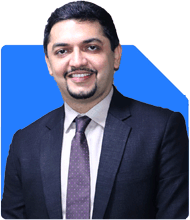
Ramalingam

Ramalingam Kalirajan  |10872 Answers  |Ask -

Mutual Funds, Financial Planning Expert - Answered on Sep 29, 2025

Ramalingam Kalirajan has over 23 years of experience in mutual funds and financial planning.
He has an MBA in finance from the University of Madras and is a certified financial planner.
He is the director and chief financial planner at Holistic Investment, a Chennai-based firm that offers financial planning and wealth management advice.... more
Asked by Anonymous - Sep 29, 2025Hindi

Money

I am 32 year old and my in hand salary is around 1.5 lacs per month with wife (32 yrs) and 1 year old son. I don't have EMI as of now because i live in joint family but I have responsibilty to take care of house hold expesne in which I spend around 65k-70k per months including my existing SIP (10k per month), term plan of 1.5 cr (1800 per month) and remaning amout I keep in saving account. Till now, i have saving of around 32 lacs. my company deduct 16k from my CTC for PF and current pf balance is around 6 lacs. Recently I have opened saving account in IDFC bank so that i can transfer my savings in this account to earn interest upto 7%. My current investment as below since last 3 months. 1. Parag parekh flexi cap fund - 5k 2. HDFC flexi cap fund - 5k I was investing 5K per month in ELSS fund as well since last 6 years (current value is 4.8 lacs) but i have stopped it 3 months ago due to new tax regime and tax deduction in this current finacial year. I am planning to start manage my money in better way and also planning to start investing another 20-30k per month but i am thinking to invest 5k in small cap and other 5k in mid cap mutual fund but very confused for investment. I am also planning to buy house in future may be after 4-5 years. Please suggest me best investment options and also suggest me to manage my money (which i keep in saving account) in better way.

Ans: You are already doing well. At 32 years, you earn steady income. You save responsibly. You have built Rs.32 lakh savings and Rs.6 lakh PF. You also run SIPs, term cover, and manage expenses well. This shows good discipline and maturity. With careful planning, you can grow wealth faster and also secure family future.

» Household Cash Flow and Surplus
– Your income is Rs.1.5 lakh monthly.
– Household spending is Rs.65k to Rs.70k.
– You contribute Rs.10k SIP and Rs.1800 for term plan.
– That leaves you with good surplus every month.
– Right now, most surplus sits idle in savings account.
– You plan to invest Rs.20k to Rs.30k more.
– This is a healthy stage for structured planning.

» Existing Portfolio Assessment
– You already invest in two flexi cap funds.
– Both are diversified equity funds.
– This brings balance across market caps.
– You also invested earlier in ELSS.
– ELSS is stopped due to new regime.
– Current ELSS value is Rs.4.8 lakh.
– This can remain invested for long term.
– Your PF is growing every month.
– Your savings account now earns 7% with IDFC.
– While better than normal banks, still not inflation-beating.

» Role of Emergency Fund
– Keep at least 6 to 9 months of expense liquid.
– That means around Rs.5 lakh to Rs.6 lakh.
– This must stay in bank savings or liquid mutual fund.
– Do not put emergency fund into risky assets.
– It must be accessible at any time.

» Insurance Coverage Review
– You already hold Rs.1.5 crore term insurance.
– For your income, slightly higher cover is better.
– Cover should be 15 to 20 times of annual income.
– Your current cover is less than ideal.
– Increase cover to at least Rs.2.5 crore gradually.
– Do not mix insurance with investment products.
– Take pure term cover only.
– Ensure health insurance for family.
– Personal health policy is important even if employer covers.

» Short Term Goals: House Purchase in 4-5 Years
– You plan to buy house in 4 to 5 years.
– This is medium-term goal.
– Money for this goal cannot go fully into equity.
– Equities are volatile in short horizon.
– For house fund, use debt and hybrid mutual funds.
– Keep majority in debt, with small equity for growth.
– This protects capital while giving moderate returns.
– Allocate savings monthly towards this house goal.
– Label the investment separately for discipline.

» Long Term Goals: Child Education and Retirement
– Your son is 1 year old now.
– Education goal will come after 15 to 17 years.
– This is a long horizon goal.
– Retirement is even further, 25+ years away.
– For long term, equity mutual funds work best.
– Flexi cap, large & midcap, and dedicated mid cap funds fit well.
– Small cap exposure can be considered in small proportion.
– Do not over-allocate to small cap. Limit to 10% of equity portfolio.
– For retirement, build a systematic SIP program.
– This creates large compounding effect.

» Surplus Allocation Strategy
– You want to start Rs.20k to Rs.30k more every month.
– Split this into multiple goals.
– Around Rs.10k to house goal (in debt/hybrid).
– Around Rs.15k to Rs.20k into equity for education and retirement.
– Within equity, spread across flexi cap, mid cap, and small cap.
– Flexi cap offers balanced diversification.
– Mid cap adds growth potential with moderate risk.
– Small cap adds aggression but only in small dose.
– This mix gives stability and growth.

» Idle Savings Deployment
– You now keep large amount in savings account.
– While IDFC gives 7%, it is still taxable.
– You can channel a part into short duration debt mutual funds.
– These funds are low risk and better tax adjusted.
– Keep only emergency fund in savings account.
– Rest surplus should be invested as per goals.
– This ensures money works harder for you.

» View on Index Funds vs Active Funds
– You did not invest in index funds.
– But many consider them cheap option.
– Index funds only mirror index, no active decision.
– They do not protect in falling markets.
– Returns are fully dependent on market direction.
– Actively managed funds use professional fund manager.
– They can shift between sectors and market caps.
– They can control risk better than passive funds.
– For Indian investors, active funds provide more value.
– Continue with actively managed funds only.

» Direct Funds vs Regular Funds
– Some investors prefer direct funds for low expense.
– But direct funds miss professional guidance.
– Without expert, wrong choices can harm returns.
– With regular funds through a Certified Financial Planner,
you get ongoing monitoring, rebalancing, and discipline.
– This service cost is small compared to avoided mistakes.
– Since goals are long and important, guidance is valuable.

» Taxation Awareness on Mutual Funds
– New rules apply on capital gains.
– For equity funds, gains held over 1 year are long-term.
– LTCG above Rs.1.25 lakh is taxed at 12.5%.
– STCG is taxed at 20%.
– For debt funds, all gains are taxed at slab rate.
– Always plan redemptions with tax efficiency in mind.
– SIPs held long term give best tax efficiency.
– Avoid frequent selling to reduce tax impact.

» Behavioural Discipline in Investing
– Markets will fluctuate with time.
– Do not react emotionally to ups and downs.
– Stick to SIPs during both uptrend and downtrend.
– Continuity builds real wealth over decades.
– Avoid chasing latest hot fund or sector.
– Avoid stopping SIPs in panic times.
– Review portfolio yearly with Certified Financial Planner.
– This keeps plan aligned to goals.

» Role of PF in Retirement
– Your PF contribution of Rs.16k monthly is good.
– PF gives safe and stable compounding.
– This forms debt portion of retirement plan.
– Do not withdraw PF unless emergency.
– Over long term, PF plus equity portfolio will secure retirement.

» Child Education Corpus Planning
– Education inflation is very high in India.
– Fees double every 6 to 8 years.
– To meet this, strong equity allocation is essential.
– SIPs in diversified equity funds will help.
– Add more SIPs as income grows.
– Keep goal-specific investments labelled for child.
– This avoids mixing with other expenses.

» House Purchase Strategy in Detail
– Buying house after 4-5 years requires clarity.
– Check approximate budget for house.
– Estimate down payment needed.
– Target saving that amount over 5 years.
– Invest monthly into debt/hybrid funds.
– Avoid putting house fund fully in equities.
– Else market crash can delay goal.
– If house goal changes, funds can be reallocated.

» Retirement Planning Direction
– Retirement is distant but needs early start.
– Invest monthly into equity funds with long horizon.
– PF plus SIPs will create large corpus.
– As you age, shift part to debt gradually.
– This protects capital closer to retirement.
– Keep retirement funds separate from other goals.

» Money Management Practices
– Track all expenses monthly.
– Increase SIP amount every year by 10%.
– Automate investments to avoid delays.
– Keep insurance premiums always paid on time.
– Keep nominees updated in all accounts.
– Avoid frequent switching of funds.
– Keep at least once-a-year review of portfolio.
– Avoid lump sum in equities at one time.
– Always link investments to goals.

» Finally
You have already built a strong base at 32. With clear surplus and no EMI, you can now shape wealth faster. Keep emergency funds liquid. Increase term cover for full safety. Build house fund in safer assets. Run disciplined SIPs in equity for education and retirement. Avoid idle cash in savings account beyond emergency. Stick to active funds through Certified Financial Planner. Over years, this disciplined mix will create both safety and prosperity for your family.

Best Regards,

K. Ramalingam, MBA, CFP,

Chief Financial Planner,

www.holisticinvestment.in

https://www.youtube.com/@HolisticInvestment
DISCLAIMER: The content of this post by the expert is the personal view of the rediffGURU. Users are advised to pursue the information provided by the rediffGURU only as a source of information to be as a point of reference and to rely on their own judgement when making a decision.
Money

You may like to see similar questions and answers below

Ramalingam

Ramalingam Kalirajan  |10872 Answers  |Ask -

Mutual Funds, Financial Planning Expert - Answered on Jun 14, 2025

Asked by Anonymous - Jun 13, 2025
Money
Hi, I am 39 years. My monthly salary is 94000 and I am investing in MF since 2016. I started my SIP with Rs. 8000 per month and presently my monthly SIP contribution is 36000. My present MF Corpus is 35 lacs (XIRR: 18.20). I am monthly invested in following funds at present: SBI Contra Fund: 5000 SBI Small Cap Fund: 6000 SBI Large and Mid Cap: 6000 Parag Parekh Flexi Cap: 5000 ICICI Blue Chip: 4000 Quant Small Cap: 3000 Nippon India Growth: 3000 Nippon India Multi Cap: 4000 My investment in small cap is high as I will be invested for next 15 years. I have my wife and two child aged 7 and 1. I have term plan of 1.5 crs. I also have emergency fund in FD for 6 lacs. Are the savings sufficient to cover my child expenses when they grow up and for my retirement? I am a PSU employee and I have statutory deductions like PF and NPS and my PF balance is 14 lacs and NPS balance is 29 lacs as on date. Presently I have no loans but planning a House purchase for 80 lacs (Margin: 10 lacs). Is it advisable to take loan for House and continue my SIP although my monthly SIP will decrease if I avail loan or shall I reduce loan amount and pay upfront higher amount/margin from my MF/ other savings to purchase house. And any suggestions from your side for funds in which I am investing to add or remove as I have XIRR of above 15% in all the funds I have invested till now. Till 60 years I will be getting leased accomodation from my employer but at the place of posting and we are mostly posted in Tier 2/3 cities or rural places. but I want to purchase a flat in State capital for better future prospect of my children. Our medical needs are taken care by my organization and I don't need to incur any expenses on that front.
Ans: Your dedication toward financial planning is impressive. Let us now take a complete 360-degree look at your current situation and future planning.

Comprehensive Financial Assessment
You are 39 years old with monthly salary of Rs.?94,000.

You have been investing consistently in mutual funds since 2016.

Your SIP began at Rs.?8,000 per month, now reaching Rs.?36,000.

Your mutual fund corpus is Rs.?35?lakhs, delivering XIRR of 18.20%.

You hold seven equity mutual fund schemes across large cap, small cap, flexi cap, and multi cap categories.

You maintain an emergency fund of Rs.?6?lakhs in fixed deposits.

You have term insurance coverage of Rs.?1.5?crore.

You are a PSU employee with PF of Rs.?14?lakhs and NPS of Rs.?29?lakhs.

You plan to buy a house worth Rs.?80?lakhs, keeping Rs.?10?lakhs as margin.

Employer provides housing until age 60, and you live in Tier?2 or rural postings.

Medical expenses are already covered by your employer’s scheme.

Your financial foundation is strong. You started early, and your SIP discipline shows excellent planning traits.

Goal Setting and Time Horizon
To build any effective financial strategy, linking money to goals is essential. You have multiple significant life goals:

Home purchase – Buying a flat in the State capital.

Child expenses – Education and possibly marriage funding.

Retirement – Corpus to support your expenses post retirement.

Let’s break these down.

Home Purchase Goal
You want to buy a flat worth Rs.?80?lakhs, using Rs.?10?lakhs margin and a home loan for the rest.

The loan repayment (EMI) must fit your income without disturbing SIPs and lifestyle.

Child-Oriented Goals
Your children are aged 7 and 1.

School, college, marriage expenses will come over 10 to 20 years.

Return on investment must beat education inflation in metros.

Retirement Goal
You plan to retire around age 60.

That leaves 21 more years of working life.

You will have PF, NPS, mutual funds.

Goal is to build sufficient corpus to sustain post-retirement life.

Linking each fund allocation and financial action to these specific goals ensures clarity and purpose.

Cash Flow and EMI Planning
You earn Rs.?94,000 per month. Let’s examine your outflow structure:

Current investment outflow is SIP of Rs.?36,000 monthly.

PF and NPS contributions are statutory and deducted from salary.

Emergency fund is already in place.

No current EMIs or loans.

But EMI will start post house purchase.

To keep financial plan intact, EMI must stay within comfortable limits—preferably under 40–45% of net income. Let us explore two funding strategies for housing:

Option A: Higher Down Payment
Use margin of Rs.?10?lakhs and an additional Rs.?5–10?lakhs from your savings or mutual funds.

Loan amount reduces accordingly.

EMI becomes more manageable.

But you will partly pause or reduce SIP to fund margin.

Option B: Moderate Margin, Higher Loan
Use only Rs.?10?lakhs margin.

Loan amount increases, raising EMI.

You continue SIP at near current levels.

EMI may cover 40–45% of net income.

Balanced Approach (Preferred)
Use margin of Rs.?10?lakhs plus Rs.?5?lakhs if comfortable.

Loan size becomes manageable.

Keep SIP on track by slightly reducing only during loan repayment stress periods.

Once EMI settles, resume or increase SIP.

With careful planning, EMI and SIP can coexist, preserving your mutual fund growth trajectory.

Emergency Fund and Insurance
You have built a strong emergency fund of Rs.?6?lakhs. This covers around six to seven months of expenses. It gives you financial cushion if your salary faces interruptions or loan EMI starts unexpectedly.

Your term insurance coverage of Rs.?1.5?crore is adequate given your dependents and responsibilities. Employer health insurance ensures no major medical spending needed.

Ensure that after taking home loan, the emergency fund stays intact. Do not use this corpus for house margin or EMI. Keeping this buffer is foundational to financial health.

Equity Portfolio Structure and Risk
You currently have seven mutual fund schemes across small, large, flexi, and multi cap categories. Small cap exposure looks particularly high (~30% of equity allocation). This heavy tilt may be appropriate for long-term goals, but bears higher volatility.

Given your time horizon of 15 years for the property and even longer for children’s future and retirement, equity is suitable. But too much small cap exposure may hurt during downturns.

A long-term investor like you can handle volatility, but also needs prudence.

Suggested Equity to Hybrid Mix
Here is a deeper elaboration on fund mix and rationale:

1. Small Cap Funds
These funds invest in smaller, high-growth firms.

They can give strong returns over time.

But they are vulnerable to market drops and liquidity issues.

We suggest keeping small cap allocation around 15–20% of total equity.

2. Large and Mid Cap Funds
Focused on more stable, growing companies.

Less volatile than small cap.

Good for steady compounding.

Weigh this allocation around 25–30%.

3. Flexi Cap and Multi Cap Funds
Provide diversification across all market caps.

Active fund managers adjust allocations.

They help blunt volatility and provide consistency.

A 30–40% allocation here helps control risk.

4. Balanced or Hybrid Funds
Combine equity and debt in single scheme.

Equity portion provides growth, debt cushions against falls.

Highly useful during market corrections.

A 20–30% allocation here adds resilience to your portfolio.

Such a structure keeps your portfolio growth-oriented yet not over-exposed to high-risk segments.

Fund Consolidation
Holding seven equity schemes plus PF and NPS across different categories adds portfolio complexity. Tracking, rebalancing, and performance evaluation become labour-intensive.

Consider reducing fund count by:

Merging two small cap funds if both are of similar mandate.

Evaluating flexi cap and multi cap funds – keep the ones with better consistency.

Ensuring every fund in portfolio serves a distinct purpose.

Keeping 4–5 equity/hybrid funds makes monitoring simpler and more effective.

Review of Direct Funds
You currently invest in direct mutual funds. These have lower expense ratios, which improves returns. Yet, direct funds come with limited guidance, which can be risky without professional oversight.

Limitations:
No regular review aligned with goals

Risk of emotional decision-making in volatility

Rebalancing burdens fall entirely on investor

Harder to get support during investments or exit planning

Benefits of Regular Funds via MFD + CFP:
Access to expert advice and goal-based allocation

Portfolio reviews aligned with life changes

Support during market dips or financial stress

Better discipline in top-ups, rebalance, and redemptions

Transitioning to regular funds managed through a Certified Financial Planner can provide more holistic guidance and oversight. The small extra cost is often justified by better discipline and risk management.

Index Funds and Active Funds
You have not shown interest in index funds or ETFs, which is wise for your strategy. Index funds simply replicate market performance. They lack flexibility and cannot avoid poor performers. They perform poorly during downturns by tracking every stock.

Actively managed funds like those in your portfolio allow skilled managers to adjust allocations, exit weak companies, and take advantage of upside. This makes them superior during volatile market phases and in generating alpha for long-term investors like you.

Children’s Education and Marriage Corpus
Your children are young now, giving you 16–20 years horizon for their education and marriage planning. Your current SIP and corpus are good building blocks. However:

Education inflation in metro cities may reach 10–12% annually.

Early planning through separate goal-based portfolios is wise.

You can start designated SIPs for each child’s education and marriage objective.

Consider increasing SIP amounts when you get salary increments.

Monitor these SIPs periodically with CFP for mid-course corrections.

Goal-based investing helps track progress and stay motivated. It ensures funds are aligned with need timelines.

Retirement Planning
Your PF and NPS corpus already stand at Rs.?14?lakhs and Rs.?29?lakhs. These are sound foundations. Combined with mutual fund corpus and continued SIPs, you appear well on track to build sufficient retirement wealth.

However, periodic review is essential:

PF and NPS have defined contribution limits and investment rules.

Mutual fund SIPs should continue with strategic allocation mix.

Hybrid funds may be increased as retirement nears to reduce volatility.

Annual fund performance and asset drift must be monitored.

With disciplined saving and periodic review, your retirement corpus can meet inflation-adjusted living requirements.

Loan Strategy vs SIP Commitment
Taking a home loan requires balancing EMI burden with SIP commitments. A loan for Rs.?70 lakhs at typical interest rate over 20 years may have EMI of Rs.?55,000.

You should:

Ensure EMI stays within 45% of net salary.

Continue SIPs without full interruption—either maintain current amount or slightly reduce (not pause).

Once home loan EMI reduces over time, resume SIP top-up.

Avoid using mutual fund corpus or emergency funds for down payment.

Balancing EMI and SIP ensures homeownership does not derail your wealth-building process.

Tax Benefits and Implications
You should factor taxation into investment and withdrawal decisions:

Equity Mutual Funds

LTCG above Rs.?1.25?lakhs is taxed at 12.5%.

STCG within one year is taxed at 20%.

Debt Funds

LTCG and STCG taxed as per income tax slab.

Home Loan

Though loan EMI interest is not deductible, the rent saved can be treated as benefit in kind.

Tax planning strategies around home loan prepayment and eligible deductions apply.

Consult your CFP before making exit or redemption decisions. Timing redemptions post 3-year holding period can help reduce tax liabilities on equity gains.

Regular Reviews & Monitoring
Your financial plan needs regular check-ins:

Review portfolio allocation and performance annually.

Rebalance if equity drift exceeds your desired limits (e.g., small cap exposure grows due to market rally).

Adjust SIP amounts aligned with new salary, promotions, or changing goals.

Keep focus on goal completion timelines and required corpus.

During market volatility, maintain disciplined SIP approach.

Such discipline builds long-term wealth and supports your overall goal framework.

Emotional Discipline & Investor Mindset
Your XIRR of 18.20% reflects strong execution. However:

Past performance is not guaranteed for future.

You must stay committed during market leaps and troughs.

Avoid panicking and selling your equity funds during corrections.

Keep focus on long?term plan rather than daily NAV movements.

Patience and discipline are as critical as returns themselves.

Growing wealth in equity is as much about emotional strength as financial strategy.

Step-Wise Action Plan
Let us summarise the steps for clarity:

Finalize home loan and EMI capacity

Evaluate your comfort with EMI covering

..Read more

Ramalingam

Ramalingam Kalirajan  |10872 Answers  |Ask -

Mutual Funds, Financial Planning Expert - Answered on Sep 29, 2025

Asked by Anonymous - Sep 28, 2025Hindi
Money
I am 32 year old and my in hand salary is around 1.5 lacs per month with wife (32 yrs) and 1 year old son. I don't have EMI as of now because i live in joint family but I have responsibilty to take care of house hold expesne in which I spend around 65k-70k per months including my existing SIP (10k per month), term plan of 1.5 cr (1800 per month) and remaning amout I keep in saving account. Till now, i have saving of around 32 lacs. my company deduct 16k from my CTC for PF and current pf balance is around 6 lacs. Recently I have opened saving account in IDFC bank so that i can transfer my savings in this account to earn interest upto 7%. My current investment as below since last 3 months. 1. Parag parekh flexi cap fund - 5k 2. HDFC flexi cap fund - 5k I was investing 5K per month in ELSS fund as well since last 6 years (current value is 4.8 lacs) but i have stopped it 3 months ago due to new tax regime and tax deduction in this current finacial year. I am planning to start manage my money in better way and also planning to start investing another 20-30k per month but i am thinking to invest 5k in small cap and other 5k in mid cap mutual fund but very confused for investment. I am also planning to buy house in future may be after 4-5 years. Please suggest me best investment options and also suggest me to manage my money (which i keep in saving account) in better way.
Ans: – You have built Rs.32 lakh savings by age 32, which is excellent.
– You are debt-free and managing household responsibly.
– Your SIP discipline shows foresight and financial maturity.
– Your term insurance and PF balance add strong protection.
– The way you think about future goals is admirable.

» Current Income and Expense Pattern
– Monthly income of Rs.1.5 lakh is healthy for your age.
– Household expenses including SIP and insurance are around Rs.70k.
– That leaves Rs.80k monthly surplus, which is significant.
– Surplus now sits mostly in a savings account.
– Idle balance earns interest but does not grow wealth enough.

» Strengths in Your Current Setup
– High savings rate is a strong advantage for you.
– No EMI allows flexible investments in growth assets.
– Existing corpus gives stability for upcoming responsibilities.
– Term cover of Rs.1.5 crore secures family in case of risk.
– PF balance is growing and adds to retirement planning.

» Weaknesses in Current Setup
– High idle money in savings account reduces long-term growth potential.
– Too much concentration in flexi cap funds without other categories.
– ELSS stopped, though it gave disciplined long-term exposure.
– Asset allocation is not yet structured between equity, debt, and liquidity.
– No clear goal-based allocation for retirement, child, and house purchase.

» Importance of Emergency Fund
– Keep 6–8 months of expenses in liquid instruments.
– That equals Rs.5–6 lakh at minimum.
– Emergency fund should stay in liquid mutual fund or short-term debt fund.
– This gives better returns than savings account, with quick access.
– Do not lock this money in long-term products.

» Short-Term Goal: Buying House in 4–5 Years
– Money needed for house cannot be put in risky equity.
– Equity can fluctuate heavily in short span.
– Allocate savings for house into debt mutual funds or safe deposits.
– These give moderate returns and preserve capital.
– Avoid small cap or mid cap funds for this goal.

» Medium-Term Goal: Child Education
– Your son’s higher education will start in 16–18 years.
– That allows long-term investing in equity mutual funds.
– Diversify across large cap, flexi cap, mid cap, and small cap funds.
– Systematic investments will compound wealth for this goal.
– Start earmarking monthly SIPs for this objective.

» Long-Term Goal: Retirement Planning
– You have 28 years to retirement at age 60.
– Current PF corpus of Rs.6 lakh will grow steadily.
– But PF alone will not be sufficient for retirement.
– You need equity exposure through mutual funds for faster growth.
– Start separate SIPs for retirement, apart from education goal.

» Assessment of Small Cap and Mid Cap Plan
– You plan Rs.5k in small cap and Rs.5k in mid cap.
– These funds carry high volatility in short-term.
– But for long-term wealth creation, they are useful.
– Mid cap balances risk and return better than small cap.
– Allocate carefully, and avoid overexposure to small cap.

» Role of Flexi Cap Funds in Portfolio
– Flexi cap funds already present in your portfolio.
– They allow fund manager to move across segments.
– They reduce the need for you to track markets.
– Continue SIPs in flexi cap funds as core holding.
– This ensures balance between stability and growth.

» Why Not Index Funds for You
– Index funds look cheap but lack human judgment.
– They only mirror index and cannot outperform.
– In volatile times, they give no downside protection.
– Actively managed funds use research and strategy to limit risk.
– For long-term wealth, actively managed funds are superior.

» Deployment of Current Savings of Rs.32 Lakh
– Keep Rs.5–6 lakh aside as emergency reserve.
– Keep Rs.8–10 lakh in safe debt options for house goal.
– Deploy balance Rs.15–18 lakh into equity mutual funds gradually.
– Invest lump sum through STP into diversified equity funds.
– This balances safety and growth across your goals.

» Deployment of Future Monthly Surplus
– You can invest additional Rs.20–30k per month comfortably.
– Allocate part to house fund through debt mutual funds.
– Allocate part to child education through equity SIPs.
– Allocate part to retirement through equity SIPs.
– This way each goal has its own dedicated investment.

» Insurance and Protection Adequacy
– Current term cover of Rs.1.5 crore is good at your age.
– With rising income and responsibilities, increase cover to Rs.2–2.5 crore soon.
– Health cover for family must be in place.
– Review health insurance every few years for adequacy.
– Avoid investment-based insurance products in future.

» Taxation Aspects to Consider
– New tax rules affect ELSS benefit but not MF growth.
– Equity MF: LTCG above Rs.1.25 lakh taxed at 12.5%.
– STCG taxed at 20%.
– Debt MF: Gains taxed as per income slab.
– Even after tax, mutual funds are more efficient than FDs.

» Direct Funds vs Regular Funds
– Direct funds may look cheaper, but need active monitoring.
– You must track markets, fund performance, and rebalance.
– This is risky given your work and family commitments.
– Regular funds with Certified Financial Planner give guidance.
– CFP ensures you stay on track for goals without missing opportunities.

» Discipline and Behavioural Aspects
– You already show discipline in saving and SIPs.
– Next step is to align investments with goals clearly.
– Avoid temptation to time the market or shift funds frequently.
– Stay invested patiently for compounding to work.
– Review portfolio yearly with CFP to fine tune allocation.

» Psychological Comfort of Structured Planning
– Right now, surplus money sits idle in savings account.
– That creates confusion and lack of direction.
– Once you assign each rupee to a goal, clarity increases.
– You will feel more control over your financial future.
– This structure reduces anxiety and builds confidence.

» Finally
– Your foundation is very strong at age 32.
– Immediate focus should be to structure savings into goals.
– Allocate emergency reserve, house goal, education goal, and retirement separately.
– Use equity funds for long-term goals and debt funds for short-term.
– Avoid idle balances in savings account beyond emergency need.
– Increase term cover slightly as family responsibility grows.
– Stay with actively managed regular funds under CFP guidance.
– With these steps, you can achieve all goals comfortably and create lasting wealth.

Best Regards,

K. Ramalingam, MBA, CFP,

Chief Financial Planner,

www.holisticinvestment.in

https://www.youtube.com/@HolisticInvestment

..Read more

Latest Questions
Ramalingam

Ramalingam Kalirajan  |10872 Answers  |Ask -

Mutual Funds, Financial Planning Expert - Answered on Dec 06, 2025

Asked by Anonymous - Dec 06, 2025Hindi
Money
Dear Sir/Ma'am, I need some guidance and advice for continuing my mutual fund investments. I am a 36 year old male, married, no kids yet and no debts/liabilities as such. I have couple of savings in PPF, NPS, Emergency funds and long term investing in direct stocks. I recently started below mentioned SIPs for long term to grow wealth. Request you to review the same and let me know if I should continue with the SIPs or need to rationalize. Kindly also advice on how to invest a lumpsum amount of around 6lacs. invesco small cap 2000 motilal oswal midcap 2700 parag parikh flexicap 3000 HDFC flexicap 3100 ICICI prudential largecap 3100 HDFC large and midcap 3100 HDFC gold etf FOF 2000 ICICI Pru equity and debt fund 3000 HDFC balanced advantage fund 3000 nippon india silver etf FOF 2000
Ans: You already built a solid foundation. Many investors delay planning. But you started early at 36. That gives you a strong advantage. You have no liabilities. You have long term thinking. You also have diversified savings like PPF, NPS, Emergency funds and direct stocks. That shows clarity and discipline. This approach builds wealth with less stress over time.

You also started systematic investments in equity funds. That is a positive step. Your selection covers multiple categories like large cap, mid cap, small cap, flexi cap, hybrid and precious metals. So the intent is right. You are trying to create a broad portfolio. That gives balance.

» Your Portfolio Composition Understanding
Your current SIP list includes:

Small cap

Mid cap

Flexi cap

Large cap

Large and mid cap

Hybrid category

Gold and Silver FoF

Equity and Debt allocation fund

Dynamic hybrid fund

This shows you are trying to cover many segments. But too many categories can create overlap. When there is overlap, you get confusion during review. It also makes portfolio discipline difficult. You may think you are diversified. But the holdings inside may repeat. That reduces efficiency.

Your portfolio now looks like:

Equity dominant

Hybrid for stability

Metals for hedge

So the broad direction is fine. But simplifying helps in long-term habit building.

» Fund Category Duplication
You hold:

Two flexi cap funds

One large and mid cap fund

One pure large cap fund

One mid cap fund

One small cap fund

Flexi cap funds already invest across large, mid, small. Then large and mid also overlaps. So the large cap exposure gets repeated. That may not add extra benefit. But it increases monitoring complexity.

So I suggest rationalising. Keep one fund per category in core. Keep satellite space for only high conviction.

» Core and Satellite Strategy
A structured portfolio follows core and satellite method.

Core portfolio should be:

Simple

Long term

Stable

Satellite portfolio can be:

High growth

Concentrated

Based on your thinking level, you can structure like this:

Core funds:

One large cap

One flexi cap

One hybrid equity and debt fund

One balanced advantage type fund

Satellite funds:

One mid cap

One small cap

One metal allocation if needed

This division gives clarity. You can continue SIPs with review every year. No need to stop and restart often. That reduces behavioural mistakes.

» Your Current SIP List Review with Suggested Streamlining

You can consider continuing:

One flexi cap

One large cap

One mid cap

One small cap

One balanced advantage

One equity and debt hybrid

You may reconsider keeping both flexi caps and both gold silver funds. One of each category is enough. Because too many funds do not increase returns. It complicates tracking.

Precious metal funds should not be more than 5 to 7 percent in your portfolio. This is because metals are hedge assets. They do not create compounding like equity. They act as protection during cycles. So keep them small.

» How to Use the Rs 6 Lakh Lump Sum
You asked about lump sum investing. This is important. Lump sum should not go fully into equity at one time. Markets move in cycles. So use a staggered method. You can invest the lump sum through STP (Systematic Transfer Plan). You can keep the amount in a liquid fund and set STP toward your chosen growth funds over 6 to 12 months.

This reduces timing risk. It also creates discipline. So your Rs 6 lakh can be deployed gradually. You may use 50% towards core equity funds and 30% toward satellite growth category. The remaining 20% can go into hybrid category. This gives balance and comfort.

» Regular Funds Over Direct Funds
One important point many investors miss. Direct funds look cheaper. But they demand deep knowledge, discipline, and behaviour control. Most investors lose more through emotional selling and wrong timing than they save on expense ratio.

With regular funds through a Mutual Fund Distributor with Certified Financial Planner qualification, you get guidance, structure and correction. The advisory discipline protects you during market extremes. That is more valuable than a small saving in expense ratio.

A personalised planner also tracks portfolio drift, rebalancing need and category shifts. So regular fund investing gives long-term benefit and behaviour coaching.

» Actively Managed Funds over Index or ETF
Some investors choose index funds or ETF thinking they are simple and cheap. But they ignore drawbacks.

Index funds or ETF will not avoid weak companies in the index. They will invest whether the company grows or struggles. There is no fund manager decision making. So when markets are at peak, index funds continue aggressive exposure. In downturns also they fall fully. There is no cushion.

Actively managed funds work with research teams. They can avoid bad sectors. They can shift allocation based on market and economy. Over long term, this gives better alpha and stability. So continuing with actively managed funds creates better wealth compounding.

» SIP Continuation Strategy
Once the rationalisation is done, continue SIPs every month without interruption. Pause and restart behaviour damages compounding power. SIP works best when you go through all market cycles. You benefit more during corrections because cost averaging works.

So continue SIP amount. You can also review SIP increase every year based on income. Increasing SIP by 10 to 15 percent every year helps you reach large corpus faster.

» Asset Allocation Based Approach
One key point in wealth creation is having the right asset mix. Equity gives growth. Hybrid gives balance. Metals give hedge. Debt gives safety. Your asset allocation should stay aligned to your risk profile and time horizon.

Since you are young and have long term horizon, higher equity allocation is fine. But as time moves, rebalancing is important. Rebalancing protects gains and restores allocation.

So review your asset allocation every year or during major life events like child birth, home buying or retirement planning.

» Behaviour Management
Many portfolios fail not due to bad funds. They fail due to bad decisions. Selling during correction. Stopping SIP when market falls. Chasing past return performance. These mistakes reduce wealth.

Your discipline so far is good. Continue to stay patient during volatility. Equity rewards patience and time.

» Financial Goals Clarity
Since you have no children now, you can decide your long-term goals. Typical goals may include:

Retirement

Future child education

Dream lifestyle purchase

Health care reserves

When goals are clear, investment purpose becomes stronger. So you can map each fund category to goal horizon. Short-term goals should not use equity. Long-term goals should use equity with hybrid support.

» Role of Review and Monitoring
Review once in a year is enough. Frequent review can create anxiety. Annual review helps check:

Fund performance

Expense drift

Category relevance

Allocation balance

Then adjust only if needed. This progress helps you stay confident and aligned.

» Taxation Awareness
Equity mutual funds taxation rules are:

Short term (below one year holding) taxable at 20 percent

Long term (above one year holding) gains above Rs 1.25 lakh taxable at 12.5 percent

Debt mutual funds are taxed as per your income slab.

So always hold equity funds for long term. That reduces tax impact and gives better growth.

» SIP Increase Plan
You can create a simple plan to increase SIP over time. For example:

Increase SIP at every salary increment

Increase SIP during bonus time

Use rewards or extra income for investing

This habit accelerates wealth. So by the time you reach 45 to 50 years, your investments could reach a strong level.

» Insurance and Protection
Before investing large, ensure you have term insurance and health insurance. If not already done, it is important. Insurance protects wealth. Without insurance, even a small medical event can impact investment plan. So review this part also. Since you are married, cover both.

» Wealth Behaviour Mindset
You are already disciplined. Just keep these simple principles:

Invest without stopping

Review once a year

Avoid funds overlap

Follow asset allocation

Avoid reacting to media noise

This helps you reach long term milestones.

» Finally
You are on the right track. Only fine tuning and simplification is needed. Your discipline is visible. Your portfolio will grow well with structure, patience and periodic review. Use the Rs 6 lakh with STP approach. And continue SIP with rationalised categories.

With time and consistency, wealth creation becomes effortless and peaceful. You just need to stay committed and avoid overthinking during market movements.

Best Regards,
K. Ramalingam, MBA, CFP,

Chief Financial Planner,

www.holisticinvestment.in

https://www.youtube.com/@HolisticInvestment

...Read more

Dr Dipankar

Dr Dipankar Dutta  |1837 Answers  |Ask -

Tech Careers and Skill Development Expert - Answered on Dec 05, 2025

Career
Dear Sir, I did my BTech from a normal engineering college not very famous. The teaching was not great and hence i did not study well. I tried my best to learn coding including all the technologies like html,css,javascript,react js,dba,php because i wanted to be a web developer But nothing seem to enter my head except html and css. I don't understand a language which has more complexities. Is it because of my lack of experience or not devoting enough time. I am not sure. I did many courses online and tried to do diplomas also abroad which i passed somehow. I recently joined android development course because i like apps but the teaching was so fast that i could not memorize anything. There was no time to even take notes down. During the course i did assignments and understood the code because i have to pass but after the course is over i tend to forget everything. I attempted a lot of interviews. Some of them i even got but could not perform well so they let me go. Now due to the AI booming and job markets in a bad shape i am re-thinking whether to keep studying or whether its just time waste. Since 3 years i am doing labour type of jobs which does not yield anything to me for survival and to pay my expenses. I have the quest to learn everything but as soon as i sit in front of the computer i listen to music or read something else. What should i do to stay more focused? What should i do to make myself believe confident. Is there still scope of IT in todays world? Kindly advise.
Ans: Your story does not show failure.
It shows persistence, effort, and desire to improve.

Most people give up.
You didn’t.
That means you will succeed — but with the right method, not the old one.

...Read more

DISCLAIMER: The content of this post by the expert is the personal view of the rediffGURU. Investment in securities market are subject to market risks. Read all the related document carefully before investing. The securities quoted are for illustration only and are not recommendatory. Users are advised to pursue the information provided by the rediffGURU only as a source of information and as a point of reference and to rely on their own judgement when making a decision. RediffGURUS is an intermediary as per India's Information Technology Act.

Close  

You haven't logged in yet. To ask a question, Please Log in below
Login

A verification OTP will be sent to this
Mobile Number / Email

Enter OTP
A 6 digit code has been sent to

Resend OTP in120seconds

Dear User, You have not registered yet. Please register by filling the fields below to get expert answers from our Gurus
Sign up

By signing up, you agree to our
Terms & Conditions and Privacy Policy

Already have an account?

Enter OTP
A 6 digit code has been sent to Mobile

Resend OTP in120seconds

x