Home > Career > Question
Need Expert Advice?Our Gurus Can Help

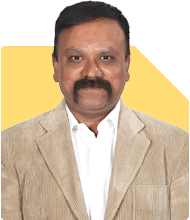
Nayagam P

Nayagam P P  |10849 Answers  |Ask -

Career Counsellor - Answered on Aug 07, 2025

Nayagam is a certified career counsellor and the founder of EduJob360.
He started his career as an HR professional and has over 10 years of experience in tutoring and mentoring students from Classes 8 to 12, helping them choose the right stream, course and college/university.
He also counsels students on how to prepare for entrance exams for getting admission into reputed universities /colleges for their graduate/postgraduate courses.
He has guided both fresh graduates and experienced professionals on how to write a resume, how to prepare for job interviews and how to negotiate their salary when joining a new job.
Nayagam has published an eBook, Professional Resume Writing Without Googling.
He has a postgraduate degree in human resources from Bhartiya Vidya Bhavan, Delhi, a postgraduate diploma in labour law from Madras University, a postgraduate diploma in school counselling from Symbiosis, Pune, and a certification in child psychology from Counsel India.
He has also completed his master’s degree in career counselling from ICCC-Mindler and Counsel, India.
... more
Asked by Anonymous - Aug 06, 2025Hindi

Career

How can students from small towns or rural India get reliable career guidance especially when theres limited access to counsellors or updated information

Ans: Students from small towns and rural India can now access reliable career guidance through a range of free and reputable services provided by both government and private organizations. The Ministry of Electronics & IT’s Common Services Centers (CSC) run dedicated career counselling via CSC Academy Centers, using online platforms and expert sessions tailored in regional languages for rural youth from class 9 onwards. Government initiatives like the National Career Service (NCS) portal and state efforts such as Career Development Centres (CDCs) in Kerala offer free career counseling, career mapping, skill assessments, and live interaction with approved counselors through well-managed digital platforms. NGOs—including Shika ani Shikva and Advaita Bodhi Foundation—organize free workshops, mentorship programs, and exposure visits, enabling rural students to interact with diverse professionals and explore unconventional career paths. Leading edtech startups and professional portals like iDreamCareer, Mindler, Dheya, Edumilestones, and Career360 provide accessible online career assessments, personalized counseling, multilingual resources, and guidance for college admissions—many extending their services free or at subsidized costs for low-income or rural students. These platforms use psychometric tools to analyze aptitude, offer information on vocational courses, scholarships, and government schemes, and even train local teachers or volunteers to act as “Career Mitra” (mentors) within villages and smaller schools. Programs promote confidence, inclusion, skill-building, and empower students to make informed educational and career choices through genuine, updated resources and expert mentorship, overcoming the geographic and socioeconomic divide.

Recommendation: Rural and small-town students should utilize government-supported services like CSCs and NCS, participate in NGO programs, and leverage established career guidance portals to access free, multilingual, and customized career advice. These avenues provide trustworthy information, essential career planning tools, exposure to diverse professions, and ensure that every student can make informed, confident, and future-ready decisions—regardless of location or resource constraints. All the BEST for a Prosperous Future!

Follow RediffGURUS to Know More on 'Careers | Money | Health | Relationships'.
Career

You may like to see similar questions and answers below
Maxim

Maxim Emmanuel  | Answer  |Ask -

Soft Skills Trainer - Answered on Apr 17, 2024

Career
Sir i want ur guidance. I don't know what i do i done post graduate sociology and pg diploma in women and child development still i am unemployed can u guide me for my career
Ans: What is the Scope of an MA in Sociology?
Job Opportunities After MA in Sociology

Experts define sociology as the branch of behavioral science that deals with social groups, their internal forms or modes of organisation, the processes that tend to maintain or change these forms of organisation and relations between groups. Here are some of the benefits of studying sociology; check out:

Sociology gives you a new perspective to understand all social relationships maturely and comprehensively.
You can make positive changes in your interpersonal as well as professional relationships by studying sociology.
Sociology has a wide range of topics from which you can choose your career pathway.
Sociology enhances your social skills by teaching you tools and techniques to deal with real-life interactions and experiences with various social groups.
It helps you solve your social problems, if any, in a constructive and result-oriented way.
It gives you insights into international issues and human behaviour patterns.
Suppose you want to make career in pyschology; taking different undergraduate and post-graduate courses will open doors to quality work opportunities. Bachelor’s or master’s in sociology are believed to be the most popular courses. The courses’ curriculum acquaints you with the fundamentals of human behaviour and gives a deep insight into human social relationships and institutions. Below, we have discussed the scope and job opportunities after MA in sociology.

What is the Scope of an MA in Sociology?
MA in sociology is a post-graduate course that equips aspirants with the skills required to work as contemporary sociologists, and understand complex human behavior patterns. An MA in sociology aims to provide students a deep insight into various facets of society, human behavior, and different institutions prevalent in the business environment. In the next section of the article, we will explore the scope of an MA in sociology in detail.

Sociology delves deeper into the diverse interactions between society and individuals. The scope of sociology also covers the fundamental sociology of market research, visual studies, diaspora studies, etc. It also includes a wide variety of sociological methods used to study the social life of humankind.

The scope of MA in sociology also includes studying social processes, social institutes, and social groups. After doing an MA in sociology, you can choose any of the aforementioned subjects for specialization.

Furthermore, there are ample career options in sociology . Many fields, including research, education, criminology, healthcare, and child development, offer lucrative jobs with competitive pay package after MA sociology. Let us walk you through careers opportunities after pursuing MA in sociology.

Job Opportunities After MA in Sociology
Here are some of the job opportunities that you can take after completing MA in sociology:

Sociology Professor
As a Sociology Professor, you can shape minds, conduct research, and contribute to academic discourse. Universities and colleges often seek individuals with advanced degrees to teach sociology courses.

Life Coach
Leveraging your sociological insights, you can pursue a career as a Life Coach, guiding individuals through personal and professional challenges, fostering personal development, and enhancing well-being.

Sociologist
Engage in sociological research and analysis, contributing to a deeper understanding of societal structures, behaviors, and trends. Sociologists often work in research institutions, think tanks, or government agencies.

Probation Officer
Apply sociological perspectives in the criminal justice system, working as a Probation Officer. Help individuals reintegrate into society, assess rehabilitation needs, and monitor probationary conditions.

Social Worker
Make a direct impact on communities by becoming a Social Worker. Address societal issues, advocate for vulnerable populations, and provide support services to those in need.

HR Coordinator
With an understanding of human behavior and organizational dynamics, work as an HR Coordinator. Apply sociological insights to foster a positive workplace culture, handle employee relations, and contribute to organizational development.

Community Health Worker
Contribute to public health initiatives by working as a Community Health Worker. Use sociological perspectives to address health disparities, engage communities, and implement preventive health measures.

Marketing Research Executive
Bridge sociology and business by becoming a Marketing Research Executive. Conduct consumer behavior studies, analyze market trends, and provide valuable insights to guide marketing strategies.

Public Relations Specialist
Utilize your sociological background in communications as a Public Relations Specialist. Shape public perception, manage organizational image, and navigate societal dynamics in the realm of public relations.

Government Jobs After MA in Sociology
Explore diverse opportunities in government sectors, such as civil services, research roles, or policy analysis. Sociological expertise is valuable in shaping public policies, addressing social issues, and contributing to governance.

Teaching and Education
After your MA in sociology, you can appear for National Eligibility Test (NET) or State-level Eligibility Test (SET) and join a college or university as an Assistant Professor or Associate Professor. Alternatively, you can pursue a PhD or M.Phil to teach sociology in universities. This way, you can begin your career in primary and secondary education and child development.

Administrative Services
Indian administrative services (IAS), Indian police service (IPS), and Indian forest service (IFS) are some of the best job opportunities after MA sociology. Passion and dedication must be your driving force while opting for administrative services like IAS or IPS. Moreover, you must qualify for the Civil Service Aptitude Test (CSAT) held by Union Public Service Commission to begin your career in the field.

Otherwise, you can take examinations held by the State Public Service Commission after completing your graduation. You can apply for job titles like Assistant Commissioner, Sub-Divisional Magistrate, District Public Relations Officer, and more after completing the MA in sociology course.

Therapy and Counselling
You can develop a career in therapy and counselling with an MA in sociology. Those with a post-graduate or undergraduate degree in sociology can become successful counsellors and behaviour therapists in fields like education, healthcare, governance, or community services.

Suppose, you want to make a career as a therapist or counsellor, then empathy, patience, analytical skills, critical thinking ability, and interpersonal communication are the qualities you require.

Research
It is believed that some interesting jobs after MA in sociology are in research, and you can carve a lucrative career with the highest job satisfaction. After completing MA in sociology or similar courses, you can apply for the role of a Junior or Senior Research Fellow, Research Assistant, or Senior Research Officer across different industries.

Family, and Child Development and Welfare
Excellent jobs come your way after an MA in Sociology in family and child development and welfare. The opportunities include a Probation Officer in the District Child Protection Society, a Marriage Counsellor, a Therapist or a Counsellor in a rehabilitation centre, a family or child development officer, and so on.

A few more job roles that one can undertake after completing MA in sociology are:

Gerontologists in the healthcare sector
Social workers in NGOs and charities
Community development workers in human welfare
Sociology professors or tutors
Life coaches, motivators, or consultants
Social influencers
Social scientists

..Read more

Latest Questions
Ramalingam

Ramalingam Kalirajan  |10872 Answers  |Ask -

Mutual Funds, Financial Planning Expert - Answered on Dec 06, 2025
Asked by Anonymous - Dec 06, 2025Hindi
Money
Dear Sir/Ma'am, I need some guidance and advice for continuing my mutual fund investments. I am a 36 year old male, married, no kids yet and no debts/liabilities as such. I have couple of savings in PPF, NPS, Emergency funds and long term investing in direct stocks. I recently started below mentioned SIPs for long term to grow wealth. Request you to review the same and let me know if I should continue with the SIPs or need to rationalize. Kindly also advice on how to invest a lumpsum amount of around 6lacs. invesco small cap 2000 motilal oswal midcap 2700 parag parikh flexicap 3000 HDFC flexicap 3100 ICICI prudential largecap 3100 HDFC large and midcap 3100 HDFC gold etf FOF 2000 ICICI Pru equity and debt fund 3000 HDFC balanced advantage fund 3000 nippon india silver etf FOF 2000
Ans: You already built a solid foundation. Many investors delay planning. But you started early at 36. That gives you a strong advantage. You have no liabilities. You have long term thinking. You also have diversified savings like PPF, NPS, Emergency funds and direct stocks. That shows clarity and discipline. This approach builds wealth with less stress over time.

You also started systematic investments in equity funds. That is a positive step. Your selection covers multiple categories like large cap, mid cap, small cap, flexi cap, hybrid and precious metals. So the intent is right. You are trying to create a broad portfolio. That gives balance.

» Your Portfolio Composition Understanding
Your current SIP list includes:

Small cap

Mid cap

Flexi cap

Large cap

Large and mid cap

Hybrid category

Gold and Silver FoF

Equity and Debt allocation fund

Dynamic hybrid fund

This shows you are trying to cover many segments. But too many categories can create overlap. When there is overlap, you get confusion during review. It also makes portfolio discipline difficult. You may think you are diversified. But the holdings inside may repeat. That reduces efficiency.

Your portfolio now looks like:

Equity dominant

Hybrid for stability

Metals for hedge

So the broad direction is fine. But simplifying helps in long-term habit building.

» Fund Category Duplication
You hold:

Two flexi cap funds

One large and mid cap fund

One pure large cap fund

One mid cap fund

One small cap fund

Flexi cap funds already invest across large, mid, small. Then large and mid also overlaps. So the large cap exposure gets repeated. That may not add extra benefit. But it increases monitoring complexity.

So I suggest rationalising. Keep one fund per category in core. Keep satellite space for only high conviction.

» Core and Satellite Strategy
A structured portfolio follows core and satellite method.

Core portfolio should be:

Simple

Long term

Stable

Satellite portfolio can be:

High growth

Concentrated

Based on your thinking level, you can structure like this:

Core funds:

One large cap

One flexi cap

One hybrid equity and debt fund

One balanced advantage type fund

Satellite funds:

One mid cap

One small cap

One metal allocation if needed

This division gives clarity. You can continue SIPs with review every year. No need to stop and restart often. That reduces behavioural mistakes.

» Your Current SIP List Review with Suggested Streamlining

You can consider continuing:

One flexi cap

One large cap

One mid cap

One small cap

One balanced advantage

One equity and debt hybrid

You may reconsider keeping both flexi caps and both gold silver funds. One of each category is enough. Because too many funds do not increase returns. It complicates tracking.

Precious metal funds should not be more than 5 to 7 percent in your portfolio. This is because metals are hedge assets. They do not create compounding like equity. They act as protection during cycles. So keep them small.

» How to Use the Rs 6 Lakh Lump Sum
You asked about lump sum investing. This is important. Lump sum should not go fully into equity at one time. Markets move in cycles. So use a staggered method. You can invest the lump sum through STP (Systematic Transfer Plan). You can keep the amount in a liquid fund and set STP toward your chosen growth funds over 6 to 12 months.

This reduces timing risk. It also creates discipline. So your Rs 6 lakh can be deployed gradually. You may use 50% towards core equity funds and 30% toward satellite growth category. The remaining 20% can go into hybrid category. This gives balance and comfort.

» Regular Funds Over Direct Funds
One important point many investors miss. Direct funds look cheaper. But they demand deep knowledge, discipline, and behaviour control. Most investors lose more through emotional selling and wrong timing than they save on expense ratio.

With regular funds through a Mutual Fund Distributor with Certified Financial Planner qualification, you get guidance, structure and correction. The advisory discipline protects you during market extremes. That is more valuable than a small saving in expense ratio.

A personalised planner also tracks portfolio drift, rebalancing need and category shifts. So regular fund investing gives long-term benefit and behaviour coaching.

» Actively Managed Funds over Index or ETF
Some investors choose index funds or ETF thinking they are simple and cheap. But they ignore drawbacks.

Index funds or ETF will not avoid weak companies in the index. They will invest whether the company grows or struggles. There is no fund manager decision making. So when markets are at peak, index funds continue aggressive exposure. In downturns also they fall fully. There is no cushion.

Actively managed funds work with research teams. They can avoid bad sectors. They can shift allocation based on market and economy. Over long term, this gives better alpha and stability. So continuing with actively managed funds creates better wealth compounding.

» SIP Continuation Strategy
Once the rationalisation is done, continue SIPs every month without interruption. Pause and restart behaviour damages compounding power. SIP works best when you go through all market cycles. You benefit more during corrections because cost averaging works.

So continue SIP amount. You can also review SIP increase every year based on income. Increasing SIP by 10 to 15 percent every year helps you reach large corpus faster.

» Asset Allocation Based Approach
One key point in wealth creation is having the right asset mix. Equity gives growth. Hybrid gives balance. Metals give hedge. Debt gives safety. Your asset allocation should stay aligned to your risk profile and time horizon.

Since you are young and have long term horizon, higher equity allocation is fine. But as time moves, rebalancing is important. Rebalancing protects gains and restores allocation.

So review your asset allocation every year or during major life events like child birth, home buying or retirement planning.

» Behaviour Management
Many portfolios fail not due to bad funds. They fail due to bad decisions. Selling during correction. Stopping SIP when market falls. Chasing past return performance. These mistakes reduce wealth.

Your discipline so far is good. Continue to stay patient during volatility. Equity rewards patience and time.

» Financial Goals Clarity
Since you have no children now, you can decide your long-term goals. Typical goals may include:

Retirement

Future child education

Dream lifestyle purchase

Health care reserves

When goals are clear, investment purpose becomes stronger. So you can map each fund category to goal horizon. Short-term goals should not use equity. Long-term goals should use equity with hybrid support.

» Role of Review and Monitoring
Review once in a year is enough. Frequent review can create anxiety. Annual review helps check:

Fund performance

Expense drift

Category relevance

Allocation balance

Then adjust only if needed. This progress helps you stay confident and aligned.

» Taxation Awareness
Equity mutual funds taxation rules are:

Short term (below one year holding) taxable at 20 percent

Long term (above one year holding) gains above Rs 1.25 lakh taxable at 12.5 percent

Debt mutual funds are taxed as per your income slab.

So always hold equity funds for long term. That reduces tax impact and gives better growth.

» SIP Increase Plan
You can create a simple plan to increase SIP over time. For example:

Increase SIP at every salary increment

Increase SIP during bonus time

Use rewards or extra income for investing

This habit accelerates wealth. So by the time you reach 45 to 50 years, your investments could reach a strong level.

» Insurance and Protection
Before investing large, ensure you have term insurance and health insurance. If not already done, it is important. Insurance protects wealth. Without insurance, even a small medical event can impact investment plan. So review this part also. Since you are married, cover both.

» Wealth Behaviour Mindset
You are already disciplined. Just keep these simple principles:

Invest without stopping

Review once a year

Avoid funds overlap

Follow asset allocation

Avoid reacting to media noise

This helps you reach long term milestones.

» Finally
You are on the right track. Only fine tuning and simplification is needed. Your discipline is visible. Your portfolio will grow well with structure, patience and periodic review. Use the Rs 6 lakh with STP approach. And continue SIP with rationalised categories.

With time and consistency, wealth creation becomes effortless and peaceful. You just need to stay committed and avoid overthinking during market movements.

Best Regards,
K. Ramalingam, MBA, CFP,

Chief Financial Planner,

www.holisticinvestment.in

https://www.youtube.com/@HolisticInvestment

...Read more

Dr Dipankar

Dr Dipankar Dutta  |1837 Answers  |Ask -

Tech Careers and Skill Development Expert - Answered on Dec 05, 2025

Career
Dear Sir, I did my BTech from a normal engineering college not very famous. The teaching was not great and hence i did not study well. I tried my best to learn coding including all the technologies like html,css,javascript,react js,dba,php because i wanted to be a web developer But nothing seem to enter my head except html and css. I don't understand a language which has more complexities. Is it because of my lack of experience or not devoting enough time. I am not sure. I did many courses online and tried to do diplomas also abroad which i passed somehow. I recently joined android development course because i like apps but the teaching was so fast that i could not memorize anything. There was no time to even take notes down. During the course i did assignments and understood the code because i have to pass but after the course is over i tend to forget everything. I attempted a lot of interviews. Some of them i even got but could not perform well so they let me go. Now due to the AI booming and job markets in a bad shape i am re-thinking whether to keep studying or whether its just time waste. Since 3 years i am doing labour type of jobs which does not yield anything to me for survival and to pay my expenses. I have the quest to learn everything but as soon as i sit in front of the computer i listen to music or read something else. What should i do to stay more focused? What should i do to make myself believe confident. Is there still scope of IT in todays world? Kindly advise.
Ans: Your story does not show failure.
It shows persistence, effort, and desire to improve.

Most people give up.
You didn’t.
That means you will succeed — but with the right method, not the old one.

...Read more

DISCLAIMER: The content of this post by the expert is the personal view of the rediffGURU. Investment in securities market are subject to market risks. Read all the related document carefully before investing. The securities quoted are for illustration only and are not recommendatory. Users are advised to pursue the information provided by the rediffGURU only as a source of information and as a point of reference and to rely on their own judgement when making a decision. RediffGURUS is an intermediary as per India's Information Technology Act.

Close  

You haven't logged in yet. To ask a question, Please Log in below
Login

A verification OTP will be sent to this
Mobile Number / Email

Enter OTP
A 6 digit code has been sent to

Resend OTP in120seconds

Dear User, You have not registered yet. Please register by filling the fields below to get expert answers from our Gurus
Sign up

By signing up, you agree to our
Terms & Conditions and Privacy Policy

Already have an account?

Enter OTP
A 6 digit code has been sent to Mobile

Resend OTP in120seconds

x