Need Expert Advice?Our Gurus Can Help
Nayagam P

Nayagam P P  |12580 Answers  |Ask -

Career Counsellor - Answered on Nov 12, 2025

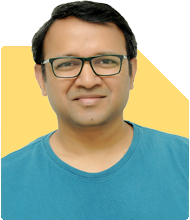
Nayagam is a certified career counsellor and the founder of EduJob360.
He started his career as an HR professional and has over 10 years of experience in tutoring and mentoring students from Classes 8 to 12, helping them choose the right stream, course and college/university.
He also counsels students on how to prepare for entrance exams for getting admission into reputed universities /colleges for their graduate/postgraduate courses.
He has guided both fresh graduates and experienced professionals on how to write a resume, how to prepare for job interviews and how to negotiate their salary when joining a new job.
Nayagam has published an eBook, Professional Resume Writing Without Googling.
He has a postgraduate degree in human resources from Bhartiya Vidya Bhavan, Delhi, a postgraduate diploma in labour law from Madras University, a postgraduate diploma in school counselling from Symbiosis, Pune, and a certification in child psychology from Counsel India.
He has also completed his master’s degree in career counselling from ICCC-Mindler and Counsel, India.
... more
Asked by Anonymous - Nov 11, 2025Hindi
Career

39 years old, want to switch job and start new consulting business, no financial backup or no strong support; Skill, knowledge and experience is only Capital, can raise Finance from market for Set up & infrastructure, but my concern is what will be the process to start a business from zero level and please provide guidelines regarding most possible hurdles at initial stage.

Ans: Please clarify, What is your specific consulting niche or industry expertise? How many years of professional experience do you have? What certifications or credentials do you possess? What specific problems will your consulting solve?
Asked on - Nov 12, 2025 | Answered on Nov 13, 2025
I have 16 years through experience in Accounting, auditing, Direct & Indirect Tax Compliances, PF, TDS, GST, Handling GST scrutiny cases at Commissionerate and at appellate level, etc.
Ans: Here are the 3-options for you, based on your experience & expertise. OPTION 1: INDEPENDENT GST COMPLIANCE & ADVISORY CONSULTING PRACTICE
Market demand for GST expertise remains exceptionally strong, growing 9-11% annually with 94 new specialized firms emerging in 2024 alone. Your unique competitive advantage lies in direct commissionerate-level dispute resolution experience—most consultants lack this credibility. Service portfolio spans GST departmental audit defense, notice response assistance, compliance advisory for SMEs, inverted tax structure refund optimization, e-invoicing implementation, and monthly retainer-based GST health checks. Financial viability: Market rates command INR 1.5-3.5 lakhs per audit defense case; monthly retainers range INR 15,000-40,000; with 6-8 monthly cases plus 8-10 retainer clients, first-year revenue exceeds INR 15-20 lakhs with 70-75% gross margins. Initial setup requires minimal capital (INR 2-3 lakhs) since home office operations are viable. Timeline to profitability: 4-6 months after activation. Critical success factor: Build strong referral network with CA practitioners lacking GST dispute expertise, positioning yourself as specialized outsourced resource. Document anonymized case studies demonstrating penalty avoidance and successful regulatory navigation as social proof.?

OPTION 2: SPECIALISED TAX ADVISORY & CORPORATE COMPLIANCE CONSULTANCY
India's accounting professional services market reaching USD 15.32 billion in 2025 offers substantial growth (projected USD 19.05 billion by 2030). Your 16-year combined expertise spanning accounting, auditing, direct tax, indirect tax, and compliance is exceptionally rare—enabling integrated tax planning rather than narrow specialization. Service architecture comprises three tiers: premium advisory (tax structuring for startups, corporate tax planning, IFC implementation commanding INR 3-25 lakhs per engagement with 60-65% margins); recurring compliance audit packages for 25-50 SMEs (INR 2-7.5 lakhs monthly recurring revenue with 75% margins); professional training workshops (INR 50,000-100,000 per session with 80% margins). Financial projection: 12-15 advisory projects combined with 30-40 monthly retainer clients generates INR 25-35 lakhs Year 1 revenue with INR 15-20 lakhs profitability. Setup capital: INR 4-5 lakhs; timeline to profitability: 6-9 months; scalability advantage emerges once service delivery templates are systematized. Differentiation strategy: Create case studies demonstrating quantified tax savings delivered, offer complimentary tax health checks, establish thought-leadership positioning through regular LinkedIn content and compliance articles.?

OPTION 3: VIRTUAL CFO & FINANCIAL ADVISORY SERVICES FOR STARTUPS/SMES
This emerging niche demonstrates highest market growth (25-30% annually) with demand exceeding supply 3:1 ratio in Tier-1 metros. India registers 1,000+ startups daily creating exponential demand for affordable professional financial management—founders lack in-house accounting expertise and cannot afford INR 12-25 lakhs full-time CFO salaries. Virtual CFO model addresses this gap at INR 2-5 lakhs annually per startup. Your background provides exactly what scaling startups desperately need: investor due diligence navigation, financial reporting for funding rounds, regulatory compliance orchestration, and cash-flow optimization—areas founders typically struggle with. Service delivery: Part-time engagement managing 15-25 startups simultaneously (8-15 hours monthly per client). Revenue model: INR 20,000-40,000 monthly retainers per client; portfolio target of 20-25 clients generates INR 6-7.5 lakhs monthly (INR 72-90 lakhs annually) with 80%+ gross margins. Profitability achieved at 12-15 clients; break-even accelerates as clientele grows. Setup capital minimal (INR 1.5-2 lakhs for software/cyber insurance); timeline to profitability fastest at 3-4 months; highly scalable once processes systematized. Market access: Partner with 100+ startup accelerators, venture capital firms, and ecosystem service providers; leverage LinkedIn founder targeting; attend 2-3 startup community events monthly. Key advantage: Unlike expensive big-firm services or inexperienced bookkeepers, you offer experienced perspective at reasonable pricing with direct founder accessibility.?
Virtual CFO services targeting startups/SMEs offers optimal combination: fastest profitability (3-4 months), highest recurring revenue percentage (95%+), lowest startup capital (INR 1.5-2 lakhs), best work-life balance, and highest market growth (25-30% annually). Your compliance expertise directly addresses founder financial management weakness. Ideal launchpad leveraging existing expertise with greatest scalability potential and sustainable long-term income generation capacity. All the BEST for a Prosperous Future!

Follow RediffGURUS to Know More on 'Careers | Money | Health | Relationships'.
Career

You may like to see similar questions and answers below

Harsh

Harsh Bharwani  | Answer  |Ask -

Entrepreneurship Expert - Answered on Aug 10, 2023

Listen
Career
Dear Sir, I am a civil engineer living in Chandrapur it is a small city. I have a experience of 25 years as quality in-charge. Hence i want to start my own business as a consultant for constructions and civil solutions. Please guide me how an from where I shall start
Ans: One should first gain as much practical experience as possible before starting on your own. As mentioned by you, you are strong at structural subjects at B-Tech level. But you will see that practical structural design is way different than the theoretical ones.

Though the design concepts remain same, the onsite execution factors play an important role in finalizing your design data. Additionally, you being an independent consultant, you will have to learn the entire process starting from Tendering, preparing BOQs, Design report submissions, onsite visits etc.,. To understand the nuances of each step, I would suggest you to get some 5 years of exposure under some consultant and then you will be confident to start on your own.

Coming to software's (which will be helpful even for working under a consultant), you should start from AutoCad (for building plans, drafting etc.,) then for analysis part you can use any of the renown building packages like MIDAS, CSI products, Bentley Products. There is no hard and fast rule to follow a particular one. You can get a grip on any one of these and perform the tasks. All the very best for your future!

There are a few construction business ideas for beginners that can get you started in this exciting and ever-growing industry. The construction industry is full of opportunity, so if you’re considering starting your own business, now is a great time to do it.

Many different successful construction business models can be effective in the construction industry. The key is to find the model that best suits your company’s strengths and weaknesses.

One common business model is the design-build model. In this model, the construction company takes on both the design and construction phases of a project. This can be a good option for companies with strong engineering and construction capabilities.

..Read more

Latest Questions
Ramalingam

Ramalingam Kalirajan  |11484 Answers  |Ask -

Mutual Funds, Financial Planning Expert - Answered on Oct 13, 2026

Asked by Anonymous - Oct 10, 2026
Money
I am a 54 year old male working abroad. I have below investments. I have below investments so far: PPF 55 lakhs,EPF 36 lakhs, MF (total cumulative) 5.5 crores ,Employee superannuity+gratuity 14.5 lakhs, NPS 17 lakhs Monthly MF SIP ongoing 2 lakhs Company FD 10 lakhs Gold 16 lakhs. I am well covered in life insurance as well as medical insurance. My question is 1) My wife is getting a one time windfall of Rs .80 Lakhs as part of her share in her ancestral property. a)Pls guide me on how to invest this money b) what are the ways to save on tax eg. rbi relief bonds etc? c) if rbi relief bonds how much is the maximum limit d) beyond that limit where should i remaining balance?
Ans: Thank you for sharing your investment details. You have built a substantial investment portfolio through regular investing. The key now is to invest your wifes Rs.80 lakh windfall in a tax-efficient manner without adding unnecessary risk.

» Assessment of Your Current Portfolio

– Your existing investments are spread across mutual funds, EPF, PPF, NPS, company deposits and gold.

– Your mutual fund corpus is already substantial, with an ongoing SIP of Rs.2 lakh per month.

– Therefore, the entire windfall need not go into equity mutual funds. Your decision should depend on your retirement age, expected expenses, tax residency and the level of risk you are comfortable taking.

– Since you are working abroad, your residential status under Indian tax laws is important. The tax treatment of your investments and interest income can differ based on whether you qualify as a resident, NRI or RNOR.

» 1. How to Invest the Rs.80 Lakh Windfall

First, keep the money in your wifes name if she is the legal recipient of the ancestral property proceeds. Maintain proper documents showing the source of funds.

Consider dividing the money into three broad purposes:

– Safety and liquidity: Keep a suitable amount in bank deposits or other low-risk instruments for emergencies and expenses expected in the next few years.

– Stable income: Consider suitable government-backed or high-quality fixed-income options, after checking eligibility, taxation, lock-in and withdrawal rules.

– Long-term growth: Invest a portion in diversified, actively managed equity mutual funds if the money is not required for at least 7–10 years.

Since your existing mutual fund corpus is already Rs.5.5 crore, avoid putting the entire Rs.80 lakh into equity without reviewing your overall asset allocation. Your present equity exposure may already be sufficient for your retirement goals.

» 2. Can You Save Tax Through RBI Bonds?

It is important to distinguish between tax-saving investments and investments that offer safety or regular interest income.

RBI Floating Rate Savings Bonds are generally considered for investors seeking government-backed interest income. However, they are not a tax-saving instrument.

– Interest earned is taxable according to the applicable income tax rules.

– Investing in these bonds does not automatically provide a deduction under Section 80C.

– The bonds have a seven-year maturity period for ordinary individual investors, with premature encashment permitted only under specified conditions for eligible senior citizens.

– Interest rates are reset periodically, so the income may change over time.

Hence, these bonds can be considered for the safety and income portion of the portfolio, but not as a way to reduce tax on the windfall itself.

» 3. What Is the Maximum Investment Limit in RBI Bonds?

– There is no maximum investment limit in RBI Floating Rate Savings Bonds.

– However, these bonds are available to eligible resident individuals and HUFs. If your wife is an NRI, she would not be eligible to invest in these bonds under the current eligibility rules. Confirm her residential status before proceeding.

– The interest rate for July–December 2026 is 8.05% per annum, payable half-yearly. The rate is reset periodically.

– The maturity period is seven years, and liquidity is limited. Premature encashment is allowed only for eligible senior citizens after the specified lock-in period.

Therefore, these bonds may suit the stable-income portion of your wifes portfolio, provided she is eligible and can accept the lock-in.

» 4. Can You Save Capital Gains Tax on the Ancestral Property?

This is an important point to clarify before investing the money.

– If your wife received the property through inheritance, the inheritance itself is generally not taxable as income.

– However, if the ancestral property was sold and Rs.80 lakh represents her share of the sale proceeds, capital gains tax may arise. The taxable gain is not necessarily the entire amount received.

– Depending on the facts, Section 54EC capital gains bonds may offer tax relief when eligible long-term capital gains arise from the sale of land or a building.

– The maximum investment eligible for this exemption is Rs.50 lakh, subject to the applicable conditions and timelines. The investment must generally be made within six months of the transfer.

– These are different from RBI Floating Rate Savings Bonds. Section 54EC bonds are meant for eligible capital gains exemption, whereas RBI Floating Rate Savings Bonds provide taxable interest income.

If the property has already been sold, please check the sale date immediately. The deadline for claiming an exemption may be important.

» 5. Where Should You Invest the Remaining Amount?

If your wife is eligible for Section 54EC bonds and has sufficient eligible capital gains, up to Rs.50 lakh may be considered for that purpose.

The remaining amount can be allocated based on your financial goals.

– Bank deposits or other suitable fixed-income investments for short-term needs and capital safety.

– High-quality fixed-income instruments for the portion meant to provide stability.

– Diversified, actively managed equity mutual funds for long-term growth, if your overall portfolio review shows that additional equity exposure is appropriate.

Do not invest in a particular product only because it offers a tax benefit. Consider liquidity, taxation, maturity and the purpose of the investment.

» 6. My Final Assessment

Your family already has a strong investment base. At age 54, retirement planning, tax efficiency and asset allocation deserve more attention than simply maximising returns.

Before investing the Rs.80 lakh, please clarify these three points:

– Is the Rs.80 lakh received from an actual sale of ancestral property, or has your wife received the property itself as her share?

– Is your wife an Indian resident or an NRI for income-tax purposes?

– When was the property sold, if a sale has taken place?

These details will help determine whether capital gains tax applies, whether Section 54EC bonds are suitable, and how the remaining money can be invested efficiently.

Best Regards,

K. Ramalingam, MBA, CFP,

AMFI-Registered MFD – ARN 4188

www.holisticinvestment.in

https://www.linkedin.com/in/ramalingamcfp/

...Read more

Ramalingam

Ramalingam Kalirajan  |11484 Answers  |Ask -

Mutual Funds, Financial Planning Expert - Answered on Oct 13, 2026

Money
my father is 75 years old and my mother is 70 years old, she has stent in the heart, can you recommend which is the best health insurance policy for them. thanks
Ans: Thank you for sharing your parents details. Having health insurance at this age is important, especially when your mother has a heart stent.

» Health Insurance for Your Parents

– At 75 and 70 years, getting a new health insurance policy may be difficult. Premiums can also be high, and some insurers may not accept the application.

– Your fathers health condition and your mothers heart history will be considered during underwriting. Since your mother has a heart stent, the insurer may impose waiting periods, exclusions or other conditions.

– Do not choose a policy based on premium alone. Check the coverage, room rent limits, co-payment, disease-wise limits and claim conditions carefully.

» What You Should Check Before Buying

– Look for a senior citizen health insurance policy that accepts applicants of their ages and offers reasonable hospitalisation coverage.

– For your mother, disclose the heart stent procedure and all related medical details honestly. Ask the insurer in writing whether future cardiac treatment will be covered and from when.

– Check the co-payment clause. If the policy has a 20% co-payment, you may have to pay 20% of eligible hospital expenses yourself.

– Check pre-existing disease waiting periods. Existing heart conditions may not be covered immediately.

– Check whether the policy has limits on ICU charges, room rent, specific treatments or the total amount payable for certain illnesses.

» Consider These Alternatives

– If your parents already have health insurance, check whether it can be continued or enhanced. Keeping existing coverage may be more useful than buying a new policy.

– Check whether they have any employer-sponsored, government-sponsored or other eligible health coverage.

– If new insurance is unavailable or too costly, maintain a separate medical emergency fund. This will help meet hospital expenses not covered by insurance.

» My Assessment

At their ages, I would first check existing insurance and its continuation options. Then compare new policies based on actual coverage and exclusions.

For your mother, written confirmation about cardiac coverage is especially important. Do not assume that a policy will cover heart-related treatment simply because the insurer accepts her application.

Please share these three details for a more suitable assessment:

– Do your parents currently have any health insurance? If yes, what is the sum insured?

– Which city do they live in?

– Does your mother have any other medical conditions apart from the heart stent?

With these details, we can narrow down the available options and identify the most practical way to protect your parents from large medical expenses.

Best Regards,

K. Ramalingam, MBA, CFP,

AMFI-Registered MFD – ARN 4188

www.holisticinvestment.in

https://www.linkedin.com/in/ramalingamcfp/

...Read more

Krishna

Krishna Kumar  |430 Answers  |Ask -

Workplace Expert - Answered on Oct 12, 2026

Asked by Anonymous - Oct 12, 2026
Career
In my office, there are times when a colleague gets stuck with some work or makes a mistake, and I try to help them so that the work gets completed on time. Sometimes, I even put my own work aside to help them because I feel that we should support each other as a team. But when I am busy with my own tasks and need some help, the same colleagues are not always available. They may say they are busy or ask me to manage it myself. I don’t want to stop helping others because of this, as I feel it is important to maintain good relationships at work. At the same time, I sometimes feel that people take my helpful nature for granted, and my own work gets delayed because of it. I also worry that if I start refusing to help, my colleagues may think I have become selfish or uncooperative.
Ans: Dear

Very good question.

Few things let's get it clear. Each one is hired for a particular role and deliverables and they are paid for that.

You are hired first to do your work and deliverables assigned to you. Helping colleagues with their work, while letting your work aside is akin to not doing your responsibility.

My suggestion would be first focus on your work, if someone approaches you with a help and assistance for their work, you can provide them with guidance but do not end up doing their work.

If you are in the midst of your work and someone approaches you, you can politely yet firmly tell them that you are in mids if an important work and once done you will call them. DO NOT set aside your work for someone else. Remember you are working in a corporate world and not some social charitable organisation where any one can do everyone's work.

Hope this helps. All the best.

Warm Regards
KK

...Read more

DISCLAIMER: The content of this post by the expert is the personal view of the rediffGURU. Investment in securities market are subject to market risks. Read all the related document carefully before investing. The securities quoted are for illustration only and are not recommendatory. Users are advised to pursue the information provided by the rediffGURU only as a source of information and as a point of reference and to rely on their own judgement when making a decision. RediffGURUS is an intermediary as per India's Information Technology Act.

Close  

You haven't logged in yet. To ask a question, Please Log in below
Login

A verification OTP will be sent to this
Mobile Number / Email

Enter OTP
A 6 digit code has been sent to

Resend OTP in120seconds

Dear User, You have not registered yet. Please register by filling the fields below to get expert answers from our Gurus
Sign up

By signing up, you agree to our
Terms & Conditions and Privacy Policy

Already have an account?

Enter OTP
A 6 digit code has been sent to Mobile

Resend OTP in120seconds

x