विशेषज्ञ की सलाह चाहिए?हमारे गुरु मदद कर सकते हैं
Krishna

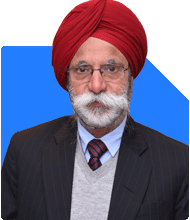
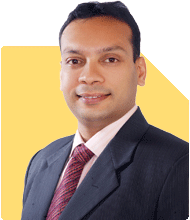
Krishna Kumar  |447 Answers  |Ask -

Workplace Expert - Answered on Sep 23, 2026

Krishna Kumar is the founder and CEO of GoMoTech, a company that provides strategic consulting in B2B sales, performance management and digital transformation.
Before branching out on his own, he worked with companies like Microsoft, Rediff, Flipkart and InMobi.
With over 25 years of experience under his belt, KK is a regular speaker at industry events and academic intuitions, both in India as well as abroad.
KK completed his MBA in marketing from the Sri Sathya Sai Institute of Higher Learning in Andhra Pradesh and his management development programme from XLRI, Jamshedpur.
He has also completed his LLB from Nagpur University and diploma in PR from Bhavan’s College of Management, Nagpur, where he was awarded a gold medal.... more
Asked by Anonymous - Sep 23, 2026
Career

I was recently given responsibility for a project, but whenever something goes well, another colleague presents the result as if they handled most of it. I don’t want to constantly fight for credit, but I also don’t want my work to become invisible over time. What is the right way to make my contribution visible without sounding like I'm complaining?

Ans: Dear

Thanks for the question, its indeed very relevant.

My suggestion would be you have a direct conversation with your manager and let her/him know about your concern. I am sure your manager would take cognisance of this and help you.

Don't sound like a disgruntled person complaining or like a child crying, but put across your point in a polite yet firm way, without taking them head-on.

Hope this helps, all the best.

Warm Regards
KK
Career

आप नीचे ऐसेही प्रश्न और उत्तर देखना पसंद कर सकते हैं

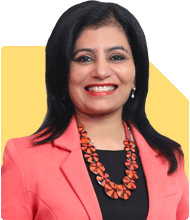
Archana

Archana Deshpande  |139 Answers  |Ask -

Image Coach, Soft Skills Trainer - Answered on May 14, 2025

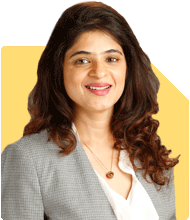
Ashwini

Ashwini Dasgupta  | Answer  |Ask -

Personality Development Expert, Career Coach - Answered on May 16, 2025

Krishna

Krishna Kumar  |447 Answers  |Ask -

Workplace Expert - Answered on Oct 12, 2026

Asked by Anonymous - Oct 12, 2026
Career
In my office, there are times when a colleague gets stuck with some work or makes a mistake, and I try to help them so that the work gets completed on time. Sometimes, I even put my own work aside to help them because I feel that we should support each other as a team. But when I am busy with my own tasks and need some help, the same colleagues are not always available. They may say they are busy or ask me to manage it myself. I don’t want to stop helping others because of this, as I feel it is important to maintain good relationships at work. At the same time, I sometimes feel that people take my helpful nature for granted, and my own work gets delayed because of it. I also worry that if I start refusing to help, my colleagues may think I have become selfish or uncooperative.
Ans: Dear

Very good question.

Few things let's get it clear. Each one is hired for a particular role and deliverables and they are paid for that.

You are hired first to do your work and deliverables assigned to you. Helping colleagues with their work, while letting your work aside is akin to not doing your responsibility.

My suggestion would be first focus on your work, if someone approaches you with a help and assistance for their work, you can provide them with guidance but do not end up doing their work.

If you are in the midst of your work and someone approaches you, you can politely yet firmly tell them that you are in mids if an important work and once done you will call them. DO NOT set aside your work for someone else. Remember you are working in a corporate world and not some social charitable organisation where any one can do everyone's work.

Hope this helps. All the best.

Warm Regards
KK

..Read more

Krishna

Krishna Kumar  |447 Answers  |Ask -

Workplace Expert - Answered on Oct 26, 2026

Asked by Anonymous - Oct 26, 2026
Career
My annual appraisal is coming up, and I am not sure how to prepare for the discussion with my manager. Throughout the year, I have completed my assigned work and taken up some additional responsibilities, but I am not very good at highlighting my achievements. I have seen some colleagues explain their contributions confidently and get good salary hikes, while others who do their work quietly seem to receive average ratings. I don't want to exaggerate my work just to impress my manager, but I also want my efforts to be recognised fairly.
Ans: Dear

It's indeed a very good question.

May I suggest following:

You don't need to exaggerate. Visibility comes from being specific and factual, not from sounding bigger.

1. Build your record before the meeting
Go through your emails, chats, and project notes from the year. For each item, write:
What you did, stated plainly
The result: time saved, money saved, errors reduced, a deadline met, a person or team helped
Numbers wherever possible. "Cut report turnaround from 5 days to 2" lands better than "improved the process."

2. Separate your assigned work from your extra work:
Your extra responsibilities are your strongest case. List them clearly, noting who benefited and what would have been missed without you.

3. Frame it as a short story, not a boast
Use this pattern: "The situation was X, I did Y, and the outcome was Z." It sounds confident without sounding inflated, because every claim is backed by a fact.

4. Use "I" for your part, "we" for the team's
Credit others honestly, but be clear about your own role. Many quiet performers lose out by saying "we" for everything.

5. Prepare your asks
Decide in advance what you want: a rating, a pay increase, a bigger role, or a specific learning opportunity. Ask for it directly, and back it with your list. If the answer is no, ask what specifically would change it next cycle and get that in writing if you can.

6. Fix the long-term gap
Quiet performers get overlooked because their work isn't visible between appraisals. Send your manager a short monthly or quarterly update on what you completed. Then the appraisal is a summary, not a surprise.
Share your key achievements and I can help you turn them into clear, confident talking points.

Hope this helps, all the best.

Warm Regards
KK

..Read more

नवीनतम प्रश्न
Nayagam P

Nayagam P P  |12598 Answers  |Ask -

Career Counsellor - Answered on Nov 11, 2026

Career
Hello Sir, Hope you’re doing well. My name is Amey. I’ve completed my engineering in Computer Science and have recently upskilled myself in Data Analytics. Despite having relevant skills and projects, I’m finding it quite difficult to enter the job market, even for internship opportunities. I thought of reaching out to you for guidance, as you have extensive experience in career counselling and placement. I’d really like to understand where I might be falling behind at this stage and what I could do differently to improve my chances of getting into the industry. Any guidance or advice from your end would truly be appreciated. Thank you, Sir.
Ans: Amey, with a Computer Science degree and Data Analytics training, you already have a good foundation. However, having skills and completing projects does not always lead to interview calls immediately. Your profile, projects, and job-search approach should clearly show your practical value to employers.

(1) Build a strong LinkedIn presence: Keep your LinkedIn profile updated and stay active. Connect with college seniors, alumni, professors, and professionals in your field. Set job and internship alerts now on LinkedIn, follow job-market trends, and apply to startups and entry-level roles as well.

(2) Strengthen job-ready skills: Do not rely only on completing a Data Analytics course. Check whether you can independently handle entry-level analyst tasks. Take practice assessments in SQL, Excel, and Power BI, identify your two weakest areas, and improve them through hands-on practice over the next 3–4 weeks.

(3) Build 3–4 strong projects: Focus on projects that solve real business problems, not just show that you know analytical tools. Publish them on GitHub and share dashboards or demos where possible. Aim for three well-documented projects rather than many incomplete ones.

(4) Improve your resume and LinkedIn profile: Your resume should show how you can contribute to an organisation, not just list courses and technical skills. Highlight your projects, tools, and the business value of your work.

(5) Expand your job search: Do not apply only for roles titled “Data Analyst.” Also apply for Junior Data Analyst, Business Analyst Trainee, MIS Executive/Analyst, Reporting Analyst, Operations Analyst, and BI Analyst Intern roles. Consider internships, trainee positions, apprenticeships, and entry-level jobs. Do not reject a suitable opportunity only because the title is different.

(6) Use a focused application strategy: Avoid sending too many generic applications. Aim for 25–30 relevant applications, 10 personalised networking messages, and two meaningful portfolio or project improvements each week. Track applications, responses, and interview outcomes in a spreadsheet.

(7) Prepare for interviews: Employers look for candidates who can explain data and share clear recommendations. Practise explaining each project in 3–5 minutes using this structure: Problem → Data → Tools → Analysis → Findings → Business Recommendation. Do at least two mock interviews weekly with friends or family, record them on your phone, and review your confidence, answers, and body language.

(8) Consider freelancing: Along with job applications, explore freelance work as a junior data analyst. Focus on Excel, SQL, Python, Power BI/Tableau, data cleaning, dashboards, and business insights. Build 2–3 portfolio projects, create a LinkedIn/GitHub presence, and approach e-commerce, sales, marketing, and small businesses through Upwork, Fiverr, or local SMEs (Small and Medium Enterprises).

Do not spend too much time collecting certificates without applying. Start applying while improving your skills and portfolio. Your first role does not need to be your final career destination; it can help you gain experience and grow into stronger Data Analytics or Business Intelligence roles. I MISSED your message on LinkedIn. Could you please send it to me again on LinkedIn? All The Best for Your Prosperous Future!

Follow RediffGURUS to Know More on 'Careers | Money | Health | Relationships'.
...Read more

Nayagam P

Nayagam P P  |12598 Answers  |Ask -

Career Counsellor - Answered on Nov 11, 2026

Career
Complete Registration process and registration end dates of various exams for Engineering admissions.
Ans: Rupesh, please note that the registration process and application opening and closing dates may vary from year to year. However, based on previous admission cycles, the TENTATIVE schedules for 2027 are as follows: (1) JEE Main 2027 (Joint Entrance Examination – Main): Session 1 applications opened on 24 October 2026 and close on 22 November 2026; Session 2 applications are scheduled from 5 January to 3 February 2027. (2) JEE Advanced 2027: Around April–May 2027 (3) IAT 2027 (IISER Aptitude Test): Around March–April. (4) BITSAT 2027 (Birla Institute of Technology and Science Admission Test): Session 1 around December 2026–March 2027, with a separate registration window likely around April–May 2027 for Session 2. (5) AEEE 2027 (Amrita Entrance Examination – Engineering): Applications have opened in November 2026; Phase 1 registration is expected to remain available until approximately April 2027, with a further application opportunity around the Phase 2 examination period. (6) VITEEE 2027 (VIT Engineering Entrance Examination): Applications opened on 20 October 2026, and the currently published last date is 31 March 2027. (7) UGEE 2027 (Undergraduate Entrance Examination – IIIT Hyderabad): Applications are expected around February–April 2027, with the entrance test and subsequent interview likely around May–June 2027. (8) COMEDK UGET 2027 (Consortium of Medical, Engineering and Dental Colleges of Karnataka – Undergraduate Entrance Test): Applications are expected around February–March 2027 (9) MET 2027 (Manipal Entrance Test): Applications opened around 19 October 2026, and the Phase 1 registration deadline is 15 March 2027; a further application opportunity is expected around April 2027 (10) SRMJEEE 2027 (SRM Joint Engineering Entrance Examination): Applications opened on 4 November 2026; Phase 1 closes on 2 April 2027, while Phase 2 closes on 4 June 2027. (11) KIITEE 2027 (KIIT Entrance Examination) - Conducted by KIIT, Bhubaneswar: Phase 1 applications opened on 10 November 2026, with the closing date expected around the first week of April 2027; subsequent phases may provide further opportunities. (12) LPUNEST 2027 (Lovely Professional University National Entrance and Scholarship Test): Phase 1 applications opened on 29 September 2026 and close on 15 January 2027; additional admission phases may follow during 2027. (13) AMUEEE 2027 (Aligarh Muslim University Engineering Entrance Examination): Applications are tentatively expected around February–March 2027, with the examination likely around April 2027; the official 2027 notification is awaited. (14) I would also encourage you to keep your State Engineering Entrance Examination as a backup option, along with the national-level and university-level entrance exams. It is always good to have multiple opportunities open!

Also, make it a habit to visit the official websites of your preferred examination authorities at least once every three days. This will help you stay updated on application deadlines, important notifications and other announcements, so that you don't miss any valuable opportunity.

Stay focused, plan your preparation well and keep moving forward with confidence. All The Best for Your Prosperous Future!

Follow RediffGURUS to Know More on 'Careers | Money | Health | Relationships'.

...Read more

Nayagam P

Nayagam P P  |12598 Answers  |Ask -

Career Counsellor - Answered on Nov 11, 2026

Ramalingam

Ramalingam Kalirajan  |11501 Answers  |Ask -

Mutual Funds, Financial Planning Expert - Answered on Nov 11, 2026

Asked by Anonymous - Nov 10, 2026
Money
Hello I am 50 years old and so far I have diversified funds in FDs, real estates, ULIPs etc but haven't taken any life insurance policy. Which one should I take? How does medi claim help? And what are group policies?
Ans: It is good that you have diversified your savings across FDs, real estate and ULIPs. However, investments and insurance serve different purposes. At 50, it is important to review both separately.

You should focus on protecting your family's financial security and avoiding unnecessary insurance costs.

» 1. Life Insurance – Do You Need It?

Life insurance provides financial support to your dependants if something happens to you.

Before choosing a policy, consider:

– Do you have financially dependent family members?
– Do you have outstanding loans?
– Does your family depend on your regular income?
– Do you have sufficient assets to support your dependants?

If your family depends on your income, life insurance may be useful. The need and affordability of cover should be assessed carefully, especially at age 50.

A term insurance policy is designed mainly for life protection. It does not combine investment and insurance.

» 2. Mediclaim / Health Insurance – Very Important

Mediclaim is health insurance. It protects your savings from large hospital expenses.

At 50, I would give health insurance high priority.

Benefits include:

– Covers eligible hospitalisation expenses due to illness or accidents.
– Provides cashless treatment at network hospitals, subject to policy terms.
– Covers eligible pre and post-hospitalisation expenses.
– Some policies cover day-care procedures that do not require 24-hour admission.
– Helps protect your FDs and other investments from being used for medical emergencies.

My suggestion:

– Consider an individual health insurance policy or family floater, depending on your family needs.
– Look for adequate coverage, preferably Rs.10–15 Lakhs or more, based on your financial position and location.
– Consider a super top-up policy for additional protection.
– Check pre-existing disease waiting periods, room rent limits, co-payment and exclusions.
– Disclose all existing medical conditions honestly.

Do not postpone health insurance. Premiums and acceptance become more challenging as age increases.

» 3. What Are Group Insurance Policies?

Group insurance means one insurance policy covers a group of people.

Common examples:

– Employer-provided group health insurance.
– Group life insurance offered by an employer.
– Insurance offered to members of certain associations.

For example, if your company provides group mediclaim, you and your eligible family members may receive health coverage.

Benefits:

– Premiums may be lower than individual policies.
– Medical underwriting may be simpler.
– Family members may also be covered, depending on the policy.

However, there is one important limitation.

Group health insurance is usually linked to your employment or membership. If you leave the organisation or retire, the cover may stop, subject to policy terms.

Hence, do not depend entirely on employer-provided insurance. Maintain an independent health insurance policy as well. Group policy members may have migration options when leaving the group, subject to applicable terms.

» 4. My Overall Recommendation

At your age, I would prioritise the following:

– First, arrange adequate personal health insurance.
– Second, assess whether your family needs additional life insurance.
– Third, review your existing ULIPs to understand their insurance cover, charges and investment value.
– Fourth, keep your FDs and other investments aligned with your financial goals.

Remember, life insurance protects your dependants, while health insurance protects your savings against medical expenses. Both serve different purposes.

» Final Insights

You have already built assets through different investment avenues. Now the focus should be on protecting those assets.

A proper review of your existing investments, family responsibilities, income and insurance requirements will help identify the right level of protection.

Best Regards,

K. Ramalingam, MBA, CFP,

AMFI-Registered MFD – ARN 4188

www.holisticinvestment.in

https://www.linkedin.com/in/ramalingamcfp/

...Read more

Samraat

Samraat Jadhav  |2603 Answers  |Ask -

Stock Market Expert - Answered on Nov 11, 2026

Ramalingam

Ramalingam Kalirajan  |11501 Answers  |Ask -

Mutual Funds, Financial Planning Expert - Answered on Nov 10, 2026

Asked by Anonymous - Nov 10, 2026
Money
As of Today SSY 1 20 Lkah SSY 2 14 Lakh Mutual fund 60 Lakh PPF 6 lakh PF 61 lakh NPS 2.5 lakh Shares 27 lakh Gold sovergen bond 2021 3 lkah if i dnt invest further will it reach to my retirement goal of 8 CR . I have my own flat having EMI of 18 k for next 15 years and personal loan EMI going on 42 K for next 4 years . I am trying to close this now without investing further . Age is 42 working in telecom industry and not sure how long the job will run . My current expenditure is 1 lakh monthly and in hand salary is 1.72 lakh
Ans: You have already built a substantial investment portfolio by age 42. Your EPF, mutual funds, shares and other savings provide a good foundation for retirement.

However, considering your job uncertainty in the telecom industry and existing EMIs, the next few years need careful planning.

» Current Financial Position

Your investments are approximately Rs.1.93 Crores.

– SSY (Account 1): Rs.20 Lakhs
– SSY (Account 2): Rs.14 Lakhs
– Mutual Funds: Rs.60 Lakhs
– PPF: Rs.6 Lakhs
– EPF: Rs.61 Lakhs
– NPS: Rs.2.5 Lakhs
– Shares: Rs.27 Lakhs
– Sovereign Gold Bonds: Rs.3 Lakhs

This is a good asset base at 42. However, SSY investments should ideally be earmarked for your children's goals, rather than retirement.

» Can You Reach Rs.8 Crores Without Further Investments?

You have around 18 years until age 60, assuming that is your retirement age.

– Your existing investments have the potential to grow substantially over this period.
– Even without fresh investments, reaching Rs.8 Crores is possible under favourable long-term return conditions.
– However, the outcome will depend on asset allocation, market returns and how much of your existing portfolio is actually available for retirement.

One important point: Rs.8 Crores after 18 years will not have the same purchasing power as Rs.8 Crores today. Inflation must also be considered while setting your retirement target.

So, I would not depend entirely on existing investments.

» Personal Loan Closure – Your Immediate Priority

Your current monthly commitments are:

– Take-home salary: Rs.1.72 Lakhs
– Monthly household expenses: Rs.1 Lakh
– Personal loan EMI: Rs.42,000
– Home loan EMI: Rs.18,000

Your monthly surplus is quite limited.

I agree with your intention to close the personal loan. However:

– First maintain an emergency fund, considering your job uncertainty.
– Check the personal loan interest rate and foreclosure charges.
– If the interest rate is high, closing this loan should be a priority.
– Avoid using your entire savings to close the loan.

Once the personal loan is closed, you will have much better monthly cash flow.

» Managing Job Uncertainty

Your concern about employment stability in the telecom industry is important.

At 42, retirement planning should not depend only on your current salary.

I suggest:

– Maintain 9–12 months of essential expenses and EMI commitments as an emergency reserve.
– Review your health insurance and term insurance coverage.
– Avoid taking additional loans.
– Keep your investment portfolio diversified.
– Review your EPF, PPF, mutual funds and equity exposure together.

» Should You Stop All Investments?

Temporarily reducing investments to close an expensive personal loan is understandable.

But I would not recommend stopping investments for several years.

Once the personal loan is closed:

– Restart your monthly SIPs.
– Increase investments whenever your salary improves.
– Use future salary increments to strengthen your retirement corpus.
– Continue reviewing your portfolio based on your retirement timeline.

Even a modest monthly investment after closing the personal loan can make a meaningful difference over 18 years.

» Final Insights

You are not starting from zero. You already have close to Rs.1.93 Crores in financial assets.

Your immediate priority should be:

– Protect your existing wealth.
– Close the high-cost personal loan.
– Build an adequate emergency reserve.
– Continue long-term investments.
– Review whether Rs.8 Crores is sufficient after adjusting for inflation.

My assessment: Your Rs.8 Crore retirement goal is achievable, but I would like to see a proper projection before concluding that no further investments are required.

A comprehensive financial plan should also account for your children's education, SSY maturity, home loan, retirement expenses and possible early job discontinuation.

The objective should be to achieve financial independence even if your current job does not continue until age 60.

Best Regards,

K. Ramalingam, MBA, CFP,

AMFI-Registered MFD – ARN 4188

www.holisticinvestment.in

https://www.linkedin.com/in/ramalingamcfp/

...Read more

Ramalingam

Ramalingam Kalirajan  |11501 Answers  |Ask -

Mutual Funds, Financial Planning Expert - Answered on Nov 10, 2026

Asked by Anonymous - Nov 09, 2026
Money
Hi Sir, I am owning a flat with clear title in Mumbai. I dont have much spare monies and will not get loan as I am retired. What is the option to buy another property which is smaller than current one but with better connectivity and almost at the same cost. It is a catch 22 situation. New property will be ready in next 3 months. Unless I sell current property I cant buy new one. Can loan against the current property be an option or is there any other option. Will be grateful if you could help explain the best way forward.
Ans: Your concern is valid. Since you are retired and have limited surplus funds, the key is to structure the property transition without creating unnecessary financial pressure.

» Loan Against Existing Property

– Yes, a Loan Against Property (LAP) can be considered. You can explore borrowing against your existing flat to fund the purchase of the new property.

– However, banks may have restrictions for retired applicants. Your pension income, age, repayment capacity and property valuation will matter.

– LAP interest rates are generally higher than regular home loan rates. Also, the repayment period may be shorter.

– Since you are retired, taking a large loan without a clear repayment plan may create financial stress.

» Explore a Bridge Arrangement

– You can discuss a short-term funding arrangement with the builder. Some builders may agree to extend the payment schedule until your existing flat is sold.

– Another option is to negotiate a sale agreement for your existing flat with an advance payment.

– You can then use the advance to meet part of the new property's payment requirements.

– You may also explore a back-to-back transaction, where the sale of your existing property and purchase of the new property are planned together.

» Consider a Conditional Sale

– You can identify a buyer for your existing flat and negotiate a suitable sale timeline.

– Simultaneously, negotiate with the new builder to reserve the new flat for a limited period.

– Ideally, both transactions should have clearly defined payment timelines and legal safeguards.

» Important Financial Considerations

– Do not commit to the new property merely based on an expected sale price.

– Keep sufficient funds for registration, stamp duty, brokerage and shifting expenses.

– Consider capital gains tax implications and eligibility for exemption under Section 54, if applicable.

– Check the new property's title, approvals, completion status and possession terms before paying a substantial advance.

» Final Insights

My suggestion would be to explore a coordinated sale and purchase rather than immediately opting for a loan against your existing property.

Since you are retired, preserving financial stability is equally important. A smaller, better-connected home can improve your convenience, but it should not come at the cost of financial security.

A personalised assessment of your existing property's market value, expected sale proceeds, new property's cost and pension income will help identify the safest route.

You are welcome to contact us for personal guidance on evaluating the options and structuring this transition.

Best Regards,

K. Ramalingam, MBA, CFP,

AMFI-Registered MFD – ARN 4188

www.holisticinvestment.in

https://www.linkedin.com/in/ramalingamcfp/

...Read more

DISCLAIMER: The content of this post by the expert is the personal view of the rediffGURU. Investment in securities market are subject to market risks. Read all the related document carefully before investing. The securities quoted are for illustration only and are not recommendatory. Users are advised to pursue the information provided by the rediffGURU only as a source of information and as a point of reference and to rely on their own judgement when making a decision. RediffGURUS is an intermediary as per India's Information Technology Act.

Close  

You haven't logged in yet. To ask a question, Please Log in below
Login

A verification OTP will be sent to this
Mobile Number / Email

Enter OTP
A 6 digit code has been sent to

Resend OTP in120seconds

Dear User, You have not registered yet. Please register by filling the fields below to get expert answers from our Gurus
Sign up

By signing up, you agree to our
Terms & Conditions and Privacy Policy

Already have an account?

Enter OTP
A 6 digit code has been sent to Mobile

Resend OTP in120seconds

x